
Course Title:
Proficiency in Food Service and Beverage Management
Course Duration:
4 Days
- Day 1–3: WhatsApp Lecture & Discussions (2 hours daily)
- Day 4: Live Interactive Session & Problem-Solving Case Discussions
Course Objectives:
By the end of the course, participants will be able to:
- Understand international standards and principles of food and beverage (F&B) service.
- Demonstrate knowledge of menu planning, table setting, and service techniques.
- Apply effective customer service, communication, and upselling strategies in food & beverage operations.
- Identify and solve common challenges in real-life food service and beverage management scenarios.
- Develop professional skills aligned with global best practices in hospitality.
Target Audience:
- Aspiring food and beverage professionals
- Hospitality staff seeking international standard training
- Restaurant/café/bar operators
- Event & catering service providers
- Students of hospitality management
Training Delivery:
- WhatsApp (Days 1–3): Daily lectures, voice notes, infographics, Q&A, and quick assessments.
- Microsoft Teams/Zoom (Day 4): Interactive discussions, problem-solving role-play, and scenario-based learning.
Assessment & Certification:
- Daily participation & mini-quizzes (Days 1–3)
- Case study analysis & contribution (Day 4)
- Certificate of Proficiency in Food Service & Beverage Management (issued by Kuzang Global Academy, accredited by ACTD).
 Suggested Duration: 4 Days (Flexible: 2 hours/day) Mode: WhatsApp (Asynchronous) + Live Session (Synchronous) Standard Basis: AHLEI, City & Guilds, HACCP, Global Hospitality Service Standards
Day 1 Lecture Note
Topic: Introduction to Food & Beverage Service Standards
 Introduction to the Course: International Food & Beverage Service Standards
Welcome to this intensive training program on Food & Beverage (F&B) Service Standards, carefully designed to align with international best practices in the hospitality industry.
The food and beverage sector is at the heart of hospitality. From fine dining restaurants and luxury hotels to cafés, banquets, and quick-service outlets, the quality of service delivery often defines customer experience and brand reputation. In today’s competitive global market, F&B professionals are expected not only to serve food but also to deliver memorable guest experiences built on consistency, etiquette, professionalism, and compliance with global standards such as HACCP (Hazard Analysis and Critical Control Points).
This course will equip participants with:
- A strong foundation in food & beverage operations,
- Knowledge of different service styles and classifications,
- Clear understanding of the roles and responsibilities of service personnel,
- Professional skills in grooming, hygiene, and customer etiquette.
By the end of the training, participants will: Develop confidence in handling diverse F&B service scenarios, Gain practical knowledge aligned with global hospitality standards, Understand the importance of personal presentation, hygiene, and compliance, Be able to contribute meaningfully to professional F&B operations in hotels, restaurants, airlines, cruise ships, and event catering.
This course is designed for:
- Aspiring hospitality professionals who want to start a career in F&B service,
- Existing service staff looking to upgrade their skills to international levels,
- Supervisors and managers who want to reinforce standards across their teams,
- Entrepreneurs in the food service sector seeking structured insights for growth.
Our approach will be practical, interactive, and engaging, with opportunities for pre-class reflections, mid-session discussions, case studies, and group activities to ensure participants not only understand but can also apply the standards in real-world situations.
 Remember: In F&B service, small details make the biggest difference. A welcoming smile, the right table setting, correct service sequence, and professional etiquette can transform a simple meal into an unforgettable experience.
 Pre-Class Discussion Question (Icebreaker)
- “Think about the last time you ate at a restaurant or hotel. What made the experience good or bad for you? Was it the food, the service, or something else?”
Day 1 Lecture Note
- Overview of the Global Food & Beverage (F&B) Industry
Welcome to the Food & Beverage (F&B) Management Course! 
Lets dive into one of the most vibrant and fast-evolving industries in the world. The F&B sector isn’t just about food and drinks — it’s about creating memorable experiences, setting global standards in hospitality, and shaping the way people connect and celebrate life.
The Global Picture
Imagine walking into a five-star restaurant in Paris, enjoying a meal on a cruise ship in the Caribbean, or ordering from your favorite café in New York — all these fall under the vast and exciting Food & Beverage industry.
It covers everything from restaurants, hotels, catering services, cafes, bars, lounges, and airlines to online delivery platforms.
According to the World Travel & Tourism Council, this sector contributes trillions of dollars to the global economy every year.
Top international brands like Hilton, Marriott, McDonald’s, Starbucks, and Emirates Airlines have become global benchmarks for service quality, hygiene (HACCP standards), and staff professionalism.
These global players remind us that success in F&B requires consistency, creativity, and an unwavering commitment to customer satisfaction.
The African & Nigerian Scene
Now, let’s bring it home.
Here in Nigeria and across Africa, the Food & Beverage industry is booming — and you’re entering at the perfect time.
What’s driving this growth?
➤ A surge in tourism and hospitality investments
➤ The rise of events, weddings, banquets, and corporate catering
➤ An urban lifestyle shift, where more people are eating out or ordering in
Cities like Lagos, Abuja, and Port Harcourt are now hotspots for fine dining, luxury hotels, and international restaurant chains.
Plus, technology is transforming the game — with apps like Jumia Food, Glovo, and Bolt Food making food delivery faster and smarter than ever before.
By the end of this course, you’ll understand not just how the F&B industry works, but also how to thrive in it — whether you dream of managing a restaurant, leading a catering team, or building your own food business.
 So, get ready to explore, engage, and elevate your understanding of the world’s most delicious industry!
 Why the F&B Industry Matters
The Food & Beverage industry is more than just preparing and serving meals — it’s a vital part of the global economy and everyday life. Here’s why it truly matters:
➤ It is a major employer of both skilled and unskilled labor, providing millions of jobs worldwide.
➤ It drives tourism and international trade, as food and culture are deeply connected and attract travelers from all over the world.
➤ It goes far beyond cooking — the industry is all about:
Service excellence – meeting and exceeding guest expectations
Customer satisfaction – creating lasting impressions and building loyalty
Health & safety compliance – maintaining strict hygiene and global food safety standards
Cultural experience – presenting food in ways that reflect professionalism, respect, and cultural pride
 Key Takeaway:
The F&B service industry isn’t just about serving food — it’s about crafting memorable guest experiences that meet global standards while showcasing professionalism, hospitality, and excellence.
- Food Service Classifications
In the global Food & Beverage industry, there’s no such thing as a one-size-fits-all approach. The way food and drinks are prepared, presented, and served depends on several factors — including the type of establishment, cultural traditions, event scale, and guest expectations.
➤ Each service style creates a unique dining experience, from formal fine dining to casual, quick-service settings.
➤ Understanding these classifications helps every F&B professional deliver the right service, in the right way, for every occasion.
➤ It also builds adaptability — a key skill for thriving in restaurants, hotels, catering, and international hospitality environments.
Now, let’s explore the five major classifications of food service and discover how each one shapes the guest experience.

At Royal Palm Hotel, a mid-sized establishment in Abuja known for hosting corporate clients and weddings, management hires a new restaurant supervisor, Chuka, who recently transitioned from a small roadside eatery. Although hardworking, Chuka has no formal training in food service classifications and assumes that “serving food is just serving food.”
One Saturday, the hotel is hosting two major events at the same time:
- A formal diplomatic dinner for visiting government delegates.
- A birthday party for a local celebrity’s child by the poolside.
Because Chuka doesn’t understand service classifications, he treats both events the same way. He instructs staff to use the same buffet setup for the diplomatic dinner as for the birthday party — disposable plates, self-service trays, and minimal table arrangement.
When guests arrive for the formal dinner, confusion breaks out. The delegates expect a table d’hôte (formal plated service) with waiters, coordinated courses, and fine dining etiquette. Instead, they are told to “serve themselves.” One guest even complains that there’s no server to pour wine or clear plates.
Meanwhile, the birthday party guests are delayed because food meant for them was mistakenly taken to the banquet hall. The mix-up causes embarrassment, complaints, and negative reviews online.
The hotel manager, Mrs. Ajayi, receives multiple refund requests and realizes the issue: Chuka never learned to differentiate between service styles such as à la carte, buffet, silver service, and banquet service. His lack of knowledge not only disrupted the guest experience but also damaged the hotel’s reputation.
 Lesson:
In Nigeria’s growing hospitality industry, understanding food service classifications is essential. Each event type demands a specific service approach. Without this knowledge, even talented staff risk poor guest experiences, loss of clientele, and reputational damage.
 1. Table Service
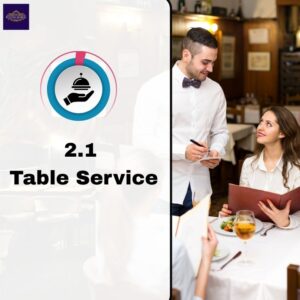
In Table Service, guests remain comfortably seated while trained wait staff serve food and beverages directly at their table. This style is all about personal attention, elegance, and professionalism, making it one of the most refined and guest-centered service methods in the Food & Beverage industry.
It offers guests a relaxed experience — where every detail, from presentation to timing, is carefully managed to ensure satisfaction.
 Where You’ll Find Table Service:
➤ Fine dining restaurants that focus on luxury and formality
➤ Casual dining outlets that balance comfort and professionalism
➤ Hotel restaurants that cater to both local and international guests
Examples of Table Service Methods:
➤ French Service: Food is brought to the table on silver platters, and portions are served individually by the waiter in front of each guest. It’s a highly elegant and interactive form of service often used in luxury settings.
➤ Russian Service: The food is fully prepared and portioned in the kitchen, then presented beautifully to the guest. It combines efficiency with sophistication.
➤ American Service: The most common style worldwide — meals are plated in the kitchen and served directly to guests. It’s fast, neat, and ideal for both casual and semi-formal dining.
Key Skills You’ll Need:
➤ Patience and attentiveness – always anticipate guest needs
➤ Excellent etiquette – maintain professionalism in posture, tone, and interaction
➤ Strong menu knowledge – confidently explain dishes and recommend pairings
➤ Upselling techniques – promote additional items like beverages and desserts tactfully
➤ Team coordination – ensure smooth timing between kitchen and service staff
 Remember: Table service isn’t just about serving food — it’s about delivering an experience that makes guests feel valued, respected, and eager to return.

You’re working in a luxury restaurant in Abuja. Tonight’s VIP dinner includes six guests. The chef prepares a variety of grilled seafood, which you bring out on a large silver platter. You stand beside each guest, serving portions onto their plates right at the table, ensuring presentation and etiquette are perfect.
Question:
Which service style is this?
- American Service
- Russian Service
- French Service
2. Buffet Service
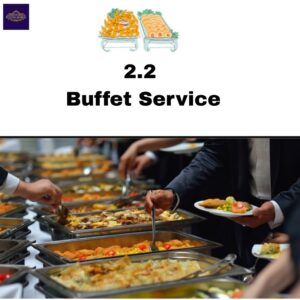
In Buffet Service, guests enjoy the freedom to serve themselves from a wide variety of dishes beautifully arranged on long tables or counters. This style emphasizes variety, convenience, and visual appeal, allowing guests to choose exactly what they want — and how much they want!
It’s a lively and social dining experience, often associated with abundance and celebration. While guests help themselves, the F&B team plays a vital behind-the-scenes role in keeping everything fresh, organized, and elegant.
Where You’ll Find Buffet Service:
➤ Hotel restaurants – especially during breakfast or brunch service
➤ Banquets and weddings – where large numbers of guests are served efficiently
➤ Cruise ships – offering diverse global cuisines for travelers
➤ Corporate events and large gatherings – where variety and speed are essential
How It Works:
Guests move along the buffet line, selecting their preferred dishes from an assortment of appetizers, mains, desserts, and beverages. Staff members ensure that:
- Dishes are constantly replenished and attractively displayed,
- Serving utensils are clean and properly positioned,
- Tables are cleared promptly, and
- The entire setup maintains a fresh, inviting appearance throughout service.
Key Focus Areas for Professionals:
➤ Keep food presentation attractive and consistent.
➤ Ensure cleanliness and hygiene at all times.
➤ Maintain smooth traffic flow — guests should move easily without congestion.
➤ Stay alert to guest needs, especially for refills, assistance, or special requests.
➤ Manage temperature control — hot foods must stay hot, and cold foods cold.
Remember: In buffet service, presentation and efficiency go hand in hand. Guests should leave impressed — not just by the food — but by the order, organization, and hospitality that define a well-managed buffet experience.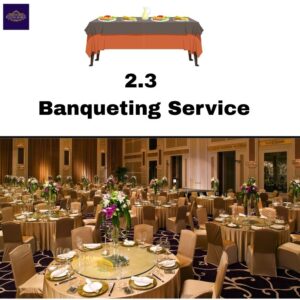
 3. Banqueting Service
Banqueting Service is designed for large groups of guests gathered to celebrate or participate in a special occasion — such as weddings, conferences, anniversaries, or corporate ceremonies. This service style is all about precision, timing, and coordination, ensuring that hundreds of guests enjoy a seamless and memorable dining experience at the same time.
It represents the heart of hospitality — where teamwork, organization, and attention to detail transform an event into something truly remarkable.
How It Works:
➤ Meals are usually prepared in bulk ahead of time to ensure quick and efficient service.
➤ Service staff follow a strictly planned sequence, ensuring that all guests at each table are served simultaneously and uniformly.
➤ The setup — including table arrangements, décor, and service flow — is often customized to match the event’s theme or client’s preference.
➤ Banquet managers coordinate closely with chefs, servers, and event planners to maintain timeliness, order, and guest satisfaction.
Where You’ll Find Banqueting Service:
➤ Weddings and receptions
➤ Corporate meetings and award ceremonies
➤ Government or diplomatic events
➤ Conferences and conventions
➤ Social celebrations and fundraisers
Key Skills Needed for Success:
➤ Coordination – work in sync with the entire service team for flawless delivery
➤ Teamwork – every role counts in ensuring smooth execution
➤ Speed and efficiency – serve large numbers without compromising quality
➤ Attention to detail – ensure uniform presentation and service timing
➤ Calm under pressure – handle unexpected challenges with professionalism
Remember: Banqueting service is a true test of organization and hospitality excellence. When done right, guests don’t just enjoy the food — they experience the grace and efficiency that define top-tier event service.
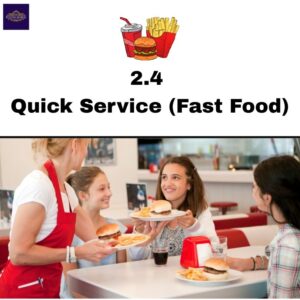
 4. Quick Service (Fast Food)
Quick Service, also known as Fast Food Service, focuses on speed, consistency, and convenience. It’s designed for guests who want great-tasting meals served fast and affordably — whether they’re dining in, taking out, or using a drive-through.
This service style is the engine of modern dining, built on efficiency, standardization, and technology. Every second counts — and every guest expects the same quality, no matter how busy the day gets!
Examples of Quick Service Outlets:
➤ KFC – famous for its crispy fried chicken and speedy service
➤ Mr. Bigg’s – a Nigerian pioneer in quick, tasty, and affordable meals
➤ McDonald’s – a global symbol of fast, standardized service
➤ Domino’s Pizza – known for its “30 minutes or less” delivery promise
Key Features of Quick Service:
➤ Minimal staff interaction – customers order, pay, and collect food directly at the counter or drive-through
➤ Standardized menu – items are pre-prepared or partially cooked for quick assembly
➤ Emphasis on technology – digital menus, self-order kiosks, and delivery apps streamline the process
➤ High turnover rate – fast service and quick table or order turnaround
Key Skills You’ll Need:
➤ Accuracy – get every order right the first time
➤ Multitasking – handle multiple customers and orders efficiently
➤ Speed with quality – serve quickly without compromising standards
➤ Cleanliness under pressure – maintain hygiene even during rush hours
➤ Team coordination – work smoothly with kitchen and counter staff
Remember: Quick Service is all about efficiency and consistency. Guests may come for the food, but they return because of reliability, cleanliness, and the smooth experience your service provides — every single time!

 5. Room Service
Room Service is a premium and personalized style of food service found mainly in hotels and resorts, where meals and beverages are delivered directly to a guest’s room. It offers guests the comfort of dining privately — anytime they choose — while still enjoying the quality and hospitality of a restaurant experience.
This service type blends luxury, convenience, and professionalism, creating a sense of exclusivity and care that defines top-tier hospitality.
How It Works:
➤ Guests place their orders through telephone, mobile apps, or in-room tablets, often from a specially designed room service menu.
➤ The order is prepared promptly in the kitchen and delivered by a professional service attendant using a trolley or tray setup, ensuring food is hot, fresh, and well-presented.
➤ The attendant serves the meal quietly and efficiently, respecting the guest’s privacy and comfort.
➤ After dining, trays or trolleys are collected discreetly to maintain cleanliness and order.
Where You’ll Find Room Service:
➤ Luxury hotels and resorts
➤ Business suites and executive floors
➤ Private villas and serviced apartments
Key Skills You’ll Need:
➤ Attention to detail – ensure presentation, order accuracy, and proper tray setup
➤ Professionalism – maintain a calm, respectful demeanor at all times
➤ Excellent communication – confirm orders, handle special requests, and deliver updates politely
➤ Discretion and respect for privacy – guests’ comfort and confidentiality are top priorities
➤ Time management – prompt service is crucial to maintaining guest satisfaction
Remember: Room Service is not just about delivering food — it’s about delivering comfort, luxury, and care right to the guest’s doorstep. Every knock on the door should reflect professional excellence and warm hospitality that makes guests feel truly valued.
Key Takeaway
Each food service classification demands its own approach, skills, and mindset. From the elegance of table service to the energy of quick service and the coordination required in banqueting, every style tests a different side of your professionalism.
➤ A true F&B professional is flexible — able to adapt seamlessly to any environment, guest type, or service situation.
➤ Whether you’re delivering breakfast to a hotel room, serving a fine-dining course, or managing a busy buffet, your attitude, efficiency, and consistency make all the difference.
Remember: The more adaptable and versatile you are, the more valuable you become — not just in your workplace, but across the global hospitality industry.
Break time and activity
Let’s take 10 minutes to take break and attend to this
 “Imagine you are working in a hotel restaurant and a guest drops food on the table. How would you handle it professionally without embarrassing the guest?”
 3. Roles and Responsibilities of Food & Beverage Personnel
Let’s talk about what really makes the Food & Beverage industry come alive — you and your team!
Every single role in F&B — from the kitchen to the dining area — plays a crucial part in creating that seamless, memorable experience guests will never forget. Whether you’re serving a fine-dining meal, managing a banquet, or greeting guests at the door, your contribution directly shapes how people feel about your establishment.
In international hospitality, success isn’t achieved by one person — it’s built through teamwork, communication, and precision.
When everyone understands their specific duties and responsibilities, things run smoothly:
➤ Guests are served on time.
➤ Orders are accurate.
➤ Food quality remains consistent.
➤ And most importantly — guests leave happy and eager to return!
Understanding each role also helps you grow professionally. The more you know about what happens in other departments — from kitchen operations to service etiquette — the better you become at coordinating, leading, and adapting in any F&B setting.
Remember: In the world of Food & Beverage, no task is too small and no role is insignificant. Every plate served, every table cleaned, every smile shared — it all adds up to one thing: exceptional guest satisfaction.
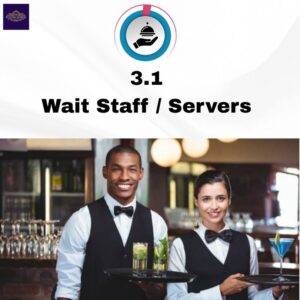
a) Wait Staff / Servers
You are the face of the dining experience — the bridge between the guest and the kitchen! As a server or wait staff, your role goes far beyond just taking orders; you’re responsible for creating moments of comfort, connection, and satisfaction that make every guest feel valued.
Here’s what your day-to-day impact looks like:
➤ Take accurate orders and ensure food and beverages are delivered promptly and professionally.
➤ Maintain a friendly, welcoming attitude, anticipating what guests might need before they even ask.
➤ Handle special requests and dietary requirements with care and attention to detail — accuracy builds trust.
➤ Keep the dining area clean and organized by clearing tables efficiently and resetting them with finesse.
Example in Action:
Imagine a guest scanning the menu with a confused look. Instead of waiting for them to ask, you step in with confidence and say,
“May I recommend our chef’s special today? It’s light, flavorful, and pairs beautifully with our fresh fruit juice.”
That simple gesture transforms uncertainty into trust, and a regular meal into a memorable dining experience.
Remember: As wait staff, you’re not just serving food — you’re serving hospitality, warmth, and excellence with every interaction. Your smile, timing, and attention to detail define the guest’s entire impression of your establishment.

It was a busy Friday evening at a popular restaurant in Lagos, and the dining room was bustling with guests. The ambiance was lively, music was soft, and the aroma of freshly cooked meals filled the air. However, amidst the excitement, one of the servers, *Chika*, appeared disorganized and unprepared for the dinner rush.
A family of four was seated at a corner table and waited patiently for someone to attend to them. After almost fifteen minutes, Chika approached their table looking hurried and distracted. She didn’t greet the guests warmly or make eye contact; instead, she quickly handed them menus and left before they could ask any questions. When she finally returned to take their order, she seemed impatient, tapping her pen on the notepad as the mother asked about vegetarian options. Chika gave vague answers, clearly unsure of the menu details, and failed to offer any helpful suggestions.
During the order process, she also neglected to write down one of the children’s meal requests and didn’t pay close attention when the father mentioned his *severe nut allergy*. Wanting to move quickly to other tables, she assumed the kitchen staff would handle it and walked away without confirming. When the meals arrived, the father’s dish was topped with crushed peanuts—a dangerous oversight. The moment he noticed, panic erupted at the table. The family was alarmed and had to call the manager immediately. Chika returned, visibly nervous, and instead of apologizing sincerely, she blamed the kitchen staff for the mistake.
The service continued to deteriorate throughout the evening. Empty plates and glasses cluttered tables because Chika didn’t clear them promptly. Guests at other tables waved repeatedly to get her attention for refills, but she was too busy chatting with another staff member near the counter. Her lack of professionalism was noticed by several diners, who exchanged disapproving glances.
By the end of the night, the restaurant manager received multiple complaints about slow service, rude behavior, and lack of attention to detail. The family affected by the allergy incident left a strongly worded review online, warning others about the restaurant’s poor service standards. The next day, management discovered that Chika had skipped the pre-shift briefing where dietary alerts and special requests were discussed.
 Lesson:
This situation highlights how negligence, poor communication, and lack of attentiveness from a server can ruin the dining experience for multiple guests. Wait staff are the face of the establishment—they must demonstrate professionalism, product knowledge, and empathy. Failing to take accurate orders, ignoring special dietary needs, and neglecting to maintain a clean and friendly environment not only harms customer satisfaction but can also put guest safety and the restaurant’s reputation at serious risk.
 b) Bartenders
You are the artist behind the bar — where flavor, creativity, and hospitality come together! As a bartender, your role is not just about mixing drinks; it’s about crafting experiences that delight the senses and elevate every guest’s visit.
Here’s what makes you stand out behind the counter:
➤ Prepare and serve drinks — both alcoholic and non-alcoholic — following international mixology standards for taste, balance, and presentation.
➤ Practice responsible alcohol service, always verifying age and keeping an eye on guest consumption to ensure a safe, enjoyable environment.
➤ Upsell smartly by suggesting drink pairings or special cocktails that complement meals — a simple recommendation can boost guest satisfaction and increase sales.
➤ Keep your workspace immaculate — maintain bar cleanliness, stock levels, and proper glassware care for smooth, professional service.
Example in Action:
A guest orders a grilled steak and asks for a drink suggestion. You respond confidently:
“You might enjoy a full-bodied red wine — it enhances the smoky flavor of the steak beautifully.”
That one suggestion transforms a meal into a memorable dining moment — and you’ve just made an impression as both a skilled professional and a trusted advisor.
Remember: As a bartender, you’re more than a drink mixer — you’re a storyteller, entertainer, and mood-setter. Every pour, garnish, and smile contributes to the guest’s overall experience and the establishment’s reputation for excellence.
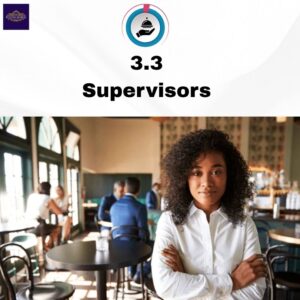
 c) Supervisors
You are the heartbeat of the F&B floor — the bridge between management, staff, and guests. As a supervisor, your mission is to keep operations running seamlessly while ensuring that every guest leaves with a smile and every team member performs at their best.
Here’s how you make it all happen:
➤ Oversee daily floor operations — making sure that service standards are met and that every shift runs like clockwork.
➤ Be the first point of contact for guest complaints or special requests. Handle them calmly, professionally, and with genuine care.
➤ Monitor staff performance — guide, motivate, and correct where necessary to maintain excellence in line with international hospitality standards.
➤ Coordinate communication between the kitchen, bar, and service teams, ensuring every order, dish, and delivery flows without confusion or delay.
Example in Action:
You notice that orders from one section are taking longer than expected. Instead of waiting for complaints, you quickly reassign a waiter to assist that section and notify the kitchen to prioritize the pending dishes.
Result? Guests stay happy, service recovers instantly, and your leadership shines.
Remember: As a supervisor, you are not just managing — you’re leading by example. Your calm under pressure, eye for detail, and proactive attitude inspire your team and shape the entire guest experience. Every shift is your stage to demonstrate what true professionalism looks like in hospitality.
You’re the Food & Beverage Supervisor at a busy upscale restaurant in Abuja on a Saturday evening. The restaurant is packed, the kitchen is under pressure, and a few things start going wrong at once:
- One section of the dining room has several delayed orders.
- A guest at another table is upset because her special dietary request was overlooked.
- Meanwhile, a new waiter seems confused about table assignments and is slowing down service.
As the supervisor, all eyes are on you to fix things quickly and calmly while maintaining high service standards.
 What should you do FIRST?
- Step into the dining area to personally apologize to the angry guest and assure her that her new order will be prioritized.
- Go straight to the kitchen to understand the cause of the delayed orders and reassign a waiter to help speed up service.
- Pull the new waiter aside immediately for a private correction, emphasizing accuracy and table coordination.
- Inform the restaurant manager that the situation is out of control and request that they take over the floor
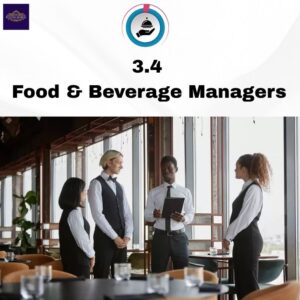
 d) Food & Beverage Managers
You are the visionaries and strategists behind the entire food and beverage operation. As an F&B Manager, your job isn’t just about keeping the service running — it’s about creating an environment where excellence, profitability, and guest satisfaction all thrive together.
Here’s what defines your role:
➤ Oversee overall planning, budgeting, and resource management, ensuring that every operation aligns with the establishment’s financial and service goals.
➤ Drive staff training and development — empowering your team with the right skills, attitude, and confidence to deliver top-tier service.
➤ Enforce strict compliance with health, hygiene, and safety standards such as HACCP, ensuring the restaurant or hotel meets global hospitality regulations.
➤ Monitor guest satisfaction and feedback, transforming insights into actionable improvements that enhance the guest experience and strengthen the brand’s reputation.
➤ Make strategic decisions on menu design, supplier partnerships, and operational policies to ensure quality, efficiency, and sustainability.
Example in Action:
After noticing guests consistently requesting healthier meal options, you decide to collaborate with the chef to design a “Wellness Menu.” The change not only attracts a new customer segment but also boosts overall sales — proving that guest insight drives growth.
Remember: As an F&B Manager, you’re the captain of the ship. Every decision you make — from budgeting to menu planning — ripples through the guest experience. Your leadership, vision, and ability to balance quality with profitability define the success of your department and elevate your establishment’s global hospitality standards.

 e) Support Staff (Busboys, Cleaners, Stewards)
You are the unsung heroes of the Food & Beverage department — the quiet force that keeps the entire operation running smoothly. Without your dedication and attention to detail, even the finest restaurant or hotel could not deliver the seamless service guests expect.
Here’s what your role involves:
➤ Maintain cleanliness and order in all dining and service areas, creating a safe, hygienic, and welcoming environment for guests and staff alike.
➤ Support the service team by setting tables, clearing dishes promptly, and ensuring supplies such as cutlery, napkins, and water glasses are always available.
➤ Handle dishwashing, laundry, and setup tasks that form the foundation of efficient operations — allowing wait staff and supervisors to focus fully on guest satisfaction.
➤ Respond quickly and quietly to needs on the floor, ensuring that service remains smooth and uninterrupted even during busy periods.
Example in Action:
During a busy dinner rush, you notice a guest’s table needs clearing before their next course. Without being prompted, you clear and reset it efficiently, ensuring the server can continue the flow of service effortlessly. The guest never sees the rush — only a flawless dining experience.
Remember:
Support staff may work behind the scenes, but your work shines through in every clean glass, every neatly set table, and every spotless floor. You represent discipline, teamwork, and pride in maintaining the invisible details that make visible excellence possible. Your consistency and commitment are what truly uphold the reputation of any world-class F&B operation.
It’s a busy Sunday afternoon at a popular hotel restaurant in Port Harcourt. The lunch rush is in full swing — guests are arriving faster than tables can be reset. The wait staff are busy taking orders and serving meals, while the kitchen is operating at maximum capacity.
You are part of the support staff team (busboy/cleaner/steward), and things are beginning to pile up:
Several tables have empty plates and used glasses that need clearing. The cutlery stand is almost empty, and napkins are running low. A large group has just left, and their table must be reset immediately for waiting guests. The dishwashing area is starting to overflow.
As service intensifies, you must decide how to act quickly to keep operations running smoothly without disrupting guests or slowing down the team.
What would you do FIRST?
- Clear and reset the large group’s table immediately so waiting guests can be seated, even if it means delaying dishwashing.
- Refill the cutlery and napkin stations first to ensure waiters have what they need to serve other guests efficiently.
- Focus on washing dishes and clearing the backlog in the kitchen to prevent delays in serving new orders.
- Wait for the supervisor’s instructions before acting, to avoid making the wrong decision during the rush.
Key Takeaway
In the Food & Beverage industry, every role matters. From the manager making strategic decisions to the busboy clearing tables with precision, each person contributes to one shared goal — delivering an unforgettable guest experience.
➤ When every team member understands their role and works in harmony, service becomes seamless, guests feel valued, and the establishment’s reputation grows stronger.
➤ Excellence in hospitality isn’t just about serving food — it’s about creating moments guests will remember long after they’ve left.
Remember: In F&B service, no task is too small, and no role is insignificant. True hospitality is built on teamwork, consistency, and pride in every action — big or small.
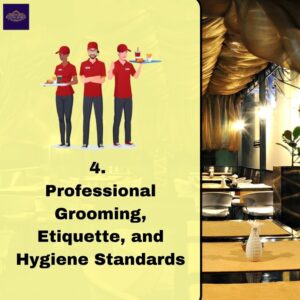
 4. Professional Grooming, Etiquette, and Hygiene Standards
Let’s talk about something that often speaks before you even say a word — your appearance and conduct. In the Food & Beverage industry, professionalism isn’t only about how well you serve; it’s about how you present yourself, how you behave, and how you maintain hygiene.
Your grooming, manners, and cleanliness reflect not just you — but the entire brand you represent. Guests form impressions instantly, and one look at a neat uniform, a confident smile, and polished manners can make all the difference between an average experience and an exceptional one.
Here’s what sets a true F&B professional apart:
➤ Professional Grooming: Maintain a clean, well-fitted uniform, tidy hair, trimmed nails, and minimal accessories. Looking sharp shows you take pride in your work.
➤ Etiquette and Behavior: Always greet guests politely, maintain good posture, and speak respectfully. Small gestures — like pulling out a chair or offering water — can elevate the guest experience.
➤ Personal Hygiene: Wash hands frequently, keep breath fresh, and ensure cleanliness during every shift. Hygiene is not optional; it’s a mark of respect for both guests and colleagues.
Remember:
In the world of hospitality, you are your brand. Every smile, every gesture, and every detail in your presentation sends a message of trust, care, and professionalism. When you look the part and act with confidence, guests feel it — and they’ll always come back for the experience you help create.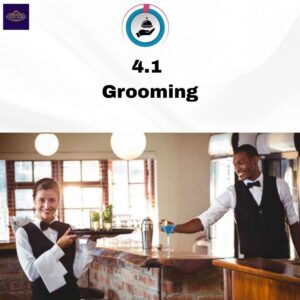
 A. Grooming
First impressions in the Food & Beverage industry are powerful — and they begin the moment a guest sees you. Professional grooming isn’t just about looking good; it’s about showing respect for your guests, your workplace, and yourself. The way you present yourself communicates competence, discipline, and pride in your role.
Here’s what every F&B professional must pay attention to:
➤ Uniform: Always clean, neatly pressed, and perfectly fitted for your role. A spotless uniform reflects your dedication to high standards.
➤ Hair: Keep it neat, tidy, and tied back if long. It not only maintains hygiene but also enhances your professional look.
➤ Jewelry: Keep it minimal. Avoid rings, bracelets, or dangling accessories that could interfere with service or compromise food safety.
➤ Nails: Short, clean, and well-trimmed at all times. Bright polish or chipped nails can easily give guests the wrong impression.
➤ Personal Hygiene: Fresh breath, clean hands, and use of deodorant are non-negotiable. You should always feel — and smell — fresh throughout your shift.
Example in Action:
Imagine a guest being served by a waiter whose shirt is wrinkled and nails are dirty — even if the food tastes great, that image can instantly damage the restaurant’s credibility. In contrast, a well-groomed server immediately reassures guests of cleanliness and professionalism before a single word is spoken.
Remember:
In hospitality, you are part of the presentation. When you look polished and professional, you don’t just serve food — you serve confidence, trust, and excellence.
It’s 7:45 a.m. at a luxury hotel in Abuja, and the breakfast buffet is about to open. The restaurant manager has reminded everyone that a VIP guest — a visiting ambassador — will be dining that morning. Every staff member is expected to look immaculate and maintain top-notch professionalism.
You, a Food & Beverage server, are running slightly late and rush into the staff area to get ready. As you look around, you notice your colleagues are fully groomed and in perfect uniform. You quickly realize that:
Your uniform from yesterday is a bit wrinkled because you didn’t iron it overnight. Your hair isn’t properly tied back, and a few strands are falling into your face. You still have your wristwatch and a small bracelet on, which technically go against the grooming policy.
The clock is ticking, and the floor supervisor is about to conduct the morning inspection before opening.
What would you do FIRST?
- Rush straight to the floor so you’re not marked late — appearances can be fixed later once the service begins.
- Take five minutes to iron your uniform, tie your hair properly, and remove your jewelry — even if it means joining the team slightly after opening.
- Hide your bracelet under your sleeve and hope the supervisor doesn’t notice during inspection.
- Complain that the grooming rules are too strict, since guests care more about service than appearance.
 B. Etiquette
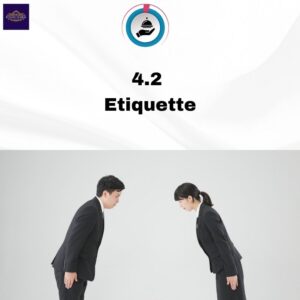
In hospitality, how you behave is just as important as what you do. Professional etiquette is the art of showing respect, warmth, and attentiveness in every interaction — because guests remember how you made them feel long after they’ve forgotten what they ate.
Good manners and communication reflect professionalism, emotional intelligence, and genuine care for the guest’s comfort. Every “please,” “thank you,” and courteous gesture adds to the experience you’re creating.
Here’s what true F&B etiquette looks like:
➤ Language: Always use polite, positive, and clear communication. Speak with warmth, avoid slang or harsh tones, and never interrupt a guest mid-sentence.
➤ Listening Skills: Pay full attention when guests speak. Repeat orders or requests to confirm accuracy — this shows attentiveness and prevents mistakes.
➤ Body Language: Stand tall, smile genuinely, and maintain friendly eye contact. Avoid crossed arms or distracted gestures — your posture should say, “I’m here for you.”
➤ Guest Interaction: Address guests respectfully using appropriate greetings or titles (e.g., “Good evening, sir/ma’am”). Be mindful of cultural differences — a small act of respect can go a long way with international guests.
Example in Action:
A polite and attentive server who greets guests warmly, listens carefully, and anticipates refills before being asked creates a lasting impression of care and professionalism — even more than one who simply performs tasks efficiently but without courtesy.
Remember:
Etiquette is the heart of service excellence. It’s not just about following rules — it’s about creating connections. When you treat every guest with respect and genuine attentiveness, you transform ordinary service into a memorable hospitality experience.
.
 C. Hygiene Standards
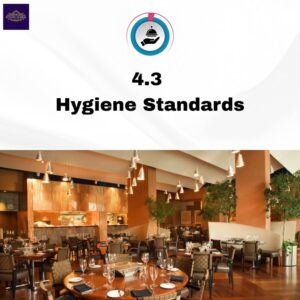
In the Food & Beverage industry, hygiene is non-negotiable — it’s the foundation of food safety, guest trust, and professional credibility. Guests may not see every process behind the scenes, but they can always feel when a team takes hygiene seriously. Cleanliness shows respect for your craft, your colleagues, and your customers.
Every professional in the industry — from kitchen staff to servers and bartenders — plays a vital role in preventing contamination and protecting guests’ health.
Here’s what proper hygiene looks like in action:
➤ Handwashing: Wash your hands thoroughly and regularly — before handling food, after using the restroom, or after touching any surface that could carry contamination.
➤ HACCP Guidelines: Follow the Hazard Analysis and Critical Control Points system — identify potential risks, monitor food handling processes, and control contamination at every stage.
➤ Clean Equipment & Surfaces: Keep knives, boards, utensils, and counters clean and sanitized at all times. A spotless workspace is a safe workspace.
➤ Temperature & Storage Control: Always store food at the right temperatures and ensure perishable items are handled quickly and safely to prevent spoilage.
Example in Action:
A bartender who regularly sanitizes glassware and a server who follows HACCP standards are not just keeping things tidy — they’re protecting guests from foodborne illness while upholding the establishment’s reputation for safety and professionalism.
Remember:
In hospitality, clean equals credible. Guests may forget what they ordered, but they’ll never forget how clean — or unclean — a place felt. Practicing strict hygiene isn’t just about rules; it’s about earning trust, loyalty, and respect every single day.
Key Takeaway
Grooming + Etiquette + Hygiene = Trust, Safety, and Repeat Business.
In the F&B industry, professionalism is more than a skill — it’s a statement. When you look the part, act with courtesy, and maintain top-notch hygiene, you’re not just doing your job — you’re building trust and ensuring guests feel safe, valued, and respected.
➤ A polished appearance shows discipline.
➤ Polite etiquette reflects respect and care.
➤ Strict hygiene practices guarantee safety and confidence.
Together, these elements create an experience that keeps guests coming back — not just for the food, but for the feeling of excellence your service delivers.
Day 1 Recap – Introduction to Food & Beverage Service Standards
As we conclude Day 1, let’s reflect on the key takeaways from today’s session:
- The Global Food & Beverage Industry
- The F&B industry is vast, dynamic, and continuously evolving.
- It spans restaurants, hotels, catering services, airlines, cruise ships, and cafes.
- Success in this industry depends not only on the quality of food but also on service excellence, professionalism, and adherence to international standards.
- Food Service Classifications
- There are five main types of food service:
- Table Service – personalized service at the table, e.g., fine dining.
- Buffet Service – self-service, common in hotels and banquets.
- Banqueting Service – large group dining for events.
- Quick Service / Fast Food – speed and efficiency focused.
- Room Service – delivering meals directly to guest rooms.
- Each classification requires specific skills and approaches to ensure customer satisfaction.
- There are five main types of food service:
- Roles and Responsibilities of F&B Personnel
- Every team member plays a critical role in delivering a seamless guest experience.
- From wait staff and bartenders to supervisors and managers, all roles are interconnected.
- Effective coordination and understanding of responsibilities ensure quality service and operational efficiency.
- Professionalism: Grooming, Etiquette, and Hygiene
- Appearance, behavior, and hygiene are non-negotiable.
- Well-groomed staff with clean uniforms, neat hair, tidy nails, and fresh breath creates trust.
- Polite language, attentive listening, and positive body language reflect professional etiquette.
- Following HACCP guidelines and hygiene protocols safeguards customer health and strengthens your establishment’s reputation.
Key Takeaway:
Success in food and beverage service is not only about what you serve but how you serve it.
Mastering service classifications, roles, grooming, etiquette, and hygiene lays the foundation for a professional career and memorable guest experiences.
End-of-Day Reflection Question:
“Which aspect of today’s session do you think is most challenging to implement in your current or future workplace, and why?”
Day 2 – Beverage Management & Service Techniques
🎯 Learning Objectives (Day 2)
By the end of today’s session, you will be able to confidently:
- ➤ Identify and classify beverages — understand the key differences between alcoholic, non-alcoholic, hot, and cold beverages.
- ➤ Apply international standards for beverage handling and service, ensuring every drink meets the highest hospitality benchmarks.
- ➤ Recognize and use the correct glassware and service equipment for each beverage type — because presentation matters as much as taste.
- ➤ Practice responsible alcohol service, following global policies that protect both guests and establishments.
- ➤ Apply upselling and pairing techniques — learn how to recommend the right beverage for every meal and guest preference, boosting both customer satisfaction and revenue growth.
✨ Get ready to explore the art, science, and service excellence behind every drink poured!
Pre-Class Engagement
- From yesterday’s class, which aspect of customer service do you think is most closely linked to beverage service?
- Can you name one challenge you faced or anticipate in serving beverages professionally?
- Identify one scenario where beverage service can enhance the customer experience.
🍷 1. Types of Beverages
Let’s dive into one of the most exciting aspects of Food & Beverage service — understanding beverages. Knowing your drinks isn’t just about pouring — it’s about mastering presentation, temperature, taste balance, and guest experience. The better your knowledge, the more confident and professional you become on the floor or behind the bar.
🥂 A. Alcoholic Beverages
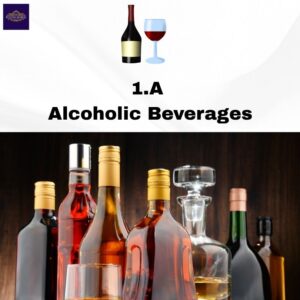
Alcoholic beverages are more than drinks — they’re experiences shaped by culture, craftsmanship, and service technique. Each category requires the right handling, glassware, and presentation to bring out its best qualities.
➤ Wine (Red, White, Sparkling):
Serve at the correct temperature — reds slightly cool, whites chilled, and sparkling wines icy cold. Master the art of decanting to let the wine breathe, and pour gracefully from the right side of the guest.
➤ Spirits (Whiskey, Gin, Vodka, Rum):
Precision matters here. Use the correct measure and appropriate glassware (e.g., whiskey tumbler, cocktail glass). Always serve with confidence and product knowledge.
➤ Beer (Lager, Ale, Stout):
Serve chilled with the right glass — pint or mug — and maintain a perfect foam head. Pour steadily to release the aroma without excessive fizz.
➤ Cocktails & Liqueurs:
These are the stars of the bar! Focus on balance, presentation, and garnish. Every cocktail tells a story — from the color to the glass rim to the final twist of lime or mint leaf.
✨ Pro Tip:
The magic of beverage service lies in details — the chill of the glass, the precision of your pour, the smile as you serve. Every guest should feel that their drink was made just for them.
Ade, a Nigerian hospitality professional, has recently started working as a Food & Beverage attendant at a high-end restaurant in London. It’s a busy Friday evening, and guests from different parts of the world are filling the dining area.
Scene 1: The Red Wine Moment 🍷
A guest orders a bottle of red wine to go with their steak. Ade carefully brings the bottle on a tray, presents it with a polite smile, and says confidently:
“Good evening, sir. Here’s your Cabernet Sauvignon 2018 — full-bodied and best enjoyed slightly cool.”
He opens the bottle smoothly, pours a small taste for approval, then decants it to let the wine breathe. His steady hand and attention to detail impress the guest.
Guest: “You seem to know your wines well.”
Ade: smiling “Yes, sir. Back home in Nigeria, I trained in fine dining service. Good service knows no borders.”
Learning point: Ade demonstrates temperature control, decanting, and confident presentation — key in wine service professionalism.
Scene 2: The Spirit Order 🥃
Later that evening, a guest from Scotland orders a single malt whiskey. Ade takes out a clean whiskey tumbler, measures the exact pour using a jigger, and serves it neatly on a coaster.
Guest: “Perfect pour — not too much, not too little. You’ve got skill.”
Ade: “Thank you, sir. Precision and respect for the spirit make all the difference.”
Learning point: Ade applies accurate measurement and appropriate glassware use, showing knowledge of spirits and maintaining consistency.
Scene 3: The Sparkling Challenge 🥂
During a celebration dinner, a table requests sparkling wine for a toast. Ade chills the bottle properly, presents it, and opens it with a quiet pop — no splash, no drama. He pours gently down the side of the flute glasses to preserve the bubbles.
Manager (whispering): “Good job, Ade. That’s exactly how we do it in fine service — elegance without noise.”
Learning point: Ade demonstrates proper handling and presentation of sparkling wine, ensuring class and safety.
Scene 4: Reflection 💬
At the end of his shift, Ade reflects on how far he’s come — from a hotel in Lagos to an international fine-dining restaurant. He realizes that skill, not nationality, defines a professional.
“It’s all about mastering your craft,” he thinks. “Whether in Nigeria or abroad, excellence speaks the same language.”
Training Takeaway for Learners:
- Wine Service: Know serving temperatures and decanting techniques.
- Spirits: Measure accurately; match the right glassware.
- Sparkling Wine: Serve well-chilled and open safely.
- Professionalism: Confidence, respect, and product knowledge elevate your service anywhere in the world.
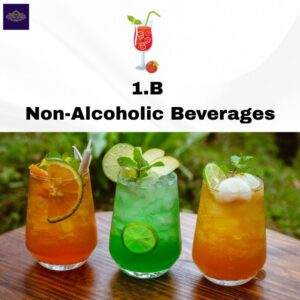
🥤 B. Non-Alcoholic Beverages
Not every guest drinks alcohol — but everyone appreciates a refreshing, beautifully served beverage. Non-alcoholic drinks play a huge role in the F&B experience, offering variety, inclusivity, and creativity. From a simple glass of juice to an elaborate mocktail, presentation and freshness are key!
Here’s what every professional should know:
➤ Types: Includes juices, soft drinks, mocktails, and smoothies. Each has its unique preparation and serving method. Freshly squeezed juices and blended smoothies should be served immediately to retain flavor and nutrients.
➤ Temperature: Always pay attention to service temperature — some guests prefer their drinks chilled, while others may want them at room temperature (especially in formal dining or breakfast service).
➤ Presentation & Garnishing: A slice of fruit, mint leaf, or colorful straw can transform a simple drink into something visually appealing and memorable. Presentation adds value — guests first taste with their eyes.
💡 Example in Action:
Imagine serving a tropical pineapple mocktail in a tall glass, garnished with a slice of orange and a mint sprig. The guest hasn’t even taken a sip, yet they already feel refreshed and delighted — that’s the power of presentation and detail.
✨ Remember:
Non-alcoholic doesn’t mean ordinary. Treat every drink with the same care as a fine wine — because professionalism shines through in every pour, every garnish, and every smile.
Tijani, a Nigerian server at a luxury restaurant in Dubai, is attending to a group celebrating a birthday. One guest orders a glass of sparkling wine, while another asks for a non-alcoholic sparkling mocktail. In a rush, Tijani accidentally serves the alcoholic drink to the guest who doesn’t take alcohol. The guest politely complains.
💭 What should Tijani have done differently?
- Double-check the order before serving and label trays clearly
- Assume all sparkling drinks look the same
- Blame the bar staff for the mix-up
- Tell the guest to just switch the glasses
A guest asks for a tropical pineapple mocktail. Ade serves it perfectly chilled, in a tall glass with orange slices and mint garnish. The guest takes a picture before even drinking it.
💭 What made Ade’s service stand out?
A. Quick service
B. Simple glassware
C. Presentation and attention to detail
D. Offering extra napkins
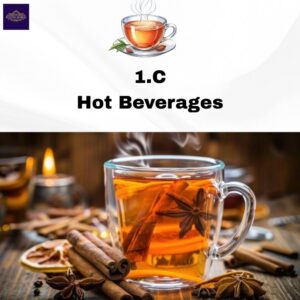
☕ C. Hot Beverages
Hot beverages bring warmth, comfort, and sophistication to the dining experience. Whether it’s a strong espresso, a calming herbal tea, or a creamy cup of hot chocolate — how you serve it matters just as much as what you serve. Precision, temperature, and timing are everything.
Here’s what every F&B professional should keep in mind:
➤ Types: Hot beverages include coffee, tea, hot chocolate, and herbal infusions. Each has its own preparation and brewing method — for instance, coffee requires proper extraction, while tea depends on steeping time and water temperature.
➤ Serving Temperature: Hot drinks should be served at the ideal temperature — warm enough to stay flavorful but never scalding. Always test the heat before serving to ensure guest safety and comfort.
➤ Cups & Presentation: Use the right cup or mug for each beverage — espresso cups for short coffees, teapots for tea service, and ceramic mugs for hot chocolate. A clean saucer, spoon, and napkin complete the presentation.
➤ Timing & Tray Service: Serve promptly once prepared, as hot beverages lose quality quickly. Carry them on a steady tray with care, maintaining elegance and confidence in every step.
💡 Example in Action:
A guest orders green tea. You bring a teapot, a warm cup, and a small honey jar on a neat tray — serving it with a smile and just the right temperature. Instantly, the guest feels cared for — not just served.
✨ Remember:
Hot beverage service is a ritual of care and precision. Every cup you serve is an opportunity to deliver warmth — not just in temperature, but in hospitality and heart.
During afternoon service, Hauwa prepares a guest’s chamomile tea but gets distracted and leaves it on the counter for several minutes. When she finally serves it, the tea is lukewarm and lacks aroma. The guest frowns, disappointed.
💭 What was Hauwa’s main mistake?
- Not adding enough sugar
- Not steeping the tea long enough
- Delayed service — hot beverages must be served promptly
- Using the wrong tray color
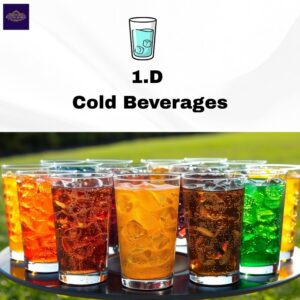
❄️ D. Cold Beverages
Cold beverages offer refreshment, style, and balance to the dining experience — especially in warm climates or during long service hours. They should always be served chilled, crisp, and visually appealing, reflecting attention to detail and guest comfort.
Here’s what every F&B professional should keep in mind:
➤ Types: Cold beverages include iced coffee, iced tea, mineral water, soft drinks, mocktails, and other chilled specialties. Each should be served at the proper temperature to preserve flavor and freshness.
➤ Glassware: Use the correct glassware for each type — tall glasses for iced drinks, goblets for sparkling water, and tumblers for soft drinks. Always ensure the glass is spotless and pre-chilled when possible.
➤ Ice Management: Ice should be clean, odor-free, and crystal clear. Avoid overfilling the glass — balance is key so the drink remains flavorful and easy to handle. Never reuse melted ice.
➤ Garnishes & Presentation: Add lemon wedges, mint leaves, fruit slices, or rim sugar to enhance visual appeal and elevate the guest experience. Presentation is part of the refreshment.
💡 Example in Action:
A guest orders iced coffee. You serve it in a tall glass filled halfway with clean ice, pour the chilled coffee smoothly, add a straw, and finish with a swirl of cream and a mint leaf. The result? Cool elegance in every sip.
✨ Remember:
Cold beverage service is about refreshment and refinement. Every chilled glass you serve should not only quench thirst — it should create an experience of calm, care, and class.
Tunde, a Nigerian waiter working in a high-end hotel restaurant in Dubai, is in charge of serving drinks during a busy lunch hour. The temperature outside is over 35°C — guests are looking forward to something cold and refreshing.
The Warm Welcome That Wasn’t 🍋
A guest orders an iced lemonade. Tunde prepares it quickly but forgets to chill the glass or add enough ice. When he serves it, the condensation on the glass is minimal, and the drink tastes only mildly cool.
Guest (frowning): “Excuse me, I thought this was supposed to be iced lemonade?”
Tunde: “Yes, ma’am — it’s cold enough.”
The guest takes a sip, sighs, and pushes the glass aside.
➤ Mistake: Tunde didn’t serve the drink at the correct temperature, ignoring the key expectation of refreshment for a cold beverage.
The Cloudy Ice Issue 🧊
Later, Tunde refills another guest’s glass of sparkling water but uses leftover ice from a tray that’s been sitting out for hours. The ice looks cloudy and slightly melted, diluting the drink.
Guest: “This water tastes flat… and there’s something odd about the ice.”
Tunde (uneasy): “Oh, maybe the freezer isn’t cold enough.”
➤ Mistake: He failed to ensure the ice was fresh, clean, and odor-free, compromising both taste and presentation.
The Glassware Glitch 🥤
A table of guests orders a mix of mocktails and soft drinks. Tunde, rushing to serve quickly, uses the same short tumblers for all beverages — even for tall layered mocktails meant for presentation. One of the guests notices.
Guest: “Shouldn’t this drink be in a taller glass? It looks different from the menu.”
Tunde: “Ah… all our glasses are the same size.”
➤ Mistake: He used incorrect glassware, diminishing the appearance and perceived value of the drinks.
The Garnish Gone Wrong 🍓
Trying to fix the visual appeal of a dull-looking drink, Tunde adds a wilted mint leaf and a dry lemon wedge from the prep counter. The garnish looks unappetizing and unprofessional.
Manager (quietly): “Tunde, remember — fresh garnish completes the drink. Guests notice everything.”
➤ Mistake: He used improper, stale garnishes, which negatively affected the guest’s visual experience.
The Reflection 💭
After the service, the restaurant manager calls Tunde aside:
“Tunde, in beverage service, presentation and temperature are everything. A cold drink that isn’t cold, or looks dull, fails the guest experience — no matter how polite the service.”
Tunde realizes that attention to small details — chilled glassware, clean ice, fresh garnish — separates an average server from a professional.
Training Takeaways:
➤ Always serve cold beverages chilled, not room temperature.
➤ Use fresh, odor-free ice — never reuse melted ice.
➤ Match the correct glassware to the drink type.
➤ Keep garnishes fresh, neat, and vibrant.
➤ Presentation equals professionalism — guests should see and feel refreshment before the first sip.]
Module 2: International Standards of Beverage Handling and Service
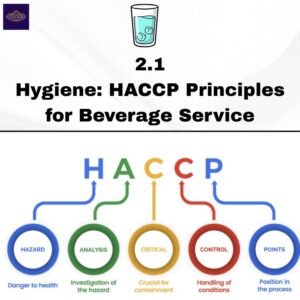
🧼 1. Hygiene: HACCP Principles for Beverage Service
Overview:
HACCP (Hazard Analysis Critical Control Points) is a globally recognized system that ensures food and beverage safety. Applying HACCP principles to beverage service guarantees the safety, quality, and consistency of every drink served to guests.
Key Points:
➤ Personal Hygiene:
▶ Wash hands thoroughly before and after handling beverages.
▶ Use clean aprons, gloves, and avoid wearing jewelry that could contaminate drinks.
▶ Maintain short, clean nails and keep hair properly restrained.
➤ Equipment Hygiene:
▶ Ensure glassware, pitchers, shakers, coffee machines, and ice scoops are cleaned and sanitized regularly.
▶ Avoid cross-contamination — for instance, don’t use the same cloth for cleaning glasses and wiping counters.
➤ Beverage Safety:
▶ Always check expiry dates on packaged or bottled beverages.
▶ Store fresh juices, dairy-based drinks, and cocktails at safe temperatures (below 5°C for chilled drinks).
💡 Remember:
Good hygiene is not optional — it’s the foundation of guest safety and trust. Every beverage served should reflect care, cleanliness, and compliance with global HACCP standards.
Ngozi, a Nigerian bartender working in a luxury beach resort in Greece, is known for her speed behind the bar. But during a busy afternoon, her rush to serve guests leads to several hygiene oversights that could easily cause a food safety incident.
Scene 1: The Hand Hygiene Shortcut ✋🍹
The bar is packed with guests. Ngozi finishes handling a delivery box and immediately starts preparing fresh fruit mocktails without washing her hands.
Colleague: “Ngozi, you should sanitize first — you just touched the box.”
Ngozi (smiling): “Ah, it’s fine. I’ll be done in a second.”
A few minutes later, she serves the drinks — unknowingly transferring unseen dirt and bacteria from the box surface to the guests’ glasses.
➤ Mistake: Ignored handwashing protocols before beverage handling, violating personal hygiene standards under HACCP.
Scene 2: The Cross-Contamination Trap 🧽
After serving, Ngozi uses the same cloth to wipe the countertop and dry a few wet glasses. The cloth carries residues from sticky cocktail mixes and lemon pulp.
Guest (noticing a smudge): “Excuse me, my glass isn’t clean.”
Ngozi (hurriedly): “Oh, that’s strange. I’ll just wipe it again.”
She unknowingly worsens the contamination.
➤ Mistake: Used one cloth for multiple purposes, creating a cross-contamination risk between surfaces and clean glassware.
Scene 3: The Spoiled Syrup Surprise 🍓
Later in the evening, Ngozi grabs a half-used bottle of strawberry syrup from the fridge. She doesn’t check the expiry date or odor — and the syrup is already expired by five days. Guests soon complain that their mocktails taste “off.”
Manager (checking the label): “Ngozi, this syrup expired last week! We can’t serve this.”
Ngozi (shocked): “Oh no… I didn’t even notice.”
➤ Mistake: Failed to check expiry dates on beverage ingredients, compromising food safety and guest trust.
Scene 4: The Ice Contamination Issue 🧊
Ngozi scoops ice using a glass tumbler instead of a proper scoop — the glass chips slightly from the contact with the ice bin. A guest’s drink later contains a small shard of glass. Thankfully, the guest notices before drinking.
Guest (alarmed): “There’s glass in my drink!”
Manager: “This could have been a serious injury. The ice must be discarded immediately.”
➤ Mistake: Used improper equipment (glass instead of scoop), creating a physical hazard — a major HACCP violation.
Scene 5: The Reflection 💭
After the incident, the manager calls Ngozi aside:
“Ngozi, your service speed is impressive, but safety must always come first. Hygiene shortcuts can destroy our reputation and put guests at risk.”
Ngozi realizes that HACCP isn’t just paperwork — it’s about protecting every guest, every time.
Training Takeaways:
➤ Personal Hygiene: Always wash hands before and after handling beverages.
➤ Equipment Hygiene: Never use one cloth for all surfaces — separate cleaning tools for glassware and counters.
➤ Beverage Safety: Check expiry dates and store drinks properly (below 5°C).
➤ Safe Practices: Always use the correct ice scoop, not glassware.
➤ Professional Responsibility: Every action behind the bar impacts guest safety and trust.

🧃 2. Storage, Rotation, and Inventory Management
Overview:
Proper storage and rotation ensure that beverages maintain their quality, flavor, and safety. International hospitality standards emphasize the FIFO (First In, First Out) method and well-organized storage to minimize waste and guarantee freshness.
Key Points:
➤ Storage:
▶ Alcoholic beverages: Store in a cool, dark, and dry place — avoid direct sunlight.
▶ Non-alcoholic drinks: Keep carbonated drinks separate from juices in temperature-controlled storage.
▶ Hot beverage ingredients: Store coffee, tea, and chocolate in airtight containers to preserve aroma and freshness.
➤ Rotation:
▶ Apply the FIFO principle — First stock in → First stock out.
▶ This prevents spoilage and ensures fresh, high-quality service for every guest.
➤ Inventory Management:
▶ Maintain a daily stock log to track quantities accurately.
▶ Identify and remove items nearing expiry before they reach guests.
▶ Monitor usage trends to prevent both overstocking and shortages.
💡 Remember:
Effective storage and rotation are key to reducing waste, saving costs, and upholding your establishment’s reputation for quality and consistency.
🍽️ 3. Serving Sequences: Appetizer, Main Course, and Dessert Beverages
Overview:
Beverages should complement the meal and be served in a sequence that enhances the guest’s dining experience. Following proper serving sequences reflects professionalism and international service excellence.
Key Points:
➤ Appetizer Drinks:
▶ Served before the meal to stimulate the appetite.
▶ Examples: Sparkling wine, aperitifs, light cocktails, or mocktails.
➤ Main Course Beverages:
▶ Carefully paired with the flavors and intensity of the main dish.
▶ Examples: Red wine with steak, white wine with fish, or non-alcoholic fruit-based drinks.
➤ Dessert Beverages:
▶ Designed to complement the sweetness and richness of the dessert course.
▶ Examples: Dessert wines, port, coffee, tea, hot chocolate, or dessert cocktails.
Practical Tip:
▶ Always serve beverages from the guest’s right and remove empty glasses from the left — this ensures smooth, elegant service that aligns with international fine dining etiquette.
Scenario Question:
- “If a guest orders salmon with lemon butter sauce, which beverage would you serve and why?”
- Expected answer: A crisp white wine or a light, citrus-based mocktail to enhance flavors.
During a formal dinner at a five-star restaurant, you are serving a group of international guests. The meal includes three courses: a light seafood appetizer, a grilled steak main course, and a rich chocolate mousse for dessert.
As the service progresses, you must choose the correct beverage and serving sequence to maintain international service excellence standards.
Question 1:
For the appetizer course (seafood salad), which drink should you serve first?
➡️ A. Red wine served at room temperature
➡️ B. Sparkling wine, chilled and served in a flute glass
➡️ C. Hot chocolate served in a mug
➡️ D. Whiskey on the rocks
According to international service etiquette, how should beverages be served and cleared?
➡️ A. Serve from the left, clear from the right
➡️ B. Serve and clear from the same side
➡️ C. Serve from the right, clear from the left
➡️ D. Serve from the left, clear from the left
🍸 4. Timing & Presentation Standards in High-End Service Environments
Overview:
In fine dining and international-standard hospitality, timing and presentation are not just details — they are expressions of excellence. Every perfectly served drink reflects professional discipline, elegance, and respect for the guest’s experience.
Key Points:
➤ Timing:
▶ Serve drinks promptly after guests are seated or immediately after ordering.
▶ Ensure hot beverages stay hot and cold drinks remain chilled — temperature is part of the experience.
▶ Coordinate beverage service in sync with meal pacing to maintain a smooth flow.
➤ Presentation:
▶ All glassware must be spotless, polished, and completely free of water spots or fingerprints.
▶ Garnish drinks attractively — a lemon twist, mint sprig, or chocolate shaving can elevate visual appeal.
▶ Use trays, coasters, and proper service gestures that convey confidence and professionalism.
➤ High-End Service Tips:
▶ Pour wine slowly and gracefully, holding the bottle correctly and avoiding splashes.
▶ Offer taste testing for wines or specialty beverages before final serving.
▶ Handle ice with tongs only — never bare hands — ensuring cleanliness and guest safety.
✨ Pro Tip:
Timing + Presentation = Perceived Value.
When every drink looks exquisite and arrives at the perfect moment, guests don’t just taste quality — they feel it.
Interactive Activity:
- Post a short video/image of a beverage being poorly served. Ask participants:
Interactive question:
“Identify at least 3 things that break international service standards and suggest corrections.”
3: Glassware and Service Equipment Usage
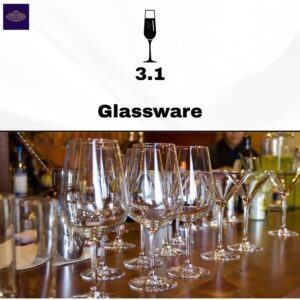
🍷 1. Glassware
Overview:
In the world of hospitality, glassware is more than just a vessel — it’s part of the art of presentation. The right glass enhances a drink’s taste, aroma, and visual appeal, while the wrong choice can weaken the overall experience. International service standards emphasize knowing your glassware and using it with precision.
Types & Uses:
➤ Wine Glasses
▶ Red Wine: Large bowl — allows aeration and enhances aroma.
▶ White Wine: Smaller bowl — preserves cooler temperature and crispness.
▶ Sparkling Wine: Flute — keeps carbonation and elegant bubbles.
➤ Highball Glass
▶ Tall and slim, ideal for cocktails, mixed drinks, soda, and juice.
▶ Example: Gin & Tonic, Mojito.
➤ Tumbler / Old Fashioned Glass
▶ Short and wide, used for spirits served neat or on the rocks.
▶ Example: Whiskey, Rum.
➤ Pilsner Glass
▶ Slender and tapered, perfect for beers, maintaining head and carbonation.
▶ Example: Lager, Pilsner.
➤ Martini Glass
▶ Conical bowl with a stem, designed for martinis and classic cocktails.
➤ Coupe Glass
▶ Round, shallow bowl — elegant choice for champagne and vintage cocktails.
➤ Coffee Cups & Mugs
▶ Used for hot beverages such as espresso, cappuccino, latte, and tea.
▶ Must be pre-warmed to maintain temperature and enhance flavor.
✨ Pro Tip:
Every glass tells a story — of flavor, aroma, and sophistication.
A professional server knows not just how to pour a drink, but what to pour it into.
Amaka, a Nigerian hospitality professional working in a 5-star hotel in Dubai, is serving guests at a formal dinner. Each guest orders a different beverage. She must select the correct glass for each one to maintain international service standards.
Which of the following choices shows proper glassware use?
A.
- Sparkling wine → Old Fashioned glass
- Whiskey (neat) → Pilsner glass
- Mojito → Flute
B.
- Red wine → Large bowl wine glass
- Gin & Tonic → Highball glass
- Espresso → Pre-warmed coffee cup
C.
- Champagne → Martini glass
- Latte → Cold tumbler
- Beer (lager) → Coupe glass
D.
- Rum on the rocks → Tumbler
- Sparkling wine → Flute
- Pilsner beer → Pilsner glass
💡 Poll Question:
If you were supervising Amaka’s service, which option demonstrates correct international glassware practice?
✅ A
✅ B
✅ C
✅ D
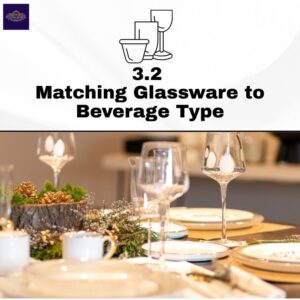
🥂 2. Matching Glassware to Beverage Type
Overview:
Choosing the right glass for the right drink isn’t just about aesthetics — it’s a mark of professionalism. The perfect match enhances taste, aroma, temperature, and presentation, giving guests a complete sensory experience.
Key Principles:
➤ 1. Consider temperature, carbonation, and aroma
▶ Cold drinks should stay chilled, aromatic ones need space to breathe.
▶ Example: A red wine glass has a wider bowl to release aromas.
➤ 2. Use stemmed glasses for wines and cocktails
▶ Holding the stem prevents body heat from warming the drink.
▶ Adds elegance and precision to service.
➤ 3. Use tall glasses for mixed or refreshing drinks
▶ Provides space for ice, soda, and garnishes like mint or citrus slices.
▶ Example: Mojito or Long Island Iced Tea.
➤ 4. Hot beverages require insulated cups or mugs
▶ Keeps drinks hot longer and ensures safe handling.
▶ Example: Cappuccino in a pre-warmed mug enhances flavor and aroma.
💡 Pro Tip:
Every glass serves a purpose — to protect, enhance, and present the drink perfectly.
Mastering glassware selection shows you’re not just serving beverages… you’re serving an experience.
Example Table:
Beverage Type | Recommended Glassware |
Red Wine | Large bowl wine glass |
White Wine | Small bowl wine glass |
Beer (Lager/Pilsner) | Pilsner |
Whiskey (Neat) | Tumbler/Old Fashioned |
Cocktail (Mojito) | Highball |
Martini | Martini glass |
Sparkling Wine | Flute |
Coffee/Tea | Coffee cup/Mug |
Scenario Question: poll
- “A guest orders red wine and sparkling water. Which glassware would you use for each, and why?”
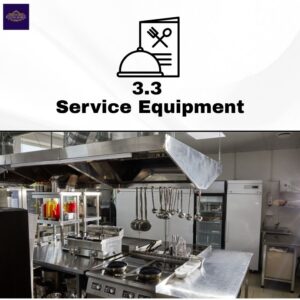
🧰 3. Service Equipment
Overview:
Behind every flawless beverage service is a set of well-maintained, professional tools. Mastering how and when to use them ensures speed, safety, and sophistication in service delivery.
Essential Equipment & Usage:
➤ 1. Shakers
▶ Used for crafting cocktails and mocktails.
▶ Two main types: Boston Shaker (two-piece, used by professionals) and Cobbler Shaker (three-piece, ideal for precision).
💡 Always shake with both hands — confidence and control matter.
➤ 2. Jiggers
▶ Used to measure alcohol accurately for consistency and responsible service.
▶ Standard sizes: 25ml, 50ml, and 75ml.
💡 Accurate measuring ensures balanced flavor and cost control.
➤ 3. Wine Openers & Decanters
▶ Wine openers: essential for uncorking bottles smoothly without breakage.
▶ Decanters: enhance wine’s aroma and taste by allowing aeration.
💡 Always present the bottle label facing the guest before opening.
➤ 4. Trays
▶ Used for carrying multiple drinks safely during service.
▶ Maintain balance, use a steady hand, and never overload.
💡 Hold trays at shoulder height in formal service — it shows professionalism.
➤ 5. Carafes & Pitchers
▶ Ideal for serving water, juice, or wine at tables and buffets.
▶ Must always be clean, odor-free, and polished.
💡 Never top up a glass without permission — always ask the guest first.
➤ 6. Ice Tongs & Scoops
▶ Used to handle ice hygienically — never with bare hands.
▶ Keep scoops in a clean, dry holder separate from the ice bin.
💡 Clean ice = clean drink. Contamination can ruin even the best cocktail.
🎯 Pro Tip:
Your equipment is your toolkit of excellence.
When handled with precision and care, it doesn’t just make your job easier — it elevates the entire guest experience.
🧽 4. Cleaning, Maintenance, and Hygiene Standards
Overview:
Cleanliness is non-negotiable in beverage service. No matter how skilled you are, a dirty glass or unclean equipment can ruin a guest’s trust instantly. Maintaining hygiene protects both your guests and your reputation.
🍷 Glassware Hygiene
➤ Wash with hot water and mild detergent
▶ Always use a gentle detergent to remove residue without damaging the glass.
➤ Rinse thoroughly
▶ Ensure no soap or chemical traces remain — they affect taste and aroma.
➤ Avoid scratches and cracks
▶ Inspect every glass before use. Discard any chipped or cracked glassware immediately.
➤ Polish glasses using lint-free cloths
▶ Use microfiber or linen cloths for a crystal-clear shine — fingerprints are unacceptable.
➤ Store stemware inverted
▶ Prevent dust accumulation and protect rims from damage.
💡 Pro Tip: Hold glasses by the stem or base — never touch the rim, as that’s where guests drink from.
🧰 Equipment Hygiene
➤ Clean shakers, jiggers, and decanters immediately after use
▶ Prevent sticky buildup and flavor transfer between drinks.
➤ Sanitize ice tongs, trays, and pitchers regularly
▶ Always follow a cleaning schedule — clean tools reflect disciplined service.
➤ Follow HACCP principles
▶ Avoid cross-contamination between raw and ready-to-serve items.
▶ Keep workstations, bar counters, and prep tools sanitized at all times.
💡 Pro Tip: The sparkle of your glassware and the shine of your tools silently tell your guests how much pride you take in your work.
🎯 Key Message:
Clean tools, spotless glassware, and consistent hygiene are not just tasks — they’re marks of professionalism.
In top-tier service, hygiene is your signature of excellence.
Interactive Question: poll
- “What are three key steps you must always take when cleaning wine glasses to meet international standards?”
- Expected Answer: Wash thoroughly, rinse, polish with lint-free cloth, inspect for cracks.
Break Time
- Take a 5–10 minute stretch and refreshment break.
- Reflective question: “Share one beverage you find challenging to serve and why.
Module 4: Responsible Alcohol Service & Global Compliance Policies
Learning Objectives
By the end of this module, participants will be able to:
- Understand and comply with local and international alcohol service laws.
- Monitor guest consumption and recognize signs of intoxication.
- Apply responsible service techniques, including polite refusal strategies.
- Follow international standards, including WHO guidelines and HACCP principles, for safe beverage service.

⚖️ 1. Legal Compliance: Age Verification & Licensing Laws
Overview:
When it comes to serving alcohol, professionalism isn’t just about service — it’s about responsibility. Every beverage you pour must comply with the law. Knowing and following licensing regulations protects you, your guests, and your establishment.
Key Points:
➤ 🔍 Age Verification
▶ Always confirm the legal drinking age before serving alcohol — no exceptions.
▶ When in doubt, politely request valid identification rather than risk a violation.
▶ Remember: protecting minors is part of your duty as a hospitality professional.
➤ 📄 Documentation
▶ Use proper ID checks — such as passports, driver’s licenses, or national ID cards — especially in bars, hotels, and events.
▶ Never accept unclear, expired, or suspicious IDs.
➤ ⏰ Local Licensing Laws
▶ Know your state or regional regulations on:
▷ Permitted hours for alcohol service
▷ Drink limits or bans on specific days
▷ Restrictions during religious or public events
▶ In Nigeria, for example, licensing laws vary between states — so always check your local policies.
➤ 🧾 Record Keeping
▶ Some venues require logs of alcohol sales, incidents, or refusals for compliance and safety audits.
▶ Accurate records demonstrate accountability and professionalism.
💡 Pro Tip:
If you’re ever unsure — don’t serve.
It’s better to delay service than to break the law.
🎯 Key Message:
As an F&B professional, you are both a host and a guardian of public safety.
Understanding and respecting alcohol laws keeps your establishment reputable and your career protected.
Chijioke works as a bartender at a luxury hotel lounge in Lagos. It’s a busy Friday evening, and several guests arrive together for a birthday celebration. As the crowd grows, Chijioke faces different service situations that test his understanding of age verification, documentation, and licensing laws.
Which of the following actions shows proper legal compliance?
A.
A young-looking guest orders a cocktail. Chijioke feels shy to ask for ID and assumes they’re old enough since they came with adults.
B.
A customer presents an expired driver’s license as proof of age. Chijioke accepts it to avoid holding up the line.
C.
During a state-declared public event where alcohol sales are temporarily banned, Chijioke continues serving drinks because guests insist.
D.
Chijioke politely asks for a valid ID from a guest who looks underage, checks the date carefully, and only serves after confirming eligibility. He also logs an incident where he refused service to another without ID.
💡 Poll Question:
If you were Chijioke, which response best represents professional and legal service behavior?
✅ A
✅ B
✅ C
✅ D

🍸 2. Monitoring Consumption and Recognizing Intoxication
Overview:
In the world of food and beverage service, your job isn’t just to serve drinks — it’s to serve responsibly. Recognizing when a guest has had too much is one of the most important skills a hospitality professional can have. Early detection protects your guests, your establishment, and your license.
🚨 Signs of Intoxication
➤ 🗣 Slurred Speech, Poor Coordination, Delayed Reactions
▶ Guests may stumble, drop items, or have trouble following simple conversations.
➤ 😠 Aggressive or Unusual Behavior
▶ Sudden mood changes, loud talking, or inappropriate laughter can be red flags.
➤ 🍻 Rapid or Frequent Drinking
▶ Constantly ordering another round or drinking faster than others at the table indicates risky consumption.
💡 Practical Tips for Professionals
➤ 👀 Observe the Pace
▶ Keep an eye on how often and how quickly a guest orders or finishes their drink.
➤ 🗣 Engage Politely
▶ A quick chat helps you gauge their alertness and emotional state — use friendly conversation as your tool.
➤ 📋 Document Incidents
▶ If a guest becomes disruptive or over-intoxicated, record the event in the incident log.
▶ Documentation protects both you and the establishment from legal consequences.
🎯 Key Message:
Serving alcohol responsibly is not just a rule — it’s a duty of care.
By staying observant, calm, and professional, you ensure guests have a safe and enjoyable experience — and you uphold the integrity of your establishment.
🧠 3. Responsible Service Techniques & Polite Refusal
Overview:
Handling guests who have had too much to drink is one of the true tests of professionalism in the F&B industry. It’s not just about saying “no” — it’s about saying it gracefully, maintaining safety while protecting the guest’s dignity and your establishment’s reputation.
🍹 Responsible Service Techniques
➤ 1. Offer Alternatives
▶ Suggest appealing non-alcoholic options like mocktails, soft drinks, or even a glass of water between rounds.
▶ Example: “How about trying our tropical mocktail? It’s refreshing and delicious.”
➤ 2. Use Neutral, Respectful Language
▶ Avoid blame or judgment — stay calm and polite.
▶ Example: “I’m sorry, but I can’t serve another drink right now for your safety. Would you like some coffee or water instead?”
➤ 3. Involve Your Team
▶ If a guest becomes agitated or refuses to cooperate, don’t handle it alone.
▶ Calmly alert a supervisor, manager, or security to assist while maintaining composure.
➤ 4. Document Every Incident
▶ Keep a clear record of what happened — the guest’s behavior, time, and actions taken.
▶ This shows accountability and ensures legal protection for both you and the business.
💬 Interactive Question for Participants:
➡ “What are three polite ways to refuse service to an intoxicated guest without escalating the situation?”
💭 Take a moment to reflect and share your responses.
Let’s discuss how you can turn a potentially difficult moment into a demonstration of professional grace and care.
🎯 Key Message:
A great F&B professional knows that responsible service doesn’t stop at the bar — it extends to protecting every guest’s safety and comfort.
Remember: how you say “no” can define your professionalism.

🌍 4. International Compliance: WHO Guidelines & HACCP Beverage Handling
Overview:
In the global hospitality industry, professional standards go beyond local laws. Following WHO and HACCP guidelines ensures every beverage is served with the highest level of safety, hygiene, and responsibility.
🌐 WHO Guidelines
➤ Limit Excessive Consumption
▶ Encourage moderation and prevent alcohol-related harm among guests.
➤ Staff Training
▶ Ensure every team member understands responsible serving practices and the consequences of over-service.
➤ Guest Safety Awareness
▶ Promote awareness of intoxication signs and act promptly to maintain guest well-being.
🥂 HACCP Beverage Handling
➤ Maintain Beverage Hygiene & Storage
▶ Keep beverages in clean, well-ventilated areas and follow first-in, first-out (FIFO) rotation.
➤ Sanitize Equipment & Glassware
▶ Regularly clean dispensers, blenders, and glassware to prevent contamination.
➤ Monitor Temperature Control
▶ Store and serve beverages — especially mixed or dairy-based ones — at safe temperatures to preserve quality and safety.
💡 Remember:
✅ Legal compliance + Responsible service = Professional credibility and guest safety.
A world-class service isn’t just about what you serve — it’s about how responsibly you serve it.
It was a busy Friday evening at The Horizon Sky Bar, one of the most prestigious rooftop lounges in Doha. The music was soft, the city lights glimmered below, and Biola — a well-trained beverage attendant from Nigeria — moved gracefully between tables, ensuring each guest’s glass was perfectly filled and every smile returned.
By 11:30 PM, most guests were relaxed, laughing, and enjoying the cool desert breeze. But one table caught Biola’s attention — Mr. Laurent, a frequent guest who had been at the bar since dinner. He’d already enjoyed two glasses of red wine and a cocktail. Now, his laughter was louder, his speech slower, and he seemed to be losing balance slightly as he leaned back in his chair.
“Biola!” he called out cheerfully, raising his glass. “Another mojito, my friend — make it strong this time!”
Biola smiled politely but immediately noticed the signs — flushed cheeks, glassy eyes, and a half-finished drink still on the table. Her training kicked in. According to WHO responsible service guidelines, over-serving a guest wasn’t just unprofessional — it could be dangerous. And under HACCP beverage handling principles, every drink served had to meet not only hygiene standards but also safety and moderation expectations.
Calmly and respectfully, Biola approached the table.
“Sir,” she began with a warm tone, “how about I bring you something refreshing instead? We have a tropical mocktail that’s cool and light — perfect for the night.”
Mr. Laurent chuckled. “Ah, no, no — I want something stronger.”
Biola kept her posture relaxed, her smile kind but firm. “I completely understand, sir,” she replied softly, “but for your comfort and safety, I won’t be able to serve another alcoholic drink tonight. Let me bring you a cold mocktail — I think you’ll enjoy it.”
There was a brief pause. Then, perhaps sensing her sincerity, Mr. Laurent nodded slowly. “Alright then, surprise me,” he said with a grin.
Biola thanked him gently and walked back to the bar. She prepared a chilled mocktail — fresh pineapple and mint — ensuring the glass and shaker were sanitized and the ice was clean and odor-free, just as HACCP beverage hygiene standards required. She served it promptly, presenting it with care on a spotless tray.
As the night went on, Mr. Laurent relaxed, sipping his mocktail with satisfaction. Before leaving, he smiled and said, “You’re very professional, Biola. Thank you.”
Later, Biola documented the interaction in the service log — noting the time, the guest, and her action taken — just as her training emphasized.
✨ Key Takeaway:
Biola didn’t just follow rules — she demonstrated true hospitality.
By blending responsible service, empathy, and international compliance, she protected the guest, upheld her establishment’s standards, and strengthened her own reputation as a world-class F&B professional.
🍽️ 5. Upselling Strategies & Food Pairing Basics
Overview:
Upselling in the Food & Beverage industry isn’t just about selling more — it’s about creating memorable experiences. When done with sincerity and product knowledge, upselling enhances guest satisfaction, strengthens trust, and boosts overall revenue.
💬 Smart Upselling Techniques
➤ Know Your Menu
▶ Understand ingredients, flavor profiles, and portion sizes so you can make confident recommendations.
➤ Personalize Suggestions
▶ Observe the guest’s preferences and tailor suggestions (e.g., “If you like something light, you’ll enjoy our citrus spritzer.”).
➤ Use Descriptive Language
▶ Paint a sensory picture — describe aromas, textures, and presentation to entice interest.
➤ Suggest Add-ons
▶ Recommend appetizers, sides, or desserts that complement the main order naturally.
➤ Offer Premium Options
▶ Introduce higher-quality alternatives respectfully, focusing on value and experience rather than cost.
🍷 Food & Beverage Pairing Basics
➤ Balance Flavors
▶ Match intensity — light dishes pair with lighter drinks; rich meals go with fuller-bodied wines or cocktails.
➤ Complement or Contrast
▶ Pair sweet with spicy (e.g., Moscato with peppered chicken) or crisp with creamy (e.g., sparkling wine with cheese).
➤ Respect Guest Preferences
▶ Always prioritize the guest’s taste; offer options rather than impose.
💡 Pro Tip:
✅ Upselling done right feels like personalized hospitality, not persuasion — it’s about helping the guest discover something they’ll love.
🏷️ A. Upselling Techniques
- 🗣️ Suggestive Selling
▶ Subtly recommend an item that complements the guest’s order.
▶ Example: “Would you like to try our signature cocktail? It pairs perfectly with the seafood platter.”
▶ Works best when staff are confident and knowledgeable about the menu. - 🎯 Personalized Recommendations
▶ Use guest cues — such as preferences, past orders, or special occasions — to tailor your suggestions.
▶ Example: If a guest orders steak, recommend a full-bodied red wine or a premium mocktail.
▶ Builds trust and creates a sense of genuine care. - 🌟 Highlighting Specials & Premium Options
▶ Emphasize house specials, seasonal items, or chef’s recommendations.
▶ Example: “Today our chef has prepared a unique dessert that pairs excellently with a light sparkling wine.”
▶ Makes the guest feel informed and valued while subtly promoting higher-margin items.
🍽️ B. Food & Beverage Pairing — Elevate Every Bite
Alright team, let’s talk about one of the most exciting parts of service — helping guests discover the perfect match between food and drink. Pairing isn’t just about rules; it’s about creating moments that make guests say, “Wow, that tastes amazing together!”
- 🍷 Wine and Meal Pairing
Think of wine as your food’s best friend — when you get the pairing right, both shine brighter.
▶ Red wine loves rich, bold flavors — think juicy steak, lamb, or venison.
▶ White wine dances beautifully with poultry, seafood, or creamy pasta.
▶ Sparkling wine brings celebration to the table — ideal for appetizers and salty bites.
▶ Rosé? Your all-rounder — it complements grilled meats and fresh, light salads perfectly.
💡 Tip: When unsure, balance intensity — light wines with light dishes, bold wines with hearty meals.
- 🧃 Non-Alcoholic Pairing Tips
Not every great pairing needs alcohol! Knowing how to match mocktails and teas shows true professionalism.
▶ Sparkling water with citrus freshens the palate — great with seafood or salads.
▶ Fruit-based mocktails pair wonderfully with spicy or flavorful dishes.
▶ Coffee or tea can turn dessert service into a signature experience.
💬 Example: Green tea enhances light fish dishes, while black coffee pairs perfectly with chocolate desserts.
- 🌍 Global Perspective
Around the world, fine dining isn’t just about food — it’s about harmony.
▶ Top restaurants train their staff to recommend smart pairings that elevate the entire dining experience.
▶ Your ability to make these connections shows confidence, knowledge, and care — the marks of a true professional.
✨ Remember: When guests trust your pairing suggestions, they’re not just tasting food — they’re tasting your expertise.
It’s a busy evening at Blue Haven Restaurant, a fine-dining venue known for its elegant international menu.
Biola, a Nigerian food and beverage server working abroad, moves confidently between tables, ensuring guests enjoy a flawless dining experience.
A couple, Mr. and Mrs. Patel, are seated by the window. They’re excited but unsure about what drink would best complement their meal.
Mrs. Patel orders grilled salmon with lemon butter sauce, while her husband chooses spicy lamb chops with rosemary glaze.
They both look up at Biola and ask:
“What drinks would you recommend to go with our meals?”
Biola smiles, knowing this is her chance to elevate their dining experience through the perfect pairing.
💭 Now, think carefully: What should Biola do next?
- Offer both guests the same red wine to keep service simple and quick.
- Recommend a light white wine or sparkling water with lemon for Mrs. Patel’s salmon,
and a bold red wine or fruit-based mocktail for Mr. Patel’s spicy lamb. - Let the guests decide on their own, since “pairing doesn’t really matter.”
- Suggest black coffee for both dishes, thinking it works for all meals.
❓Poll Question:
If you were Biola, which pairing advice would create the best guest experience?
✅ A
✅ B
✅ C
✅ D
🧠 C. The Psychology of Upselling Without Pressure
Let’s be real — nobody likes to feel pushed into buying something. The secret to successful upselling isn’t pressure — it’s connection. When you focus on value and experience, guests feel cared for, not sold to.
▶ Think experience, not sales.
Instead of trying to “sell,” aim to enhance their time. Guests remember how you made them feel, not just what they ordered.
▶ Use warm, positive language.
Say things like, “May I suggest…” or “Many of our guests enjoy this with…” — it sounds natural, friendly, and confident.
▶ Keep it short and sincere.
One or two thoughtful recommendations are far more effective than a long list. Speak from genuine enthusiasm, not from a script.
▶ Build rapport first.
Smile, listen, and connect. Once guests trust you, they’ll value your suggestions — and that’s when upselling becomes effortless.
💡 Remember: Great upselling feels like hospitality, not a sales pitch. It’s about making the guest feel special, not sold to.

D. Increasing Customer Satisfaction & Revenue
- Satisfied guests spend more and return more often.
- Upselling enhances the dining experience, making it feel curated and thoughtful.
- Training staff on menu knowledge, beverage pairing, and customer psychology can increase revenue by 10–30%.
]
💡 Interactive Scenario for Class:
A guest orders grilled chicken. How would you upsell a beverage and dessert while making the guest feel cared for, not pressured?
- Discuss different approaches (wine suggestion, mocktail option, dessert pairing).
✅ Day 2 Recap – Beverage Management & Service Techniques
Fantastic work today, team! Here’s a quick refresh of everything we explored — each point designed to elevate your professionalism and guest experience:
➤ Types of Beverages:
From alcoholic to non-alcoholic, hot to cold — you now know how each category shapes taste, presentation, and service style.
➤ International Standards:
You learned how HACCP hygiene, proper storage, and precise service sequences protect quality while enhancing presentation and timing.
➤ Glassware & Equipment:
Every glass, shaker, opener, and decanter has a purpose — and you now know how to use each one confidently while maintaining hygiene excellence.
➤ Responsible Alcohol Service:
From age verification to monitoring intoxication and polite refusal, you mastered the balance between hospitality and safety — guided by WHO & HACCP principles.
➤ Upselling & Food Pairing:
You discovered how suggestive selling, personalized recommendations, and thoughtful beverage pairings can boost satisfaction and revenue — without pressure.
💡 Key takeaway: Professional beverage service isn’t just about pouring drinks — it’s about creating experiences guests remember and respect.
Q&A & Discussion
- “If a guest orders grilled chicken with herbs, which beverage would you suggest and why?”
- Discuss correct pairing rationale.
🌟 Day 3 – Menu Planning, Guest Experience & Service Excellence 🌟
Welcome back, everyone! 🎉
You’ve done amazing work so far — and today, we’re stepping into one of the most exciting parts of Food & Beverage management: Menu Planning.
Now, let’s be clear — menus aren’t just lists of food and drink. They’re the voice of your establishment. Every time a guest opens that menu, it tells them a story — about your brand, your standards, and the experience they’re about to have.
Think of a menu as your silent ambassador. Its design, layout, and wording communicate your restaurant’s personality and help guide your guests’ choices — even how much they’re willing to spend. 👀
A well-crafted menu doesn’t just feed guests — it speaks to them.
Every section, every description, every price placement has a purpose — shaping how guests feel, what they order, and how your business performs.
Across the world, successful menus are built around three golden goals:
🔹 Guest Satisfaction – giving variety and clarity so every guest finds something they love.
🔹 Operational Efficiency – making sure every dish supports smooth kitchen workflow.
🔹 Revenue Optimization – positioning high-margin dishes to boost profitability.
So, as we explore today’s topic, I want you to think like both a guest and a manager.
Ask yourself: How does my menu make people feel?
Because great menus don’t just list food — they create memories. 🍽️✨
At Riverside Bistro, a mid-range restaurant popular with both tourists and locals, Jadesola, a Nigerian hospitality professional working abroad, notices some guests struggling with the menu.
The bistro recently redesigned its menu, but in the rush to launch it, several key principles were ignored:
❌ Categories are unclear: Appetizers, mains, and desserts are scattered randomly.
❌ Descriptions are vague: “Chef’s special” and “House favorite” appear frequently without explaining ingredients.
❌ Pricing is inconsistent: Some dishes have prices hidden or in tiny fonts, leaving guests confused about cost.
A family of four sits down, excited for dinner. They scan the menu and immediately frown. One child points to a “Seafood Surprise” and asks,
> “What’s in it?”
The parents can’t answer either, and the server has to intervene repeatedly, explaining items individually. Meanwhile, the kitchen struggles because the menu contains dishes not fully stocked or requiring extra prep, slowing service.
The result?
❌ Guests are frustrated and unsure what to order, reducing guest satisfaction.
❌ The kitchen becomes overwhelmed, hurting operational efficiency.
❌ High-margin dishes are overlooked because they’re poorly positioned, affecting revenue optimization.
By the end of the night, several tables leave early, some even complaining about the confusing menu design. Jadesola realizes that a poorly structured menu not only diminishes the dining experience but also reflects negatively on the restaurant’s identity and professionalism.
Key Takeaway:
Menus are more than a list — they guide guests, support the kitchen, and drive profits. Neglecting design, clarity, and structure can lead to frustrated customers, slow service, and lost revenue.
🌟 Menu Types and Structures 🌟
Let’s therefore take a closer look at one of the most influential tools in the hospitality world — the menu.
A menu is far more than a list of dishes. It’s the silent ambassador of any restaurant or hotel, communicating the brand’s identity, style, and personality before a single bite is served. The way it’s designed, organized, and worded can shape how guests feel, what they order, and ultimately, how much they enjoy their experience.
A well-crafted menu does three powerful things:
🍴 It captures attention and builds appetite.
⚙️ It supports smooth kitchen operations.
💰 It drives profitability by guiding guest choices.
Across the globe, successful restaurants structure their menus to balance guest satisfaction, operational efficiency, and revenue goals.
As we go through this session, think about how each menu type serves a unique purpose — and how the right structure can turn an ordinary dining experience into something truly memorable. ✨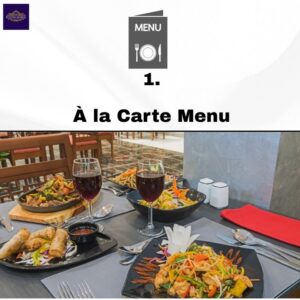
🍽️ À la Carte Menu 🍽️
Now, let’s talk about one of the most elegant and flexible menu styles in hospitality — the À la Carte menu.
Here, every dish stands proudly on its own. Each item is listed and priced individually, allowing guests to build their meal exactly how they want it. Think of it as dining made personal — guests choose what speaks to their taste, and you deliver an experience tailored just for them.
✨ Key Features:
➤ Offers the widest freedom of choice — guests pick what they truly crave.
➤ Encourages premium pricing because each dish carries its own value.
➤ Demands well-trained staff and a coordinated kitchen team to manage multiple, diverse orders at once.
🏨 Where You’ll Find It:
➤ Fine dining restaurants
➤ Upscale hotels
➤ Exclusive lounges — the kind of places where service, presentation, and experience matter just as much as the food.
🥂 Example:
➤ Steak with Peppercorn Sauce – ₦15,000
➤ Grilled Salmon with Asparagus – ₦18,000
➤ Truffle Risotto – ₦12,500
💡 Pros:
➤ High profit margins
➤ A sense of exclusivity
➤ Truly personalized service
⚠️ Cons:
➤ Slower service speed
➤ Higher labor costs
➤ Requires excellent kitchen coordination
When done right, the À la Carte menu doesn’t just serve meals — it delivers a statement of class, precision, and choice.
🍽️ Table d’Hôte Menu (Set Menu) 🍽️
Now, let’s shift our focus to another classic — the Table d’Hôte menu, also known as the Set Menu.
Unlike À la Carte, this one offers guests a fixed-price meal with a limited selection of courses. Everything is pre-planned, making the dining experience smooth, organized, and time-efficient — perfect for large groups or formal events.
✨ Key Features:
➤ Usually includes 2–4 courses (starter, main, dessert).
➤ Simplifies kitchen planning and ensures faster service delivery.
➤ Encourages volume sales since costs and portions are predictable.
🏨 Where You’ll Find It:
➤ Banquet dining halls
➤ Corporate events
➤ Cruise ships
➤ Some mid-range restaurants
🥂 Example:
3-Course Business Lunch – ₦10,000
➤ Starter: Tomato Basil Soup
➤ Main: Grilled Chicken with Mashed Potatoes
➤ Dessert: Chocolate Mousse
💡 Pros:
➤ Faster and more consistent service
➤ Easy cost control for management
➤ Highly efficient for large groups and events
⚠️ Cons:
➤ Limited choice for guests
➤ May feel a bit restrictive
➤ Possible food wastage if preferences differ
The Table d’Hôte menu is all about balance and efficiency — offering quality dining that’s both elegant and practical, especially when serving many guests at once.
Ms. Ugochi Okafor, a Nigerian-born Food and Beverage (F&B) Manager recently promoted to oversee restaurant operations at the Pacific Blue Hotel in Vancouver, Canada. She’s known for her warmth, professionalism, and attention to detail — traits that earned her success back home in Lagos and now in her new international role.
It’s Ugochi’s first major assignment — a corporate networking luncheon for 40 guests, including several executives from global tech companies.
The event was planned as a Table d’Hôte (Set Menu) service — three courses at a fixed price to ensure smooth delivery. However, a new Canadian server, unfamiliar with the plan, mistakenly sets the dining area with À la Carte menus, offering guests a full list of individually priced dishes.
As guests begin ordering, confusion spreads through the kitchen.
> “Table 3 wants steak, but Table 4 ordered sushi?”
> “Wait—didn’t we plan salmon and chicken only?”
The head chef looks puzzled. The meal timing is falling apart. Guests start murmuring, unsure what’s happening.
From across the room, Ugochi notices the tension. She quickly steps in, approaches the head table, and with her signature calm smile, says:
> “Ladies and gentlemen, please allow me a moment — we’ll have your courses coming right up. Lunch today is a special three-course experience designed just for your event.”
She discreetly gathers the servers and corrects the mix-up. The À la Carte menus are removed, and within minutes, the pre-arranged Table d’Hôte menu rolls out smoothly:
> 🥗 Starter: Tomato Basil Soup
> 🍗 Main Course: Grilled Chicken Breast with Herb Sauce
> 🍰 Dessert: Chocolate Mousse
Service recovers beautifully. The guests are delighted — the meal flows perfectly, and Ugochi turns a potential disaster into a moment of grace and professionalism.
Later that afternoon, during a team debrief, Ugochi gathers the staff and explains the difference between À la Carte and Table d’Hôte menus.
> “In hospitality, success depends on knowing your menu types,” she says.
> “An À la Carte menu gives guests complete freedom — it’s personal, detailed, and perfect for fine dining. But for events like today’s luncheon, the Table d’Hôte menu is the smart choice — it keeps service organized, costs predictable, and guests satisfied.”
She goes on to share examples from her experience managing restaurants in Lagos, where business lunches often used Table d’Hôte for time efficiency, while weekend dinners leaned on À la Carte for luxury and variety.
Two weeks later, Ugochi is asked to plan a VIP dinner for a visiting government delegation. This time, she designs a hybrid menu:
➤ Starters and Desserts from a Table d’Hôte plan (for timing and consistency),
➤ Main Courses offered À la Carte (for personal preference).
The evening runs flawlessly. The hotel director publicly commends Ugochi for her “exceptional understanding of menu design and guest satisfaction.”
The event earns the hotel a glowing review in Hospitality Canada Magazine, and Ugochi’s reputation as a globally competent F&B Manager grows even stronger.
Takeaway
Ugochi’s story shows that knowing the difference between À la Carte and Table d’Hôte menus is essential for every F&B professional — especially when working abroad.
It ensures:
➤ Smooth kitchen coordination
➤ Accurate cost control
➤ Consistent guest satisfaction
➤ Professional excellence across diverse cultural and dining settings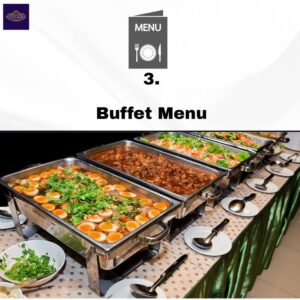
🍽️ Buffet Menu 🍽️
Let’s move on to one of the most popular and crowd-pleasing menu styles — the Buffet Menu.
This menu is all about variety, abundance, and freedom. Guests serve themselves from a beautiful spread of dishes, often at a fixed price. It’s a style that encourages exploration, letting everyone fill their plates with exactly what they love — in the portions they prefer.
✨ Key Features:
➤ Offers variety and abundance, giving guests a sense of great value.
➤ Flexible for different dietary preferences — guests choose their own portions and combinations.
➤ Requires strong hygiene practices and careful food replenishment to maintain quality and presentation.
🏨 Where You’ll Find It:
➤ Hotels
➤ Weddings
➤ Conferences
➤ Resorts
➤ Cruise lines
🥂 Example:
₦25,000 Dinner Buffet
➤ Salad Bar
➤ Grilled Meats
➤ Seafood Selection
➤ Pasta Station
➤ Dessert Assortment
💡 Pros:
➤ Efficient for large groups
➤ Wide variety of dishes
➤ Creates a lively, festive atmosphere
⚠️ Cons:
➤ Higher risk of food waste
➤ Requires ample space and large kitchen prep
➤ Less personalized service experience
The Buffet Menu is a celebration of choice — perfect for bringing people together to enjoy food, freedom, and festivity all in one experience.
🍷 Tasting Menu (Degustation) 🍷
Now, let’s explore one of the most refined and artistic dining experiences — the Tasting Menu, also known as Degustation.
This menu is all about storytelling through food. Guests are taken on a culinary journey of carefully curated small portions, each dish highlighting the chef’s creativity, skill, and passion. It’s not just a meal — it’s an experience designed to engage all the senses.
✨ Key Features:
➤ Offers a multi-course tasting journey, showcasing the chef’s signature dishes.
➤ Enhances the dining experience with thoughtful beverage pairings — from wines to craft cocktails or elegant non-alcoholic options.
➤ Typically high-end and labor-intensive, requiring precision, timing, and artistry.
🏨 Where You’ll Find It:
➤ Michelin-starred restaurants
➤ Fine dining establishments
➤ Exclusive wine-tasting or culinary events
🥂 Example:
7-Course Chef’s Tasting Menu – ₦65,000
➤ Amuse-Bouche
➤ Seared Scallops
➤ Duck Confit
➤ Sorbet Cleanser
➤ Wagyu Beef
➤ Cheese Selection
➤ Dessert Sampler
💡 Pros:
➤ Elevates brand prestige and reputation
➤ Encourages culinary creativity and innovation
➤ Creates unforgettable dining experiences for guests
⚠️ Cons:
➤ Expensive for guests
➤ Longer service duration
➤ Requires highly skilled and synchronized staff
The Tasting Menu is dining as art — where every course tells a story, every bite sparks emotion, and every guest leaves with a memory worth savoring.
A couple visits your fine dining restaurant to celebrate their anniversary. They want to choose dishes individually — he loves steak, she prefers seafood, and both enjoy different desserts.
💭 Which menu style best suits this situation?
OPTION: A. À la Carte (61 votes)
OPTION: B. Table d’Hôte (0 votes)
OPTION: C. Buffet (0 votes)
OPTION: D. Fast-food Menu (0 votes)
Your kitchen team is struggling to manage multiple unique orders at once, slowing down service. Management wants to simplify meal prep and control costs better.
💭 What menu style should you suggest switching to?
OPTION: A. À la Carte (0 votes)
OPTION: B. Table d’Hôte (57 votes)
OPTION: C. Café Menu (0 votes)
OPTION: D. Buffet (1 vote)

📌 International Standards in Menu Design 📌
No matter what type of menu you’re creating — À la Carte, Buffet, or Tasting — certain international hospitality standards ensure your menu not only looks professional but also delivers a seamless experience for every guest. Let’s explore the key principles that define world-class menu design.
✨ 1. Clarity and Accessibility
➤ Use clear, legible fonts and avoid clutter — guests should never struggle to read your menu.
➤ In multicultural environments (like airports and international hotels), translate menus into multiple languages to enhance accessibility and comfort.
🥗 2. Dietary Inclusivity
➤ Offer diverse meal options — vegetarian, vegan, gluten-free, halal, kosher, and allergy-friendly.
➤ Clearly label dishes with icons or notes to guide guests. For example:
🌱 = Vegetarian 🌾 = Contains Gluten 🥜 = Contains Nuts
💰 3. Profitability and Psychology
➤ Apply menu engineering — position high-margin dishes where the eye naturally falls (usually the top right or center sections).
➤ Use descriptive language to enhance perceived value. For instance:
Instead of “Prawns”, write “Buttery Garlic Prawns served with Fresh Herbs.”
🌍 4. Sustainability and Trends
➤ Highlight locally sourced and seasonal ingredients — it reduces costs and appeals to eco-conscious diners.
➤ Embrace digital innovation — QR code menus and digital displays are becoming global norms for hygiene, convenience, and modern presentation.
A professionally designed menu follows these standards to achieve one goal: to make guests feel informed, inspired, and eager to order.
✨ Key Takeaway ✨
Remember — a menu is far more than a list of food and drinks. It’s your marketing tool, your brand statement, and one of your strongest profit drivers.
The structure and style of your menu determine who you attract, how your establishment is perceived, and how much profit you make.
Every choice — from layout to language — shapes the story your restaurant tells.
So, design with intention, present with pride, and let your menu speak the language of excellence. 🍽️
💰 Food & Beverage Cost Control Basics 💰
In the world of hospitality, profit isn’t just earned through sales — it’s protected through control. You can have a restaurant full of customers and still lose money if your food and beverage costs aren’t managed wisely.
Cost control is the heartbeat of sustainability in this industry. It’s what keeps operations running smoothly, prices competitive, and profits consistent.
But here’s the key — cost control isn’t about cutting corners or lowering quality. It’s about being smart with resources:
➤ Reducing waste.
➤ Monitoring portion sizes.
➤ Tracking inventory carefully.
➤ Ensuring every ingredient purchased delivers value.
When done right, cost control becomes an invisible strength — one that allows your establishment to thrive, serve quality, and stay profitable, no matter the challenges.
10/16/25, 19:49 – Klevafx Technologies: IMG-20250924-WA0073.jpg (file attached)
When Bello first took over Azure Sky Bistro in Toronto, Canada as the food and beverage Manager, business was booming. Guests loved the Afro-Canadian fusion menu, the cocktails were vibrant, and the restaurant quickly became a weekend favorite.
Sales were high — reservations filled weeks in advance — but behind the scenes, cracks were forming.
🍽️ Inventory wasn’t properly tracked.
🥂 Kitchen staff gave out free side dishes “to please customers.”
🗑️ Leftovers were discarded daily, and food portions weren’t standardized.
When the accountant raised an early warning about rising costs, Bello dismissed it with confidence:
> “As long as customers are happy, the money will come back. Let’s focus on service, not spreadsheets.”
He didn’t realize that profit is not earned through sales alone — it’s protected through control.
The Decline
Three months later, problems surfaced.
Suppliers complained about unpaid invoices.
Wine bottles vanished faster than recorded sales could explain.
The kitchen threw away nearly 15% of its food stock each week due to over-ordering and poor storage.
When the owner reviewed the financial statement, he was stunned:
> “Bello, we’re full every night — how are we losing money?”
📉 Food cost percentage skyrocketed to 60% (industry standard: 30–35%).
🍷 Over-pouring and unrecorded drinks ate up beverage profits.
💸 Waste, freebies, and poor portion control drained resources.
Despite the crowds, Azure Sky Bistro was bleeding cash.
The Breaking Point
One busy Friday evening, a health inspector arrived unannounced.
The findings were embarrassing:
🧊 Freezers were unlabelled.
🥫 Expired sauces were discovered in storage.
🍾 Half-opened wine bottles sat unrefrigerated.
The restaurant was fined heavily and warned for non-compliance.
Social media backlash followed — customers complained about inconsistency and slow service.
👨🍳 The executive chef quit, frustrated by Bello’s refusal to enforce cost control.
🏚️ Within six months, Azure Sky Bistro — once a rising star — shut down permanently.
In his final meeting, Bello sighed:
> “I thought cost control meant cutting quality. I see now it’s about managing what you have wisely.”
The Lesson
The downfall of Azure Sky Bistro became a cautionary tale in hospitality circles. It exposed a hard truth — a full restaurant can still fail without cost control.
✅ Successful F&B management requires:
📦 Accurate inventory tracking
🍽️ Consistent portion sizes
📊 Regular cost and menu analysis
♻️ Waste reduction and resource management
👥 Staff accountability and training
Cost control isn’t about limitation — it’s about sustainability and smart stewardship.
Takeaway
Bello’s story reminds every hospitality professional that a busy restaurant doesn’t equal a profitable one.
Without discipline, even excellence collapses.
Because in this industry, profit isn’t earned through sales — it’s protected through control. 💰
📊 Key Cost Elements
Let’s start with one of the most crucial components in any food and beverage operation — Food Cost.
Food cost typically accounts for 25%–40% of total sales, depending on the type of establishment. And here’s the truth: even with great sales, poor food cost management can quietly destroy profitability.
🍽️ 1. Food Cost
➤ Purchasing Ingredients – Buying in bulk without proper planning often leads to waste and overstocking. On the flip side, failing to negotiate well with suppliers can push costs unnecessarily high.
➤ Wastage – Spoilage, over-prepping, or poor storage are silent profit killers. Every bit of unused or wasted ingredient is money lost.
➤ Portion Sizes – Inconsistent plating leads to over-portioning, shrinking your margins dish by dish. Standardizing recipes and portion sizes ensures every plate served is both profitable and consistent.
💡 Case Example:
If a steak dish sells for ₦20,000 and the cost of ingredients is ₦8,000, your food cost percentage is 40%.
But if the chef adds slightly larger cuts of meat or wastes vegetables, raising the cost to ₦10,000, the food cost jumps to 50% — meaning you lose 10% profit on every single plate sold.
Efficient food cost control isn’t about restricting creativity — it’s about balancing quality with smart management to keep your business thriving.
Amaka Nwosu, a Nigerian Assistant F&B Manager working at The Northern Lights Hotel in Calgary, Canada, has been asked to review the restaurant’s declining profit margins.
Despite strong sales, the month-end report shows unusually high food costs. After observing operations for a week, she notes several issues:
🥩 The chef orders premium cuts of meat weekly without checking existing stock.
🥗 Prep staff often make large salad batches that spoil before use.
🍰 Servers give complimentary desserts “to keep guests happy” without recording them.
🧾 The purchasing clerk buys from multiple suppliers without comparing prices.
At month’s end, the restaurant’s sales total ₦8,000,000, but the cost of food used equals ₦3,200,000.
What is Amaka’s food cost percentage for the month?
- 25%
B. 35%
C. 40%
D. 50%
10/16/25, 19:56 – Klevafx Technologies: POLL:
What is Amaka’s food cost percentage for the month?
OPTION: A (0 votes)
OPTION: B (38 votes)
OPTION: C (13 votes)
OPTION: D (0 votes)
🍷 2. Beverage Cost 🍷
Beverage sales are often the most profitable part of any restaurant, lounge, or bar — but only when managed with discipline and precision. While drinks may appear simple to serve, even a small oversight in measurement, storage, or service can quietly drain profits.
➤ Wine & Spirits – These are high-cost, high-margin products that require strict stock control and accurate pouring techniques. Overpouring just a few milliliters per drink can add up to thousands of naira lost every month. Proper training, jiggers, and portion control tools are essential to maintain consistency and profitability.
➤ Mixers – Items like soft drinks, syrups, bitters, and garnishes must be carefully portioned. Wasting a slice of lemon here, a splash of syrup there, may seem minor — but multiplied over hundreds of drinks, it affects both cost and presentation quality.
➤ Non-Alcoholics – Drinks such as coffee, tea, smoothies, and fresh juices can easily lead to waste when brewed or prepared in excess. Efficient batch preparation, accurate forecasting, and portion tracking help reduce spoilage and unnecessary costs.
📊 Inventory and Control Tips:
➤ Conduct regular stock counts and compare them against sales reports.
➤ Implement a beverage control sheet or POS tracking system to monitor daily usage.
➤ Store high-value bottles in locked areas and track their movement.
➤ Train staff on standard serving sizes and reinforce accountability behind the bar.
📌 Industry Benchmark:
Beverage costs typically range between 18%–24% of total beverage sales, depending on the establishment and menu mix.
In essence, successful beverage cost control is about precision, consistency, and teamwork. Every pour, every garnish, and every bottle opened should serve a purpose — because when handled right, beverages can be your most powerful profit engine.
Ibrahim Lawal, a Nigerian Bar and Beverage Manager at The Silver Birch Lounge in Vancouver, prides himself on offering top-tier cocktails and a vibrant customer experience. Sales are booming — ₦6,000,000 in beverage revenue last month — but profits are dropping sharply.
After a quick review, Ibrahim discovers a few worrying trends behind the bar:
🍸 Bartenders are free-pouring instead of using jiggers or measuring tools.
🍋 Garnishes (like lime wedges and mint leaves) are often wasted or overused.
🥤 Syrups and soft drink mixers are left open overnight, losing flavor and freshness.
🍾 Expensive spirits are stored in open shelves without proper inventory tracking.
When the accountant runs the numbers, the beverage cost is ₦1,800,000.
Which of the following actions will best prevent future beverage losses?
- Reduce bar staff by half to save labor costs.
B. Conduct regular stock counts and reconcile with POS reports.
C. Eliminate all high-value spirits from the menu.
D. Focus only on non-alcoholic drink sales.Which of the following actions will best prevent future beverage losses?
OPTION: A (1 vote)
OPTION: B (51 votes)
OPTION: C (0 votes)
OPTION: D (0 votes)

👨🍳 3. Labor Cost 👩🍳
Labor is often the largest single expense in food and beverage operations — sometimes reaching up to 50% of total costs. Managing it effectively is key to maintaining both excellent service and healthy profit margins.
➤ Wages & Benefits – Fair and competitive pay keeps employees motivated and reduces turnover. However, overstaffing during slow periods can quickly inflate costs without adding value. Smart scheduling ensures the right number of people are on duty at the right time.
➤ Training – Investing in staff training pays off long-term. Untrained employees are more likely to make costly mistakes — from overpouring and wrong orders to dropping items or mishandling food. Skilled, confident staff perform efficiently and enhance the guest experience.
➤ Service Time & Scheduling – Poorly managed schedules can lead to idle workers when business is slow or overwhelmed staff during peak hours. Both extremes hurt service quality and profit. Use sales data and customer flow patterns to create flexible schedules that match demand.
📊 Practical Tips for Labor Efficiency:
➤ Track labor cost as a percentage of total sales — ideally between 25%–35%, depending on the operation.
➤ Cross-train employees so they can handle multiple roles during busy or quiet periods.
➤ Implement digital scheduling tools or shift management systems to reduce human error.
➤ Reward productivity and teamwork, not just attendance.
👉 The Goal:
Find the perfect balance between exceptional service and labor productivity — ensuring guests receive top-quality experiences while the business remains profitable and sustainable.
Ebere, a Nigerian Food & Beverage Manager, recently joined a high-end hotel in Bern, Switzerland. Known for her warm leadership style and strong hospitality experience back home, she’s eager to make her mark.
However, things quickly get challenging.
Switzerland’s labor costs are extremely high, and her new restaurant’s wages already consume over 48% of total sales. Staff are well-trained and unionized, so layoffs aren’t simple. To maintain profitability, Ebere must find smart ways to control labor expenses without compromising service quality.
She notices a few key issues:
👩🍳 Overstaffing: Too many kitchen hands scheduled during slow lunch hours.
🕰️ Inefficient Scheduling: Evening rushes often catch them short-staffed, leading to guest complaints.
📚 Training Gaps: Temporary staff make frequent order-entry errors, increasing food waste and refunds.
Ebere introduces digital scheduling tools, cross-trains servers for bar backup, and implements a “performance bonus” for teams that meet service-time targets.
Within a month, labor costs drop from 48% to 34%, and guest satisfaction improves.
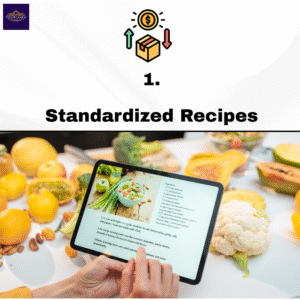
🧾 1. Standardized Recipes
Standardized recipes are the foundation of effective cost control in food and beverage operations. They ensure that every dish or drink is prepared the same way every time — no matter who is in the kitchen or behind the bar.
➤ Precision & Consistency – Each dish and drink should have a detailed recipe card outlining exact measurements, ingredients, and portion sizes. This prevents chefs or bartenders from “freestyling” with portions that can lead to waste or uneven quality.
➤ Predictable Costs – By following standardized recipes, managers can accurately calculate food and beverage costs per serving, making it easier to price menu items profitably and monitor profit margins.
➤ Quality Control & Customer Satisfaction – Guests expect the same experience every time they visit. Consistency in flavor, portion, and presentation strengthens your brand reputation and customer loyalty.
💡 Tip: Regularly update recipe cards whenever ingredient prices change or new menu items are introduced. This keeps cost margins realistic and helps the business adapt quickly to market fluctuations.
📊 Extra Insight:
➤ Consider using digital recipe management software to store, update, and calculate costs automatically.
➤ Train staff to weigh and measure accurately — even small variances can impact profitability over time.
➤ Review recipes quarterly to ensure they align with your target food cost percentage and portion control standards.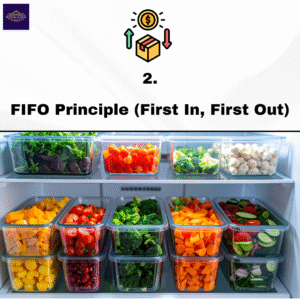
🍽️ 2. FIFO Principle (First In, First Out)
Alright everyone, let’s talk about one of the simplest — yet most powerful — cost control habits you can develop in any kitchen or bar: FIFO, which stands for First In, First Out.
👉 Here’s what it means: the oldest stock — the one that arrived first — should always be used before the new stock. Sounds basic, right? But trust me, it’s one of the golden rules that separates well-managed operations from wasteful ones.
➤ Why it matters: It helps prevent spoilage, expired items, and that silent profit leak that happens when food sits too long on the shelf.
➤ A simple example: When new milk cartons arrive, you don’t just toss them in front of the fridge. You neatly move the older ones forward and place the new ones behind. That’s FIFO in action — clean, easy, and incredibly effective.
📌 Here’s a fun fact: Many restaurants lose 5–10% of their inventory each month simply because products expire in storage. That’s money literally going into the trash. FIFO eliminates that loss and keeps your stock fresh and your profits protected.
💡 Quick Tip: Make FIFO a daily habit. During deliveries or restocking, always check dates and arrange shelves so the “old” goes first. It’s small details like this that keep your operation efficient and profitable.
Maxwell, a Nigerian F&B Supervisor working in a Swiss resort kitchen, begins to notice an unpleasant trend — rising food waste and shrinking profit margins.
During a routine kitchen inspection, he opens the walk-in freezer and finds:
❄️ Boxes of chicken dated three weeks ago, pushed behind newer deliveries.
🥦 Vegetables that expired last week.
🧀 Several containers of cheese covered in frost burn — completely unsellable.
When he checks the records, he realizes the new storekeeper hasn’t been following the FIFO (First In, First Out) principle. Old stock keeps getting buried behind the new, and now the resort has lost over ₦350,000 worth of ingredients in a single month due to spoilage.
Maxwell quickly trains the team on labeling, shelf organization, and FIFO rotation during every restock. Within two weeks, waste drops drastically — and the kitchen’s cost efficiency improves by 15%.
If you were Maxwell, what’s the best immediate step to prevent this issue from happening again?
- 🧾 Conduct daily inventory checks and discard all expired products immediately
- 📦 Introduce clear labeling and date tagging on all stock items for easy tracking
- 👨🍳 Assign one staff member per shift to monitor and rotate inventory using FIFO
- 🗣️ Conduct weekly staff training sessions on food storage and cost control principles
10/16/25, 20:22 – Klevafx Technologies: POLL:
If you were Maxwell, what’s the best immediate step to prevent this issue from happening again?
OPTION: A (5 votes)
OPTION: B (5 votes)
OPTION: C (38 votes)
OPTION: D (0 votes)

💻 3. Monitoring Inventory with Digital Systems
Alright, let’s step into the modern era of cost control — where data replaces guesswork. Gone are the days of flipping through dusty stock logs or scribbling numbers that no one can read. Today, digital systems do the heavy lifting for you.
👉 Here’s how it helps:
➤ You can track incoming stock, daily usage, and wastage in real time — no more surprises at month-end.
➤ Automated alerts can warn you before you run out of key items or before you order too much.
➤ Whether you’re managing a five-star hotel or a small café, tools like Toast, MarketMan, or even a well-designed Excel sheet can make your inventory smarter and more transparent.
📊 Real-World Example: A bar manager once used a digital tracker and noticed that tequila usage was 30% higher than recorded sales. What did that mean? After a quick investigation, it turned out some bartenders were overpouring without realizing it. Once they received proper training, costs dropped — immediately.
💡 Pro Tip: If you’re not using a digital system yet, start small. Even a shared Google Sheet can track what comes in, what goes out, and what’s wasted. The goal isn’t just control — it’s clarity. When you know where your money is going, you know how to protect your profit.
🧾 1. Yokitup,
https://www.yokitup.com/en
Overview: ➤ A free software designed for managing recipes, inventories, and data sheets, helping to identify the cost price of dishes with automatic stock valuation.
Key Features:
➤ Manage recipes and inventories without limits.
➤ Evaluate the margin rate of each dish.
➤ Simplify inventory entry to save time and avoid data entry errors.
Ideal For: ➤ Restaurants seeking a straightforward tool to control expenses and optimize margins.
2. Knack – Restaurant Inventory Manager Template
https://www.knack.com/templates/restaurant-inventory-manager/
Overview: ➤ A customizable app template that allows users to track ingredients, stock, recipes, and more to avoid stockouts and maintain smooth operations.
Key Features:
➤ Track inventory movements and changes over time through detailed logs.
➤ Store and manage recipes alongside their corresponding ingredients.
➤ Real-time tracking ensures continuous monitoring of inventory levels.
Ideal For: ➤ Restaurants and kitchen managers looking for a flexible and scalable solution.
3. Backbar
https://www.getbackbar.com/
Overview: ➤ An inventory app designed for bars and restaurants, automating invoice, inventory, and order management with one solution.
Key Features:
➤ Automate key reports to provide a clear view of product and financial performance.
➤ Simplify distributor ordering and manage invoices efficiently.
➤ Track costs and optimize beverage operations.
Ideal For: ➤ Bars and restaurants aiming to streamline their beverage inventory processes.
10/16/25, 20:34 – Klevafx Technologies: IMG-20251016-WA0020.jpg (file attached)
📦 4. Regular Stocktaking (Auditing)
Now let’s talk about something that separates organized operators from guesswork managers — regular stocktaking.
You see, if you’re not counting it, you’re probably losing it. Regular audits — whether weekly or bi-weekly — shine a light on what’s really happening behind the scenes.
👉 Here’s why it matters:
➤ Physical stock counts reveal theft, recording errors, or misuse that digital systems alone can’t catch.
➤ A perpetual inventory system (where digital records are updated daily) works best when you compare it with physical counts — this keeps your data honest.
➤ Spot checks — quick surprise counts — keep everyone accountable and reduce the temptation to “borrow” stock.
📌 Remember: In the F&B world, unmonitored stock is an open invitation to losses. A missing bottle here, an extra scoop there — it all adds up.
💡 Pro Tip: Turn stocktaking into a team habit, not a punishment. When everyone knows inventory is tracked and valued, they start treating it like money — because that’s exactly what it is.
✨ Key Takeaways
Let’s wrap this up with what truly matters — the heartbeat of a successful food and beverage operation:
➤ Food, beverage, and labor costs are the three pillars of profitability. When they’re in balance, your business thrives.
➤ Waste, theft, overpouring, and poor scheduling may look small day-to-day, but together, they quietly drain revenue like a slow leak in a tank.
➤ Smart systems save money: standardized recipes, FIFO, digital inventory tracking, and regular audits keep you in control — not guessing.
➤ And remember, cost control isn’t about cutting corners or lowering guest experience. It’s about sustainability — ensuring that your guests enjoy great quality today, and your business is still standing strong tomorrow.
💡 Bottom line: The best F&B managers don’t just count sales — they protect profits.
10/16/25, 20:39 – Klevafx Technologies: IMG-20251016-WA0023.jpg (file attached)
💫 3. Customer Service Excellence
Let’s talk about what truly separates good restaurants from unforgettable ones — service that touches the heart.
Customer service excellence isn’t about having flawless meals or stunning décor. It’s about how your guests feel from the moment they walk in to the moment they leave. Food fills the stomach, but service fills the soul.
A guest may forgive a late meal or a dish that’s not perfect — but they will never forget indifference, rudeness, or neglect. The magic lies in the details: a warm smile at the door, remembering a guest’s favorite drink, or checking in mid-meal with genuine care.
And here’s the truth: great service isn’t about being mistake-free — it’s about how gracefully you recover. When something goes wrong, how you respond determines whether you lose a guest or earn their loyalty for life. A quick apology, a sincere tone, and a thoughtful gesture (like a complimentary dessert) can turn a complaint into connection.
Guests might forget the exact taste of the wine, but they’ll always remember how you made them feel — respected, seen, and valued.
So, what defines true customer service excellence? Empathy. Consistency. The ability to make every guest feel important — because to them, this might not just be another meal… it could be their moment.
⚙️ Key Aspects of Excellent Service
➡️ Taking Orders Professionally
✔️ Smile genuinely, make eye contact, and use a polite tone.
✔️ Repeat the order clearly to confirm accuracy.
✔️ Use POS systems or tablets to ensure speed and precision.
➡️ Upselling Without Pressure
✔️ Suggest add-ons in a natural, friendly way.
✔️ Example: “Would you like to try our freshly baked garlic bread with your pasta?”
➡️ Handling Complaints Gracefully
✔️ Listen actively — don’t interrupt or argue.
✔️ Apologize sincerely and offer quick solutions.
✔️ Example: If a guest receives an undercooked steak, apologize, replace it promptly, and offer a complimentary drink.
✨ Final Thought:
In hospitality, every guest is a story in progress. How you treat them decides how that story ends — as a one-time visit or a lifelong relationship.
Osaze, a Nigerian F&B supervisor, recently joined Lochside Bistro, a fine-dining restaurant nestled in the heart of Edinburgh, Scotland. Known for his professionalism, warmth, and attention to detail, he quickly realized that great hospitality is far more than just serving food—it’s about creating memorable experiences.
One busy Friday evening, the restaurant is fully booked. A table of four guests arrives late, clearly exhausted after a long train journey through the Scottish Highlands. The kitchen is operating at full capacity, and starters are delayed. To make matters trickier, one guest’s main course arrives slightly cooler than expected.
Many servers might have shrugged or rushed past, but Osaze takes a different approach. He greets the guests with a warm smile and a sincere apology for the delay, immediately setting a tone of care and attention. Noticing the wine list is extensive, he recalls that one of the guests had previously enjoyed a particular Pinot Noir and suggests it while they wait, sharing a small anecdote about its vineyard in France.
As the starters arrive, Osaze checks in personally, ensuring each dish meets the guests’ expectations and subtly adjusting the pacing of courses to match the table’s comfort and appetite. When he notices the slight issue with the main course temperature, he doesn’t ignore it—he personally informs the chef and offers a small, complimentary dessert as a thoughtful gesture.
Throughout the meal, Osaze is attentive but unobtrusive. He notices when glasses need topping up, remembers each guest’s beverage preference, and engages in friendly conversation to make them feel seen and valued. His actions create an atmosphere of warmth, respect, and genuine care.
By the end of the evening, the guests leave glowing reviews, noting not just the food but the exceptional service they received. One of them writes:
> “The meal was fantastic, but what truly made the night unforgettable was how personally we were treated. Osaze and his team made us feel like valued guests, not just diners.”
This evening reinforces a critical lesson for Osaze: in hospitality, guests may forgive minor mistakes in food or timing, but they never forget indifference, rudeness, or neglect. Every gesture—from a smile at the door to remembering a favorite drink—contributes to the overall experience.
Osaze’s dedication to personalized, empathetic, and consistent service transforms ordinary dining into an unforgettable experience, ensuring guests leave not just satisfied, but genuinely impressed, and eager to return.
🌍 Cultural Sensitivity in Food & Beverage Service
Let’s face it — the hospitality industry is one of the most diverse workplaces on earth. Every day, we serve guests from different religions, ethnicities, and cultural backgrounds. And here’s the thing: what delights one guest might unintentionally offend another if we’re not careful.
That’s why cultural sensitivity isn’t just a nice-to-have skill — it’s essential. It’s the heart of truly inclusive and globally minded service.
Being culturally sensitive means more than just knowing which foods are allowed or forbidden. It’s about understanding how people communicate, how they express respect, and what makes them feel comfortable and valued.
When you serve with cultural awareness, you’re not just delivering a meal — you’re delivering respect. You’re saying to every guest, “You belong here.”
In a world where hospitality crosses borders every day, this mindset isn’t just good manners — it’s good business.
✨ Remember: Great service doesn’t just fill plates — it builds bridges.
🙏 1. Religious Dietary Restrictions
In hospitality, food isn’t just nourishment — it’s a reflection of belief, faith, and identity. Overlooking a guest’s dietary restrictions can cause offense, discomfort, or even health risks. That’s why cultural and religious awareness in menu service is a true mark of professionalism.
Let’s explore some key considerations every food and beverage professional should know:
➡️ Halal (Islamic Tradition)
✔️ Meat must be prepared according to Islamic law.
✔️ Pork and alcohol are strictly prohibited.
✔️ Always double-check for hidden pork products — like bacon bits or gelatin — that may not be obvious.
➡️ Kosher (Jewish Tradition)
✔️ Pork and shellfish are not permitted.
✔️ Meat and dairy cannot be cooked, served, or eaten together.
✔️ Kosher certification is required to ensure compliance with religious standards.
➡️ Vegetarian & Vegan Guests
✔️ Some choose this diet for religious reasons (e.g., Hindus, Buddhists), while others do so for lifestyle or health.
✔️ Avoid cross-contamination — for instance, don’t cook vegetables in meat fat or use shared utensils.
➡️ Christian Traditions
✔️ Some Christians refrain from eating meat on specific days like Lent or Good Friday.
✔️ Wine or grape juice often holds symbolic value during religious observances.
📌 Service Tip: Never assume. Instead, ask respectfully:
> “Do you have any dietary preferences or restrictions we should be aware of?”
That single question shows care, respect, and cultural intelligence — and it can make all the difference in a guest’s dining experience.
🌎 2. Cultural Expectations in Food & Beverage
In hospitality, food is never “just food” — it carries meaning, tradition, and emotion. Every culture approaches dining differently, and what feels polite or normal in one place can be considered rude or disrespectful in another.
As professionals, understanding these cultural expectations helps us create experiences that are not only enjoyable but also respectful and memorable.
➡️ Asian Cultures (e.g., Japan, China)
✔️ Tea service can be ceremonial — never rush it.
✔️ Silence during meals is often a sign of respect; loud chatter can seem impolite.
✔️ In Japan, placing chopsticks upright in food is taboo — it symbolizes death.
➡️ Middle Eastern Cultures
✔️ Generosity is a mark of good hospitality — guests expect plentiful portions.
✔️ Bread holds deep cultural symbolism; wasting it is seen as disrespectful.
✔️ Alcohol may be forbidden depending on religious adherence — always confirm before offering.
➡️ Western Cultures
✔️ Emphasis is on quick, efficient, and friendly service.
✔️ Guests appreciate when servers recommend or upsell dishes naturally.
✔️ Tipping is standard in the U.S., but optional or included in prices in some European countries.
➡️ African Cultures
✔️ Sharing food reflects friendship, warmth, and community.
✔️ Many guests value traditional ingredients served in authentic, familiar ways.
📌 Service Tip: If you’re serving international or multicultural guests, do your homework. Learn what matters most to them — whether it’s offering a vegetarian menu for an Indian wedding or ensuring Halal options for Middle Eastern clients.
Those small gestures speak volumes — they tell your guests, “We see you, we respect you, and we value your culture.”
💬 3. Communication Styles Across Cultures
In hospitality, what you say is important — but how you say it can make or break the guest experience. Service isn’t just about food and presentation; it’s also about connection. Your tone, gestures, posture, and level of formality all communicate something — sometimes even more than words do.
Here’s the challenge: communication looks different across the world. What feels friendly and open in one culture might come across as too casual, intrusive, or disrespectful in another. The best professionals know how to adapt — they listen, observe, and mirror their guests with emotional intelligence.
Let’s explore how communication styles vary globally and how you can master the art of cultural communication in service.
➡️ Tone of Voice
✔️ In many Western cultures, guests appreciate a casual, cheerful, and conversational tone. A friendly “How’s your day going?” or “Would you like me to recommend something?” builds connection.
✔️ In Asian cultures, politeness and respect are key. A more formal tone, with courteous phrases and modest gestures, shows professionalism. For example, instead of saying “Hey there,” a simple “Good evening, sir/ma’am” is more appropriate.
✔️ Key insight: Adapt your tone to match your guest’s demeanor. If they’re formal, match that energy; if they’re relaxed, engage warmly.
➡️ Gestures & Body Language
✔️ Body language speaks volumes — even when you’re silent.
✔️ In many Asian and African cultures, pointing directly at people or objects with one finger is considered rude. Use an open hand or gesture softly instead.
✔️ A “thumbs-up” is positive in most Western countries, but in parts of the Middle East and West Africa, it can be seen as offensive.
✔️ Maintaining too much eye contact might feel aggressive in some Asian or Middle Eastern cultures, while in Western service environments, steady eye contact conveys confidence and sincerity.
➡️ Personal Space
✔️ In American and European cultures, guests often value a wider personal bubble — standing too close can feel intrusive.
✔️ In Middle Eastern, Latin American, and some African cultures, standing closer or lightly touching a shoulder while speaking may express warmth and friendliness.
✔️ The secret is observation: let the guest’s body language guide you. If they step back, give space. If they lean in or maintain closeness, match their comfort level respectfully.
📌 Service Tip: Cultural intelligence begins with awareness. Encourage your staff to be mindful of tone, body language, and personal boundaries. If a guest looks uncomfortable or quiet, adjust your approach with empathy — softer tone, more space, slower pace.
✨ Remember: In a world of global hospitality, your ability to communicate with respect and awareness is just as valuable as your ability to serve a perfect meal. A kind gesture, a patient smile, or a culturally sensitive response can turn an ordinary interaction into a lifelong impression.
4. Why Cultural Sensitivity = Business Growth
✓ Avoiding Offense:
Being culturally aware helps prevent embarrassing or costly mistakes—like serving pork to a Muslim guest or interrupting a tea ceremony in progress. Sensitivity protects your brand’s reputation and maintains guest trust.
✓ Inclusivity:
When guests feel recognized and respected regardless of their background, they are more likely to return and recommend your establishment. Inclusive service creates emotional connection—turning first-time guests into loyal advocates.
✓ Competitive Advantage:
In today’s global market, travelers choose establishments that honor their customs, dietary needs, and values. Cultural respect isn’t just ethical—it’s profitable, setting your business apart in a crowded industry.
✓ Staff Training:
Empowered and culturally educated staff serve with confidence. They understand how to greet, communicate, and handle diverse guests without hesitation or fear of mistakes—enhancing professionalism across the team.
💡 Case Study:
A hotel chain in Dubai recorded a 25% increase in repeat business after introducing a halal-certified menu and mandatory staff training in cultural etiquette for Middle Eastern and international guests. The investment not only improved guest satisfaction but also positioned the hotel as a preferred destination for culturally conscious travelers.
Hauwa, a Nigerian server, works at a luxury hotel restaurant in Dubai. She is energetic and outgoing, used to a casual and lively interaction style from her previous experience in Nigeria. However, she has not yet adapted to the cultural expectations of her diverse international clientele in Dubai.
Incident:
A group of Middle Eastern guests is seated for dinner. Hauwa approaches them and, in her usual cheerful tone, says:
> “Hi everyone! Let’s get this party started! Check out the specials!”
She gestures broadly, points directly at the dishes on the menu, and leans over the table while maintaining close proximity. She also makes frequent jokes, assuming that humor will make the guests feel at ease.
Guest Reaction:
The guests appear uncomfortable and exchange subtle glances. They politely ask for a little more space and for her to speak more formally. Hauwa, misunderstanding the cues, laughs and continues speaking in the same casual, loud tone. Later, the guests complain to management that they felt disrespected, rushed, and that the service did not meet the standards expected in Dubai’s fine dining culture.
Outcome:
Management reviews Hauwa’s service history and notes recurring complaints from international guests regarding tone, gestures, and personal space. Hauwa had previously attended one cultural sensitivity training session but did not consistently apply the lessons.
Consequence:
Because repeated warnings and coaching did not lead to improvement, Hauwa is terminated. Management cites failure to adapt communication to guest cultural expectations, which compromised guest experience and the hotel’s reputation in an international market.
Lesson:
📌 High energy and friendliness must be balanced with awareness of cultural norms.
📌 Gestures, tone, humor, and personal space vary across cultures; failing to adjust can have serious career consequences.
📌 Observation, empathy, and training application are essential for success in global hospitality environments.
5. Trends in International Hospitality
The food and beverage industry is rapidly evolving to meet the expectations of a global, health-conscious, and tech-savvy audience. Staying ahead of these trends gives establishments a strong competitive advantage and appeals to the modern traveler.
✓ Sustainability:
Reducing food waste, sourcing locally, and using eco-friendly packaging are now essentials—not luxuries. Guests appreciate brands that care for the environment.
➡ Example: Many top restaurants now partner directly with local farmers to reduce carbon footprint and ensure fresh, traceable ingredients.
✓ Digital Menus:
QR code menus and tablet-based ordering have become common in modern dining. They promote hygiene, speed up service, and allow instant menu updates.
➡ Bonus Tip: Adding images and allergen info to digital menus enhances guest trust and decision-making.
✓ Contactless Service:
From mobile payments to robotic servers and AI-driven order systems, technology is redefining efficiency. This trend surged after COVID-19 and remains popular for its convenience and safety.
➡ Example: Some hotels now use AI concierges that recommend meals or drinks based on guest preferences.
✓ Health & Wellness Focus:
Guests today want transparency and balance in what they consume. Plant-based meals, gluten-free options, calorie labeling, and fresh juice bars are in high demand.
➡ Example: Wellness-focused restaurants often highlight nutrition information and partner with fitness centers to attract health-conscious diners.
Ai Concierge
✅ Recap – Day 3
Alright everyone, let’s take a quick look back at what we covered today!
➡ Menu Planning:
We explored different menu styles — à la carte, table d’hôte, buffet, and tasting menus — and how each one shapes the guest experience and business efficiency.
➡ Food & Beverage Cost Control:
We discovered that managing food, beverage, and labor costs is the secret to profitability. Remember — every gram of waste or unrecorded sale affects your bottom line!
➡ Customer Service Excellence:
From taking orders and upselling to handling complaints, we learned that great service isn’t about perfection — it’s about attitude, empathy, and recovery.
➡ Cultural Sensitivity:
We saw how respecting religious, cultural, and communication differences turns a simple meal into an inclusive, memorable experience.
➡ International Trends:
And finally, we looked at what’s shaping the global hospitality scene — sustainability, digital menus, contactless service, and the growing focus on health and wellness.
👏 Give yourselves a round of applause — that’s a lot of knowledge packed into one day!