
 1. What is Customer Service Excellence?
“Excellence is doing ordinary things extraordinarily well.” – John W. Gardner
Customer Service Excellence is the gold standard of guest and client care. It’s not simply about being nice or helpful—it’s a strategic, intentional approach to consistently delivering value, satisfaction, and memorable service at every touch point.
It goes beyond just meeting expectations. It’s about making every customer feel like they made the right choice by choosing you. It’s not a one-time act—it’s a culture, a mindset, and a daily commitment.
 Why It Matters (Global Perspective)
Leading hospitality brands like The Ritz-Carlton, Hilton, and Four Seasons have one thing in common:
They treat every interaction as a chance to surprise, serve, and inspire loyalty.
Excellence in service is what makes a guest come back, refer others, or even forgive a mistake—because they remember how they were treated, not just what they were given.
Ancient & Pre-Industrial Era
 Markets & Trade Centers: In ancient civilizations like Egypt, Mesopotamia, Greece, and Rome, traders and merchants built reputations by treating customers fairly. Word-of-mouth and trust were key.
Barter System: Personal interaction was the only means of service. Customer satisfaction was directly tied to ongoing relationships.
- Industrial Revolution (18th – 19th Century)
Mass Production: Businesses shifted from local to factory-based production. Customer service became more transactional.
Mail-Order Catalogs: Companies like Sears, Roebuck & Co. (1888) introduced customer service via mail correspondence, including returns and inquiries.
- Early 20th Century
Telephone Invention (1876): Revolutionized customer support by enabling real-time voice communication.
Department Stores: Customer service desks and return policies became formalized. Brands began valuing long-term customer loyalty.
- Post-WWII Era (1945–1970s)
Consumer Rights Movement: Customers became more empowered. Governments introduced protection laws.
Call Centers: The rise of switchboards and call operators laid the groundwork for modern customer service teams.
- 1980s – 1990s: The Tech Age Begins
Toll-Free Numbers (e.g., 1-800 numbers): Businesses enabled free access to support.
CRM Software: Early customer relationship management tools (like ACT! and GoldMine) began tracking interactions.
Outsourcing Begins: Some companies began moving customer service operations offshore for cost efficiency.
- 2000s: Internet & Digital Support
Email Support: Became a standard customer service channel.
Live Chat: Real-time chat on websites provided faster resolution.
Self-Service: FAQs, knowledge bases, and forums emerged.
Social Media: Platforms like Twitter and Facebook began hosting customer inquiries and complaints.
- 2010s – Present: AI & Omnichannel Support
Chatbots & AI Assistants: Tools like ChatGPT, Intercom, and Drift automate routine queries.
Omnichannel Service: Customers now interact across email, chat, SMS, social media, and voice — all integrated into a single system.
Mobile Support: Apps and mobile-friendly interfaces made customer support more accessible on the go.
Personalization & Analytics: Data-driven insights help tailor service experiences to individual customer needs.
- Future Trends
AI-powered empathy & emotional analysis
Predictive service using big data
Voice AI (Alexa, Google Assistant) integrations
Hyper-personalized service using real-time analytics
Increased focus on customer experience (CX) as a differentiator
The Ritz-Carlton and the Lost Stuffed Giraffe – “Joshie’s Extended Vacation”

Location: Ritz-Carlton Hotel, Amelia Island, Florida
Year: Around 2012
Customer: Chris Hurn (businessman and father)
 The Story
Chris Hurn and his family had just returned from a vacation at the Ritz-Carlton Amelia Island when they discovered that their young son had left behind his beloved stuffed giraffe, Joshie, at the hotel.
The little boy was devastated.
To comfort him, his father told a small white lie: “Don’t worry — Joshie just decided to stay a little longer on vacation.”
Hoping to retrieve the toy, Chris called the hotel and explained the situation. The staff not only confirmed they had found Joshie, but what they did next turned this into a legendary customer service moment.
 What the Hotel Did
A few days later, a package arrived. Inside was:
★ Joshie the giraffe, safe and sound
★ A photo album showing Joshie on “his extended vacation” — lounging by the pool, driving a golf cart, getting a massage at the spa, and even helping out in the security office
★ A few Ritz-Carlton branded gifts and goodies
★ A handwritten note from the staff explaining Joshie’s adventure and return
 The Impact
This small gesture deeply moved the family. Chris Hurn shared the story online, and it quickly went viral as an example of going above and beyond in customer service.
The story has since been shared in numerous business, leadership, and hospitality trainings as a gold standard for service excellence.
 Why It Worked
★ The hotel understood the emotional value of the toy
★ Staff showed creativity, empathy, and teamwork
★ They turned a simple lost-and-found incident into a customer-for-life moment
★ The Ritz-Carlton empowered their employees to act on behalf of the brand promise: “We are Ladies and Gentlemen serving Ladies and Gentlemen.”
 Key Characteristics of Customer Service Excellence – What Sets YOU Apart
If you want to be more than just another hospitality worker—if you want to become the kind of professional guests remember, recommend, and return to—then you need to develop certain key traits that define true service excellence.
These characteristics are what separate the average from the exceptional. They help you stay calm under pressure, handle guests with grace, and turn challenges into opportunities to shine.
Whether you’re at the front desk, serving in a restaurant, assisting guests in a hotel, or managing behind the scenes—these qualities will make YOU the reason guests keep coming back.
Let’s break them down one by one 
1. Anticipating Guest Needs Before They Ask – That’s Real Excellence
In the world of hospitality, waiting until a guest asks is already too late. The best professionals (like YOU aim to be) don’t just react—they predict and prepare. That’s the real difference between basic service and excellent service.
Think about it: how would you feel if someone handed you exactly what you needed before you even said a word? Valued, seen, and impressed—right?
 That’s the feeling YOU should aim to create every day.
Here’s what that looks like in action:
- At a spa: You offer a towel or water before they even ask.
- At the front desk: You provide access to charging sockets because you know most guests carry phones and devices.
- At the restaurant: Instead of saying, “Do you want water?”, you ask, “Would you prefer still or sparkling water?”—and maybe even serve it with a slice of lemon
 .
.
When you do this, you show guests that you understand them—even without them saying a word.
 That’s not just service—it’s service excellence.
2. Solving Problems Quickly and Politely – How YOU Turn Issues Into Opportunities
Let’s be real: mistakes will happen. Maybe the room isn’t ready. Maybe the food took too long. Or maybe a guest just isn’t happy.
But what truly sets YOU apart in hospitality is how fast and how well you handle it.
In top hotels and restaurants around the world, complaints aren’t treated as problems—they’re seen as golden chances to build trust and win the guest over.
Here’s how you master this:
 Stay calm—even if the guest isn’t
Acknowledge the issue honestly (don’t make excuses)
Take action fast—offer a real solution, not just words
Never blame your teammates or the system
Apologize sincerely: “I’m truly sorry for the inconvenience. Let me make it right.”
Follow up to make sure they’re satisfied
Remember: people may forget the mistake, but they’ll never forget how you made them feel when fixing it.
Solve problems with grace, and you’ll stand out as a true professional.
3. Make Every Guest Feel Seen, Heard & Valued – This Is Where YOU Shine
In hospitality, guests are never “just customers.” They’re people—with feelings, preferences, and expectations. And the truth is, most guests won’t remember exactly what you said—but they’ll never forget how you made them feel.
That’s where YOU make the difference.
When a guest feels ignored or rushed, they disconnect. But when you take the time to truly see and hear them, you create emotional loyalty that no promo or fancy lobby can buy.
Here’s how YOU can do that every day:
 Use their name genuinely: “Welcome back, Mr. Daniels.” Names build trust.
Keep eye contact: It shows respect and attentiveness.
Show empathy: Say, “I understand how frustrating that must be. Let me help.”
Never interrupt—let them finish, even if you already know the solution.
 Pro tip: Listening is not just about hearing words—it’s about picking up what they’re not saying and responding with care.
The best hospitality professionals (like YOU) don’t just serve—they connect. And emotionally connected guests?
 They return, they tip better, and they tell the world about you.
4. Go Beyond Satisfaction — Deliver DELIGHT! 
In hospitality, satisfaction is just the starting point. If you truly want to stand out, your goal should be to create moments that make guests smile, feel special, and say, “Wow!”
That’s what we call delight—and YOU have the power to create it in the smallest ways.
Here’s the difference:
 Satisfaction = “It was okay.”
Delight = “I can’t believe they did that for me!”
Imagine YOU doing this:
– Leaving a handwritten birthday note and a small treat in a guest’s hotel room 
– Sending a personalized thank-you message after their stay or visit
– Remembering their favorite drink, how they like their coffee, or which room they prefer—and offering it before they ask
These small gestures don’t cost much, but they make a BIG impact.
International brands like Four Seasons and Ritz-Carlton are known for this. It’s not by accident—it’s built into their service DNA.
And now, YOU can bring that same energy wherever you work.
Because delighted guests become loyal guests—and loyal guests bring others with them.
Chiamaka is a 27-year-old guest relations officer at Peace Crest Hotel, a mid-range but fast-rising hotel in Enugu. Known by her team as the “smiling solution,” she’s soft-spoken but incredibly observant. She takes pride in learning about her guests, even when they say very little.
One Thursday afternoon, a guest named Mr. Ikenna Okoye checks in from Lagos. He’s a business consultant in town for a 3-day seminar. He looks tired and distracted, just wants to get to his room and prep for his session the next day.
While checking him in, Chiamaka notices something most people would miss—he’s wearing a Father pin. From experience, she knows it’s probably something sentimental. She gently asks, “Sir, if you don’t mind me asking—is it your child’s pin?”
He smiles slightly and says, “Yes, my daughter made it for me. Today’s her 5th birthday, and I feel bad I’m missing it.”
That evening, Chiamaka does something simple—but powerful.
 She writes a small note:
“Happy Birthday to Princess Adaora! Your daddy told us how special you are. We’re sending you love from Enugu!”
She places the note in a gift envelope with a little teddy keyholder from the hotel souvenir shop. She hands it to Mr. Okoye with a smile as he heads out for dinner.
He’s speechless. His eyes light up.
He takes a photo of the note and sends it to his daughter. He posts it on LinkedIn with the caption:
“Customer service that feels like home. Thank you, Chiamaka. Peace Crest, you have a gem.”
That single moment?
Created delight.
Built loyalty.
Showed that hospitality is not about having a big name—but a big heart.
Lesson for YOU:
It’s not about doing something expensive. It’s about doing something thoughtful.
When you treat each guest like they matter—like Chiamaka—you don’t just serve…
You inspire.
In Summary – What YOU Must Always Remember
Customer Service Excellence isn’t just something you do—it’s who you become.
It’s about:
– A mindset of serving with purpose and passion
–  A culture of respect, consistency, and care
– A promise to not just finish a task, but to elevate the experience
Whether you’re chatting on WhatsApp, welcoming someone at the front desk, or answering a guest’s call—YOU are the experience.
Guests don’t just remember the hotel, the restaurant, or the brand…
They remember YOU.
So ask yourself every day:
 “How can I serve better today?”
That’s the spirit of true hospitality excellence. And that’s
how YOU rise above the rest.
Mary Dinah — A Nigerian Champion of Customer Service Excellence
Mary Dinah is a Nigerian hotelier and the founder of M.A.D Hospitality, a London-based hospitality consulting firm. She has worked closely with global brands like Hilton, Marriott, Four Seasons, Le Méridien, and Sheraton.
While she’s known for her humanitarian efforts, Mary has also received international recognition for excellence in hospitality, including the Marriott Golden Circle Award—a prestigious honor awarded to professionals who deliver outstanding guest experiences and drive revenue through exceptional service.
Why She Stands Out:
★ She has worked with world-leading hotel brands, helping them raise their service delivery to international standards.
★ Through her consulting and training, she builds hospitality teams that focus on personalized, thoughtful guest care.
★ Her work blends cultural awareness, emotional intelligence, and professionalism—a powerful mix in global hospitality.
★ She has been recognized for creating guest experiences that are memorable, consistent, and loyalty-building.
 What YOU Can Learn from Mary Dinah’s Success:
★ Don’t just follow procedures—create a culture that values people, both guests and staff.
★ Learn to think and act globally, even if you work locally. Excellence is universal.
★ Focus on the experience, not just the service. Guests remember how you made them feel.
★ Service excellence isn’t invisible—it gets noticed, rewarded, and celebrated around the world.
Welcome Back and thank you for the awesome feedback, Your presence and participation is highly appreciated. Lets continue
2. The Guest Journey: Understanding Service Touchpoints
In the world of hospitality and customer service, the Guest Journey is more than just a series of transactions—it’s the complete experience a guest has with your brand, from beginning to end.
It starts the moment they first hear about your hotel, restaurant, or service—maybe through an ad, a recommendation, or even your Instagram page. And it continues through their booking, arrival, check-in, every interaction, and even what happens after they leave.
Each stage, no matter how small, is called a service touchpoint—and every touchpoint is a chance for YOU to either build trust or break it.
Why does this matter?
Because in top global hospitality brands like Marriott, Hilton, and Emirates, nothing is left to chance.
They design every stage of the guest journey carefully—so that the guest feels welcomed, respected, cared for, and remembered.
So whether you’re welcoming guests at the front desk, serving in a restaurant, or handling feedback after check-out—YOU play a key role in shaping the journey.
 When you understand the guest journey, you stop seeing your job as “just one task”—and start seeing yourself as a key part of a bigger, unforgettable experience.
Meet Tolu, a first-time traveler to Abuja looking for a relaxing weekend getaway. While scrolling through Instagram, she comes across a beautifully curated post from Eden Cove Hotel showcasing their spa and rooftop lounge. She’s instantly intrigued — this is the first touchpoint: brand discovery through social media.
She clicks the link in the bio, leading her to a clean, mobile-friendly website. She browses room types, checks availability, and makes a reservation in just a few minutes. She receives a friendly confirmation email with helpful details about her stay. These are key pre-arrival touchpoints: booking experience and follow-up communication.
When she arrives at the hotel, the front desk staff greets her by name with a warm smile, offers her a welcome drink, and helps her check in seamlessly. She’s guided to her room, which already has a handwritten welcome card and a curated snack tray — creating strong arrival and in-room touchpoints.
Throughout her stay, every staff interaction is polite and personal. The concierge helps her plan a city tour, and room service is prompt and friendly. These moments define the mid-journey service touchpoints — how staff treat her, how services are delivered, and how issues are handled.
When she checks out, the receptionist thanks her sincerely and asks about her experience. The next day, she receives a follow-up email asking for feedback and offering a discount for her next stay — post-departure touchpoints that extend the relationship beyond the visit.
Tolu is impressed. Her entire journey — from first contact to post-stay engagement — felt personal, smooth, and memorable. She leaves a glowing review online and recommends Eden Cove to her friends.
This shows how every moment, from discovery to departure, can either build or break the guest experience — and how mastering these touchpoints can turn a one-time visitor into a loyal customer.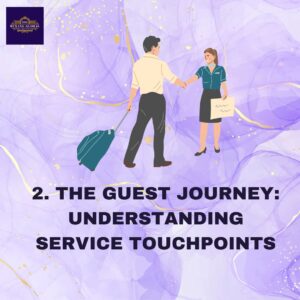
 Common Touchpoints on the Guest Journey
Each touchpoint is like a chapter in your brand’s story—and YOUR goal is to make every chapter pleasant, smooth, and memorable. When guests feel valued at every step, they’re more likely to return, recommend, and rave about your service.
Let’s look at one of the most important starting points

1. Website & Social Media Presence – Your Digital First Impression
Before most guests ever walk through your physical door, they’ve already visited your digital front door—your website, Instagram page, WhatsApp catalog, or even your Google listing.
This first impression matters A LOT.
If your page looks confusing, outdated, or unprofessional, many potential guests won’t even give you a chance.
Here’s how YOU can make this touchpoint count:
★ Make sure your page is clear, welcoming, and easy to understand
★ Display accurate information: location, prices, services, and check-in/check-out times
★ Use high-quality photos that truly reflect the guest experience
★ Keep your brand voice friendly, polite, and professional—just like you’d speak to a real guest
★ Respond to comments, messages, and reviews promptly. Slow replies send the wrong signal
Is your business page or hotel listing up to date?
Do your photos match what guests actually experience?
Are you replying to DMs, WhatsApp messages, or Google reviews quickly and kindly?
Remember: In the guest journey, trust begins online—before the guest ever books.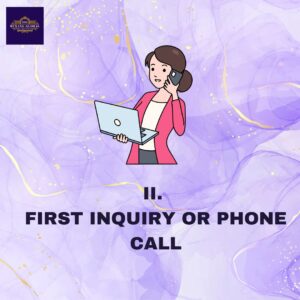
2
. First Inquiry or Phone Call – The First Real Human Connection
This is often the very first time a guest speaks directly with someone from your business. Whether it’s a phone call, WhatsApp message, or DM—this moment is critical. Why? Because it gives guests their first taste of your service style.
From the moment you say “Hello,” the guest is already judging:
How professional you sound
How friendly and patient you are
How quickly you respond
And whether or not they can trust you with their time and money
In this early stage of the guest journey, your voice becomes your brand. A poor or rushed response could make them walk away—before they ever arrive.
Here’s how YOU can make a strong impression:
★ Greet callers and message senders warmly and professionally
★ Respond promptly—slow replies = lost customers
★ Use polite, welcoming language that reassures and guides them
★ Don’t just answer questions—anticipate what else they may need and offer helpful suggestions
 Example:
“Good evening, thank you for reaching Kuzang Global. How may I assist you today?”
Sounds simple, but that one line sets the tone: You’re warm. You’re ready. You care.
Do you greet callers in a polite, professional tone?
Are your WhatsApp and DMs being answered within 5–10 minutes (during business hours)?
Do you sound interested—or irritated?
Pro tip: People don’t just remember what you said—they remember how you made them feel. And for many guests, this first inquiry is the moment that either pulls them in—or pushes them away.
Mrs. Adebayo, an executive assistant at a major consulting firm, is tasked with securing a venue for their upcoming 3-day staff retreat. She hears about a well-known facility from a colleague and decides to reach out via WhatsApp on a Tuesday at 10:45 AM.
She sends this message:
> “Good morning, please I’d like to inquire about your group booking rates and facilities for a 3-day executive retreat.”
 Mistake 1: No Prompt Response
 Hours pass with no reply. By 2:00 PM, she sends a polite follow-up:
> “Just checking in to see if someone is available to assist?”
Still no response.
Finally, around 5:45 PM, a message pops up:
> “What dates?”
No greeting. No introduction. Just two words.
Mistake 2: Unprofessional & Disinterested Tone
She replies with the details—20 guests, executive team, full board accommodation, and a projector-equipped hall.
She gets a blunt response:
> “That’s a big group. I’m not sure. Check back tomorrow.”
No brochure. No options. No attempt to reassure or guide her.
Mistake 3: No Effort to Engage or Impress
She was ready with budget approval and needed a quote and simple confirmation.
Instead of a warm, professional exchange that made her feel valued, she felt like a bother—as if her request was too much.
 The Result:
That same evening, she contacts a competing venue, receives a cheerful response in under 10 minutes, a PDF brochure, and a call to walk her through packages.
The deal is sealed within 24 hours.
She never replies to the first business again—and quietly discourages her boss and colleagues from using them.
 Lesson:
 People won’t always tell you why they left—you’ll just stop hearing from them.
Poor tone, late replies, and lack of enthusiasm don’t just cost one customer—they cost referrals, reputation, and revenue.
Final Thought:
In today’s fast-paced service world, first impressions are made in seconds—especially over chat or phone.
If the first message doesn’t say “We care”, the last message might be “Never mind.”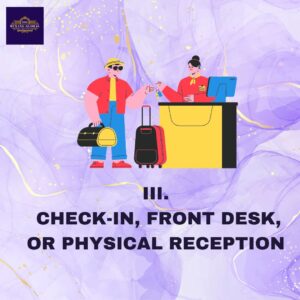
3. Check-In, Front Desk, or Physical Reception – Where First Impressions Are Sealed
This is the moment where the online impression meets real life. The guest finally arrives—maybe tired from travel, maybe anxious about their stay—and what they experience in the first 2–3 minutes will shape how they view everything else.
Whether you’re working the front desk, handling check-ins at a short-let apartment, or greeting walk-in customers at a spa or restaurant—this is YOUR moment to shine.
At this point in the guest journey, you are not just a staff member—you are the face of the brand.
Here’s how YOU can create an unforgettable welcome:
★ Smile warmly and make eye contact the moment they approach
★ Stand up (if seated) to greet them—it shows respect and readiness
★ Use their name if possible: “Welcome, Mr. Akinwale. We’ve been expecting you.”
★ Keep your tone polite, calm, and reassuring
★ Make sure your reception area is clean, well-lit, and free of unnecessary noise or clutter
★ Offer to assist with luggage, escort them, or explain check-in clearly
Do YOU smile and look guests in the eye when they arrive?
Is your front desk or lobby clean, tidy, and welcoming?
Do YOU take the lead in making the guest feel expected and appreciated?
Remember: You never get a second chance to make a first impression.
And in hospitality, that first 30 seconds can either open the door to trust—or close it.
4. Product or Service Delivery – Your Performance Moment
This is it—the moment of truth. The guest has booked, arrived, and interacted with your team. Now it’s time to deliver what they came for.
Whether you’re offering a hotel room, a spa treatment, a plate of food, a taxi ride, or even a training session—this is YOUR stage. And just like in a performance, every detail matters.
This stage of the guest journey is where expectations meet reality. And for YOU, it’s your opportunity to prove that your service isn’t just talk—it’s quality, consistency, and care in action.
Here’s how YOU can deliver with excellence:
★ Make sure the product or service is exactly what was promised—no surprises
★ Deliver on time and without errors (late food or dirty rooms ruin everything)
★ Personalize wherever possible: know their room preference, how they like their coffee, or if they have allergies
★ Keep your energy warm and your attitude professional—even during busy moments
★ Never let the guest feel like they’re “just a number”
Was the service delivered on time and as described?
Did YOU or your team remember any special requests or preferences?
Were cleanliness, accuracy, and guest comfort prioritized?
Pro tip: Guests may forget the Wi-Fi password or what you served—but they’ll never forget how well you delivered the main experience.
When YOU treat service delivery like a performance, excellence becomes your habit—and the guest becomes your fan.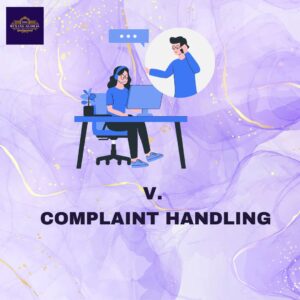
5. Complaint Handling – Turning Frustration Into Loyalty
In hospitality, complaints are not the end of the story—they’re a powerful opportunity for YOU to show what true service excellence looks like.
Things go wrong sometimes. Maybe the room wasn’t ready. Maybe the food was cold. Or maybe the guest just had a bad day. But what matters most is how YOU respond in that moment.
Top global brands like Marriott, Hilton, and Emirates actually train their staff to welcome complaints—because they understand one simple truth:
Guests remember how you made them feel when things went wrong more than the issue itself.
Here’s how YOU can handle complaints like a pro:
★ Stay calm—don’t take it personally
★ Listen without interrupting—let them finish
★ Apologize sincerely, even if the problem wasn’t your fault
★ Use a recovery model like LEARN (Listen, Empathize, Apologize, Resolve, Notify) or HEART (Hear, Empathize, Apologize, Respond, Thank)
★ Offer a clear, timely solution—and follow through
★ Thank them for speaking up and reassure them that their experience matters
Do YOU remain calm and respectful, even when a guest is upset?
Do you listen fully, or do you start defending yourself too quickly?
Do you apply a structured approach like LEARN or HEART to solve the issue professionally?
Pro tip: Many loyal customers started off as unhappy ones—until someone like YOU turned the situation around with empathy and action.
When YOU handle complaints well, you don’t just fix problems—you build trust and create lifelong ambassadors for your brand.
6. Follow-Up Communication – The Lasting Impression That Builds Loyalty
Many people focus so much on welcoming the guest that they forget something just as important—how you say goodbye.
Follow-up communication is the final touchpoint in the guest journey. It might be the last thing a guest hears from you—but it can be the most powerful moment of all.
Why? Because guests are more likely to remember the end of an experience. And if YOU leave them with warmth, gratitude, and a sense that they were truly valued—they’re more likely to come back, recommend you, or leave a glowing review.
Here’s how YOU can create a lasting final impression:
★ Send a simple “thank you” message or voice note after their visit
★ Ask how their experience was—and listen closely to their feedback
★ Let them know you’d love to serve them again
★ Share a special offer, future event, or loyalty reward (if applicable)
★ Personalize it! Mention their name or something memorable from their stay
Do YOU follow up after the guest leaves?
Are you asking for feedback in a warm, non-pushy way?
Do you make them feel appreciated—not forgotten?
Example:
“Thank you for choosing us, Mr. Ade. We hope you had a pleasant stay. We’d love to welcome you again soon!”
Pro tip: Many businesses end the relationship after checkout. But you can stand out by continuing the connection.
Because the last impression you leave?
It’s often the first thing they’ll remember when deciding to come back.
20:40 – Klevafx Technologies: IMG-20250728-WA0008.jpg (file attached)
3. Customer Expectations vs. Service Reality – Where YOU Win or Lose Trust
“People may forget what you said, but they will never forget how you made them feel.”
– Maya Angelou
In hospitality, it’s not enough to just provide a service—you need to deliver an experience that meets (or better yet, exceeds) what the guest was expecting.
 Understanding Expectations in Today’s Hospitality World
We live in a world where everything is fast, digital, and review-driven. Guests are no longer impressed by “just okay” service. They want more—faster, better, smoother, and more personalized.
If your service falls short of what they expected—even by a little—frustration sets in. And when that happens, two things vanish quickly: trust and loyalty.
That’s why YOU must understand not just what the guest paid for, but what they hope to feel, experience, and remember.
The real secret to customer service excellence?
It’s in learning how to bridge the gap between what customers expect and what you actually deliver—and then taking it a step further.
What Do Customers Expect Today?
No matter who you serve—a hotel guest, restaurant diner, training participant, or spa visitor—they all want the same key things:
★ Speed & Responsiveness – No one likes waiting. Fast replies and quick service matter.
★ Accuracy & Clarity – Get it right the first time. Wrong room, wrong order, wrong time? That’s a deal-breaker.
★ Personalization – Remember their name. Their favorite seat. How they like their tea. These small touches go a long way.
★ Respect & Warmth – Kindness, patience, and genuine attention will always stand out.
★ Consistency – It’s not about impressing once. It’s about delivering great service every time.
Are YOU meeting or exceeding these expectations?
Do you deliver more than what was promised—or just the bare minimum?
When you consistently exceed expectations, guests don’t just thank you—they trust you, return to you, and recommend you.
Meet Mr. and Mrs. Okoro, a couple celebrating their 10th wedding anniversary. They booked a weekend stay at a boutique hotel after seeing glowing reviews and stunning photos online. The website promised a “luxury experience,” complimentary welcome drinks, a romantic room setup, and personalized service.
But from the moment they arrived, reality fell short.
At check-in, there was a delay. The receptionist barely acknowledged them, focused on her phone, and didn’t seem aware of their reservation. There were no welcome drinks, and when they finally got to their room—it wasn’t decorated as requested. In fact, it wasn’t even the room they booked. When they called to complain, they were told the room they reserved was “not available” due to a system glitch.
No apology. No solution. No warmth.
The couple stayed, but the experience was already tainted. They felt unseen, unheard, and unimportant—a sharp contrast to what they were expecting. The next morning, breakfast was cold and delayed. When they checked out, no one even asked how their stay was.
By the time they left, they didn’t just lose interest in returning—they had lost trust in the brand. They shared their disappointment in a detailed online review, warning others not to be fooled by “Instagram hype.”
The Damage?
A broken promise of a special moment
A lost opportunity to create loyalty
A negative review that may cost future bookings
A reminder that feelings matter more than features
This shows how missing the mark—even slightly—can erode trust and create long-term damage. Guests remember how your service made them feel. That’s where you win—or lose.
 1. Fast Response – Your First Shot at Trust
In today’s world, speed is service. Whether it’s a message on WhatsApp, an email inquiry, or a guest standing at your counter—no one wants to feel ignored or forgotten.
 Silence = Frustration.
A fast response doesn’t mean you must have the answer right away—but it does mean the guest should feel seen and acknowledged immediately.
Here’s how YOU can stand out with speed:
★ Greet guests instantly, even if you’re attending to someone else: “Good afternoon, sir. I’ll be right with you.”
★ On WhatsApp or Instagram, reply within minutes—even if it’s just to say: “Thanks for reaching out! Let me check and get back to you shortly.”
★ Avoid keeping people in lines or on hold without updates. A simple, “We’ll be with you in a moment,” goes a long way.
Do YOU respond quickly—even when you’re busy?
Are you trained to acknowledge guests immediately, online and offline?
Fast replies build confidence. Slow replies make people question your professionalism—even before service begins.
In hospitality, speed shows you care. So even if the answer takes time,
your response shouldn’t.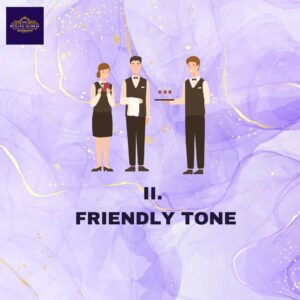
 2. Friendly Tone – The Power of Warmth in Every Interaction
In hospitality, guests aren’t just looking for a clean room, good food, or quick check-in. They want all of that—but served with kindness and warmth.
That’s where YOU make the difference.
A smile, a cheerful voice, or a calm and patient response can instantly shift a guest’s mood from tense to relaxed. It’s the difference between a transaction and a connection.
Here’s how YOU can show friendliness in every interaction:
★ Greet each guest with genuine warmth: “Good morning! Welcome to Elim Suites.”
★ Smile—even when speaking on the phone. It shows in your tone.
★ Use respectful and kind phrases: “My pleasure,” “Absolutely,” “Let me assist you with that.”
★ Stay calm, even when the guest is not. Your friendliness can defuse tension.
Do YOU smile first, not just respond?
Is your tone calm, respectful, and pleasant—even under pressure?
In hospitality, people remember how you made them feel—not just what you did for them.
Friendliness costs nothing, but it adds value to everything.
 3. Consistent Service – Make Every Guest Experience Dependable
In hospitality, consistency builds trust. Guests don’t just want one good experience—they want to know they’ll be treated well every single time they interact with you, no matter who is on duty or what time of day it is.
Think about this: if a guest receives warm, attentive service today but gets ignored tomorrow… they begin to wonder:
 “Can I really trust this place?”
Inconsistent service sends the wrong message:
“We’re not dependable.”
And in hospitality, reliability is everything.
Here’s how YOU can provide consistent service every day:
★ Stick to the same greeting standards: “Good morning, welcome back!”
★ Don’t make guests repeat themselves—pass notes or use guest profiles
★ Treat every shift, every guest, and every task with equal attention
★ Make sure team members follow the same standard, not personal style
Do YOU deliver the same level of service on a busy day as you do on a slow day?
Is your guest experience just as good at night as it is in the morning?
Can your guests count on you—every time?
Top brands like Marriott and Emirates are known for this.
They train staff to ensure that every guest touchpoint feels familiar, dependable, and high quality—no matter where in the world you are.
YOU can do the same—right where you are.
4. Accurate Information – Trust Begins with the Right Answers
In hospitality, you are a guide—and guests rely on you for clear, correct, and confident information.
Whether it’s check-in time, room availability, spa hours, Wi-Fi details, or refund policy, your words carry weight. And when you give wrong or incomplete information, trust breaks instantly—and frustration takes its place.
 One of the biggest guest complaints worldwide?
“I was told one thing by one person, and something else by another.”
That kind of confusion can ruin the entire experience—even if everything else is perfect.
Here’s how YOU can build trust through accurate service:
★ Only share information you’re sure about
★ If unsure, say: “Let me confirm that for you and get back shortly.”
★ Avoid passing guests from person to person without helping
★ Double-check details before making promises or commitments
★ Keep your knowledge updated—policies, prices, hours, procedures
Do YOU take a moment to confirm facts before responding?
Are you confident in the information you provide to guests?
Do guests leave the conversation feeling clear and satisfied?
Misinformation doesn’t just cause inconvenience—it damages your reputation.
But clear, accurate answers show professionalism, build confidence, and make you a trusted resource in your team.
Olasumbo Olagoke‑Komolafe: Food Safety Manager of the Year 2024
Industry: Quick Service Restaurant (QSR) / Food & Hospitality Services
At the Restaurant Managers Conference held at the LCCI Conference and Exhibition Centre in Ikeja, Lagos, Olasumbo Olagoke‑Komolafe was awarded Food Safety Manager of the Year 2024 by Respitality Care Company
With over 12 years of experience in food safety and quality assurance, she served as Senior Manager of Food Safety & Quality Assurance at Sweet Sensation Confectionery.
She led her team to successfully secure NAFDAC Good Hygiene Practice (GHP) certification for four consecutive years, demonstrating reliable standards and impeccable consistency
Her leadership transformed Sweet Sensation’s safety protocols into a benchmark for impeccable hygiene, compliance, and operational excellence in Nigeria’s QSR environment
Why She Stands Out for Service Consistency:
Unwavering Compliance: Consistently meets and exceeds regulatory standards—persistence that led to multiple years of certification.
Steady Leadership: Maintains high performance even under pressure and across changing organizational contexts.
Industry Recognition: Earning a national-level award validated not just individual excellence, but the culture she fostered in her team.
Final Thought:
Olasumbo’s recognition shows that consistency—even behind the scenes—creates real impact. Whether it’s food safety, front desk operations, or any service interaction: consistently high quality leads to trust, loyalty, and respect.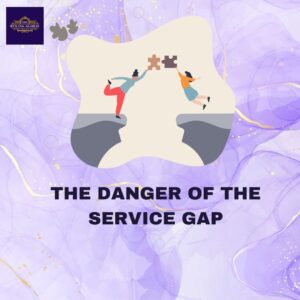
 The Danger of the Service Gap – When Expectations and Reality Don’t Match
In hospitality, the “Service Gap” is the silent deal-breaker. It’s what happens when what a guest expects… and what they actually experience… don’t line up.
And when there’s a gap between promise and delivery, disappointment moves in quickly.
No matter how friendly you are or how beautiful your space looks—if the guest’s expectations aren’t met, that gap can lead to:
 Negative reviews
Lost trust
Damaged brand image
Guests who never return
Let’s be real—even if you got 80% of the service right, that 20% gap is what they’ll talk about.
Here are real-world examples of service gaps:
★ Promised a smooth check-in → Guest waited 30+ minutes with no explanation
★ Expected polite communication → Was met with cold or rushed replies
★ Requested one service → Received something completely different
★ Thought it was a professional event → Found it disorganized and chaotic
Guests don’t remember everything you did right—they remember where you fell short.
Are YOU aware of the expectations you’re creating through your words, website, or ads?
Are YOU delivering exactly what’s promised—or just close?
Your job is to close the gap.
Deliver what was promised—and then go one step further.
That’s the difference between losing a customer and earning a lifelong fan.
Excellence Formula – The Secret Behind World-Class Service
There’s a simple but powerful formula used by the best hospitality brands in the world—from Hilton to Emirates to Eko Hotel:
 Customer Service Excellence = Expectations Met + Something Extra
Yes, meeting expectations is great. But exceeding them—even in small, thoughtful ways—is what creates lasting impressions and guest loyalty.
That “something extra” doesn’t need to be expensive or complicated. In fact, it’s often the little touches that people remember most.
Here’s what that could look like in YOUR role:
★ A warm smile and a firm, respectful handshake at check-in
★ Offering chilled water or tea while they wait in the lobby
★ Greeting returning guests by name: “Welcome back, Ms. Chidera!”
★ Sending a quick thank-you WhatsApp message after a visit or stay
★ Holding the elevator door or helping with luggage without being asked
Do YOU go beyond just doing your job—and add something personal, kind, or thoughtful?
Are YOU consistent in giving guests small moments of “Wow”?
Excellence isn’t about doing more—it’s about doing the ordinary with extra care.
World-class service is built on intentional, consistent gestures that make people feel seen, safe, and special.
🟦 DAY 2 – COMMUNICATION & EMOTIONAL INTELLIGENCE IN SERVICE
🎙️ Theme: “Speak Like a Pro, Listen Like a Leader”
🎯 Objective of the Day:
To equip YOU with the confidence and emotional skill to communicate effectively and empathetically—whether you’re speaking to a guest on the phone, writing an email, welcoming someone in person, or handling a complaint.
You’ll learn how to:
✅ Speak with clarity, warmth, and professionalism
✅ Listen actively and read what’s not being said
✅ Handle rude or difficult customers without losing your cool
✅ Turn small conversations into big loyalty moments
✅ Use emotional intelligence to connect, not just respond
💡 Why This Matters:
In hospitality, communication is your superpower.
Words can calm, inspire, reassure—or destroy a first impression.
Today is about sharpening your voice, tone, empathy, and awareness so that every guest interaction reflects world-class service.
📌 Because when YOU speak and listen like a leader—guests notice, trust, and come back.
🧩 1. Mastering Verbal & Non-Verbal Communication – Say It Like a Pro
“The way we communicate with others and with ourselves ultimately determines the quality of our relationships.”
– Tony Robbins
In hospitality, every moment is communication—not just what you say, but also how you say it, when you say it, and even what your body is saying when your mouth is silent.
✅ A warm “Welcome, ma” with a smile = Confidence and care
❌ A cold “Yes?” with crossed arms = Indifference, even if you didn’t mean it
Whether you’re chatting with a guest, sending a WhatsApp message, answering the phone, or just standing at the front desk—you are communicating your service attitude, your confidence, and the kind of brand your company represents.
The best hospitality professionals know that great communication is not just about grammar or vocabulary—it’s a blend of:
★ Emotional intelligence (how you read and respond to emotions)
★ Cultural awareness (knowing what is polite, respectful, or offensive across different backgrounds)
★ Behavioral precision (how you control your voice, tone, posture, eye contact, and timing)
💡 This is why top global brands—like Marriott, Emirates, and Four Seasons—train their teams to master communication. Because when you speak with clarity and carry yourself with warmth and purpose, guests instantly feel safe, valued, and understood.
✅ Do YOU smile when you speak—or do guests hear stress in your voice?
✅ Do your words match your tone and body language?
✅ Can YOU communicate respect and professionalism—without even saying a word?
🎯 Remember: In hospitality, your mouth speaks—but so does your posture, your hands, your timing, and your tone.
Great service starts with great communication—and YOU have what it takes to master it.
It was just past 10 a.m. when a middle-aged guest, Mrs. Olatunji, entered the lobby of Eminence Suites & Apartments, looking slightly hurried but hopeful. She was dressed formally—clearly on her way to attend the Domak Real Estate Investors’ Conference happening that day.
As she approached the front desk, she noticed the receptionist, Bola, leaning on the counter with her phone in hand. Her expression was neutral, her shoulders slouched, and her arms crossed. There was no smile. No eye contact. No greeting.
Without looking up, Bola muttered a flat:
“Yes?”
Startled by the cold tone, Mrs. Olatunji paused and then asked, “Please, where’s the conference hall for the Domak event?”
Still distracted and visibly uninterested, Bola sighed, then lazily nodded in the direction of a hallway and said:
“Just go left.”
There was no further explanation. No confirmation. No offer to guide or check. No smile.
Mrs. Olatunji followed the vague direction but ended up in the hotel’s restaurant, not the conference room. After walking around awkwardly and asking a server for clarification, she made her way back to the front desk—more flustered than before.
Now, Bola was chatting and laughing with a colleague behind the counter. She didn’t notice the returning guest immediately, nor did she acknowledge her confusion.
Mrs. Olatunji finally got proper directions from a bellboy. But by then, the first speaker had already started, and she had missed the welcome networking session. She later told a friend, “It’s a lovely hotel, but their staff behave like you’re disturbing them. They don’t care if you get lost or not.”
The next morning, her online review read:
> ⭐⭐☆☆☆
> “Nice building. Poor service. Staff were cold and uninterested. I felt like I was being dismissed instead of assisted. Just asked a simple question and got treated like a nuisance.”
⚠️ What Went Wrong?
No warm greeting (“Yes?” vs. “Good morning, welcome ma. How can I assist you?”)
Poor body language (crossed arms, no eye contact, distracted on phone)
Unclear directions (vague instructions instead of a clear explanation or offer to guide)
No follow-up or empathy when the guest returned confused
No awareness of how non-verbal cues impact perception
💡 What Should Have Happened?
Bola could have simply:
Looked up with a smile
Said: “Good morning ma, welcome. The Domak conference is holding in our Hall A. Please take the elevator on your right, it’s on the second floor. I’ll also call someone to guide you.”
Maintained positive body language and stepped away from her phone
Thanked the guest and wished her an enjoyable session
🧠 Training Reflection:
This situation teaches us that communication is more than words. It’s tone. It’s timing. It’s body language. It’s the willingness to be present in the moment—even for something that seems routine.
For Bola, the consequence was not just a lost opportunity for excellent service. It became a stain on the hotel’s online reputation—visible to hundreds of future guests.
🗣️ A. Verbal Communication Skills – Your Voice is Your Signature
In hospitality, your voice carries your brand. What you say—and how you say it—can make a guest feel respected, welcomed, or completely dismissed.
That’s why world-class professionals speak with clarity, confidence, and care at all times—even under pressure.
💡 Clear, respectful communication builds trust.
Mumbled words, rude tones, or poor language? They destroy it.
🔑 Key Verbal Skills to Master:
1️⃣ Clear Speech – Let Them Hear You (and Understand You)
★ Speak clearly—avoid mumbling or trailing off mid-sentence
★ Don’t chew gum, eat, or speak too fast while attending to guests
★ Use a polite and neutral tone that both locals and international guests can easily understand
🗣️ Poor: “Ehn… whatchu say again?”
✅ Better: “I beg your pardon, could you please repeat that?”
2️⃣ Tone Control – Your Tone Tells the Truth
★ If you’re apologizing, let your voice show it. If you’re welcoming, sound warm and enthusiastic.
★ Avoid robotic or irritated tones—even when you’re tired or stressed
★ Remember: Guests can feel your tone before they fully hear your words
🎙️ Your tone will always reveal what you’re truly feeling—so manage it well.
3️⃣ Pacing – Slow Down to Be Understood
★ Speak at a steady, calm pace, especially when explaining directions or policies
★ Don’t rush through important details—confused guests are rarely happy guests
★ Global hospitality brands like Hilton and IHG train their teams to use slow, deliberate speech. Why? Because it shows confidence, professionalism, and care
✅ Calm speech = clarity.
⛔ Fast speech = confusion or disinterest.
4️⃣ Courtesy Language – Politeness Never Fails
Words are powerful. Use kind, professional phrases that reflect respect, no matter who the guest is.
✅ Recommended phrases:
★ “Please, may I assist you?”
★ “Thank you for your patience.”
★ “Kindly give me a moment.”
★ “You’re welcome.”
★ “It’s my pleasure.”
❌ Avoid phrases like:
- “Hold on!” → Instead say: “Kindly allow me a moment while I check that for you.”
- “That’s not my job.” → Instead say: “Let me find the right person to assist you.”
✅ Example Reframe:
❌ “Hold on.”
✅ “Kindly allow me a moment while I look into that for you.”
🎯 Remember: Your voice is not just noise—it’s a reflection of your attitude and professionalism.
When you master verbal communication, you earn trust faster, resolve issues better, and create moments that guests remember.

A guest walks up to the front desk visibly upset.
She says, “I requested a wake-up call for 6:00 AM, but no one called. I missed my morning meeting.”
The receptionist responds:
“Sorry about that. We were short-staffed this morning.”
(Spoken in a flat, tired tone, with no eye contact and arms crossed.)
How do you think the guest is likely to feel after this response?
OPTION: ✔️ A. Reassured—the receptionist apologized (0 votes)
OPTION: ✔️ B. Dismissed—the tone felt like an excuse (56 votes)
OPTION: ✔️ C. Confused—was it really an apology? (8 votes)
OPTION: ✔️ D. Angry—the receptionist didn’t seem to care (17 votes)
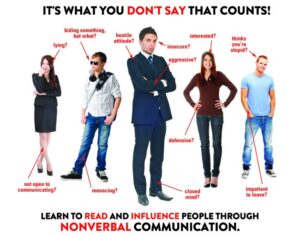
🧍🏽 B. Non-Verbal Communication Skills – Your Body Speaks Louder Than Words
Did you know that up to 93% of communication is non-verbal?
In fact, your body language alone makes up over 55% of how people understand you.
In hospitality, this means that your posture, facial expression, gestures, and even how you stand say more than your words ever will.
💡 “Your body is the billboard of your attitude.”
– Ritz-Carlton Training Manual
So if your words are polite but your face looks tired or irritated, the guest will believe your body—not your words.
🔑 Key Non-Verbal Skills to Master:
1️⃣ Facial Expression – Let Your Face Say “Welcome”
★ A genuine smile is the universal symbol of warmth—it relaxes the guest and invites trust
★ Even on tough days, a smile lifts your energy and opens doors
★ Avoid frowning, looking bored, or having a blank face—it feels cold and uninviting
😊 “A smile is the shortest distance between two people.”
– Global Hospitality Quote
2️⃣ Posture – How You Stand Shows How Much You Care
★ Stand or sit upright with alertness—it shows pride in your work
★ Avoid slouching, leaning against walls, or folding your arms while speaking to guests
★ Posture should say: “I’m here. I’m ready. I respect you.”
📌 In luxury hotels, staff are trained to “stand tall, speak calm, and serve warm.”
3️⃣ Eye Contact – Respect Through the Eyes
★ Make steady, brief eye contact when speaking—it shows confidence and attention
★ Don’t stare aggressively, look away too quickly, or roll your eyes (even when frustrated)
★ Be culturally sensitive: In some cultures, too much eye contact may seem rude
✅ Your eyes communicate sincerity—use them with care.
4️⃣ Gestures – Speak with Your Hands (Gently)
★ Use open hand gestures to direct or welcome guests
★ Avoid pointing directly at people—it can feel aggressive or disrespectful
★ Don’t fidget, cross arms, or wave hands too much—it distracts and signals nervousness
✅ Pro tip: Use two hands when presenting something important—like a key card or menu. It shows care.
5️⃣ Personal Space – Respect the Invisible Boundary
★ Maintain a comfortable distance—especially with international guests
★ Avoid standing too close or invading personal space
★ A general rule: keep about one arm’s length of respectful distance
🌍 Different cultures have different comfort zones—when in doubt, give space.
💡 Why This Matters:
Your guest may forget your exact words.
But they will always remember how your face, hands, and posture made them feel.
🎯 When your body language matches your words and your heart, that’s when true hospitality shines.

🌐 Global Best Practice Insight – The Ritz-Carlton Standard
At Ritz-Carlton, one of the world’s most respected hospitality brands, every team member is trained with this powerful guiding phrase:
> “We are ladies and gentlemen serving ladies and gentlemen.”
💡 What does this mean for YOU?
It means every word, tone, gesture, and action—from the front desk to the kitchen to housekeeping—must reflect:
★ Dignity – You carry yourself with class, no matter your role.
★ Service – You exist to anticipate and exceed guest needs.
★ Professionalism – You act with consistency, respect, and care—especially under pressure.
✅ Whether you wear a suit or a uniform, YOU represent excellence.
✅ Whether the guest is wealthy or modest, YOU treat them with the same grace and warmth.
🎯 Because when you hold yourself like a “lady or gentleman,” guests naturally treat you—and your brand—with the same respect.
A guest arrives at the hotel reception with two small children and visible luggage. It’s been a long journey. She approaches the front desk for check-in.
Receptionist Chioma is behind the desk. She’s standing with arms folded, leaning slightly against the counter. Her expression is neutral—no smile, no frown. She makes brief eye contact and says in a low voice:
“Good evening. Name, please?”
She processes the check-in quickly and gives the room key card without offering assistance or further information. The guest walks away slowly, looking around unsure about the direction to the elevators.
What non-verbal signals did Chioma unintentionally send?
OPTION: ✔️ A. “I don’t really want to be here right now.” (1 vote)
OPTION: ✔️ B. “I’m trying my best, but I’m tired.” (5 votes)
OPTION: ✔️ C. “I’m not interested in helping more than I must.” (63 votes)
OPTION: ✔️ D. “You’re just another task, not a valued guest.” (12 votes)

After a stressful day of travel from Johannesburg, Mrs. Adeleke, a respected Nigerian entrepreneur and frequent traveler, finally arrives at GroveBay Suites, a boutique hotel in the heart of Lagos.
She’s exhausted but hopeful for a warm welcome and some much-needed rest.
As she wheels her suitcase through the lobby:
🧍🏽♂️ The receptionist is sitting behind the front desk, hunched over with his arms tightly crossed and earphones in one ear. His phone is on the counter beside him, still lit up with WhatsApp chats.
He doesn’t stand up. He doesn’t smile.
In fact, he barely acknowledges her until she says:
> “Good evening. I have a reservation under Adeleke.”
😐 Still seated and expressionless, he removes one earbud and replies:
> “Your name again?”
No eye contact. His eyes flicker briefly to his computer screen, then to her bag, then back to the phone.
Mrs. Adeleke repeats her name, now slightly irritated. The receptionist slowly pulls up the reservation, and instead of handing her the form or saying “Please fill this,” he points lazily with one finger at the document on the counter—without saying a word.
As she writes, she asks a question:
> “Do you offer room service tonight? I haven’t eaten since this morning.”
🙄 The receptionist sighs loudly, shrugs his shoulders, and mumbles:
> “I don’t know… kitchen closes early. You can check later.”
Still no smile. No apology. No interest.
Then, as he comes around the desk to verify her ID, he leans in too closely, almost chest-to-shoulder with her, violating her personal space. She visibly steps back, uncomfortable.
He doesn’t notice.
He hands her the key card with one hand while still holding his phone in the other.
No welcome. No “Enjoy your stay.”
Just a robotic:
> “Room 205. Elevator’s behind.”
😞 Guest Reaction:
As Mrs. Adeleke rides up in the elevator, she feels a mix of disappointment, discomfort, and mild anger.
She begins to question her choice—despite the nice lobby and decent reviews.
She doesn’t feel valued. She doesn’t feel seen. She doesn’t feel safe.
Later that night, she texts a colleague:
> “Hotel’s okay, but the staff? Cold. Unprofessional. I wouldn’t recommend.”
📉 The Real Cost of That Interaction:
Despite a clean room and good facilities, the first impression failed because the receptionist’s non-verbal communication broke every hospitality standard:
🔴 No smile = No warmth
🔴 Slouched posture = No pride or energy
🔴 Avoided eye contact = Disinterest or dishonesty
🔴 Dismissive gestures = Lack of respect
🔴 Invading personal space = Guest discomfort
🔴 Holding a phone = Divided attention, unprofessionalism
💥 Takeaway for YOU (Hospitality Professionals):
In hospitality, the guest’s experience starts before a single word is spoken.
Your body, face, hands, posture, and personal space all send messages—either welcome in or go away.
✅ If you want to deliver Customer Service Excellence, then every gesture must say:
“I see you. I respect you. You matter here.”
🧩 4. Personal Grooming, Professionalism & Brand Representation
“You don’t just represent yourself—you represent the entire brand. Every day, in every way.”
In hospitality, YOU are the brand.
Not just the logo. Not just the building. Not just the fancy uniforms.
🌍 Why This Matters Globally
In world-class institutions like Four Seasons, Emirates, and The Ritz-Carlton, this one truth is emphasized over and over:
“Even if you’re not wearing the company logo, your attitude, your words, and your appearance are speaking on behalf of the brand.”
From the moment a guest sees you—how you’re dressed, how you carry yourself, how you respond to a simple “Good morning”—they’re already forming an opinion about the entire company.
Here’s what this looks like in action:
★ Your grooming is clean, neat, and professional—no wrinkled uniforms, no over-the-top styles
★ You speak clearly, respectfully, and with confidence—even on WhatsApp
★ Your posture, facial expression, and tone show that you take pride in your work
★ You’re courteous and composed—even during pressure or complaints
★ You show up on time, act responsibly, and stay focused—because excellence is a habit
✅ Are YOU someone guests can trust to represent the brand well?
✅ Is your appearance and attitude aligned with what your organization promises?
✅ Would a guest say: “If everyone here is like you, I’ll definitely come back”?
💡 Professionalism is not about being perfect—it’s about being consistent, respectful, and intentional in everything you do.
🎯 Whether you’re handling luggage, replying to emails, answering the phone, or helping a guest find their seat—you are the live, breathing face of your brand.
👗🌟 Grooming & Appearance Tips – What World-Class Hospitality Professionals Do Daily
Great grooming is more than just “looking nice.” It’s a sign of self-respect, professional pride, and respect for the guest.
In top hospitality brands like Four Seasons, Emirates, and Marriott, grooming is taken seriously because your appearance tells guests:
🔹 “I care.”
🔹 “You’re important.”
🔹 “You’re in good hands.”
✔️ What Global Hospitality Professionals Maintain:
★ Neat Hair – Always clean, brushed, and styled away from the face. No unkempt or distracting styles.
★ Clean Clothes – Uniforms should be wrinkle-free, well-fitted, and spotless. No stains, tears, or faded outfits.
★ Pleasant Body Odor – Daily shower, deodorant, and a light scent. Avoid strong perfumes or body spray—it can overwhelm guests.
★ Genuine Smile – Your smile is your best tool. It creates warmth, comfort, and connection instantly.
★ Tidy Workspace – Whether it’s a front desk, counter, or even your phone chat space—keep it clean, neat, and uncluttered.
★ Polite & Calm Speech – No matter how tired or stressed you feel, speak with patience and courtesy. The guest shouldn’t feel your stress.
✅ Remember: Guests don’t care how YOU feel—they care how THEY’RE treated.
Your grooming and attitude speak before you say a word. Make sure they say the right thing.
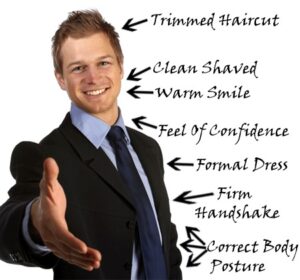
Your grooming and attitude speak before you say a word

🧑🏾💼👔 What Does Professionalism Look Like?
Professionalism is not just about what you wear—it’s about how you show up, how you follow through, and how you make people feel.
In hospitality, the way YOU behave reflects the entire organization. That’s why world-class professionals don’t leave professionalism to chance—they practice it daily.
📌 Global Behavior Checklist for Hospitality Professionals
⏰ 1. Be Punctual & Reliable
★ Always show up early—being “on time” is the minimum
★ Never keep clients, guests, or colleagues waiting
★ Respect time like you respect people
> “Being late tells the client they are not your priority.”
🤝 2. Keep Your Word
★ Follow through on everything you say
★ If you promise to call, message, or deliver—do it
★ Don’t say “Yes” just to please—say what you can actually commit to
> Top brands teach: Under-promise, over-deliver. It builds long-term trust.
🤍 3. Respect Everyone Equally
★ Whether it’s the janitor, guest, intern, or CEO—treat them with the same respect
★ Never judge by appearance, accent, gender, tribe, or social status
★ Use warm, polite words with EVERYONE
> True hospitality has no bias. Respect is always in style.
🚫 4. Avoid Gossip and Negativity
★ Never talk about clients, coworkers, or managers behind their back
★ Don’t complain in front of guests—they came for peace, not your problems
★ Keep a positive, professional, and solution-focused tone
> Your words reflect your values. Choose them wisely.
✨ Final Thought:
“Guests may forget your hairstyle or your shoes, but they will never forget how you made them feel.”
At Kuzang Global Academy, we’re not just training you to work in the industry—
🌟 We’re preparing you to lead with excellence, dignity, and class.
🧩 5. Making the First Contact Count – Phone, Email, or In-Person
“You never get a second chance to make a first impression.”
– Will Rogers
In the world of hospitality, first contact is everything. That first phone call, email, WhatsApp reply, or face-to-face moment may only last a few seconds—but it shapes how the guest feels about you and your brand for the rest of their journey.
🌍 Why First Impressions Matter Globally
In international institutions like Emirates, Radisson, or Hilton, staff are trained to understand this:
> The first 7 seconds can win the guest—or lose them.
That short moment creates an emotional impression—of confidence, care, or concern. If it’s cold, sloppy, or unclear… even the best product may not fix the bad start.
📌 How YOU Can Make First Contact Count:
📞 On the Phone:
★ Pick up within 3 rings
★ Smile before you speak—it shows in your voice
★ Greet warmly and introduce the business:
> “Good morning, thank you for calling Azaria Suites. How may I assist you today?”
💬 Via WhatsApp or Email:
★ Respond quickly and professionally—no slangs, shortcuts, or “heys”
★ Use polite, full sentences:
> “Hello Ms. Ifeoma, thank you for reaching out. May I help you with your booking?”
> ★ Avoid delays. Even if you need more time, reply with:
> “Let me confirm that and get back to you shortly.”
🤝 In-Person:
★ Stand up straight, make eye contact, and smile
★ Greet first—don’t wait for the guest to speak
★ If busy, acknowledge the guest and say:
> “I’ll be with you shortly, please feel welcome.”
✅ Is your tone professional and welcoming?
✅ Are you prepared to create a positive emotion in the first few seconds?
💡 First contact isn’t about scripts—it’s about presence. About showing the guest that you’re glad they’re here and ready to serve.
A guest walks into a luxury hotel lobby for a business meeting. She is greeted at the front desk by Rita, a front desk staff member.
Rita is wearing the correct uniform—but her shirt is wrinkled, her hair is messy, and she’s chewing gum. Her fingernails are brightly painted in neon green with chipped polish. Though she smiles and greets the guest politely, the guest keeps glancing at her appearance.
Later, the guest mentions in passing to a colleague:
“That hotel was nice, but I don’t know… something about the front desk made it feel less professional than I expected.”
What do you think shaped the guest’s perception the most?
OPTION: A. Rita was friendly, so appearance doesn’t matter that much (2 votes)
OPTION: B. The grooming distracted from the professionalism (74 votes)
OPTION: C. The guest was being overly judgmental (0 votes)
OPTION: D. The uniform alone is enough to create a good impression (1 vote)
☎️ Phone Etiquette – Make Your Voice Smile
Your voice is often the first impression guests will ever get of your brand—especially if they’ve never seen your face or visited your location.
They may not see your expression, but they can hear your mood.
So make it warm. Make it professional. Make it memorable.
✅ Global Standards for Hospitality Phone Etiquette
★ Answer within 3 rings – Guests feel ignored if it rings endlessly
★ Speak clearly, warmly, and confidently – Avoid mumbling or sounding distracted
★ Always state your name and company – It builds trust and clarity
> 🗣️ Sample Script:
> “Good morning! This is Blessing from Kuzang Global Academy. How may I assist you today?”
⚠️ What to Avoid:
🚫 Rushing through the greeting like you’re in a hurry
🚫 Sounding tired, moody, or uninterested
🚫 Saying “Yes?”, “Hello?”, or “What do you want?”
🚫 Talking while chewing gum or with loud background noise
🎯 Pro Tip:
SMILE before you speak—yes, even on the phone!
Smiling physically lifts your tone, makes you sound friendlier, and creates a welcoming atmosphere the guest can feel.
💡 Remember: In hospitality, your phone voice should sound like your best self—even when you’re tired. One friendly call can win a guest for life.
📧 Email Etiquette – Professionalism in Writing
In the global hospitality industry, email is often the very first impression—especially for international clients, corporate bookings, or official partnerships.
It’s not just a message—it’s a reflection of your brand, attention to detail, and professionalism.
✅ Email Do’s (Global Standards):
★ Start with a formal, respectful greeting:
> Dear Sir/Madam
> Dear Mr. James
> Dear Kuzang Client
★ Keep your email clear, polite, and straight to the point
★ Double-check your grammar, spelling, and punctuation
★ Always include a professional signature with:
> • Your name
> • Your role
> • Your organization’s name
> • Contact details
★ Respond within 24 hours—even if it’s just an acknowledgement like:
> “Thank you for your message. I’ll revert shortly with full details.”
📩 Sample Opening:
> Dear Mrs. Grace,
> Thank you for reaching out to Kuzang Global Academy. We’re delighted to assist you with your request regarding your training reservation…
❌ Email Don’ts (Avoid These Common Mistakes):
🚫 Starting with “Hey,” “Hi dear,” or using nicknames for formal clients
🚫 Typing in ALL CAPS or all lowercase (It looks careless or aggressive)
🚫 Ignoring emails for days without a response
🚫 Replying with just “Ok,” “Noted,” or “Seen” — always add value to your reply
📌 Why It Matters:
In the hospitality world, every email you send reinforces your brand culture.
Do you sound courteous, reliable, and professional—or rushed, casual, and forgettable?
🎯 Treat every email like it’s going to a VIP client—because in hospitality, they all are.

👥 Physical Interaction – Presence & Warmth That Guests Can Feel
In the hospitality world, no technology can replace the impact of a kind face and respectful human presence.
Whether it’s at reception, in the hallway, or at an event—you’re not just offering a service.
👉🏽 You’re offering comfort, attention, and care.
✅ Global Etiquette Practices for In-Person Excellence
★ Stand or sit upright when receiving a guest – posture shows readiness and respect
★ Make respectful eye contact – enough to connect, not to stare
★ Smile genuinely – not forced or robotic
★ Use a calm, warm, and welcoming tone of voice
🗣️ Sample Greeting:
> “Good afternoon! Welcome to Kuzang Global. It’s a pleasure to have you here. How may I assist you today?”
✋ Go the Extra Step – It’s the Little Things That Count
★ Open the door for them—don’t just point
★ Offer them a seat or a refreshment
★ Use the guest’s name if known:
> “Welcome back, Mr. Tunde!”
> ★ Ask helpful follow-up questions:
> “Would you like help with your bags?”
> “Would you prefer still or sparkling water?”
🔁 Key Principle:
Every guest interaction—whether by voice, message, or in person—should leave the guest thinking:
> “Wow, I’m in good hands.”
💡 It’s not just what you do—it’s how you do it that turns service into an experience.
Royal Crest Hospitality, a promising boutique hotel brand in West Africa, was in early talks with a European travel agency—Altura Prestige Travels—which specialized in high-net-worth clients and international corporate retreat packages.
Altura had sent a formal partnership inquiry after one of their scouts stayed at the hotel and gave a glowing report. The agency was considering Royal Crest as one of its new preferred destinations for executive clients.
📧 The Email That Changed Everything:
Altura sent a professional email requesting pricing, capacity, security standards, and exclusive corporate offers. They addressed the hotel’s management formally and signed off with:
> Warm regards,
> Altura Business Travel Coordination Team
The hotel’s Reservations Officer, in a hurry and not trained in email etiquette, replied casually:
> Hi,
> We have rooms. Price is \$160. Let me know if u r interested.
> Thanks – Sandra
There was:
★ No greeting
★ No proper sentence structure
★ No customization or acknowledgment of the potential partnership
★ No professional closing
★ Misspellings and use of informal shorthand
🧊 What Happened Next?
The team at Altura didn’t reply.
Instead, they wrote in an internal report:
> “Though the location is promising, the email response lacked professionalism. We cannot entrust our corporate clients to a service that does not demonstrate attention to detail in communication.”
They shifted the \$2.8 million partnership to another hotel chain in Ghana.
⚠️ What Went Wrong?
✔️ No formal greeting or acknowledgment of the partner’s status
✔️ Poor grammar and shorthand (e.g., “u r” instead of “you are”)
✔️ Informal tone inappropriate for business
✔️ No company branding or email signature
✔️ Missed opportunity to present offers or welcome a potential partner
✅ What Should Have Happened?
A professional response could have looked like this:
> Subject: Re: Corporate Retreat Partnership Inquiry
>
> Dear Altura Business Travel Team,
>
> Thank you for considering Royal Crest Hospitality as a potential destination for your corporate clients. We are honored by your interest.
>
> Please find attached a detailed proposal including our room rates, executive packages, and group services.
>
> We would be delighted to arrange a virtual meeting at your convenience.
>
> Warm regards,
> Sandra Eze
> Reservations Officer
> Royal Crest Hospitality
> \[Phone number] | \[Website] | \[Official email signature]
💡 Key Insight:
In hospitality, your email is often your handshake.
Lose formality, structure, or tone—and you might lose the client too.
🧩 3. Empathy & Active Listening – Make Guests Feel Truly Understood
“People don’t care how much you know, until they know how much you care.”
– Theodore Roosevelt
In hospitality, it’s not enough to solve a guest’s problem—you must first connect with what they’re feeling.
That’s where empathy and active listening come in.
❤️ What is Empathy (And Why YOU Need It)?
Empathy is the emotional superpower of world-class service. It’s not just about feeling sorry for someone—it’s about stepping into their shoes, recognizing their emotions, and responding with genuine care.
🔁 Let’s break it down:
❌ Sympathy says:
> “I feel sorry for you.”
✅ Empathy says:
> “I understand how you feel—and I’m here to help.”
Whether a guest is tired, confused, upset, or nervous, empathy allows you to respond in a way that makes them feel seen, heard, and safe.
🔍 Why Empathy Matters in Hospitality:
★ It calms anger faster than explanations ever could
★ It builds emotional connection—and emotional connection = guest loyalty
★ It transforms tense situations into “wow” moments
★ It shows professionalism, maturity, and emotional intelligence (EQ)
★ According to PwC, 59% of customers feel brands have “lost touch” with empathy
✅ That means YOU can stand out simply by caring more—and showing it.
🎯 Real-Life Example:
Imagine a guest’s flight was delayed, and they arrive late, tired, and frustrated.
You could just say:
> “Check-in ends at 9pm. You’re late.”
Or… you could say:
> “I completely understand—it must’ve been a long day for you. Let me see how we can still make you comfortable tonight.”
🔥 That one response could turn a complaint into a compliment.
🧠 Empathy = Emotional Intelligence in Action.
The best hospitality professionals in the world—from Ritz-Carlton to Emirates—train themselves to listen deeply, read emotions, and respond with care.
And YOU can, too.
A guest at a seaside resort approaches the front desk visibly upset. She says, almost tearfully:
“I came here to relax after a stressful year. But I haven’t slept well in two nights because of loud music from the beach bar. I even called reception last night, but nothing changed. I’m exhausted.”
The staff member, Daniel, replies:
“Ma, we’ll reduce the volume tonight.”
He immediately starts typing on his system.
How would you rate Daniel’s response in terms of empathy and active listening?
OPTION: A. Helpful – He offered a solution immediately (1 vote)
OPTION: B. Cold – He didn’t acknowledge her feelings (49 votes)
OPTION: C. Efficient – He got straight to the point (3 votes)
OPTION: D. Rushed – He didn’t really listen or connect with her concern (12 votes)
What should Daniel have said FIRST to show empathy?
OPTION: A. “We’ll make sure it’s quieter tonight, ma.” (0 votes)
OPTION: B. “I totally understand. That must be very frustrating after the week you’ve had. I’m so sorry.” (71 votes)
OPTION: C. “Let me call the bar now.” (0 votes)
OPTION: D. “Please give me your room number.” (0 votes)
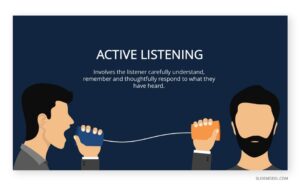
👂 What is Active Listening? – Hear With Your Ears, Heart & Mind
In hospitality, guests don’t just want to be heard—they want to feel that you truly understand them.
That’s where Active Listening comes in.
Active listening is more than hearing words—it means giving your full presence, reading emotion, and responding in a way that shows real empathy.
💡 Think of it as empathy in action.
You’re not just solving a problem—you’re connecting with a human being.
✅ Key Components of Active Listening:
1️⃣ 🎧 Give Undivided Attention – Be Fully Present
★ Put away distractions—no phones, side chats, or multitasking
★ Make eye contact and face the guest directly
★ Lean in slightly to show you’re engaged
💡 Attention is the most basic form of respect.
When you give it fully, guests feel important.
2️⃣ 👌 Use Verbal & Non-Verbal Affirmations – Let Them Know You’re With Them
★ Nods, smiles, and short phrases help reassure the speaker
★ Use phrases like:
- “I see.”
- “I understand.”
- “Go on.”
- “Yes, I’m listening.”
✅ These subtle cues tell the guest: “You’re being heard.”
3️⃣ 🚫 Don’t Interrupt – Let Them Finish
★ Even if you think you already know the issue, wait
★ Interrupting breaks trust and makes people feel dismissed
★ Most guests aren’t just looking for answers—they’re looking to be respected
💡 Letting them speak shows patience, maturity, and confidence.
4️⃣ 🔄 Paraphrase to Confirm – Repeat What You Heard
★ After they speak, summarize to confirm their message
★ This clears confusion, avoids mistakes, and proves you were truly listening
✅ Example:
> “So, if I understand correctly, you arrived on time, but your booking wasn’t recorded at the front desk?”
🎯 This technique:
★ Clears confusion
★ Avoids repeating the issue
★ Builds guest confidence in you
🧠 When you actively listen, you turn a complaint into a conversation—and a frustrated guest into a loyal one.
Because in the end, it’s not just about being right—it’s about making the guest feel heard, understood, and valued.
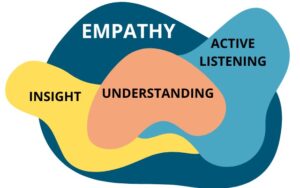
🎯 Empathy + Active Listening = Service Excellence
When you combine genuine empathy with active listening, something powerful happens:
Guests no longer feel like numbers—they feel like people who matter.
✅ They feel:
★ Valued – “This person sees me.”
★ Respected – “I’m not being brushed off.”
★ Reassured – “They’re trying to help me, not argue with me.”
💡 Even if you can’t fix the problem immediately, a guest who feels heard is far more likely to stay calm, patient, and cooperative.
📌 Quick Empathy Response Templates (For Common Situations):
❌ Don’t say:
> “That’s our policy.”
✅ Instead, try:
> “I completely understand how that might be frustrating. Let’s see how we can make this right.”
❌ Don’t say:
> “There’s nothing I can do.”
✅ Say:
> “Let me explore all available options and see what best helps you.”
🎤 Your voice + your care = your superpower.
Every conversation is a chance to show not just what you know—but how much you care.
You’re working at a front desk when a visibly upset customer approaches.
The guest says, “I booked a room with a balcony, but this one faces the back wall. I’m really disappointed.”
How do you respond?
OPTION: A) “That’s our policy. We assign rooms based on availability.” (0 votes)
OPTION: B) “There’s nothing I can do. It’s what the system gave.” (0 votes)
OPTION: C) “I completely understand your frustration. Let me check what we can do to improve your experience (67 votes)
OPTION: D) “You should’ve booked earlier if you wanted a better room.” (0 votes)
A Customer is Angry Their Food Order is Late
They say, “I’ve been waiting for over 40 minutes. This is unacceptable!”
You reply:
OPTION: A) “It’s not my fault — the kitchen is behind.” (0 votes)
OPTION: B) “That’s how long it takes during rush hour.” (0 votes)
OPTION: C) “I truly understand how frustrating that wait must be. I’ll check with the kitchen and update u (65 votes)
OPTION: D) “You can cancel if you’re not happy.” (0 votes)
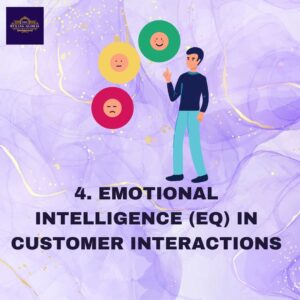
🧩 4. Emotional Intelligence (EQ) in Customer Interactions
“Emotional intelligence is the hidden ingredient behind every excellent service experience.”
– Anonymous Global Hospitality Trainer
Have you ever noticed that it’s not the policy guests remember—but how you made them feel when things went wrong?
That’s the power of Emotional Intelligence, also known as EQ—and it’s a must-have skill for every hospitality professional.
💬 What is Emotional Intelligence (EQ)?
EQ is your ability to:
🔹 Recognize and manage your own emotions
🔹 Understand how others are feeling (even if they don’t say it directly)
🔹 Respond with the right words, tone, and body language to keep situations calm, respectful, and professional
💡 In world-class brands like Ritz-Carlton, Four Seasons, and Airbnb, emotional intelligence is considered just as important as technical skill—because service is emotional.
✅ Why EQ Matters in Hospitality & Customer Service:
When guests are:
😡 Upset
😕 Confused
😟 Anxious
😭 Disappointed
…what they need first is not policy, pricing, or procedures.
They need a human response. They need you—calm, composed, and caring.
Professionals with strong EQ are able to:
★ Stay calm under pressure
★ Defuse frustration with empathy
★ Read what a guest isn’t saying
★ Respond in a way that makes people feel safe, heard, and respected
🎯 Example of EQ in Action:
Let’s say a guest is angry because they booked a double room but received a single.
❌ Low-EQ Response:
> “It’s not my fault. You’ll have to take that up with the booking agent.”
✅ High-EQ Response:
> “I understand how upsetting that must feel, especially after a long journey. Let me check what I can do to make this right for you.”
Same issue—very different outcome.
💡 Remember:
In emotional moments, people don’t remember what you said—they remember how you made them feel.
So when your EQ is high, you don’t just handle situations better—you turn them into opportunities to win trust and loyalty.
Amina had been going through a difficult period in her marriage. That morning, her spouse had moved out temporarily after a heated disagreement. She hadn’t slept well. Her eyes were swollen from crying. Yet, she showed up to work—determined to stay professional.
Around 11:15 AM, an elderly couple checking in from the UK became irritated when their room wasn’t ready due to a system glitch. The husband raised his voice. The wife muttered, “I knew we should have booked somewhere else.”
As the line behind them grew longer, all eyes were on Amina.
Instead of reacting defensively or appearing overwhelmed, Amina:
✔️ Took a deep breath
✔️ Maintained soft eye contact and a gentle tone
✔️ Smiled and said:
> “Sir, I completely understand how frustrating this must be after your long journey. Please give me just a few minutes—I will personally make sure your room is ready and include a complimentary drink while you wait.”
She calmly asked a colleague to help speed up housekeeping and walked the couple to the lounge herself. Later, the husband returned and said:
> “You turned a stressful moment into something very kind. Thank you.”
💡 What Showed Her Emotional Intelligence?
✔️ Self-Awareness: She knew she was emotionally vulnerable, but didn’t let it spill onto guests.
✔️ Self-Regulation: She remained calm under pressure and avoided snapping or breaking down.
✔️ Empathy: She acknowledged the guest’s frustration and addressed their emotional state before solving the issue.
✔️ Social Skill: She used tone, words, and service gestures to de-escalate tension and build trust.
✨ Key Insight:
Emotional intelligence isn’t about pretending everything is fine.
It’s about managing your emotions so they don’t harm your work—and using empathy to lift others, even when you’re struggling inside.
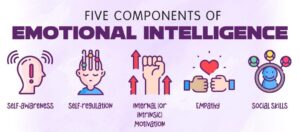
🌟 The 5 Core Elements of EQ in Service Excellence
In hospitality, your ability to read the room, manage your emotions, and respond with empathy is what separates good service from world-class service.
Let’s break down the 5 pillars of Emotional Intelligence (EQ) that every top-performing hospitality professional should master:
- 🧠 Self-Awareness
“You cannot manage what you don’t understand.”
Before you can lead others—or serve them well—you must first understand yourself.
★ Recognize your own emotional state in real-time.
★ Ask: “Am I tired, irritated, overwhelmed, or distracted?”
★ Notice how your emotions affect your tone, body language, and response.
✅ Example:
A receptionist who realizes they’re feeling drained after a long shift chooses to take a deep breath, smile, and still welcome the next guest warmly.
That’s self-awareness in action.
- 🔐 Self-Regulation
“Stay professional, even when the customer is not.”
Service can be emotional. But EQ helps you respond, not react.
★ Don’t snap, sigh, or roll your eyes—even when under pressure.
★ Keep your tone calm, your face composed, and your attitude helpful.
★ Remain in control, especially when the guest isn’t.
✅ Try This:
- Take a deep breath before replying.
- Silently count to 3 before answering an upset guest.
- Think: “I’m here to help, not to argue.”
- ❤️ Empathy
(Covered in Module 3, but worth repeating.)
Empathy is the heart of EQ—and service. It means feeling with people, not just for them.
★ Read emotional cues: body language, tone, facial expressions.
★ Show you care through your words, your eyes, your gestures.
★ Respond in a way that says: “You matter to me.”
✅ Quick Phrase:
> “I understand how this must feel. Let’s see how we can make it right.”
- 🔋 Motivation
“True service professionals are driven by purpose—not just pay.”
Hospitality work can be tiring—but purpose keeps you going.
★ Find joy in creating positive guest experiences.
★ Set a daily goal to make someone smile.
★ Stay curious, solution-focused, and forward-thinking.
✅ Example:
Instead of saying “I don’t know,” a motivated staff says:
> “Let me find out for you—I’ll be right back.”
It’s not about being perfect—it’s about being committed to service excellence.
- 🗣️ Social Skills
“EQ helps you speak the customer’s language—even when they’re silent.”
Great social skills mean knowing what to say, how to say it, and when to stay silent.
★ Adapt your communication to different personality types—some guests are calm, others are emotional or impatient.
★ Know how to de-escalate conflict and find common ground.
★ Use teamwork and emotional maturity when dealing with colleagues.
✅ Examples:
★ Use light humor (appropriately) to break tension.
★ Listen more than you speak when a guest is venting.
★ Support your team during busy hours, not just when it’s convenient.
🎯 Bottom Line:
Mastering EQ means YOU stay in control, make others feel safe, and handle pressure like a pro.
💡 In hospitality, EQ isn’t optional—it’s your daily advantage.

🎯 Benefits of High Emotional Intelligence (EQ) in Hospitality
When you develop strong emotional intelligence, everyone wins—your guests, your team, and most importantly, YOU.
Here’s what happens when your EQ is high on the job:
⭐ Fewer Service Escalations & Complaints
- You handle issues calmly and professionally—so they don’t spiral.
- Guests feel heard and understood, even when things go wrong.
⭐ More Guest Satisfaction & Repeat Business
- Emotional connection leads to loyalty.
- Guests don’t just remember the service—they remember how you made them feel.
⭐ Stronger Teamwork & Positive Work Culture
- You manage stress better, communicate more clearly, and help others feel supported.
- Teams with high EQ solve problems faster and enjoy working together more.
⭐ Higher Leadership Potential for You
- High EQ professionals are seen as mature, reliable, and people-focused.
- Supervisors and managers are more likely to trust you with leadership roles.
🧠 Harvard Business Review confirms it:
> 90% of top performers across industries possess high emotional intelligence.
💡 Want to grow in your career? Start by growing your EQ.
It’s your hidden superpower—and in hospitality, it’s one of your greatest assets.

🧩 5. Using Positive Language to De-escalate Tension
In hospitality, words can either calm the storm or fan the flames.
When a guest is upset or frustrated, how you speak to them—especially your tone and word choice—can either escalate the situation or gently guide it toward resolution.
💡 Positive language isn’t about sugar-coating—it’s about shifting the focus to solutions, not blame.
🚫 Avoid Phrases That Trigger or Dismiss:
These can sound defensive, cold, or uninterested—even if you didn’t mean it that way.
- “That’s not my job.”
- “You should have…”
- “There’s nothing I can do.”
- “Calm down!”
These phrases shut the guest down—and can make them feel powerless or disrespected.
✅ Use These Instead to Reframe & Reassure:
These show empathy, professionalism, and a willingness to help.
- “Let me see how I can assist you.”
- “I understand your frustration—let’s work through this together.”
- “Thank you for your patience, I appreciate it.”
- “Let me connect you with someone who can assist further.”
🎯 Why It Works:
Positive language helps:
★ Defuse tension
★ Show that you’re solution-focused
★ Make the guest feel respected and heard
★ Maintain control and professionalism—even when the guest doesn’t
💡 Remember: The words you choose don’t just solve problems—they shape how the guest feels about your brand, your team, and YOU.
💼 Customer Service Isn’t Servitude – Handling Abusive Behavior Professionally
Even the best customer service won’t satisfy everyone.
There are rare moments when a customer—despite being treated with care, patience, and professionalism—becomes disruptive, insulting, or abusive.
So, what should staff and managers do?
✅ Steps to Handle a Difficult Guest While Protecting Your Team:
✔️ Stay Calm and Professional
Respond with measured tone and body language. Don’t mirror the guest’s anger or sarcasm.
✔️ Set Boundaries Respectfully
Example: “Sir, I want to help you, but I kindly ask that we speak respectfully.”
✔️ Get a Supervisor or Manager Involved
Let leadership step in to support the staff and assess the situation.
✔️ Remove the Staff from the Situation (If Needed)
If a staff member is emotionally stressed, let them step away and be replaced by another colleague.
✔️ Document the Incident
Always write a brief, factual report for management records. This protects both the staff and the business.
✔️ Make a Decision
If the behavior continues, management has the right to deny service or ask the guest to leave, especially if abuse threatens the mental or emotional well-being of staff or other guests.
💬 Remember:
“The customer is not always right—but they should always be treated with dignity. And so should your staff.”
Customer service excellence doesn’t mean tolerating abuse.
It means knowing when to protect your team and uphold the dignity of your brand.
🎤 Final Word:
“In hospitality, every word, gesture, and tone becomes part of the guest’s experience. But what truly sets great service apart is not just what we say—but how we make people feel.”
Communication speaks to the mind.
Emotional intelligence speaks to the heart.
Together, they build trust, loyalty, and lasting impressions.
As you leave this session, remember:
✔️ Listen beyond the words
✔️ Respond with empathy
✔️ Represent your brand with care and confidence—even on tough days.
📘 DAY 3: COMPLAINT HANDLING, RECOVERY & CUSTOMER LOYALTY
“Turning Problems into Opportunities”
Today is about YOU — how you respond when things go wrong… because let’s be honest, no matter how amazing you are, some guests will still complain. And that’s okay!
The secret to great service isn’t being perfect — it’s how you handle imperfection with calm, care, and class.
🎯 Today’s Goal:
To help you grow in:
⭐ Confidence when handling complaints
⭐ Emotional strength to stay cool under pressure
⭐ Smart strategies to recover and win guests back
⭐ Turning one bad moment into a loyalty-building opportunity
🧠 Remember this:
> “A complaint is a gift. It’s a second chance to serve better.” – Janelle Barlow
💡 Here’s What You Need to Know Today:
⭐ A Complaint Is Not a Personal Attack
It might feel like it, but it’s not about you — it’s a guest asking for help. Your job is to listen, not argue.
⭐ Stay Calm, Even When They’re Not
The more upset the guest, the more important it is that you stay cool. Your calm energy can de-escalate the entire situation.
⭐ Always Acknowledge and Apologize
Even if it’s not your fault: “I’m really sorry that happened” shows maturity, professionalism, and care.
⭐ Fix the Issue — Then Add a Touch of Kindness
Solve the problem, but also think: What can I do to surprise this guest with extra care? It could be a smile, a kind gesture, or a small gift.
⭐ Follow Up, if You Can
After fixing the issue, check back: “Is everything okay now?” It shows you didn’t just react — you cared.
👏 You’ve got this! Every time you handle a complaint well, you’re not just fixing a moment — you’re building our brand and earning trust that lasts.
Let’s turn today’s lessons into real service excellence.
🎯 Common Types of Customer Complaints
Let’s be honest — if you’ve ever worked with people (whether in hospitality, retail, healthcare, or even government), you’ve likely received a complaint. It might have been loud, quiet, rude, respectful — but at its core, it was someone saying, “This experience didn’t meet my expectations.”
And here’s a powerful mindset shift:
A complaint isn’t an attack. It’s a request — a call for better service.
> 💬 “Every complaint is a chance to upgrade your service experience.”
Professionals in top-tier service roles learn not to take complaints personally. Instead of reacting with emotion, they respond with calm, curiosity, and care. Why? Because complaints often show us exactly where we can improve. They’re not obstacles — they’re opportunities.
🔎 Let’s look at the two main types of customer complaints:
⭐ Constructive Complaints – These are usually calm, clear, and focused on helping you improve. The customer might say, “My order wasn’t right,” or “The check-in process was too slow.” These are helpful and often come from a place of sincerity.
⭐ Emotional Complaints – These come when emotions are running high. The guest might feel ignored, disrespected, or frustrated. It’s not always about logic — it’s about how they felt in that moment.
In both cases, your job is not to match their energy — it’s to remain professional, listen actively, and show empathy. Whether their tone is calm or heated, your ability to stay composed is what defines your level of service.
Here’s a surprising truth:
> “Only 1 in 26 unhappy customers complain. The rest silently walk away.” – Esteban Kolsky
So when someone actually takes the time to express their dissatisfaction, it means they still care. They’re giving you (or your business) a second chance. Don’t waste it.
📌 Let’s reflect (drop a voice note or short text response):
🟡 Have you ever received a complaint that helped you grow professionally?
🟡 Is there a situation where you now realize you could’ve responded better?
We’re here to grow — not just to deliver service, but to deliver service that makes people feel heard, respected, and valued.
Constructive Complaint
A Nigerian staff member named Chidi is working at a hotel front desk in the UK.
A guest approaches Chidi calmly at checkout and says:
> “Hi, just a bit of feedback — the room was clean and the staff were friendly, but my wake-up call didn’t come through this morning, so I nearly missed my meeting. You might want to check if your system is working properly.”
Response from Chidi:
Chidi thanks the guest for the feedback, apologizes sincerely, and makes a note to inform the technical team immediately.
> “Thank you so much for pointing that out. I sincerely apologize for the inconvenience. I’ll make sure our team checks the system today to prevent it from happening again. We really appreciate your input.”
🇳🇬 Emotional Complaint
Chidi is still working at the same hotel in the UK.
A guest storms to the front desk visibly upset.
> “I’ve been calling room service for over an hour! I feel like I’m being ignored! This is ridiculous! Is this how you treat people here?”
Response from Chidi:
Chidi remains calm, listens without interrupting, and responds with empathy:
> “I’m truly sorry you’ve had this experience. I understand how frustrating that must be. Let me find out what happened and get this resolved for you right away.”
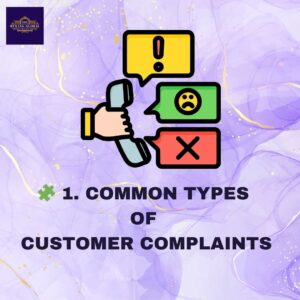
📍 Understanding Common Complaint Triggers
🎯 Let’s Break Down What Usually Frustrates Customers — And Why It Matters
One of the biggest skills in delivering world-class service is not just fixing problems — it’s anticipating them. The best service professionals don’t wait for complaints to happen. They see the warning signs early and act before the customer even has to speak.
Today, we’ll explore some of the most common reasons people complain, with real examples you’ve probably encountered — and tips to handle them better.
Let’s start with one of the most common:
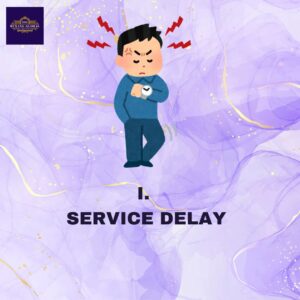
🔄 ⏳ Service Delays – It’s Not Just About Time… It’s About Feeling Ignored.
Most people don’t mind a little wait if they feel seen and respected. But silence? That’s what causes tension.
Imagine this:
✅ “I’ve been in this queue for 30 minutes and no one has said anything.”
✅ “My food is late, and no one has updated me.”
These complaints aren’t just about time — they’re about the lack of communication.
📌 How It Impacts the Guest:
⭐ They feel invisible — like no one values their time.
⭐ It creates frustration and damages trust.
⭐ Many will not return — some may leave negative reviews.
💡 What You Can Do Instead:
When you notice a delay coming, don’t wait for the guest to complain.
✅ Give timely updates:
“Thank you for your patience. Your order is being prepared and will be ready in about 10 minutes.”
✅ Check in before they check out — mentally or physically.
Remember, people are more patient when they feel included in the process. A simple update, smile, or reassurance can completely turn a situation around.
📍 You’re working a busy evening shift at a hotel restaurant. A guest has been waiting 25 minutes for their meal. You’ve just confirmed with the kitchen that it will take another 10 minutes due to a backup. You notice the guest looking restless, glancing at their watch.
What should you do next?
- ✅ Go over to the guest and say,
“Thank you for your patience — I just checked with the kitchen, and your meal will be ready in about 10 minutes. I truly appreciate you waiting. Would you like a glass of water or anything while you wait?”
- Wait and see if the guest complains before saying anything — you’re short-staffed and have other tables to attend to.
- Make eye contact and smile from a distance — but don’t approach unless called.
- Tell the kitchen to hurry up — it’s not your place to talk to the guest until the food is ready.
What should you do next?
OPTION: A (64 votes)
OPTION: B (0 votes)
OPTION: C (0 votes)
OPTION: D (0 votes)

🏨 2. Product or Service Quality – When What You Promised Isn’t What They Get
Let’s be honest — guests have expectations, and rightfully so. They come with pictures in mind, reviews they read, and a promise they believe you made (whether through your words, website, or setup).
So when reality doesn’t match that promise, even in small ways, it leads to disappointment—and sometimes, very vocal complaints.
Here’s how that usually sounds:
✅ “The room had a foul smell.”
✅ “The water pressure was too low.”
✅ “The event space didn’t match the pictures.”
📌 What This Does to the Customer Experience:
⭐ It breaks trust immediately — they feel misled.
⭐ It makes your brand seem unreliable.
⭐ It often forces you into damage control — with refunds, discounts, or lost business.
💡 So What Should You Do?
Always take this type of complaint seriously. People don’t want long explanations — they want solutions.
✅ Start with a genuine apology — not a defensive response.
✅ Take action: inspect the issue personally or escalate it fast.
✅ Offer options that make the guest feel cared for — a new room, a clean-up, an upgrade, a sincere promise to fix it.
It’s not always the issue itself that gets you in trouble — it’s how you respond to it.
A newlywed couple checks into a luxury hotel for their wedding night. One of the front desk staff is a Nigerian named Amaka, working in guest services abroad.
The couple arrives excited, but when they enter their room, it’s not the honeymoon suite they booked. The bed is unmade, and leftover food trays are still inside. The groom rushes back to the lobby, visibly angry:
> “This is supposed to be our wedding night! We paid for the honeymoon suite, and what we got was a mess! My wife is in tears — how can you do this to us?”
📌 What This Does to the Customer Experience:
The couple feels betrayed on one of the most important nights of their lives.
It breaks trust in the hotel’s promises.
It creates a lasting negative memory tied to your brand.
✅ What Should You Do?
Amaka’s Ideal Response:
Staying calm and focused, Amaka apologizes sincerely and takes immediate action:
> “I am truly sorry. I can’t imagine how upsetting this must be — and on your wedding night. Please allow me to make this right immediately.”
She then:
Personally inspects available suites.
Gets the honeymoon suite cleaned and decorated within 30 minutes.
Offers a free spa treatment and complimentary dinner as an apology.
Writes a handwritten note and places it in the new room with a small gift.
💡 Why This Works:
Genuine empathy comes first, not excuses.
Swift, visible action shows accountability.
Extras help restore trust and create a new, positive memory.
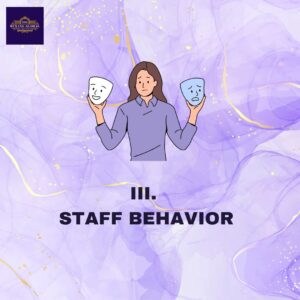
🤷♂️ 3. Staff Behavior – How You Make People Feel Matters Most
Let’s talk about one of the biggest triggers for complaints — your attitude and presence. Yes, YOU.
Even when everything else is right — clean rooms, quick service, great products — if the guest feels disrespected or dismissed, that emotional bruise stays longer than any physical issue.
People don’t just remember what you did — they remember how you made them feel.
These are the kinds of comments that come up when staff behavior goes wrong:
✅ “The receptionist didn’t even look up when I walked in.”
✅ “The waiter rolled his eyes when I asked a question.”
✅ “I felt disrespected by your manager’s tone.”
📌 Why This Hits Hard:
⭐ It’s personal. The guest feels ignored, judged, or even insulted.
⭐ It spreads fast — emotional complaints go straight to social media.
⭐ It affects trust in your entire brand — not just one person.
💡 How You Should Handle This — and Prevent It:
You don’t need to fake a smile all day, but you do need to be intentional about professionalism, respect, and emotional intelligence. Every guest, every interaction, every moment.
✅ Make eye contact and acknowledge people promptly.
✅ Speak with warmth — your tone matters more than your words.
✅ If you’re tired or having a bad day, pause and reset before facing the next guest. It’s not their fault.
Remember, you’re not just “doing a job” — you’re shaping someone’s experience.
📍 It’s a busy evening at your hotel’s restaurant. A guest walks up and asks if their table is ready. You’re stressed — two colleagues have called in sick, and your manager just reminded you about several pending orders.
You sigh and respond, without looking up:
“It’ll be ready when it’s ready. You’ll have to wait like everyone else.”
The guest raises their eyebrows and walks away visibly upset.
What should you have said instead?
- Roll your eyes slightly and say:
“We’re extremely busy right now — please be patient like everyone else.”
- Nod silently and turn away to continue your task. They’ll wait if it’s important.
- Say nothing, just gesture vaguely toward the waiting area.
- Smile politely and say:
“Thank you so much for your patience — we’re just preparing your table and it’ll be ready very shortly. Can I offer you a seat while you wait?”
What should you have said instead?
OPTION: A (0 votes)
OPTION: B (0 votes)
OPTION: C (0 votes)
OPTION: D (61 votes)

💰 4. Pricing & Charges – When Money Becomes a Trigger
Let’s face it—money is emotional. When someone feels overcharged, misled, or unsure about what they’re paying for, frustration comes fast. It doesn’t matter if it was a mistake or a miscommunication—they’ll often feel like they were tricked, and that stings.
You’ve probably heard things like:
✅ “I was billed twice for the same item.”
✅ “The promo I saw online wasn’t honored here.”
✅ “Why is there a hidden fee?”
Even if you weren’t the one who set the price or created the ad, you may still be the one facing the angry guest. So how do you handle this without making it worse?
📌 Why It Matters:
⭐ Money complaints make people feel cheated.
⭐ It leads to trust issues, and once trust is broken, it’s hard to win back.
⭐ In serious cases, it could even bring legal trouble or go viral online.
💡 Your Best Response Strategy:
✅ Stay calm and listen—let them vent without interruption.
✅ Be transparent. Explain the charge in plain language.
✅ If there’s a valid error, own it immediately and correct it.
✅ Offer a refund, discount, or clarification depending on the situation.
People don’t expect perfection—they expect honesty. If you respond with clarity and empathy, you can turn even a billing issue into a loyalty moment.
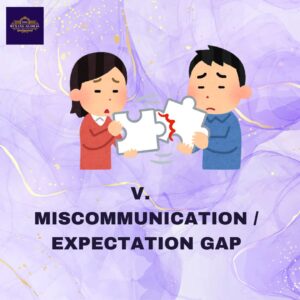
📉 5. Miscommunication & Expectation Gaps – When Promises Don’t Match Reality
Now let’s talk about one of the sneakiest causes of customer frustration: what they expected versus what they actually got. Sometimes, the customer complaint doesn’t come from rudeness or pricing—but simply from a mismatch in information.
Ever heard complaints like these?
✅ “I was told airport pickup was included.”
✅ “The website promised a sea view, but I’m looking at a wall.”
✅ “Your staff on WhatsApp said something totally different from what I got.”
These are not just misunderstandings—they’re trust-breakers. When guests feel misled, even unintentionally, they may assume your business lacks integrity. That’s a tough image to repair.
⭐ The Damage?
It creates disappointment and emotional letdown.
Guests may not complain loudly—but they’ll quietly never return.
Worse still, they may tell friends or post online, where the damage spreads.
💡 What You Can Do:
✅ Make sure all your messaging—online, on the phone, or face-to-face—is consistent and crystal clear.
✅ Confirm details in writing when possible (WhatsApp messages, email, etc.).
✅ Never assume silence means satisfaction.
🛑 Important Insight:
Not everyone complains aloud. Some guests may smile politely, leave quietly, and never come back. This is why brands like Hilton or Emirates don’t wait for complaints—they ask. Follow-up calls, short feedback forms, and simple “how was your experience?” messages can uncover and fix hidden issues early.
📍 A guest checks out of your hotel and suddenly becomes upset after reviewing their bill. They say:
“I was told breakfast was included, but now I see I’ve been charged for it. This is ridiculous!”
They’re visibly frustrated and raising their voice in front of other guests.
How should you respond?
- Defend the charge immediately by saying:
“Well, if it’s on the bill, then you were charged for it. Maybe you misunderstood.”
- Remain calm and say:
“I understand how that can be frustrating. I wasn’t the one who checked you in, but I’ll get the manager right away so we can review this together and sort it out for you.”
- Ignore their tone and just repeat the policy word-for-word from the screen.
- Shrug and say:
“I don’t know — that’s what the system shows. There’s nothing I can do.
How should you respond?
OPTION: A (0 votes)
OPTION: B (62 votes)
OPTION: C (0 votes)
OPTION: D (0 votes)

📌 “The most dangerous customer is the one who leaves quietly and never returns.”
🧩 2. The LEARN & HEART Models for Service Recovery
Let’s face it—no business is perfect. Delays happen. A meal takes too long. A room isn’t quite ready. What separates good service from great is how you respond when things go wrong. In fact, according to service legends like Ritz-Carlton and Hilton, the recovery moment can leave a stronger impression than the original mistake.
In our class today, we’re looking at two world-class frameworks used by hospitality giants—LEARN and HEART. These aren’t just acronyms—they’re powerful tools that help turn upset guests into loyal fans when applied with empathy and urgency.
✨ The LEARN Model – Used by Hilton Worldwide
Here’s how it works:
⭐ L – Listen: Give your full attention. Don’t interrupt. Show you care with eye contact, nodding, and genuine presence.
✓ Goal: Make the guest feel heard and respected.
⭐ E – Empathize: Acknowledge how they’re feeling. Don’t rush into solving—first, connect emotionally.
✓ Goal: Build emotional trust.
⭐ A – Apologize: Offer a heartfelt apology, even if the issue wasn’t your personal fault. Own the moment.
✓ Goal: Diffuse tension and demonstrate accountability.
⭐ R – Resolve: Act quickly to fix the issue or escalate it to someone who can. Always offer a clear solution or realistic timeline.
✓ Goal: Restore guest satisfaction.
⭐ N – Notify: Let the relevant team or supervisor know what happened, so it doesn’t occur again.
✓ Goal: Prevent future issues and improve system-wide service quality.
🗣️ Sample Response:
“I completely understand your concern, and I sincerely apologize for the delay. I’ll personally make sure it’s sorted within the next 10 minutes. Thank you so much for your patience.”
💡 A quick note: That last step—Notify—is often ignored, but it’s vital. You’re not just solving one person’s problem—you’re helping the whole business grow stronger by alerting the system. Think of yourself as the early-warning radar for service excellence.
Now let’s talk about something that separates ordinary service from truly exceptional hospitality—how we recover when things go wrong.
💖 The HEART Model – Ritz-Carlton
At world-class establishments like The Ritz-Carlton, service recovery isn’t just about fixing a problem. It’s about repairing the emotional damage that may have been caused when a guest’s expectations weren’t met. The guest may be feeling frustrated, disappointed, or even disrespected—and those emotions are just as important to address as the issue itself.
The HEART model helps us do this with care, clarity, and class.
It begins with H – Hear. This means letting the guest speak without interrupting them. Even if you already know what happened, give them space to tell their story. It builds trust and shows that their voice matters.
Next is E – Empathize. Go beyond just listening—connect emotionally. Try to feel what they’re feeling and say something like, “I understand how that must have felt.” This helps the guest feel seen and humanizes the situation.
Then comes A – Apologize. Say sorry sincerely and without making excuses—even if it wasn’t your personal fault. A genuine apology demonstrates humility, respect, and emotional intelligence.
R – Respond is where you take immediate action. Don’t delay, deflect, or overexplain. Show the guest you’re capable, confident, and eager to fix the issue or find someone who can.
Finally, T – Thank. This step is often forgotten, but it’s what sets apart world-class service from the rest. Thank the guest for bringing the issue to your attention. Something like, “We really appreciate you pointing this out—it helps us improve,” turns a complaint into a compliment and signals that their feedback is truly valued.
✅ Example:
> “Thank you so much for letting us know. I completely understand why this was upsetting. I sincerely apologize and will have it resolved immediately. We value your feedback—it helps us improve.”
That final “thank you” might seem small, but it’s powerful. It reframes the interaction as a partnership—not a battle. It shows you don’t just tolerate feedback—you welcome it.
In every service recovery moment, you’re either building or breaking trust. The HEART model helps ensure we’re always building.
A guest is upset because their room wasn’t ready at check-in. They begin explaining the inconvenience they faced.
❓What should you do first
OPTION: A) Cut them off politely and explain why it happened (0 votes)
OPTION: B) Apologize immediately and offer a free meal (0 votes)
OPTION: C) Let them speak fully without interrupting (59 votes)
OPTION: D) Tell them to calm down and wait for a solution (0 votes)
Which part of H.E.A.R.T. does this represent?
OPTION: A) Respond (0 votes)
OPTION: B) Empathize (0 votes)
OPTION: C) Thank (0 votes)
OPTION: D) Hear (54 votes)
🧩 3. Handling Angry or Difficult Customers Professionally
Let’s be real—you will encounter angry customers. Whether you’re in a hotel, restaurant, airport, hospital, or even working remotely, these situations will come up. And how you handle them—in that heat of the moment—can define your entire customer service reputation.
You see, when customers are upset, it’s rarely just about the actual issue. It’s about how they feel about the issue. Many times, it’s because they feel:
★ Ignored
★ Disrespected
★ Let down
Maybe no one communicated clearly with them. Maybe they didn’t get what they were promised. Or maybe no one took a moment to simply say, “I understand.”
That’s where you step up.
★ Stay calm – Don’t mirror their anger. Take a deep breath and hold your composure.
★ Listen actively – Let them speak. Don’t interrupt. Nod. Maintain eye contact (if in person).
★ Acknowledge their feelings – Say things like, “I can see how that must have felt,” or “That sounds frustrating, and I’m sorry you had to go through that.”
★ Avoid getting defensive – It’s not a personal attack. It’s an opportunity to show your professionalism.
★ Focus on resolution – Ask, “What can I do right now to help fix this for you?”
Here’s the truth: when a customer says, “Thank you for listening,” that’s not just politeness—it’s relief. It means you’ve created emotional safety. That alone can turn a bad experience into a positive memory.
So next time someone raises their voice or expresses disappointment, remember:
You don’t need to be perfect—you just need to be present, respectful, and focused on finding a solution.
That’s what sets great service apart from average service. That’s what makes you stand out—in any industry, at any level.
: https://youtu.be/zy16vZx4uAw?si=b8vFV7vPErsiKtLC
subscribe and like the video after watching

🎯 Top 6 Professional Strategies for Handling Difficult Customers
Alright you know very well—handling difficult customers isn’t easy. But with the right approach, you can turn stressful moments into shining moments that showcase your calm, confidence, and professionalism.
Here’s how:
- Stay Calm—Even If They’re Not
When someone’s yelling or being rude, your natural reaction might be to tense up or snap back. Don’t.
✔️ Breathe.
✔️ Lower your voice. (It calms the energy.)
✔️ Stay grounded. You’re the anchor—not the storm.
🧠 Pro Tip: Anger feeds on reactions. If you don’t feed it, it dies out.
- Don’t Take It Personally
It’s not about you. They’re upset about what happened, not who you are.
✔️ Keep your ego out of it.
✔️ Don’t get defensive.
✔️ Remind yourself: “I’m the solution—not the problem.”
You’re here to help—not to fight.
- Don’t Argue or Blame Others
Even if the mistake wasn’t yours, don’t play the blame game. That never ends well.
❌ Don’t say:
- “That’s not my fault.”
- “That’s another department.”
✅ Instead say:
“Let me take full responsibility and help get this fixed for you.”
💡 Why? Because the customer doesn’t care whose fault it is—they just want someone to care enough to fix it.
- Use Respectful Language and Calm Body Language
How you say something matters just as much as what you say.
✔️ Open posture (don’t cross your arms)
✔️ Gentle eye contact
✔️ Use a calm, respectful tone
✅ Say:
- “I hear you.”
- “Let’s work through this together.”
❌ Avoid:
- “Calm down.” (It never helps. It usually makes things worse.)
- Step Away When You Need To—But Do It Professionally
Sometimes the best move is to pause and bring in support. That’s not weakness—that’s wisdom.
✅ Try this:
“May I kindly excuse myself for a moment? I’d like to bring in someone who can help resolve this even faster.”
You’re not running—you’re stepping up. That’s leadership.
Keep this in mind: You can’t always control how people act—but you can always control how you respond.
And that’s what separates the average from the exceptional.
A Nigerian hospitality staff member, Adaora, is working as a restaurant supervisor in a busy hotel in Canada. She’s hardworking, respected by colleagues, and known for her direct but efficient customer service style.
One evening, a high-paying guest complains that Adaora was “rude” during dinner service. According to the guest, she “dismissed” their wine request and had a “cold tone” when answering questions.
Adaora remembers the interaction differently. She was under pressure, short-staffed, and trying to move quickly — but never intended to be rude.
The hotel, fearing backlash from a loyal guest and wanting to protect its image, decides to let Adaora go. She is called into the office the next day.
> Manager (calmly):
> “We’ve received a formal complaint from one of our VIP guests. After reviewing it, senior management has decided to terminate your employment. We know this is difficult, but we must prioritize guest perception.”
💔 Adaora’s Internal Reaction:
Shock
Anger
Embarrassment
Betrayal
Deep sense of “Why me?”
She wants to scream:
> “It wasn’t even that serious! I’ve given my best to this job!”
But in that moment, Adaora remembers her training:
✅ “Don’t Take It Personally” in the Deepest Way
✔ She understands: it’s not a judgment of her worth — but a reflection of a guest’s experience
✔ She holds back defensive words, keeping her professionalism intact
✔ She walks out with her head high, reminding herself:
> “This situation doesn’t define who I am. I am not the problem — I’m still the kind, capable person I was before this happened.”
💡 What This Teaches:
⭐ Sometimes the consequences feel unfair — but your response is your power
⭐ Emotional control protects your dignity, even when your job is gone
⭐ Professional image matters in the long run — today’s employer may be tomorrow’s reference
⭐ Every loss carries a lesson — even painful ones
One of the most powerful tools in your customer service toolbox—language. When a customer is upset, your words can either calm the storm or make it worse. Knowing exactly what to say—and just as importantly, what not to say—can transform tense situations into trust-building moments.
In difficult conversations, don’t try to reinvent the wheel. Use proven, empathetic phrases that defuse tension, build rapport, and restore confidence. Here are word-for-word options you can lean on when you’re caught in the middle of a customer’s frustration:
✅ Phrases That Work (Use These Word-for-Word if Needed)
✔️ “I completely understand how this may feel frustrating.”
✔️ “Let me make this right for you as quickly as possible.”
✔️ “Thank you for your patience. I’m following up immediately.”
✔️ “I’m truly sorry you’re experiencing this. Let’s resolve it together.”
✔️ “Your concern is valid, and I appreciate you bringing it to our attention.”
💡 These phrases acknowledge the guest’s feelings without blaming anyone, making excuses, or escalating the situation. They show that you are emotionally intelligent, solutions-focused, and most importantly—human.
Now, just as important as what to say is knowing what to avoid. One careless word, gesture, or attitude can undo all your good efforts.
⚠️ Common Mistakes to Avoid
❌ Interrupting the customer mid-rant
❌ Rolling your eyes or sighing loudly
❌ Saying “It’s not my job”
❌ Quoting rules or policies with a cold tone
❌ Promising something you can’t actually deliver
Remember this simple truth:
> “Empathy without a solution is sympathy.
> Action without empathy is cold.
> Combine both—and you become excellent.”
You’ve already made a commitment to grow in this journey. Let your words reflect your professionalism, compassion, and calm control. That’s how great service becomes excellent.

🧩 4. Creating ‘WOW’ Moments to Build Loyalty
“Fixing a problem meets expectations. Creating a ‘WOW’ moment exceeds them—and builds lifelong loyalty.”
In today’s competitive hospitality and service industry, delivering only what’s expected is no longer enough. Whether you’re dealing with guests in a hotel, customers in a retail space, or clients online, the secret to standing out lies in creating WOW moments—those small but powerful gestures that surprise and delight.
✅ Emotional loyalty—how people feel about your brand or service—is more powerful than transactional loyalty (like discounts or reward points). You build this emotional loyalty when people feel seen, valued, and remembered.
🎯 Why ‘WOW’ Moments Matter
- They turn frustration into gratitude
Even an upset customer can become your biggest fan when their issue is handled with care and a personal touch.
- They create unforgettable experiences
People may forget the exact service you gave—but they won’t forget how you made them feel.
- They inspire 5-star reviews and referrals
When people are pleasantly surprised, they love to share the story.
💡 Even luxury brands like The Ritz-Carlton empower their staff to go the extra mile (up to \$2,000 worth per guest!) just to create a WOW moment.
🌟 Examples of WOW Moments You Can Use Now
🛏️ For those in hospitality settings
- Upgrade a guest’s room to thank them for their patience
- Offer a warm drink and towel on arrival, especially after travel delays
- Surprise guests with a birthday treat or handwritten welcome note
📩 For those offering customer service or managing online interactions
- Instead of texting, call personally to explain and resolve an issue
- Send a thank-you gift, discount code, or e-book after solving a problem
- Use the customer’s name, mention past conversations—show you remember them
💼 If you’re part of a training, consulting, or coaching business
- Surprise your best students with access to a bonus lesson
- Send a personalized voice note: “Thanks for being here. You matter.”
- Mail a certificate with a handwritten “Well done!” for completing a program

⭐ Tony Hsieh
Former CEO of Zappos (Online Retailer)
🧭 Who Was He?
Tony Hsieh (pronounced “Shay”) revolutionized online customer service through his leadership at Zappos, turning a shoe-selling website into one of the most customer-obsessed companies in the world. He believed that customer service wasn’t a department — it was the company.
💡 Famous for:
✅ Making customer happiness the business model — Zappos famously offered 365-day return policies and free shipping both ways, all to build trust and reduce friction.
✅ Encouraging staff to spend as much time as needed on customer calls — one call reportedly lasted over 10 hours, just to support a customer and connect human to human.
✅ Creating a workplace where staff were empowered to go above and beyond, whether it was:
Sending flowers to a grieving customer
Overnighting shoes at Zappos’ cost for a last-minute wedding
Sending a thank-you card with a hand-drawn picture — just because the customer mentioned their child liked art
🧠 Philosophy:
> “Customer service shouldn’t just be a department — it should be the entire company.”
> – Tony Hsieh
✅ He believed that loyalty, referrals, and long-term success came not from flashy ads but from genuine care and emotional connection.
✅ Simple Formula for Creating WOW:
WOW = Personalization + Speed + Generosity + Sincerity
🎁 You don’t need a big budget to impress customers.
Often, a small, thoughtful gesture delivered sincerely can have a bigger impact than something expensive or scripted.
📌 How to Create WOW Moments:
🔹 Be Proactive
Don’t wait for complaints—look ahead, anticipate guest needs, and respond before you’re asked.
🔹 Be Personal
Use the customer’s name and reference their preferences or situation. Show them they’re more than just a number.
🔹 Be Human
Drop the robotic tone. Speak with empathy, warmth, and gratitude. Authenticity builds connection.
🔹 Be Empowered
Staff should feel trusted and authorized to delight customers without needing layers of approval.
🔁 Turn Mistakes Into Loyalty Opportunities
Mistakes are inevitable—but recovery is powerful.
📍 Example:
A guest’s check-in is delayed. They’re irritated.
But when staff responds with a warm apology and offers a free dessert at the restaurant, the story changes.
💬 “The way they handled the issue made me feel even more valued.” — Happy Guest
Oluwaseun, a young Nigerian professional, worked as a front desk associate at a luxury five-star hotel in Qatar that catered to VIP guests—diplomats, celebrities, and wealthy business travelers. Known for his calm demeanor and sharp attention to detail, Oluwaseun had quietly built a reputation among guests and staff for delivering service that exceeded expectations in one of the most competitive hospitality environments in the Middle East.
🔎 What Happened:
One afternoon, Oluwaseun noticed that a guest — Mrs. Klein, a returning business traveler from Germany — was due to arrive later that evening. She had stayed at the hotel three months earlier.
🔹 Being Proactive:
Without waiting for instructions, Oluwaseun:
⭐ Checked her last visit records.
⭐ Noticed she always requested room 804 with a feather pillow and sparkling water instead of still.
⭐ Realized her birthday was the next day — a small note from her passport scan.
He coordinated quietly with housekeeping and F\&B:
⭐ Reserved room 804 in advance
⭐ Arranged for a birthday card and chocolate tray in her room
⭐ Set the room temperature to her preference and stocked it with her preferred water
🔹 Being Personal:
When she arrived, he greeted her with:
> “Welcome back, Mrs. Klein. Room 804 is ready just how you like it — and we’ve added a little something for your birthday tomorrow.”
She was stunned. No one had remembered.
> “I travel all over the world, and no one ever pays this much attention. Thank you, Seun.”
🎯 The Result:
✅ Mrs. Klein sent a glowing email to hotel management praising Oluwaseun’s attention to detail.
✅ Management reviewed his record — he had no formal complaint in 18 months and had quietly improved VIP check-in efficiency.
✅ He was promoted to Guest Experience Supervisor within 2 months.
💸 The Wealth Turnaround:
Mrs. Klein turned out to be the head of a European travel investment firm.
Later, her company sought cultural consultants and hospitality trainers for a West African expansion project.
Guess who she contacted?
✅ Oluwaseun was invited to consult.
✅ He delivered training on personalizing guest experiences.
✅ Within a year, he launched a boutique training agency across Nigeria and Ghana — offering luxury-level customer service training.
💡 Key Lesson:
✅ Being proactive opens doors others don’t even see.
✅ Being personal turns guests into advocates — and connections into wealth.
✅ Excellence isn’t about where you work — it’s how you work.
🧩 5. The RATER Model: Measuring Service Quality in Customer Service Excellence
“If you can’t measure it, you can’t improve it.”
— Peter Drucker
In the pursuit of Customer Service Excellence, you must do more than simply serve—you must measure the quality of service delivered. The RATER Model, developed by Zeithaml, Parasuraman, and Berry, offers a reliable framework used by world-class organizations to evaluate and enhance their service standards.
From hotels like Hilton and Four Seasons to airlines like Emirates, the RATER model helps teams understand how customers truly experience service—and where improvements are needed.
📏 Why the RATER Model Is Essential in Service Excellence
Customer-focused organizations use the RATER Model to:
Identify service quality gaps that affect guest satisfaction
Train staff with precision, targeting the areas that matter most
Promote accountability and consistency across teams
Structure performance reviews around what customers actually value
By integrating RATER into training sessions, mystery shopping, and guest feedback, companies move beyond guesswork—and create service moments that build trust and loyalty.
For any team committed to excellence, RATER isn’t just a model—it’s a mindset.
🔎 The Five Dimensions of RATER
The RATER Model identifies five key dimensions that shape how customers experience and evaluate service quality. Each element highlights a specific area of performance that can either build trust—or break it.
- Reliability is the ability to deliver on promises dependably and accurately. A common example of poor reliability is when a guest arrives for an early check-in—confirmed in advance—but their room isn’t ready, or when an airport shuttle fails to show up as scheduled. These lapses create frustration and reduce confidence in the brand.
- Assurance speaks to the competence, courtesy, and professionalism of staff. It reflects how well employees can instill trust and confidence in guests. For instance, if a front desk staff member is unable to explain hotel policies or mishandles safety-related questions, guests begin to doubt the organization’s credibility.
- Tangibles refer to the physical aspects of service—facilities, uniforms, equipment, and communication materials. Dirty restrooms, stained tablecloths, or an outdated and unprofessional website can all signal poor attention to detail and reduce the perceived quality of service.
- Empathy is about offering personalized care and attention. A failure in empathy might look like ignoring a guest’s special request or treating all customers the same without consideration for individual needs. For example, when a family with a young child arrives and staff offers no assistance or child-friendly options, the service feels cold and impersonal.
- Responsiveness measures the willingness and speed with which staff respond to guest needs. Saying “I’ll get back to you” without follow-up, or ignoring a customer’s inquiry at reception, are classic signs of poor responsiveness. Quick, thoughtful responses show guests they are valued and heard.
💬 Examples in Action
Let’s look at how these failures appear in real hospitality scenarios—and how they should be handled:
When a guest’s room isn’t ready after a confirmed early check-in, it’s a reliability issue. The fix? Always double-check special requests and ensure transparent communication in advance.
If a new team member keeps saying “I’m not sure” to every question, that’s a failure in assurance. Staff must be trained on FAQs, hotel facilities, and how to respond with confidence.
A cluttered, disorganized conference room reflects poor tangibles. Regular pre-event inspections and quality control can prevent this.
If a family arrives and no one offers help or items suitable for children, this is a lack of empathy. Staff should proactively offer coloring books, high chairs, or friendly assistance.
When a customer complaint is met with “come back later,” responsiveness has broken down. Service teams must be trained to treat every issue with urgency and take clear follow-up actions.
Which of the following best shows how the RATER model can be applied to improve employee satisfaction in a service organization?
OPTION: A) Encouraging staff to handle as many customers as possible without breaks (1 vote)
OPTION: B) Giving employees frequent opportunities for training, support, and recognizing their performance (50 votes)
OPTION: C) Letting employees solve customer problems only after management approval (0 votes)
OPTION: D) Reducing staff numbers to cut costs while maintaining service levels (0 votes)
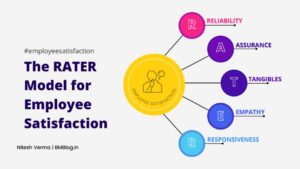
🔎 Understanding the RATER Dimensions in Action
The RATER Model gives us five lenses through which we can assess and improve service quality. Each of these dimensions reflects what customers really care about when they interact with your organization.
Let’s take a look at what each dimension means—and more importantly, how it shows up in real hospitality scenarios.
🟩 Reliability is all about consistency and keeping your promises. If a guest is promised early check-in and the room isn’t ready, that’s a breakdown in reliability. Guests begin to doubt everything else once that first promise is broken.
🟦 Assurance is how confident and competent your team appears. Imagine a new front desk staff member who fumbles answers and seems unsure—that shakes the guest’s confidence. Assurance builds trust, and without it, even small issues feel risky.
🟨 Tangibles refer to everything physical the guest sees—cleanliness, signage, uniforms, the website, even the condition of the menus. A dusty reception desk or outdated materials can make guests question whether your service is up to standard.
🟧 Empathy is about seeing guests as people, not just transactions. When a family with a toddler checks in and no one offers a high chair or coloring book, it signals a lack of empathy. Great brands personalize service by reading between the lines.
🟥 Responsiveness is your team’s willingness to jump in and help. If a guest complains and is told, “Come back later,” it sends the message that they don’t matter. Timely responses show that you’re alert, caring, and ready to act.
💬 Bringing It All Together with Real Situations
Here’s how these failures can look—and how they can be addressed:
A guest’s early check-in request is ignored? That’s a reliability issue. A simple confirmation call could’ve set the right expectation.
A staff member keeps saying “I’m not sure” to every question? That hurts assurance. Training on FAQs and hotel policies would boost confidence.
A conference room is messy before an event? That’s a tangibles issue. A final walkthrough could have prevented it.
A child arrives with family and no one offers help? That shows lack of empathy. Small gestures go a long way here.
A complaint is met with “come back later”? That’s poor responsiveness. Teach staff to take ownership and follow through.
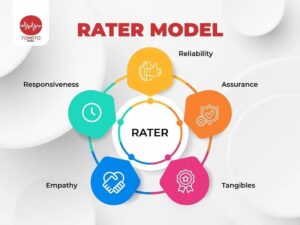
Using RATER to Develop Your Team
At Kuzang Global Academy, RATER isn’t just theory—it’s a practical framework you can use every day. You can:
Run monthly service audits based on the five dimensions
Design simple, fair performance scorecards
Create guest feedback forms aligned with RATER language
Spot exactly where a team member is struggling, and offer targeted training
🧠 When you embed RATER into your team culture, service improvement stops being guesswork—it becomes measurable and consistent.
📝 Group Task (WhatsApp Discussion)
Think of a situation where one of the RATER elements failed—what happened, and how was the guest impacted?
Drop your scenario and one way the failure could have been prevented. Let’s learn from each other.
✅ Final Key Takeaway:
“RATER doesn’t just help you deliver service—it helps you deliver the right kind of service, every time.”
⭐ From Porter to General Manager: The Journey of Josiah Elias Montsho
At the Palace of the Lost City, Sun City Resort – South Africa
👤 Early Beginnings
Josiah Elias Montsho started his career in hospitality at just 19 years old—as a hotel porter at Sun City’s Palace of the Lost City. The job was intended to be temporary, but his attitude and dedication changed his path forever.
🛎️ Rising Through Dedication & Service Excellence
Josiah took every opportunity to learn and assist beyond his role—from carrying luggage to observing guest interactions.
He developed a passion for hospitality, and within six years earned a scholarship for a 3-year diploma in Hotel Management.
Later, he completed executive training and steadily moved up: from Front Office Manager to Operations Manager to Rooms Division Manager—across some of South Africa’s most prestigious hotels.
🎯 Service Focus That Set Him Apart
Josiah consistently delivered reliable and attentive service, anticipating guest needs and ensuring smooth operations behind the scenes.
He believed in servant leadership, coaching his teams, promoting multi-skilling, and investing in their growth—and often said management is about helping others succeed.
🏆 The Pinnacle: General Manager Role
Ultimately, Josiah became the General Manager of the Palace of the Lost City, Sun City’s flagship resort. His rise—from porter to GM—illustrates the power of customer service excellence, emotional intelligence, and persistence
💡 What This Story Teaches:
✅ Exceptional service mindset creates promotion pathways.
✅ Being reliable, respectful, and proactive earns trust at all levels.
✅ Leadership rooted in coaching, empathy, and mentorship builds strong teams.
✅ Humble beginnings can lead to spectacular outcomes—if service excellence drives your approach.
7/31/25, 20:51 – Klevafx Technologies: IMG-20250313-WA0098.jpg (file attached)
We’ve come to the end of today’s WhatsApp class — well done, everyone! 🎉
Hope you had a great time and gained valuable insights.
7/31/25, 20:52 – Klevafx Technologies: IMG-20250731-WA0076.jpg (file attached)
📌 Reminder: Tomorrow will be our live session — a fully interactive experience!
We’ll be learning from one another, so come prepared to share, speak, and shine.
Everyone will be a facilitator tomorrow! 💡