
📌 Introduction to Hotel Housekeeping Operations
Competency Focus: Understanding Structure, Roles, and Standards
Dear Students,
Let me say this clearly from day one: Housekeeping is not “just cleaning.” It is the heart of the hotel. It is the silent brand ambassador. It is the reason guests return — or decide never to come back. A guest may forget the reception desk. They may forget the food. But they will never forget the condition of their room. And that responsibility rests fully on the housekeeping department.
This module is designed to help you understand how hotel housekeeping truly operates. If you want to work professionally in hotels — whether locally or internationally — you must understand the structure of the department, the reporting lines, the responsibilities attached to each role, and the professional standards that guide daily operations. Hotels do not run on guesswork. They run on systems. They run on structure. And structure creates discipline, which produces excellence.
In this training, you will learn the hierarchy within the housekeeping department — from the Executive Housekeeper to supervisors, room attendants, public area cleaners, and linen staff. You will understand why Standard Operating Procedures (SOPs) are strictly followed and how consistency maintains a hotel’s reputation. You will also learn how housekeeping interacts with other departments and why teamwork is critical in delivering excellent guest experiences.
Here is a hard truth: when structure is ignored, performance drops. When standards are ignored, complaints increase. When complaints increase, revenue drops. And when revenue drops, jobs are at risk. Professional housekeeping is about precision, accountability, and consistency. It is serious business.
As you go through this module, I want you to think beyond being “just staff.” Think like a future supervisor. Think like a future Executive Housekeeper. Think like a hospitality professional who can work anywhere in the world because you understand global standards.
This training will stretch you. It will discipline your thinking. It will refine your professional conduct. If you take it seriously, it can open doors for you across the hospitality industry.
Let’s begin. 💼✨

🇳🇬 A Day in the Life of a Nigerian Housekeeping Professional Working Abroad
Meet Amaka — A Nigerian Room Attendant working in Dubai
Amaka completed her Hotel Housekeeping & Guest Room Management Training in Nigeria. Today, she works at a 5-star property in Dubai under the Marriott International brand.
Here’s what a typical day looks like for her.
⏰ 6:00 AM — Preparing for Excellence
Amaka wakes up early. Uniform neatly ironed. Hair properly packed. Shoes polished. She understands something important — presentation reflects professionalism.
By 7:00 AM, she arrives at the staff entrance. She clocks in and greets colleagues from India, the Philippines, Kenya, and Egypt. Hospitality is global — and she is part of it.
📋 7:30 AM — Morning Briefing
At the housekeeping office, the Floor Supervisor conducts the daily briefing.
➤ Occupancy rate: 92%
➤ VIP arrivals: 3
➤ Early check-outs: 5
➤ Special requests: Baby crib in Room 804
Assignments are shared. Amaka receives 14 rooms.
Because of her training, she understands:
➤ Reporting structure
➤ Room status updates
➤ Importance of turnaround time
➤ Coordination with Front Office
She collects her master key, trolley, fresh linen, and cleaning supplies.
🚪 8:00 AM — Room Operations Begin
First room: Check-out.
She follows SOP strictly:
➤ Knock three times — “Housekeeping!”
➤ Open curtains
➤ Strip linen carefully
➤ Check for guest belongings
➤ Inspect mattress and bed base
➤ Clean bathroom top to bottom
➤ Replace amenities according to brand standard
➤ Make bed with hospital corners
➤ Final inspection before closing
She updates room status on her device.
No shortcuts. No rushing. Structure creates excellence.
🤝 11:30 AM — Teamwork in Action
Room 910 reports an air-conditioning fault. Amaka immediately informs maintenance through the system.
She understands housekeeping does not work alone.
➤ Front Office needs rooms released on time
➤ Maintenance ensures comfort
➤ Laundry ensures linen quality
Hotels run on systems — not guesswork.
🌟 1:00 PM — VIP Room Preparation
A VIP guest is checking in.
She double-checks everything:
➤ No fingerprints on mirrors
➤ Towels aligned perfectly
➤ Bed linen wrinkle-free
➤ Welcome note properly placed
Her supervisor inspects the room and nods in approval.
This is not “just cleaning.”
This is brand protection.
🍽 2:30 PM — Lunch Break
In the staff cafeteria, she reflects on how far she has come — from training in Nigeria to working internationally.
She remembers her instructor saying:
“When standards drop, complaints rise. When complaints rise, revenue drops.”
She now sees it in real life.
🧹 3:00 PM — Final Rounds
She completes her remaining rooms, restocks her trolley, returns unused supplies, and reports linen count.
Before clocking out, she checks with her supervisor:
“Is there anything else I can assist with?”
Professional attitude sets her apart.
📈 The Result
After several months of consistent performance, Amaka is shortlisted for Senior Room Attendant.
Why?
Because she:
➤ Understands hierarchy
➤ Follows SOP
➤ Works with discipline
➤ Thinks beyond “just staff”
💼 The Bigger Picture
This is the reality of a trained Nigerian hospitality professional working abroad.
Early mornings. Structured systems. Accountability. Teamwork. Standards.
Housekeeping is not ordinary work.
It is organized excellence behind the scenes.
And for those who take training seriously, it becomes a passport to global opportunities. ✨
🔥 HOTEL HOUSEKEEPING & GUEST ROOM MANAGEMENT TRAINING 🔥
(WhatsApp Learning Series)
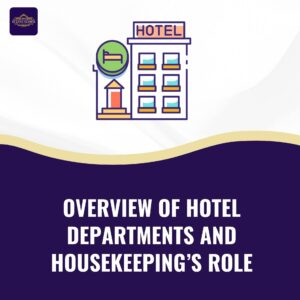
📌 Overview of Hotel Departments & Housekeeping’s Role
Dear Students,
If you want to succeed in the hospitality industry, you must first understand one powerful truth:
A hotel is not one department.
It is a system.
And every system only works when each part understands its role clearly.
Many people think a hotel is just “reception and rooms.” That thinking is shallow. A professional must see the bigger picture. A hotel is made up of multiple departments working together daily to create one seamless guest experience.
Let’s break it down.
🔹 Major Hotel Departments
A standard hotel is structured into key departments such as:
- Front Office – Handles reservations, check-in, check-out, guest inquiries, and first impressions.
• Housekeeping – Responsible for cleanliness, room preparation, public areas, and hygiene standards.
• Food & Beverage (F&B) – Manages restaurants, bars, room service, and kitchen operations.
• Maintenance/Engineering – Ensures all equipment, lighting, plumbing, and air-conditioning systems work properly.
• Security – Protects guests, staff, and property.
• Accounts/Finance – Manages revenue, expenses, payroll, and budgeting.
• Sales & Marketing – Promotes the hotel and drives bookings.
• Human Resources – Manages recruitment, training, and staff welfare.
Each department has its own responsibilities. But here is the hard truth: if one department fails, the guest experience suffers.
🔥 Now Let’s Talk About Housekeeping
Housekeeping is the operational backbone of the hotel.
Front Office may sell the room.
But Housekeeping makes the room sellable.
Sales & Marketing may advertise luxury.
But Housekeeping delivers the luxury physically.
Maintenance may fix equipment.
But Housekeeping ensures the environment feels fresh, clean, and welcoming.
If a guest enters a dirty room, nothing else matters. Not the smile at reception. Not the beautiful website. Not the quality of food.
Cleanliness is non-negotiable.
Housekeeping is directly responsible for:
- Preparing rooms before guest arrival
• Maintaining cleanliness during guest stay
• Managing linen and laundry
• Reporting maintenance issues
• Protecting hotel assets
• Ensuring hygiene and safety standards
• Maintaining public areas
This is not small work. This is high-responsibility work.
🧠 Why Understanding Other Departments Matters
As a housekeeping professional, you cannot work in isolation. You must collaborate constantly.
- You coordinate with Front Office for room status updates.
• You report technical faults to Maintenance.
• You work with Security when suspicious situations arise.
• You depend on Laundry and F&B for smooth operations.
Professional housekeeping staff understand inter-department communication. Unprofessional staff only focus on sweeping and mopping.
Which one will you choose to be?
⚠️ A Hard Reality
Hotels do not promote lazy workers.
They promote professionals who understand structure.
If you know only how to clean but do not understand hotel operations, you limit your growth.
If you understand the full system, you position yourself for leadership.
Think bigger than your current position.
From today, start seeing the hotel as a coordinated machine — and Housekeeping as one of its strongest engines.
This knowledge is what separates ordinary cleaners from hospitality professionals.
Let’s move forward with excellence. 💼✨
🇳🇬 Negative Scenario: When Cleanliness Is Ignored
“Just This One Room”
Emeka works as a room attendant in a busy hotel in Abuja. It is a high-occupancy weekend. The hotel is almost full, and check-ins are coming in quickly.
He is assigned 18 rooms instead of the usual 14.
By 2:30 PM, he is already exhausted.
Room 305 is a check-out room scheduled for immediate re-sale. The Front Office calls:
“Please release 305 quickly. Guest is waiting.”
Emeka rushes.
Instead of following full SOP, he cuts corners:
➤ He does not properly inspect under the bed.
➤ He wipes the bathroom sink but does not scrub it thoroughly.
➤ He sprays air freshener to mask a damp smell instead of identifying the source.
➤ He forgets to check the toilet base.
He tells himself:
“It’s just this one room. Nobody will notice.”
🚪 The Guest Arrives
Mrs. Johnson, a business traveler from Port Harcourt, checks into Room 305.
Within minutes, she notices:
➤ Hair strands in the bathroom drain.
➤ Water stains on the mirror.
➤ Dust on the bedside table.
➤ A faint odor in the bathroom.
Her confidence in the hotel drops immediately.
She doesn’t call housekeeping.
She takes pictures.
📱 The Review
That evening, she posts online:
“The room was not properly cleaned. Bathroom hygiene was poor. Very disappointed.”
The hotel’s rating drops from 4.2 to 3.9 within weeks due to multiple similar complaints.
Management investigates.
Room inspection records trace back to Emeka.
⚠️ The Consequences
Because of repeated cleanliness complaints:
➤ Guest trust declines.
➤ Refunds are issued.
➤ Corporate clients reconsider contracts.
➤ Revenue drops.
Emeka receives a formal warning. His supervisor is questioned. The department is placed under strict monitoring.
All because of “just one rushed room.”
💡 The Lesson
In housekeeping, there is no small dirt.
There is no small negligence.
Guests may tolerate delayed food.
They may forgive slow check-in.
But they will not tolerate uncleanliness.
Cleanliness is not decoration.
It is trust.
It is safety.
It is reputation.
It is revenue.
And once trust is broken, it is difficult to clean up.
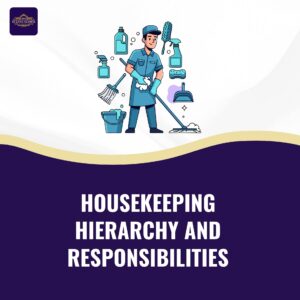
📌 Housekeeping Hierarchy and Responsibilities
In a professional hotel, nothing operates randomly. There is order. There is structure. There is authority. There is accountability.
Housekeeping is not a loose group of cleaners. It is a structured department with clear reporting lines and defined responsibilities. When hierarchy is respected, operations run smoothly. When hierarchy is ignored, confusion begins.
If you want to grow in hospitality, you must understand this structure clearly.
🔹 The Housekeeping Hierarchy
A standard hotel housekeeping department is structured as follows:
1️⃣ Executive Housekeeper
This is the head of the department. The Executive Housekeeper oversees the entire housekeeping operation. They create policies, enforce standards, manage budgets, supervise staff performance, coordinate with other departments, and ensure quality control across all areas.
They are not just supervising cleaning — they are protecting the hotel’s reputation.
2️⃣ Assistant Housekeeper
Supports the Executive Housekeeper and helps manage daily operations. Steps in when the head is unavailable and ensures that standards are consistently maintained.
3️⃣ Housekeeping Supervisors / Floor Supervisors
These are the quality controllers. They inspect rooms after cleaning, assign tasks to room attendants, ensure procedures are followed, and report issues.
No room should be released to guests without proper inspection.
4️⃣ Room Attendants
The backbone of daily operations. They clean and prepare guest rooms, restock amenities, change linen, report maintenance faults, and ensure rooms meet hotel standards.
Speed matters. But accuracy matters more.
5️⃣ Public Area Attendants
Responsible for lobbies, corridors, restrooms, staircases, elevators, and other shared spaces. Guests judge a hotel before entering their rooms — public areas must always be spotless.
6️⃣ Linen / Laundry Staff
Manage bed sheets, towels, uniforms, and fabric inventory. Poor linen control leads to financial loss. Proper management saves the hotel money.
🔥 Responsibilities: What This Really Means
Every position comes with responsibility. Not excuses.
The Executive Housekeeper is responsible for strategy and standards.
Supervisors are responsible for inspection and quality control.
Room attendants are responsible for execution.
Public area staff are responsible for first impressions.
Laundry staff are responsible for asset protection.
Each level depends on the other.
If one person is careless, the entire department looks incompetent.
⚠️ Hard Truth About Hierarchy
Hierarchy is not about pride.
It is about control and efficiency.
When staff bypass supervisors, confusion happens.
When supervisors fail to inspect properly, guests complain.
When leadership fails to enforce standards, the hotel reputation suffers.
Professionalism means respecting reporting lines.
🧠 Growth Mindset
Today you may be a room attendant. Tomorrow you could be a supervisor. One day, you may become an Executive Housekeeper.
But growth only happens when you understand not just your role — but the entire structure.
Know your responsibility.
Respect the hierarchy.
Deliver excellence at your level.
That is how real hospitality professionals are built. 💼✨

📌 Types of Hotel Rooms (Standard, Deluxe, Suite, Executive)
In hospitality, not all rooms are the same.
Different guests pay different prices — and they expect different experiences.
As a housekeeping professional, you must understand room categories clearly. If you treat every room the same way, you are already making a mistake.
Room type determines:
• Size
• Amenities
• Interior finishing
• Guest expectations
• Cleaning detail level
Let’s break them down.
🔹 1️⃣ Standard Room
This is the basic room category in most hotels. It usually contains:
- A bed (single, double, or queen)
• Basic furniture (chair, desk, wardrobe)
• Television
• Bathroom with essential amenities
• Standard décor
It is simple, functional, and affordable.
But here is the truth:
Even though it is “standard,” it must never look ordinary. Cleanliness must be perfect. Presentation must be neat. Many complaints come from standard rooms because staff assume “it’s just basic.”
There is no such thing as “just basic” in hospitality.
🔹 2️⃣ Deluxe Room
A deluxe room is an upgraded version of the standard room. It offers:
- More space
• Better interior finishing
• Higher quality furniture
• Extra amenities (better toiletries, minibar, better view)
• Enhanced comfort
Guests paying for deluxe expect to feel the difference immediately.
Housekeeping must pay extra attention to:
• Arrangement of furniture
• Neatness of bed styling
• Cleanliness of mirrors and glass
• Proper placement of premium amenities
Details matter more here.
🔹 3️⃣ Executive Room
Executive rooms are designed for business travelers and high-profile guests. They often include:
- Premium bedding
• Work desk and office-friendly setup
• Coffee/tea station
• Upgraded bathroom supplies
• Sometimes access to executive lounge
These guests are often professionals who notice small details quickly.
Dust on a desk? Unacceptable.
Poor linen presentation? Unacceptable.
Missing amenities? Unacceptable.
Executive rooms demand precision.
🔹 4️⃣ Suite
A suite is luxury. It is larger and may include:
- Separate living area
• Bedroom area
• Dining space
• Sometimes kitchenette
• High-end décor
• Premium bathroom fittings
Suites are for VIP guests, celebrities, top executives, or long-stay clients.
Cleaning a suite is not rushed work. It requires coordination, thorough inspection, and careful arrangement. Every section must look flawless.
When a guest pays for a suite, they are paying for an experience — not just space.
⚠️ The Hard Truth
Higher room category = Higher expectation.
If a suite guest finds the same presentation as a standard room, the hotel loses credibility.
If executive guests see carelessness, they may never return.
Housekeeping must adjust performance based on room type.
🧠 Professional Mindset
Understand room categories.
Understand guest expectations.
Deliver according to standard — not according to mood.
A true housekeeping professional does not clean rooms randomly.
They clean with awareness of value, class, and expectation.
That is what separates average workers from hospitality experts. 💼✨
📌 Importance of Cleanliness in Guest Satisfaction
In the hotel industry, cleanliness is not a luxury.
It is the foundation.
A guest may forgive slow service.
They may tolerate minor delays.
But they will not tolerate dirt.
The first thing a guest does after check-in is inspect the room — consciously or unconsciously. They look at the bed. They check the bathroom. They notice the smell. They observe the floor. Within minutes, they have already formed an opinion about the hotel.
And that opinion determines whether they stay happily, complain, or never return.
🔹 Cleanliness Builds Trust
When a room is spotless, well-arranged, and fresh, it sends a powerful message:
“This hotel cares.”
Clean sheets.
Shining bathroom fittings.
Dust-free surfaces.
Fresh scent.
These are not small details. They create psychological comfort. Guests feel safe. They feel relaxed. They feel valued.
Trust begins with cleanliness.
🔹 Cleanliness Protects Health
Hotels accommodate different people from different places every day. Without proper cleaning and sanitization, germs spread easily.
Poor hygiene can lead to:
• Guest complaints
• Negative reviews
• Health risks
• Damage to the hotel’s reputation
Professional housekeeping is not just about appearance — it is about safety and hygiene standards.
🔹 Cleanliness Drives Reviews and Revenue
Today, guests leave reviews online. One dirty bathroom can lead to a one-star rating. One bad review can discourage dozens of potential customers.
Think about this carefully:
Clean rooms = Positive reviews
Positive reviews = More bookings
More bookings = Job security
Cleanliness directly affects revenue.
🔥 The Hard Truth
Guests may not always compliment a clean room. They expect it.
But they will immediately complain about a dirty one.
In hospitality, cleanliness is not something you are praised for — it is something you are judged for when missing.
There is no excuse for:
• Hair in the bathroom
• Stained linen
• Dusty tables
• Bad odor
• Unemptied trash
These are signs of carelessness.
🧠 Professional Standard
A true housekeeping professional cleans as if they were preparing the room for someone important — because every guest is important.
Do not clean to finish quickly.
Do not clean because you were told.
Clean because excellence is your standard.
Remember this clearly:
Guest satisfaction begins with cleanliness.
And cleanliness begins with you. 💼✨
📌 Professional Ethics and Work Attitude
In hospitality, skill alone is not enough.
You can know how to clean perfectly, arrange a bed flawlessly, and organize a trolley neatly — but if your attitude is wrong, your career will not grow.
Hotels promote character.
Hotels reward discipline.
Hotels trust professionals.
Professional ethics and work attitude are what separate temporary workers from long-term hospitality leaders.
🔹 What Are Professional Ethics?
Professional ethics are the moral principles that guide your behavior at work. They determine how you act when:
- No one is watching
• A guest forgets money in a room
• You are tired but still on duty
• You make a mistake
• You are corrected by a supervisor
Ethics is about doing the right thing — even when it is inconvenient.
In housekeeping, ethics include:
- Honesty
• Respect for guest privacy
• Confidentiality
• Accountability
• Integrity
Entering a guest room means entering someone’s temporary home. That is a position of trust. Breaking that trust destroys your professional reputation immediately.
🔹 Work Attitude: The Silent Career Builder
Your attitude shows in:
- How you respond to instructions
• How you handle pressure
• How you treat colleagues
• How you speak to guests
• How you manage time
A negative attitude spreads quickly in a team. So does a positive one.
Hotels notice staff who:
• Arrive on time
• Wear proper uniform
• Maintain personal hygiene
• Follow procedures
• Accept corrections professionally
Discipline is not punishment. It is preparation for leadership.
🔥 Hard Truth About Attitude
Skills can be taught.
Attitude is chosen.
A lazy worker blames others.
A professional takes responsibility.
A careless worker hides mistakes.
A professional reports and corrects them.
A proud worker resists supervision.
A professional respects hierarchy.
Promotion does not come from years of service alone. It comes from consistency in behavior.
🔹 Key Professional Standards in Housekeeping
- Never discuss guest matters outside work
• Never argue in front of guests
• Never ignore hotel policies
• Never misuse hotel property
• Always maintain confidentiality
• Always maintain composure
Remember: your behavior represents the hotel brand.
🧠 Growth Mindset
Every day at work is an interview for your next promotion.
Supervisors are always observing:
• Your reliability
• Your honesty
• Your teamwork
• Your professionalism
If your attitude is strong, opportunities will find you.
Professional ethics protect your job.
Professional attitude builds your career.
Choose excellence daily. 💼✨

📌 Module 2: Workplace Health, Safety & Hygiene
Introduction
In hospitality, cleanliness is important.
But safety is critical.
A hotel is a workplace filled with movement, chemicals, equipment, guests, pressure, and deadlines. Without proper health and safety awareness, accidents can happen in seconds — and the consequences can be serious.
Workplace health, safety, and hygiene are not optional topics. They are professional requirements.
If you cannot protect yourself, your colleagues, and your guests, you are not ready for the industry.
🔹 Why This Module Matters
Housekeeping staff face daily risks such as:
- Slippery floors
• Chemical exposure
• Sharp objects
• Heavy lifting
• Electrical equipment
• Biohazards (body fluids, waste, contaminated linen)
One careless action can lead to injury.
One ignored hazard can lead to a lawsuit.
One unsafe habit can cost a job.
Safety is everyone’s responsibility — not just management’s.
🔥 Hard Truth
Many accidents in hotels are preventable.
They happen because:
• Procedures are ignored
• Protective equipment is not used
• Staff rush carelessly
• Hazards are not reported
• Hygiene standards are not followed
Professional staff do not take shortcuts.
Shortcuts create injuries.
🔹 What You Will Learn in This Module
In this section, you will understand:
- Workplace hazards in housekeeping
• Proper use of cleaning chemicals
• Personal Protective Equipment (PPE)
• Safe lifting techniques
• Fire safety awareness
• Infection control and hygiene practices
• Reporting accidents and incidents
Safety knowledge protects your health, your income, and your future.
🧠 Professional Mindset
A true housekeeping professional does not only clean rooms. They maintain safe environments.
You must think before you act:
Is this floor dry?
Am I using the right chemical?
Am I wearing the proper protection?
Have I reported that fault?
Prevention is better than explanation.
In hospitality, safety is not a suggestion.
It is a standard.
Master it. Practice it. Respect it.
Because a safe worker is a valuable worker. 💼✨
📌 Personal Hygiene Standards
In hospitality, your appearance speaks before you do.
Before a guest notices the room, they may notice you.
Before they judge the hotel, they observe the staff.
Personal hygiene is not optional. It is a professional requirement.
You cannot promote cleanliness whileo a dirty uniform.
You cannot maintain hygiene with poor grooming habits.
You cannot represent a hotel brand carelessly.
🔹 What Personal Hygiene Really Means
Personal hygiene is the daily practice of keeping your body, uniform, and overall appearance clean and presentable at all times.
It includes:
- Bathing daily
• Wearing a clean, ironed uniform
• Keeping hair neat and well-trimmed
• Maintaining clean, short nails
• Using deodorant (no strong perfume)
• Wearing clean, polished shoes
• Maintaining fresh breath
• Avoiding excessive jewelry
Guests may not complain directly, but they notice everything.
🔥 The Hard Truth
Body odor, dirty nails, stained uniforms, or untidy hair destroy professional image instantly.
In housekeeping, you work closely with beds, towels, bathrooms, and guest belongings. If your hygiene is poor, guests may question the cleanliness of the entire hotel.
Your personal hygiene reflects your work standards.
If you look careless, people assume your work is careless.
🔹 Hygiene and Health Protection
Good personal hygiene is not just about appearance — it protects health.
Proper handwashing prevents the spread of germs.
Clean uniforms prevent cross-contamination.
Hair control prevents contamination of rooms and linen.
Professional housekeeping staff must wash hands:
- Before entering a new room
• After cleaning bathrooms
• After handling trash
• After touching dirty linen
Hygiene protects you and the guest.
🔹 Professional Grooming Standards
Hotels expect staff to:
- Maintain a natural, professional look
• Avoid heavy makeup
• Avoid strong fragrances
• Keep facial hair neatly trimmed
• Cover wounds properly
• Stay home if seriously ill
You are part of the hotel brand. Your presentation matters.
🧠 Professional Mindset
Every day before work, ask yourself:
If I were the guest, would I feel comfortable with me cleaning my room?
If the answer is no, adjust immediately.
Personal hygiene is discipline.
Discipline builds trust.
Trust builds reputation.
In hospitality, excellence starts with you. 💼✨

📌 Use of Personal Protective Equipment (PPE)
In housekeeping, you are exposed to risks every single day — from chemicals to slips, sharps to repetitive motion. PPE isn’t just “nice to have.” It’s a professional necessity that protects your body and keeps you going in this demanding job.
🔹 What PPE Really Is
Personal Protective Equipment (PPE) refers to gear designed to protect your body from hazards you face at work when other controls are not enough. This includes items like gloves, masks, aprons, goggles, and non-slip shoes — all chosen based on the job you are doing.
🔹 Why PPE Matters in Housekeeping
Housekeeping work involves:
- Using strong cleaning chemicals
• Handling potentially contaminated linen
• Working on wet floors
• Manipulating sharp objects
• Lifting and pushing carts
Without protection, these tasks can lead to cuts, chemical burns, respiratory issues, slips, and long-term injuries. PPE provides a physical barrier between you and these hazards so you stay safe while doing your job well.
📊 Industry Reality: Risk Is Real
Data shows that hotel workers face higher rates of workplace injury than many other service sectors. Hotels report about 3.8 injury cases per 100 workers, compared to the average for food service jobs. Many of these injuries come from physically demanding work like housekeeping and carrying luggage.
Historically, housekeepers have also shown significantly higher injury rates compared with other hotel workers, especially musculoskeletal injuries from repetitive tasks like bed-making and heavy lifting.
These numbers highlight that housekeeping is one of the more physically risky roles in hotels — and PPE is one of the most effective defenses.
🔹 What PPE Protects You From
Here’s what common PPE helps with in hotels:
Gloves:
• Protect from chemicals and cleaning agents
• Reduce risk of skin irritation and burns
Masks/Respirators:
• Protect from fumes, dust, and airborne particles
Goggles/Face Shields:
• Protect eyes from splashes and chemical fumes
Non-Slip Shoes:
• Prevent slips and falls on wet floors
Aprons/Protective Clothing:
• Shield clothes and skin from contamination
Each piece has a purpose. Leaving one out increases your chance of injury.
🔹 The Hard Truth
Skills matter, but safety matters more when you’re on the job every day. Injury breaks momentum, damages your health, and can even cost you your income. PPE does not replace skill — but it ensures you can use your skill safely.
🔹 How PPE Saves You
Studies across industries show that when workers use PPE correctly, workplace injuries can drop significantly — sometimes by 30–70% where proper PPE protocols are in place.
That’s not just a statistic — that’s you staying healthy, earning consistently, and avoiding pain you didn’t sign up for.
🧠 Professional Mindset
Always check your PPE before work. Always wear the right gear for the task at hand. And never think “it won’t happen to me.”
In housekeeping, PPE is not a suggestion —
it’s your shield on the frontline of safety. 💼✨
📌 Preventing Cross-Contamination
In housekeeping, one careless action can spread germs from one place to another in seconds.
That is cross-contamination.
It happens when bacteria, viruses, dirt, or harmful substances are transferred from one surface, object, or person to another.
And in a hotel environment, this can affect multiple guests quickly.
Prevention is not optional. It is a professional standard.
🔹 What Cross-Contamination Looks Like
Cross-contamination can happen when:
- The same cloth is used in the bathroom and on bedroom surfaces
• Gloves are not changed between tasks
• Dirty linen touches clean linen
• Cleaning tools are not sanitized
• Hands are not washed properly
• Cleaning equipment is stored carelessly
It only takes one mistake to contaminate an entire room.
🔥 The Hard Truth
Guests may never see germs — but they will feel the consequences.
Poor hygiene can lead to:
- Guest illness
• Complaints
• Negative reviews
• Health inspections
• Damage to hotel reputation
One room cleaned improperly can affect many others.
Professional housekeeping is about control.
Control of tools.
Control of processes.
Control of hygiene.
🔹 Key Practices to Prevent Cross-Contamination
1️⃣ Use Color-Coded Cleaning Cloths
Many hotels use different colored cloths for different areas:
- One color for bathrooms
• One color for bedroom surfaces
• One color for public areas
This prevents mixing germs from high-risk areas to low-risk areas.
2️⃣ Change Gloves Regularly
Do not use the same gloves for:
- Cleaning toilets
• Making beds
• Restocking amenities
Remove and replace gloves between tasks.
3️⃣ Separate Dirty and Clean Linen
Dirty linen must never touch clean linen.
Transport them separately.
Store them separately.
4️⃣ Wash Hands Frequently
Hand hygiene is critical:
- After handling trash
• After cleaning bathrooms
• After touching dirty linen
• Before touching clean surfaces
Handwashing is simple — but powerful.
5️⃣ Clean from Top to Bottom
Always clean:
- From cleaner areas to dirtier areas
• From higher surfaces to lower surfaces
This prevents spreading dirt back onto already cleaned areas.
🔹 Equipment Hygiene
Cleaning tools must also be cleaned.
- Mop heads should be washed and dried properly
• Buckets must be rinsed
• Trolleys should be wiped down
• Cloths must be washed after use
Dirty equipment spreads contamination.
🧠 Professional Mindset
Cross-contamination prevention requires awareness.
Think before you move.
Think before you switch tasks.
Think before you reuse a cloth.
A true professional understands that hygiene is invisible — but its impact is visible.
Control contamination.
Protect the guest.
Protect the hotel.
Protect yourself.
Excellence in housekeeping means excellence in hygiene control. 💼✨
🔥 HOTEL HOUSEKEEPING & GUEST ROOM MANAGEMENT TRAINING 🔥
(WhatsApp Learning Series)
📌 Safe Chemical Handling
In housekeeping, chemicals are part of your daily tools.
But here is the truth:
The same chemical that removes stains can also damage your skin.
The same disinfectant that kills germs can harm your lungs.
Chemicals are powerful — and power must be handled responsibly.
Safe chemical handling is not optional. It is a professional obligation.
🔹 Why Chemical Safety Matters
Hotels use various cleaning agents such as:
• Disinfectants
• Glass cleaners
• Toilet bowl cleaners
• Degreasers
• Floor polishers
• Laundry chemicals
Many of these contain strong substances that can cause:
• Skin burns
• Eye irritation
• Breathing problems
• Poisoning
• Long-term health issues
Carelessness with chemicals can result in injury within seconds.
🔥 The Hard Truth
Most chemical accidents happen because:
• Staff mix different chemicals
• Labels are ignored
• Chemicals are transferred into unlabelled bottles
• PPE is not worn
• Chemicals are overused
• Instructions are not followed
Mixing certain chemicals (like bleach and ammonia) can release toxic gases. That is not a small mistake — that is dangerous.
Professional staff do not experiment.
They follow procedure.
🔹 Key Rules for Safe Chemical Handling
1️⃣ Always Read Labels
Before using any product, read the instructions carefully. The label tells you:
• Proper dilution ratio
• Surface compatibility
• Safety precautions
• Required PPE
Never assume. Always confirm.
2️⃣ Never Mix Chemicals
Unless specifically instructed by manufacturer guidelines, never mix cleaning products. Some combinations can create poisonous fumes.
3️⃣ Use Correct Dilution
Too strong = dangerous and wasteful.
Too weak = ineffective and unprofessional.
Follow the recommended dilution ratio exactly.
4️⃣ Wear Proper PPE
Use gloves, masks, and eye protection when required. Do not handle strong chemicals with bare hands.
5️⃣ Store Chemicals Properly
• Keep them in original containers
• Ensure labels are visible
• Store away from heat and food areas
• Keep out of reach of unauthorized persons
Improper storage can cause spills, contamination, or fire hazards.
6️⃣ Report Spills Immediately
Chemical spills must be handled quickly and correctly. Never ignore them.
🧠 Professional Mindset
Safe chemical handling is about discipline.
Do not rush.
Do not guess.
Do not improvise.
You are not just cleaning a room — you are working with substances that require knowledge and caution.
Protect your skin.
Protect your lungs.
Protect your future.
In hospitality, safety is part of professionalism.
Handle chemicals wisely — and work confidently. 💼✨

📌 Fire Safety Basics
Fire is one of the most dangerous emergencies in a hotel.
It spreads fast.
It creates panic.
It destroys property.
And most importantly — it threatens lives.
In hospitality, fire safety is not just the responsibility of security or management.
It is everyone’s responsibility — including housekeeping.
🔥 Why Fire Safety Matters in Hotels
Hotels operate 24 hours a day. Guests are sleeping, cooking equipment is running, electrical systems are active, laundry machines are operating.
Common causes of hotel fires include:
- Electrical faults
• Overloaded sockets
• Faulty equipment
• Improper chemical storage
• Kitchen accidents
• Careless smoking
One small spark can become a major disaster within minutes.
🔹 Basic Fire Prevention Rules
Prevention is always better than response.
Housekeeping staff must:
- Report faulty electrical outlets immediately
• Never overload power sockets
• Store chemicals properly
• Keep corridors and fire exits clear
• Avoid blocking fire extinguishers
• Turn off equipment when not in use
Clutter increases fire risk.
Blocked exits increase death risk.
Professional staff never ignore hazards.
🔹 Understanding the Fire Triangle
For a fire to exist, three elements are needed:
- Heat
• Fuel
• Oxygen
Remove one — the fire stops.
That is the basic principle behind firefighting.
🔹 Types of Fire (Basic Awareness)
Different fires require different extinguishers:
- Class A – Solid materials (wood, paper, fabric)
• Class B – Flammable liquids
• Class C – Electrical fires
Using the wrong extinguisher can make the fire worse.
Never use water on electrical or fuel fires.
🔹 What To Do If You Discover a Fire
Remember this simple principle:
R.A.C.E.
- R – Rescue anyone in immediate danger (if safe to do so)
• A – Alarm raise the fire alarm immediately
• C – Contain close doors to limit spread
• E – Evacuate follow evacuation procedures
Do not panic.
Do not run blindly.
Do not use elevators during a fire.
🔥 The Hard Truth
Many fire disasters become deadly because:
- Staff ignored early warning signs
• Exits were blocked
• Safety drills were not taken seriously
• People panicked
Training exists to save lives — but only if it is respected.
🧠 Professional Mindset
As housekeeping staff, you move around the hotel constantly. You are often the first to notice:
- Burning smells
• Electrical sparks
• Blocked exits
• Unsafe storage
Your alertness can prevent disaster.
Fire safety is not theory.
It is life protection.
Stay observant.
Report immediately.
Act responsibly.
In hospitality, safety is part of service excellence. 💼✨

📌 Hazard Identification in Guest Rooms
Guest rooms are designed for comfort, but they can hide hazards — risks that can harm guests or staff if ignored.
As a housekeeping professional, your eyes must spot danger before it becomes an incident. Identifying hazards is not optional. It is part of your job.
One small oversight can lead to injury, complaint, or legal trouble. Vigilance saves lives, protects guests, and preserves the hotel’s reputation.
🔹 Common Hazards in Guest Rooms
1️⃣ Wet or Slippery Floors
Spills, bathroom water, or cleaning residues can cause slips and falls.
2️⃣ Electrical Hazards
Faulty plugs, exposed wires, or overloaded sockets can cause shocks or fires.
3️⃣ Sharp Objects
Broken furniture, glass, or cutlery left behind can injure guests or staff.
4️⃣ Trip Hazards
Loose rugs, cords, or clutter in walking paths create risk.
5️⃣ Chemical Hazards
Cleaning agents left in open bottles or improperly stored can harm guests and staff.
6️⃣ Fire Hazards
Candles, cigarettes, or flammable materials left in rooms can start fires.
7️⃣ Hygiene Hazards
Dirty linen, leftover food, or uncleaned bathrooms can spread germs.
8️⃣ Security Risks
Unlocked windows, faulty door locks, or missing safes put guests’ belongings at risk.
🔹 How to Identify Hazards Effectively
Professional housekeeping staff follow a routine:
- Inspect the room thoroughly before guest arrival
• Check the bathroom for wet floors, leaks, and broken tiles
• Examine electrical outlets, lamps, and appliances
• Ensure all furniture is stable and intact
• Look for loose rugs, cords, or obstacles
• Check that chemicals are properly stored
• Confirm smoke detectors and safety equipment are functional
• Ensure personal safety items (fire exits, emergency info) are visible
Your inspection is not just a checklist — it is a duty of care.
🔹 The Hard Truth
Most accidents in hotels happen because someone ignored a hazard.
A small spill can lead to a guest injury.
A faulty lamp can cause a fire.
A missing rug corner can trip a child.
Professional staff do not wait for accidents to happen.
They identify hazards before they cause harm.
🧠 Professional Mindset
When entering a room, ask yourself:
- “Is this room safe for the guest?”
- “Could anything here cause harm?”
- “Have all potential risks been removed or reported?”
Hazard identification is not a task.
It is an attitude of responsibility.
A vigilant housekeeping team prevents incidents, builds trust, and elevates hotel standards.
Excellence in housekeeping is seeing the risk before anyone else does. 💼✨
📌 Module 3: Housekeeping Equipment & Cleaning Agents
Introduction
Housekeeping is not just about sweeping, mopping, or dusting.
It is about using the right tools and the right chemicals to deliver consistent, professional results.
The effectiveness of your work depends as much on equipment and cleaning agents as on skill. A careless choice of tools or chemicals can ruin surfaces, create safety hazards, or compromise hygiene.
This module focuses on what equipment to use, when to use it, and how to handle cleaning agents safely — because professional housekeeping is precise, systematic, and informed.
🔹 Why Equipment and Cleaning Agents Matter
Every room, public area, and surface in a hotel presents a different cleaning challenge.
- Hard floors vs. carpets vs. tiles
• Glass surfaces vs. mirrors vs. furniture
• Bathrooms, toilets, and showers
• High-touch surfaces like switches, handles, and remotes
Each requires the correct equipment and appropriate cleaning agents to maintain hygiene and appearance.
The wrong choice can:
- Damage surfaces
• Spread germs
• Waste chemicals
• Create safety risks
Professional staff know their tools and chemicals as well as they know their rooms.
🔹 The Hard Truth
Many “average” cleaners blame surfaces or chemicals when results are poor.
The truth: poor results often come from lack of knowledge — knowing which tool and agent to use for each task.
Excellence in housekeeping means:
- Understanding the purpose of each piece of equipment
• Knowing chemical properties
• Following manufacturer guidelines
• Maintaining equipment in top condition
When equipment is used correctly, cleaning becomes faster, safer, and more effective.
When chemicals are handled correctly, hygiene standards are maintained, and guests remain safe.
🧠 Professional Mindset
Think of housekeeping equipment and cleaning agents as extensions of your hands.
- Choose wisely
• Use responsibly
• Maintain consistently
Your professionalism is reflected not just in how clean a room looks, but in how safely and effectively it was cleaned.
Master your tools. Master your chemicals. Master housekeeping. 💼✨
📌 Cleaning Tools & Equipment
Housekeeping isn’t just about elbow grease — it’s about using the right tools to work smarter, safer, and more efficiently. Good equipment improves results, protects your body, and helps you maintain the high standards expected in professional hotels.
🔹 Why Tools Matter
Hotels are busy places with many surfaces and materials: carpets, tiles, glass, wood, bathrooms, upholstery, and high‑touch areas. Cleaning all of these well — and quickly — requires a variety of specialized tools:
- Microfiber cloths
• Buckets and wringers
• Mops (dry and wet)
• Vacuum cleaners (with HEPA filters)
• Floor scrubbers
• Dust pans and brushes
• Trolleys and carts
The better the equipment, the better the cleaning outcome. Modern cleaning tools can make jobs that once took hours now take a fraction of the time, while improving thoroughness and reducing fatigue.
📊 Industry Insight
Investing in quality cleaning equipment can significantly boost housekeeping performance. For example, modern high‑capacity vacuum cleaners can increase cleaning efficiency by up to 30% compared to outdated tools — meaning one staff member can accomplish much more in the same amount of time. (
That’s not just faster work — it means more consistent results, greater guest satisfaction, and less physical strain on you.
🔹 How Equipment Improves Work
Faster Cleaning: High‑performance tools cover larger areas quickly, letting you focus on details rather than time pressure.
Better Hygiene: Tools like HEPA‑filtered vacuums capture microscopic particles (dust mites, pollen, allergens) that traditional tools might miss, improving air quality and guest comfort.
Less Strain: Ergonomic designs reduce fatigue and lower the risk of musculoskeletal injuries, which housekeepers report at high rates due to heavy physical demands.
🔹 Professional Handling of Tools
Having good equipment is only half the job — how you use and maintain it matters too.
- Inspect tools before use — broken handles, frayed cords, and damaged parts make cleaning unsafe and ineffective.
• Use the right tool for the task — don’t use a floor scrubber for upholstery or a bathroom mop on carpet.
• Clean and store equipment properly — dirty tools spread contamination and shorten tool lifespan.
• Report faulty tools immediately — don’t risk injury or poor results.
Professional housekeeping is about precision, not improvisation.
🧠 Professional Mindset
Think of your tools and equipment as extensions of your professionalism. They help you deliver:
✔ faster room turnovers
✔ deeper cleaning
✔ higher guest satisfaction
✔ safer working conditions
Use them wisely, maintain them, and respect them.
Because excellence in housekeeping begins with the right tools — and the right attitude. 💼✨

📌 Color Coding Systems in Housekeeping
In professional hotels, hygiene is not left to chance.
Cross-contamination is a serious risk — and color coding is one of the simplest, most effective ways to prevent it.
Color coding systems assign specific colors to tools and areas, so staff know exactly what can be used where. This is not just for convenience — it is a critical safety and hygiene protocol.
🔹 Why Color Coding Matters
Housekeeping staff handle multiple areas with different contamination risks:
- Bathrooms and toilets
• Guest bedrooms
• Kitchens and pantries
• Public spaces (lobbies, elevators)
Without color coding, cleaning cloths, mops, or gloves could be used across areas, spreading germs and compromising hygiene.
Color coding ensures that tools stay in their designated zones, preventing cross-contamination and improving efficiency.
🔹 Common Color Coding Practices
Hotels often use the following scheme:
Color | Area / Use |
Red | Toilets and bathrooms |
Blue | Guest rooms (beds, furniture) |
Green | Kitchen and pantry areas |
Yellow | Public areas, corridors, lobbies |
Other colors may be added depending on the hotel’s standards, but the principle is the same: one color per area, never mix.
📊 Industry Insight
Studies in hotel and healthcare cleaning show that proper use of color-coded tools can reduce cross-contamination incidents by up to 40%, significantly lowering guest complaints and improving hygiene scores.
For hotels, this translates to higher guest satisfaction, safer environments, and better regulatory compliance.
🔹 How to Implement Color Coding Professionally
- Label all equipment clearly — mops, buckets, cloths, and gloves.
- Train staff consistently — everyone must know the color assignments.
- Separate storage areas — keep tools for different zones apart.
- Inspect regularly — ensure no tools are misplaced or worn out.
- Replace worn or contaminated tools immediately — faded colors or damaged equipment reduce effectiveness.
🧠 Professional Mindset
Color coding is more than a rule. It is a commitment to guest safety, hygiene, and professionalism.
Every time you grab a red cloth for the bathroom or a blue mop for the bedroom, you are actively preventing contamination and protecting guests — and your hotel’s reputation.
Excellence in housekeeping is not just cleaning — it is cleaning smart, safe, and systematic. 💼✨
📌 Types of Cleaning Chemicals
In housekeeping, cleaning chemicals are not random liquids you spray and forget. They are specialised solutions formulated to tackle specific types of dirt, stains, germs, and surfaces. Knowing them — and using them correctly — makes the difference between professional results and poor performance.
📊 Industry Insight
Cleaning chemicals are a huge part of commercial operations globally. In fact, general‑purpose cleaners — one of the main categories used in hotels — account for about 32% of the global institutional cleaning chemicals market, reflecting their essential role in keeping buildings clean and safe.
This shows that hygienic, well‑maintained environments are not just expectations — they are big business standards in hospitality.
🔹 Major Types of Cleaning Chemicals
Here are the main categories commonly used in hotel housekeeping, and why each matters:
1️⃣ Detergents
These are everyday cleaning agents for dirt and grime. They help lift dirt from surfaces so it can be rinsed away. They are widely used for floors, walls, furniture, and general cleaning.
2️⃣ Disinfectants & Sanitizers
These kill germs and reduce infection risks on high‑touch surfaces like door handles, light switches, remotes, and bathroom fixtures. Disinfectants are stronger than regular cleaners and must be used carefully following contact time instructions.
3️⃣ Bathroom Cleaners / Toilet Bowl Chemicals
Specially formulated to remove soap scum, hard water deposits, and scale. These often contain mild acids or descalers for bathroom hygiene.
4️⃣ Glass & Mirror Cleaners
Designed to clean without streaks or residue, often using alcohol or ammonia base for quick evaporation and clear shine.
5️⃣ Deodorizers & Air Fresheners
Not just fragrance — these agents neutralize odors rather than mask them, keeping guest rooms and public areas smelling fresh.
6️⃣ Carpet & Upholstery Cleaners
Formulated to remove stains and soil embedded in fabrics without damaging fibers.
7️⃣ Polishes (Furniture / Metal / Floor Finishes)
Used after cleaning to protect and enhance surfaces like wood, metal fixtures, and floors. (Hospitality.Institute)
8️⃣ Specialty Cleaners
These include stain removers, oven or grill cleaners (for kitchen/banquet areas), and other task‑specific formulas.
🔹 How Chemistry Influences Cleaning
Different cleaning chemicals operate by different principles:
- Surfactants break up dirt and grease so it rinses away.
• Acids dissolve mineral deposits like scale.
• Solvents dissolve oil‑based stains.
• Alkalis are used for heavy‑duty grease removal.
Understanding these can help you choose the right product for the right job, protect surfaces, and achieve consistent results.
🔥 The Hard Truth
Using the wrong chemical on a surface isn’t just ineffective — it can:
- Damage finishes
• Harm fabrics
• Irritate skin or lungs
• Create hazards through improper mixing
Professional housekeepers don’t guess. They match the chemical to the surface and task — and follow instructions exactly.
🧠 Professional Mindset
Every chemical in your trolley has a purpose.
Before you use it, always think:
✔ Am I using the right product for this surface?
✔ Is it diluted correctly?
✔ Do I have the proper PPE?
✔ Could mixing it with another product be dangerous?
Safety and effectiveness start with understanding — not spraying blindly.
Clean smart. Clean safe. Clean professionally. 💼✨

📌 Dilution and Storage of Cleaning Chemicals
Cleaning chemicals are powerful tools — but their effectiveness and safety depend on proper dilution and storage. Mismanagement here can lead to accidents, damage to surfaces, or ineffective cleaning.
As a professional housekeeper, understanding how to dilute and store chemicals correctly is non-negotiable.
🔹 Why Dilution Matters
Chemicals are concentrated for a reason. Using them full strength when it’s not required can:
- Damage surfaces (e.g., carpets, fabrics, tiles)
• Cause skin burns or respiratory issues
• Waste chemicals, increasing costs
Too weak? The chemical won’t work — dirt, germs, and stains remain.
Proper dilution ensures:
- Maximum cleaning efficiency
• Safety for staff and guests
• Cost-effectiveness for the hotel
Industry Insight: Studies in commercial cleaning show that incorrect dilution contributes to up to 25% of cleaning failures, meaning rooms may not meet hygiene standards if staff do not follow proper dilution protocols.
🔹 Best Practices for Dilution
- Follow manufacturer instructions exactly — every chemical has its recommended ratio.
- Measure carefully — do not eyeball or guess.
- Use separate containers — never mix chemicals in the same container unless specified.
- Label dilution containers clearly — include product name, concentration, and date prepared.
- Mix safely — always add chemical to water, never water to chemical, unless specified.
- Prepare fresh solutions daily when required — some chemicals lose effectiveness over time.
🔹 Safe Storage Practices
Proper storage is as important as proper dilution. Chemicals stored incorrectly are major fire, health, and contamination hazards.
Key storage rules:
- Keep chemicals in their original containers with labels intact.
• Store separately from food and beverages.
• Maintain a cool, dry, and ventilated storage area.
• Keep flammable and corrosive chemicals apart.
• Ensure restricted access — only trained staff should handle chemicals.
• Follow first-in, first-out (FIFO) method to use older stock first.
Industry Insight: According to safety audits in hospitality facilities, over 30% of chemical-related accidents are caused by improper storage, highlighting the critical importance of secure, organized storage.
🔹 Professional Mindset
Always treat cleaning chemicals with respect.
Before use, ask yourself:
✔ Is this chemical diluted correctly?
✔ Am I using the right PPE?
✔ Is it stored safely after use?
Dilution and storage are not “extra steps” — they are essential for safety, efficiency, and professional housekeeping standards.
Handle chemicals smartly. Store them safely. Work safely. 💼✨
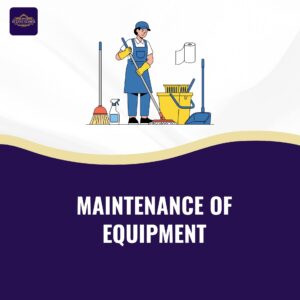
📌 Maintenance of Equipment
Professional housekeeping isn’t just about using equipment — it’s about maintaining it. A dirty, damaged, or poorly functioning tool is more than inconvenient; it’s a safety hazard, a hygiene risk, and a threat to efficiency.
Hotels depend on equipment to meet strict cleanliness standards, and well-maintained equipment ensures consistent, high-quality results.
🔹 Why Maintenance Matters
Housekeeping staff rely on:
- Vacuum cleaners
• Floor scrubbers and polishers
• Mops, brushes, and cloths
• Trolleys and carts
• Spray bottles and dispensers
Equipment that breaks down or is poorly maintained can:
- Slow down cleaning operations
• Spread dirt or germs
• Cause injury
• Increase operational costs
Industry Insight: Studies in commercial cleaning show that up to 20% of cleaning inefficiency comes from poorly maintained equipment, highlighting that maintenance directly affects productivity and guest satisfaction. (fsm.how)
🔹 Best Practices for Equipment Maintenance
1️⃣ Daily Checks:
Inspect tools before and after use for damage or wear.
2️⃣ Cleaning After Use:
• Rinse mops and cloths
• Empty vacuum bags or tanks
• Wipe down trolleys and handles
3️⃣ Proper Storage:
• Store equipment in designated areas
• Keep electrical tools away from water
• Avoid stacking or crowding items
4️⃣ Scheduled Servicing:
• Follow manufacturer guidelines for servicing machinery
• Replace worn-out parts promptly
• Maintain records of maintenance for accountability
5️⃣ Report Issues Immediately:
• Broken or faulty equipment should never be used
• Report to supervisors or the maintenance team
🔹 Professional Mindset
Maintaining equipment is part of your professional responsibility.
Ask yourself:
✔ Is this tool safe to use today?
✔ Will it perform efficiently?
✔ Is it clean and ready for the next task?
Equipment reflects your professionalism. A well-maintained vacuum, mop, or trolley shows attention to detail, responsibility, and pride in your work.
Remember: a cleaner who damages surfaces or spreads germs because of faulty equipment is not a professional.
✅ Rule of Thumb: Treat every piece of equipment as an extension of your skill. Care for it, maintain it, and it will help you deliver excellence — safely, efficiently, and consistently. 💼✨
Module 4: Standard Guest Room Cleaning Procedures (Introduction)
Welcome to Module 4.
This is not just another lesson. This is where you begin to think and operate like a true hotel professional.
Let me speak to you directly — guests don’t see your effort. They see your results. When they open that door, they are scanning the room in seconds. The bed. The smell. The bathroom. The floor. The mirror. If something is wrong, they notice immediately.
In hospitality, there is no room for “almost clean.”
Standard procedures exist for one reason: consistency. Every respected hotel brand — whether local or international like Hilton Hotels & Resorts or Marriott International — trains their staff to clean rooms the same way, every single time. Not because staff are not smart, but because systems prevent mistakes.
When you follow a standard cleaning sequence, you don’t forget areas. You don’t waste time moving back and forth. You don’t cross-contaminate bathroom germs into bedroom surfaces. You work with structure. You work with control.
If you want to grow from “someone who cleans” to a Guest Room Manager, this mindset is non-negotiable.
Understand this clearly: a dirty room can destroy a hotel’s reputation. One bad guest experience can turn into a damaging review. That review can cost the hotel future bookings. Your cleaning skill is directly connected to the hotel’s income.
That is serious responsibility.
From today, stop saying, “I’m just cleaning.” You are preparing a private space for someone who paid for comfort, safety, and rest. That room must feel fresh. It must feel organized. It must feel untouched.
In this module, we will break down the professional sequence of cleaning a guest room step by step — from entering the room properly, to bathroom standards, to bed-making, to final inspection before you close that door.
By the end of this module, you should not just clean — you should clean with authority.
Ask yourself one question: if a VIP guest walks into a room you cleaned, would you feel confident?
If the answer is not yet “yes,” stay focused. We are about to change that.

Entry Procedure (Knock Protocol)
Let’s get something straight immediately.
Before you clean like a professional, you must enter like a professional.
The way you enter a guest room speaks loudly about your training, your discipline, and your respect for privacy. This is not just a routine — this is security, safety, and brand protection.
In top hotels around the world — including brands like Hilton Hotels & Resorts — the knock protocol is taken seriously. Why? Because one wrong entry can lead to embarrassment, complaints, or even legal trouble.
You never assume a room is empty.
You confirm it.
Here is the professional knock protocol you must follow every single time:
➤ Stand to the side of the door, not directly in front of it.
➤ Knock firmly and clearly — not gently, not aggressively.
➤ Announce: “Housekeeping!” in a confident voice.
➤ Wait 10 seconds.
➤ Knock and announce again: “Housekeeping!”
➤ Wait another 10 seconds.
➤ Repeat one final time before using your key card to enter.
No shortcuts.
If a guest responds — you stop immediately and follow instructions.
If you hear movement — you wait.
If the “Do Not Disturb” sign is displayed — you do not knock unless instructed by your supervisor.
When entering after no response:
➤ Open the door slowly.
➤ Announce again: “Housekeeping entering.”
➤ Keep the door slightly open initially for safety.
Why all this discipline?
Because you are protecting:
- The guest’s privacy
- Your own safety
- The hotel’s reputation
Imagine walking into a room without knocking and a guest is inside. That single mistake can destroy trust instantly.
Professional housekeepers do not rush doors.
They control the situation.
From today, your entry must be deliberate, confident, and structured.
You are not just opening a door.
You are entering someone’s temporary home.

Room Inspection Checklist
Now listen carefully.
Cleaning a room is one level.
Inspecting your own work before you leave — that is the level of a professional.
Many housekeepers lose credibility not because they didn’t clean… but because they failed to inspect. A missed hair strand. A fingerprint on the mirror. A forgotten trash bin. Small details create big complaints.
Top brands like Marriott International don’t rely on luck. They rely on inspection standards. And from today, so will you.
Before you close that door, pause.
Stand at the entrance for 5 seconds and scan the room like a guest. Ask yourself: Would I pay to sleep here?
Here is your professional final inspection checklist:
➤ Bed Area
- Sheets tight, smooth, and wrinkle-free
- Pillows aligned evenly
- No stains, no hair, no odor
- Bed skirt straight
➤ Bathroom
- Toilet seat and rim spotless
- Mirror streak-free
- Sink shining
- Towels folded neatly and dry
- Floor completely dry
➤ Surfaces
- No dust on tables, headboards, TV stand
- No fingerprints on glass or mirrors
- Telephone wiped
- Remote control clean
➤ Floor
- Properly vacuumed or mopped
- Corners checked
- Under the bed inspected
➤ Amenities
- Complimentary items arranged properly
- Waste bin empty with fresh liner
- Curtains positioned correctly
- AC and lights functioning
Now here is the truth: guests may not praise you for a perfect room… but they will complain about an imperfect one.
Inspection is what separates average staff from future supervisors.
Never rush out of a room.
Never assume it is fine.
Never say, “It’s okay like that.”
Your standard must be higher than the guest’s expectation.
Close the door only when you are confident.
Room Inspection Checklist
Now listen carefully.
Cleaning a room is one level.
Inspecting your own work before you leave — that is the level of a professional.
Many housekeepers lose credibility not because they didn’t clean… but because they failed to inspect. A missed hair strand. A fingerprint on the mirror. A forgotten trash bin. Small details create big complaints.
Top brands like Marriott International don’t rely on luck. They rely on inspection standards. And from today, so will you.
Before you close that door, pause.
Stand at the entrance for 5 seconds and scan the room like a guest. Ask yourself: Would I pay to sleep here?
Here is your professional final inspection checklist:
➤ Bed Area
✔ Sheets tight, smooth, and wrinkle-free
✔ Pillows aligned evenly
✔ No stains, no hair, no odor
✔ Bed skirt straight
➤ Bathroom
✔ Toilet seat and rim spotless
✔ Mirror streak-free
✔ Sink shining
✔ Towels folded neatly and dry
✔ Floor completely dry
➤ Surfaces
✔ No dust on tables, headboards, TV stand
✔ No fingerprints on glass or mirrors
✔ Telephone wiped
✔ Remote control clean
➤ Floor
✔ Properly vacuumed or mopped
✔ Corners checked
✔ Under the bed inspected
➤ Amenities
✔ Complimentary items arranged properly
✔ Waste bin empty with fresh liner
✔ Curtains positioned correctly
✔ AC and lights functioning
Now here is the truth: guests may not praise you for a perfect room… but they will complain about an imperfect one.
Inspection is what separates average staff from future supervisors.
Never rush out of a room.
Never assume it is fine.
Never say, “It’s okay like that.”
Your standard must be higher than the guest’s expectation.
Close the door only when you are confident.
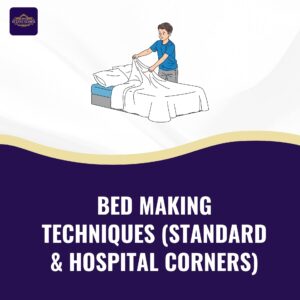
Bed Making Techniques (Standard & Hospital Corners)
Let’s be honest.
The bed is the first thing the guest sees.
If the bed looks perfect, the whole room feels clean.
If the bed looks careless, everything else becomes suspicious.
This is why serious hotels — including brands like Hilton Hotels & Resorts — train their housekeepers to master bed presentation. Because a well-made bed is not decoration. It is a statement of standard.
From today, you do not “spread sheets.”
You engineer the bed.
Standard Bed Making Technique
This is your foundation. Every movement must be deliberate.
➤ Remove all used linen carefully without shaking (avoid spreading dust or hair).
➤ Inspect the mattress for stains or damage before placing fresh linen.
➤ Lay the fitted sheet tightly — no loose edges.
➤ Spread the flat sheet evenly, ensuring equal drop on both sides.
➤ Place blanket or duvet smoothly — no lumps, no uneven folds.
➤ Align pillows uniformly, pillow openings facing inward.
The key word here is tight.
Wrinkles mean rushing.
Loose sheets mean poor training.
When a guest sits or lies down, the bed should feel firm and structured — not messy.
Hospital Corners (Professional Finish)
Hospital corners are what separate beginners from trained professionals.
They give the bed a sharp, clean, luxury appearance.
Here is how you do it properly:
➤ Tuck the sheet neatly at the foot of the bed first.
➤ Lift the side of the sheet at a 45-degree angle, forming a triangle.
➤ Tuck the hanging portion tightly under the mattress.
➤ Bring the triangle down smoothly and tuck it in firmly.
➤ Repeat on the other side.
The result?
A crisp, straight edge that looks intentional and premium.
No sagging.
No bulging.
No loose fabric.
Professional Standard You Must Remember
A properly made bed should:
✔ Look symmetrical from the entrance
✔ Have smooth, stretched surfaces
✔ Feel tight when pressed
✔ Have centered duvet and pillows
If your bed does not look like something you would see in a high-end hotel photo, redo it.
Excellence in bed making is not about speed first.
It is about precision first.
Speed will come with practice.
When you master this skill, guests may never mention your name — but they will sleep comfortably because of your discipline.
And that is professionalism.
Bathroom Cleaning Procedure
Now pay close attention.
If there is one place in the room that guests inspect the hardest — it is the bathroom.
A bedroom can look beautiful, but if the bathroom is not spotless, the entire room is considered dirty. That is the reality.
This is why serious hotel brands like Marriott International place strict emphasis on bathroom sanitation standards. Because cleanliness here is not just about appearance — it is about hygiene and safety.
From today, you do not “wash a bathroom.”
You sanitize and detail it.
The Professional Cleaning Sequence
Never clean randomly. Follow structure.
➤ Ventilate first — switch on the light and exhaust fan.
➤ Remove used towels and trash immediately.
➤ Flush the toilet before cleaning.
➤ Apply cleaning chemicals to toilet bowl, sink, shower area, and tiles — allow proper dwell time.
Do not rush chemicals. They need time to break down dirt and bacteria.
While chemicals are working, move strategically:
➤ Clean mirrors using glass cleaner — wipe until streak-free.
➤ Wipe down countertops and sink area.
➤ Scrub shower walls, taps, and handles.
➤ Scrub inside and outside of the toilet bowl thoroughly.
➤ Wipe toilet seat, lid, base, and flush handle.
Then rinse and dry completely.
A professional bathroom must be dry. Water marks destroy the finish.
Final Detailing (This Is Where Many Fail)
Before you step out:
✔ Check behind the toilet base
✔ Check corners of the floor
✔ Polish chrome fixtures until they shine
✔ Replace fresh towels neatly folded
✔ Refill amenities properly aligned
✔ Empty bin with a new liner
✔ Ensure there is no hair anywhere
Let me be blunt — one strand of hair can trigger a complaint.
When you finish, stand back and inspect the bathroom under full lighting. It should smell fresh, look bright, and feel untouched.
A guest must walk in and feel confident using every surface.
That is the standard.
Do not aim for “clean enough.”
Aim for “cannot find fault.”
That is how professionals work.
Dusting, Vacuuming, Mopping
Let’s be clear.
Floors and surfaces tell the real story of your cleaning.
A guest might not check under the bed immediately — but dust floating in sunlight? Hair on the floor? Sticky tiles? They will see it.
This is where many housekeepers relax. And that is exactly where complaints are born.
In structured hotel environments like Hilton Hotels & Resorts, floor care and surface care follow strict sequence. Not random wiping. Not careless sweeping.
From today, you clean with order.
Dusting (Always First)
Dusting is not just wiping visible surfaces.
It is removing fine particles that settle everywhere.
➤ Start from top to bottom — never the other way around.
➤ Dust ceiling corners and air vents first.
➤ Move to headboards, shelves, frames, lamps, TV units.
➤ Wipe telephones, switches, and remote controls.
If you dust after vacuuming, you are wasting effort. Dust falls downward. Always remember that.
And do not just move dust around — trap it with a proper cloth.
Vacuuming (Detailed, Not Rushed)
Vacuuming is about coverage, not speed.
➤ Begin from the farthest corner of the room.
➤ Work your way backward toward the door.
➤ Go under the bed and behind furniture.
➤ Focus on edges and corners.
One visible hair on the carpet can destroy your entire effort.
Lines on the carpet should look neat and intentional. That shows control.
Mopping (If Tile or Hard Floor)
Mopping is not pouring water on the floor.
➤ Sweep or vacuum first before mopping.
➤ Use correct chemical dilution.
➤ Mop in straight, controlled strokes.
➤ Allow floor to dry completely before final inspection.
A wet floor with footprints is unacceptable.
The floor must look clean, dry, and streak-free.
The Professional Standard
When you finish:
✔ No dust on surfaces
✔ No hair on the floor
✔ No sticky feeling underfoot
✔ No hidden dirt in corners
Stand at the door and look across the room toward the light. Dust and streaks reveal themselves under light.
Do not leave until you are confident.
Because a guest may not compliment your vacuum lines — but they will complain about dirt instantly.
Clean with pride.
Finish with confidence.
Final Room Inspection
This is the moment of truth.
Everything you have done — bed making, bathroom cleaning, dusting, vacuuming — means nothing if you skip the final inspection.
Professionals do not finish a room and walk out immediately.
They pause. They inspect. They confirm.
In structured hotel systems like Marriott International, a room is never considered ready until it passes inspection standards. That discipline is what protects the brand.
From today, you adopt the same mindset.
Step Back and Reset Your Eyes
Before leaving:
➤ Stand at the entrance.
➤ Look at the room as if you are the guest checking in.
➤ Scan from left to right.
➤ Notice the bed presentation first.
Does the room feel fresh? Balanced? Inviting?
If something feels “off,” it probably is.
Critical Final Checks
➤ Bed perfectly aligned and wrinkle-free
➤ Bathroom dry, shining, and odor-free
➤ All lights, AC, and TV functioning
➤ Curtains properly arranged
➤ Amenities positioned neatly
➤ No cleaning equipment left behind
➤ No unusual smell
Then do one more thing many people forget:
➤ Check the floor again near the door. That is where hair and dust hide after you finish.
The Professional Standard
A guest must walk in and feel:
✔ Comfort
✔ Cleanliness
✔ Order
✔ Freshness
If you would hesitate to post a photo of that room proudly, then it is not ready.
Do not rush out because you are tired.
Do not assume “it’s fine.”
Do not gamble with the hotel’s reputation.
Close that door only when you are 100% certain.
That final 60 seconds of inspection is what separates average workers from trusted professionals.
Module 5: Linen & Laundry Management (Introduction)
Now we move to something many people underestimate — but no serious hotel ignores.
Linen.
Sheets. Pillowcases. Towels. Duvets. Bath mats.
These are not just fabrics. They are part of the guest experience.
A guest may not know your name.
But they will remember how the bed felt.
They will remember how the towel smelled.
That is why structured hotel brands like Hilton Hotels & Resorts treat linen management as a controlled system — not guesswork.
From today, you must understand this clearly:
Linen is money.
Poor handling means:
➤ Stains that could have been prevented
➤ Torn sheets from rough removal
➤ Shortage of stock
➤ Cross-contamination
➤ Increased replacement cost
And when linen cost increases, management notices.
What Linen Management Really Means
It is not just washing and folding.
It involves:
➤ Proper removal from guest rooms
➤ Sorting (whites, colored, heavily soiled)
➤ Correct washing temperature
➤ Proper chemical usage
➤ Safe drying
➤ Professional folding
➤ Organized storage
➤ Accurate counting and tracking
This is a system.
Without control, chaos begins — missing towels, mismatched sets, stained sheets returned to rooms. That is how standards drop.
The Mindset You Must Adopt
Never throw linen on the floor.
Never mix clean and dirty linen.
Never ignore a stain hoping “it won’t show.”
Handle every piece like it belongs to your own home — but with professional discipline.
Clean linen must:
✔ Smell fresh
✔ Be stain-free
✔ Be properly folded
✔ Be stored neatly
✔ Be counted accurately
When linen is managed correctly, operations run smoothly.
When linen is mismanaged, complaints increase.
In this module, you will learn how to control linen flow from room to laundry and back to storage — the professional way.
Because in hospitality, comfort begins with clean fabric.
And you are responsible for that comfort.
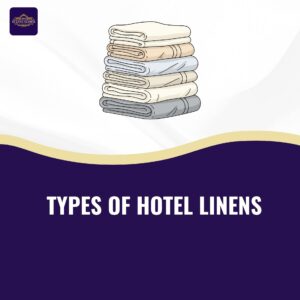
Types of Hotel Linens
If you don’t know your linen, you can’t manage it properly.
Simple.
Professional housekeepers don’t just grab “any sheet.” They understand categories, usage, and purpose. That knowledge is what prevents shortages, misuse, and unnecessary damage.
In structured hospitality systems like Marriott International, linen is classified clearly. Every piece has a function. Every piece has a standard.
From today, you must know the difference.
- Bed Linen
This is what guests interact with the most.
➤ Bed sheets (fitted and flat)
➤ Pillowcases
➤ Duvet covers
➤ Mattress protectors
➤ Bed skirts
These must always be:
✔ Crisp
✔ White or properly uniform
✔ Free from stains
✔ Tear-free
One stained sheet can damage guest trust instantly.
- Bathroom Linen
These directly affect hygiene perception.
➤ Bath towels
➤ Hand towels
➤ Face towels
➤ Bath mats
Towels must be:
✔ Soft
✔ Absorbent
✔ Fresh-smelling
✔ Properly folded
Rough or thin towels show poor linen control.
- Food & Beverage Linen (If Applicable)
In hotels with restaurants or room service:
➤ Tablecloths
➤ Napkins
➤ Service cloths
These require separate handling to avoid food stains transferring to guest room linen.
- Specialty & Protective Linen
Often overlooked but very important.
➤ Pillow protectors
➤ Mattress covers
➤ Laundry bags
➤ Cleaning cloths (separate from guest linen)
Never mix protective linen with guest-use linen.
Professional Reminder
Each category must be:
➤ Counted properly
➤ Washed according to fabric type
➤ Stored separately
➤ Issued and recorded
Linen confusion leads to loss. Loss leads to cost. Cost leads to management questions.
Know your linen.
Respect your linen.
Control your linen.
That is how professionals operate.

Linen Inventory Control
Now we are entering management territory.
This is where you stop thinking like a cleaner… and start thinking like a controller.
Linen inventory control is not about counting sheets once in a while. It is about knowing — at any given time — how many pieces you have, where they are, and what condition they are in.
Hotels with strong systems, including global brands like Hilton Hotels & Resorts, do not guess their linen numbers. They track them.
Because when linen disappears, money disappears.
Why Inventory Control Matters
Without control, you will face:
➤ Missing towels
➤ Shortage during high occupancy
➤ Over-ordering and waste
➤ Increased replacement cost
➤ Blame between housekeeping and laundry
Inventory control protects the operation from chaos.
The Professional System
Every hotel should maintain a par stock level — meaning the minimum number of each linen item required to operate smoothly.
For example:
➤ One set in the room
➤ One set in laundry
➤ One set in storage
That is control.
Every issue and return must be recorded. Clean linen going out must be counted. Dirty linen coming in must be counted.
Numbers must balance.
What You Must Practice
✔ Count linen daily
✔ Record damaged items
✔ Separate stained or torn pieces immediately
✔ Store linen in a clean, dry, organized space
✔ Never mix clean and dirty stock
Do not assume. Confirm.
If 50 towels were issued, 50 should return — unless documented.
The Mindset Shift
Inventory control is discipline.
It shows management that you:
➤ Understand cost
➤ Respect resources
➤ Can be trusted with responsibility
Anyone can fold a sheet.
Not everyone can control inventory.
When you master linen inventory control, you are already stepping into supervisory level thinking.
And that is how growth begins.

Sorting and Handling Soiled Linens
This is where professionalism is tested.
Soiled linen is not just “dirty fabric.”
It can carry bacteria, body fluids, chemicals, and contamination.
If you handle it carelessly, you risk:
➤ Cross-contamination
➤ Health hazards
➤ Permanent stains
➤ Damage to other linen
Hotels with structured hygiene systems like Marriott International follow strict sorting procedures. Not because it looks nice — but because it protects staff, guests, and the business.
From today, you handle soiled linen with discipline.
Step 1: Safe Collection
➤ Wear gloves when handling heavily soiled items
➤ Do not shake linen (this spreads bacteria and dust)
➤ Place directly into designated laundry bags
➤ Never throw linen on the floor
Respect hygiene. Protect yourself first.
Step 2: Proper Sorting
Sorting must be done immediately in the laundry area — not inside guest rooms.
Separate by:
➤ Color (whites, colored items)
➤ Fabric type
➤ Level of soil (lightly used vs heavily stained)
Heavily stained linen should be isolated for pre-treatment.
Never mix blood-stained or heavily contaminated linen with regular wash items.
Step 3: Controlled Handling
✔ Transport in closed laundry carts
✔ Keep clean and dirty linen areas completely separate
✔ Report severely damaged items
✔ Record discarded pieces
One careless mix can ruin an entire batch.
The Professional Standard
Soiled linen must move in one direction only:
Room ➤ Collection ➤ Sorting ➤ Washing ➤ Clean storage
Never backward.
Clean and dirty must never cross paths.
When you master sorting and handling, you reduce:
➤ Infection risk
➤ Replacement cost
➤ Guest complaints
➤ Operational confusion
This is not just laundry work.
This is hygiene control.
Handle soiled linen like a trained professional — not casually.
That is the difference.
Stain Removal Basics
Let’s be very clear.
If you cannot manage stains properly, your linen cost will rise — and management will notice.
A stain ignored today becomes a permanent loss tomorrow.
Professional hotels like Hilton Hotels & Resorts train staff to treat stains immediately and correctly. Not aggressively. Not carelessly. Correctly.
From today, you do not panic when you see a stain.
You assess it.
Rule Number One: Act Fast
The longer a stain sits, the harder it becomes to remove.
➤ Identify the type of stain (food, blood, oil, makeup, ink).
➤ Treat it before sending it into general washing.
➤ Never throw stained linen back into circulation.
Speed matters — but accuracy matters more.
Rule Number Two: Know the Basics
Different stains require different handling:
➤ Protein stains (blood, sweat) — use cold water first. Never hot.
➤ Oil/grease stains — require proper degreasing agent.
➤ Food & beverage stains — pre-soak before washing.
➤ Ink or makeup stains — treat carefully with appropriate remover.
Hot water on the wrong stain can set it permanently.
Think before you treat.
Rule Number Three: Do Not Damage the Fabric
✔ Do not scrub aggressively
✔ Do not mix strong chemicals randomly
✔ Do not bleach colored fabrics
✔ Always follow dilution guidelines
Saving linen is good. Destroying it while trying to save it is not professional.
The Professional Mindset
When you see a stain, ask:
➤ What caused it?
➤ How fresh is it?
➤ What fabric am I dealing with?
Then act.
Stain control reduces:
➤ Replacement cost
➤ Guest complaints
➤ Wasted stock
➤ Financial loss
Anyone can wash linen.
Not everyone can preserve it.
Master stain removal, and you show that you understand both hygiene and cost control.
That is management-level thinking.

Storage Standards
Let me be direct.
You can wash linen perfectly… fold it beautifully… and still destroy everything with poor storage.
Storage is not just “keeping things somewhere.”
It is preservation. It is control. It is hygiene protection.
Serious hospitality systems like Marriott International enforce strict storage standards because clean linen must remain clean until it reaches the guest room.
If storage is wrong, all your hard work is wasted.
The Golden Rules of Linen Storage
➤ Store clean linen in a dry, well-ventilated room
➤ Keep it completely separate from dirty linen areas
➤ Use shelves — never place directly on the floor
➤ Protect from moisture, dust, and pests
Clean linen should never smell musty.
If it smells, storage has failed.
Organization Standard
Linen must be arranged:
➤ By category (sheets, pillowcases, towels)
➤ By size
➤ By usage frequency
Practice FIFO — First In, First Out.
Older stock must be used before newly washed stock to prevent discoloration or fabric weakening.
No random stacking. No overcrowding shelves.
Handling Inside Storage
✔ Fold neatly and uniformly
✔ Avoid over-compressing stacks
✔ Keep shelves clean at all times
✔ Conduct routine inventory checks
Storage rooms should look controlled — not chaotic.
The Professional Mindset
When management walks into your linen store, what should they see?
Order. Cleanliness. Structure. Accountability.
Storage is the final protection point before linen returns to the guest.
If you control storage, you control quality.
If you control quality, you protect the hotel’s reputation.
This is not just housekeeping.
This is operational discipline.
Module 6: Guest Interaction & Service Excellence (Introduction)
Now we move beyond cleaning.
This is where many housekeepers either grow… or remain average.
Because no matter how perfectly you clean, you will eventually interact with a guest.
And in that moment, you are no longer “just housekeeping.”
You are the face of the hotel.
In global hospitality systems like Hilton Hotels & Resorts, service excellence is not optional. Every staff member — from front desk to housekeeping — is trained to represent the brand with confidence and professionalism.
From today, you must understand this clearly:
Guests may forget your cleaning.
They will never forget how you made them feel.
Why Guest Interaction Matters
A simple interaction can:
➤ Build guest trust
➤ Create a positive review
➤ Resolve a complaint quickly
➤ Strengthen the hotel’s reputation
Or it can damage everything.
One rude response.
One careless tone.
One dismissive attitude.
That is all it takes.
The Shift You Must Make
You are not invisible staff.
You are part of the guest experience.
When a guest asks for extra towels…
When they stop you in the hallway…
When they raise a concern about their room…
Your response must show:
✔ Respect
✔ Confidence
✔ Professionalism
✔ Calmness
Not irritation. Not impatience.
What This Module Will Teach You
In this module, you will learn:
➤ Professional communication standards
➤ Body language and presentation
➤ Handling guest requests
➤ Managing difficult situations
➤ Turning complaints into positive experiences
Service excellence is not about smiling only.
It is about attitude, tone, and control.
When you master guest interaction, you move from operational staff to trusted hospitality professional.
Because at the end of the day, hotels are not just selling rooms.
They are selling experience.
And you are part of that experience.

Professional Communication Skills
Let’s get this straight.
Your uniform may identify you as housekeeping.
But your communication identifies you as a professional.
In hospitality, how you speak can either build confidence or create doubt. Structured hotel brands like Marriott International train staff to communicate clearly, calmly, and respectfully — because one wrong sentence can damage guest trust.
From today, your words must be intentional.
- Speak With Clarity and Confidence
Guests must hear you clearly and understand you easily.
➤ Speak at a moderate pace
➤ Use simple, polite language
➤ Maintain a calm tone
➤ Avoid slang or casual expressions
Never mumble. Never shout. Never sound unsure.
Instead of saying, “I don’t know,” say,
“I will confirm that for you right away.”
That is confidence.
- Use Professional Phrases
Certain phrases elevate your standard instantly.
➤ “Good morning/afternoon, how may I assist you?”
➤ “Certainly, I will take care of that immediately.”
➤ “Thank you for bringing that to our attention.”
➤ “Please allow me a moment.”
Avoid negative responses like:
“I can’t.”
“That’s not my job.”
“I don’t think so.”
Your role is to assist or direct — never dismiss.
- Body Language Speaks Too
Communication is not only verbal.
➤ Maintain respectful eye contact
➤ Stand upright — no slouching
➤ Avoid folding arms while speaking
➤ Keep facial expressions neutral and attentive
If your body looks defensive or irritated, the guest will feel it — even if your words sound polite.
- Listening Is Power
Many complaints escalate because staff do not listen properly.
➤ Allow the guest to finish speaking
➤ Do not interrupt
➤ Acknowledge their concern
➤ Repeat key details to confirm understanding
When a guest feels heard, tension reduces immediately.
The Professional Standard
Before speaking, ask yourself:
Is it respectful?
Is it clear?
Is it helpful?
Professional communication builds trust.
Trust builds reputation.
Reputation builds success.
Anyone can talk.
Not everyone can communicate like a hospitality professional.
From today, you choose the higher standard.
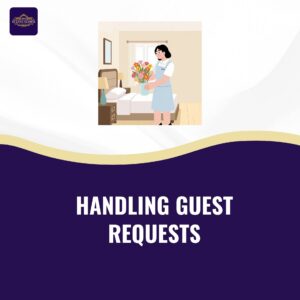
Handling Guest Requests
This is where your professionalism becomes visible.
Guests will make requests — some simple, some urgent, some unexpected. Extra towels. Additional pillows. A room issue. Special assistance.
How you respond in that moment defines your standard.
Hotels with structured service culture like Hilton Hotels & Resorts train staff to treat every request seriously — because what seems small to you may be important to the guest.
From today, no request is “too small.”
The Right Approach
When a guest makes a request:
➤ Stop what you are doing and give them attention
➤ Listen fully before responding
➤ Acknowledge clearly
➤ Respond with confidence
Never look irritated.
Never sigh.
Never respond casually.
Instead of saying, “Okay,” say,
“Certainly, I will bring that to you right away.”
That difference matters.
Speed and Accuracy
A professional does two things:
➤ Acts quickly
➤ Gets it right the first time
If a guest requests two towels, deliver two — clean, properly folded, and presentable.
If you cannot handle the request directly, do not dismiss it. Inform the appropriate department immediately and follow up.
Ownership shows maturity.
When the Request Is Beyond Your Authority
Sometimes guests ask for something outside your responsibility.
Do not say: “That’s not my department.”
Instead say:
“I will inform the front desk immediately.”
“Allow me to connect you with the right department.”
You are a bridge, not a barrier.
The Professional Standard
After fulfilling the request, confirm politely:
“Is there anything else I may assist you with?”
That one sentence can elevate your service.
Handling guest requests is not about doing tasks.
It is about making guests feel valued.
And when guests feel valued, they remember the hotel positively.
That is service excellence.
Managing Complaints Politely
Now listen carefully.
Complaints are not attacks.
They are opportunities.
In hospitality, complaints will happen. A room may not be ready. A towel may be missing. An air conditioner may not be cooling properly. What matters most is not the mistake — it is how you respond.
Hotels with strong service culture like Marriott International train their staff to remain calm under pressure. Because when a guest complains, emotions are already high. If you react emotionally, the situation escalates.
From today, your role is to control the atmosphere.
Step One: Stay Calm
➤ Do not interrupt the guest
➤ Maintain steady eye contact
➤ Keep your tone low and respectful
➤ Do not become defensive
Even if the complaint feels unfair, your job is not to argue. Your job is to stabilize the situation.
Step Two: Acknowledge and Apologize
A simple acknowledgment reduces tension immediately.
Say:
“I sincerely apologize for the inconvenience.”
“Thank you for informing us.”
“We will resolve this immediately.”
Notice something — you are not blaming anyone. You are taking responsibility on behalf of the hotel.
That shows professionalism.
Step Three: Take Action
After listening:
➤ Clarify the issue
➤ Offer a solution within your authority
➤ Inform your supervisor if needed
➤ Follow up to ensure it is resolved
Never walk away without confirming action.
What You Must Never Do
➤ Do not argue
➤ Do not blame another department
➤ Do not show frustration
➤ Do not ignore the complaint
One careless reaction can turn a small issue into a damaging review.
The Professional Mindset
When a guest complains, they are giving you a chance to fix the experience.
Handle it with maturity.
Respond with control.
Resolve it with urgency.
A well-managed complaint can turn an unhappy guest into a loyal one.
That is the power of polite professionalism.

Cultural Sensitivity
This is where true hospitality begins.
In hotels, you will meet guests from different countries, religions, languages, and backgrounds. What feels normal to you may feel uncomfortable to someone else.
Professional hospitality brands like Hilton Hotels & Resorts train staff to understand cultural differences — because respect is universal, but customs are not.
From today, you must operate with awareness.
Understand This Clearly
Guests may have:
➤ Different greetings and communication styles
➤ Different dietary or religious practices
➤ Different expectations about privacy
➤ Different comfort levels with eye contact or physical distance
Your job is not to judge.
Your job is to respect.
Simple Cultural Sensitivity Practices
➤ Use polite, neutral language at all times
➤ Avoid personal questions about religion, income, or nationality
➤ Respect personal space
➤ Be careful with jokes — humor does not translate the same everywhere
➤ Follow special room requests carefully (for example, no alcohol items, prayer mats, specific arrangements)
Small gestures show big awareness.
Body Language Matters
Some cultures prefer less direct eye contact.
Some expect very formal communication.
Some value privacy deeply.
Observe first. Adapt respectfully.
The Professional Standard
Cultural sensitivity means:
You do not assume.
You do not stereotype.
You do not impose your personal beliefs.
You remain respectful, neutral, and professional at all times.
When guests feel understood and respected, they feel safe.
And when they feel safe, they feel comfortable.
That is hospitality at its highest level.
Confidentiality and Privacy
This is serious.
In hospitality, guests trust you with something very important — their space, their belongings, and sometimes their personal information.
If that trust is broken, the damage can be permanent.
Global hotel systems like Marriott International enforce strict confidentiality rules because privacy is not optional. It is a standard.
From today, you must understand this clearly:
What you see in a guest room stays in the guest room.
Inside the Room
When servicing a room:
➤ Do not touch personal belongings unnecessarily
➤ Do not open bags, drawers, or suitcases
➤ Do not read documents left on desks
➤ Do not take photos inside guest rooms
Even if something looks interesting or unusual — it is not your business.
Professionalism means discipline.
Outside the Room
Never discuss:
➤ Guest names
➤ Room numbers
➤ Special requests
➤ Personal habits or observations
Do not gossip with colleagues.
Do not share information with friends.
Do not post anything on social media.
Confidentiality protects both the guest and the hotel.
Handling Sensitive Situations
If you notice:
➤ Lost valuables
➤ Suspicious items
➤ Security concerns
Report immediately to your supervisor or security — quietly and professionally.
Do not investigate on your own.
Do not discuss it with others.
The Professional Standard
Guests must feel safe knowing:
✔ Their belongings are respected
✔ Their information is protected
✔ Their privacy is guaranteed
Trust is hard to build and easy to lose.
Anyone can clean a room.
But only a disciplined professional can be trusted with someone’s privacy.
From today, guard that trust carefully.
Module 7: Room Status & Documentation (Introduction)
If you don’t understand room status, you are not yet a professional housekeeper.
This is where many people fail in hospitality — not because they can’t clean, but because they don’t understand documentation. Cleaning a room is physical work. Managing room status is professional work.
In every serious hotel, housekeeping is directly connected to Front Office, Maintenance, and Management through accurate room reporting. One wrong update can cause chaos:
- A guest checks into a dirty room.
• A room marked “vacant” is actually occupied.
• Maintenance issues go unreported.
• Revenue is lost because rooms are wrongly blocked.
Industry Insight: Studies in hotel operations show that inaccurate room status reporting contributes to up to 18–22% of guest complaints related to housekeeping and check-in delays. That is not a small mistake — that is a reputation problem.
In this module, you will learn:
- The meaning of room status codes (VC, VD, OC, OD, OOO, OOS, etc.)
- How housekeeping communicates with Front Office
- How to fill room report sheets correctly
- How to document maintenance issues properly
- Why documentation protects you as a staff member
Understand this clearly:
If it is not documented, it did not happen.
A professional housekeeper does not rely on memory. You rely on records. Records protect the hotel. Records protect the guest. Records protect you.
By the end of this module, you will not just clean rooms — you will manage room information like a trained hospitality professional.
This is where you move from being a cleaner to becoming part of hotel operations.

Room Status Codes (Vacant, Occupied, Out of Order, etc.)
If you don’t understand room status codes, you are operating blindly.
Room status is the language of hotel operations. It tells Front Office what to sell, Maintenance what to fix, and Management what is generating revenue. One wrong code can cost the hotel money — or damage its reputation.
Industry Insight: Operational audits in hotels show that inaccurate room status updates can reduce available room revenue by up to 10% daily in high-occupancy properties. That is serious.
🔹 1) Vacant (V)
The guest has checked out. The room is empty.
But vacant does NOT automatically mean ready to sell.
Vacant rooms are further classified as:
➤ Vacant Clean (VC) – Cleaned, inspected, and ready for sale
➤ Vacant Dirty (VD) – Guest has left, but room is not yet cleaned
➤ Rule: Only VC rooms can be assigned to new guests.
🔹 2) Occupied (O)
A guest is currently staying in the room.
Sub-categories include:
➤ Occupied Clean (OC) – Guest in-house, room already serviced
➤ Occupied Dirty (OD) – Guest in-house, room not yet serviced
➤ Warning: Never mark an occupied room as vacant. That is a serious operational error.
🔹 3) Out of Order (OOO)
The room has a major defect and cannot be sold.
Examples:
➤ Broken air conditioning
➤ Severe plumbing issue
➤ Electrical hazard
➤ Major structural damage
➤ OOO meaning: Room is removed from inventory and must not be sold until fixed and cleared.
🔹 4) Out of Service (OOS)
The room has a minor issue and is temporarily unavailable.
Examples:
➤ Deep cleaning required
➤ Minor maintenance repair
➤ Carpet shampooing
➤ Fumigation / treatment
➤ Difference from OOO: OOS is usually short-term and may return faster depending on hotel policy.
🔹 5) Stayover (SO)
Guest remains for another night. No checkout.
➤ Room must be serviced based on standard (unless DND)
➤ Do not assume “stayover” means “no work”
🔹 6) Due Out (DO)
Guest is expected to check out today.
➤ Helps you plan quick turnaround
➤ These rooms are priority because they may be needed for arrivals
🔹 7) Do Not Disturb (DND)
Guest has requested privacy.
➤ Never ignore DND
➤ Follow hotel rules for entry, reporting, and return time
➤ Document the DND properly (this protects you)
⚠ Why This Matters
Room status determines:
➤ What can be sold
➤ What must be cleaned
➤ What must be repaired
➤ What generates revenue
If you misreport status, you create conflict between Housekeeping and Front Office — and that’s where check-in delays and guest complaints start.
A professional housekeeper does not guess.
➤ You verify
➤ You update immediately
➤ You document correctly
Room status is not just a code — it is control over hotel operations.
Housekeeping Reports
If you cannot read or complete a housekeeping report correctly, you are not yet operating at a professional level.
Cleaning is physical.
Reporting is operational.
Hotels do not run on effort — they run on information. Every cleaned room, every missing item, every maintenance issue must be documented properly. That documentation is what connects Housekeeping to Front Office, Maintenance, Security, and Management.
Industry Insight: Internal hotel audits show that incomplete housekeeping reports contribute to up to 20% of interdepartmental errors, including wrong room assignments and delayed check-ins.
Let’s break down the core reports you must understand.
🔹 1) Room Status Report
This is the most important daily document.
It shows the condition of every room in the hotel.
It includes:
➤ Room number
➤ Current status (VC, VD, OC, OD, OOO, OOS)
➤ Remarks (maintenance issue, DND, late checkout, etc.)
➤ Time cleaned
➤ Housekeeper’s name
This report must match the Front Office system. Any mismatch creates confusion.
🔹 2) Room Attendant Worksheet
This is your personal assignment sheet for the day.
It shows:
➤ List of rooms assigned
➤ Stayovers and due outs
➤ Special requests (baby cot, extra towel, VIP guest)
➤ Notes section for updates
You do not leave the floor without completing and returning this sheet.
🔹 3) Maintenance Report
If something is broken and you don’t report it, you are responsible.
This report documents:
➤ Fault description
➤ Room number
➤ Severity level
➤ Date and time reported
Never assume “someone else will report it.”
🔹 4) Lost & Found Report
Anything left behind by a guest must be documented immediately.
It must include:
➤ Description of item
➤ Exact location found
➤ Date and time found
➤ Name of staff who found it
➤ Signature of supervisor
Failure to document lost property can lead to serious disciplinary action.
🔹 5) Linen Control Report
Hotels lose thousands yearly due to poor linen tracking.
This report monitors:
➤ Linen issued
➤ Linen returned
➤ Damaged items
➤ Missing items
Linen control protects hotel cost.
⚠ Why Reports Matter
Reports determine:
➤ What rooms can be sold
➤ What needs repair
➤ What items are missing
➤ Staff accountability
Understand this clearly:
If it is not written down, it did not happen.
Professional housekeepers do not rely on memory.
You rely on documentation.
That is what separates a cleaner from a hospitality professional.
Lost and Found Procedures
This is where integrity is tested.
A professional housekeeper is trusted with guests’ privacy, property, and valuables. One mistake here can destroy a hotel’s reputation — and your career.
Industry Insight: Hospitality compliance reviews show that mishandled lost property cases are among the top 5 internal disciplinary issues in hotels globally. Why? Because trust is everything in hospitality.
You must know the procedure. Not guess. Not assume. Follow procedure.
🔹 Step 1: Do NOT Touch Carelessly
When you find an item in a room:
➤ Do not use it
➤ Do not move it unnecessarily
➤ Do not show it to other staff
➤ Do not keep it “temporarily”
Professionalism starts with self-control.
🔹 Step 2: Report Immediately
Once discovered:
➤ Inform your supervisor immediately
➤ Record the room number
➤ Record the exact location found (e.g., under pillow, inside drawer, bathroom sink area)
➤ Record date and time
Never leave a found item undocumented.
🔹 Step 3: Complete Lost & Found Form
The documentation must include:
➤ Detailed description of the item (color, brand, condition)
➤ Where it was found
➤ Name of the staff who found it
➤ Supervisor’s signature
➤ Security acknowledgement (depending on hotel policy)
Be specific.
“Phone” is not enough.
Write: “Black iPhone 13 with cracked back screen and red case.”
Details protect you.
🔹 Step 4: Secure Storage
After documentation:
➤ Seal the item in a labeled bag
➤ Attach the lost & found form
➤ Store in designated secure area
➤ Valuable items may go directly to Security
Never take items home. Never store in your locker.
🔹 Step 5: Guest Claim Procedure
If a guest calls or returns:
➤ Verify ownership (ask for description first)
➤ Confirm room number and stay dates
➤ Follow hotel policy for release or courier
➤ Document the release with signature
Never hand over an item without verification.
🔹 Special Situations
Cash:
➤ Count in presence of supervisor
➤ Document exact amount
➤ Both staff must sign
Illegal items:
➤ Do not confront
➤ Inform supervisor and Security immediately
⚠ Why This Matters
Lost & Found procedures protect:
➤ The guest
➤ The hotel
➤ Your job
If an item disappears and there is no documentation, suspicion begins.
Professional housekeepers are trusted because they follow procedure — not because they “mean well.”
Integrity is not what you say.
Integrity is what you document.
Maintenance Reporting
A professional housekeeper does not just clean — you inspect.
Every room you enter is an inspection point. If you walk past a defect without reporting it, you have failed operationally.
Industry Insight: Hotel engineering departments report that over 35% of room maintenance issues are first identified by housekeeping staff. That means you are the hotel’s first line of quality control.
🔹 What Is Maintenance Reporting?
Maintenance reporting is the formal process of documenting and communicating faults, damages, or safety risks found in guest rooms or public areas.
If it is broken and you don’t report it, it becomes your responsibility.
🔹 What Must Be Reported?
Never ignore small issues. Small issues become guest complaints.
Report immediately when you see:
➤ Faulty air conditioning
➤ Flickering or dead light bulbs
➤ Plumbing leaks or slow drainage
➤ Broken tiles or cracked mirrors
➤ Loose door locks or faulty key cards
➤ Damaged furniture
➤ Electrical sparks or exposed wires
➤ Non-functioning TV, kettle, or minibar
If it affects comfort, safety, or functionality — report it.
🔹 Levels of Maintenance Severity
Not all issues are equal. You must understand urgency.
➤ Emergency – Safety hazard (electrical fault, water flooding, gas smell). Report immediately and stop using the room.
➤ Major – Affects guest comfort significantly (AC failure, toilet not flushing). May require Out of Order (OOO).
➤ Minor – Cosmetic or small repair (loose handle, chipped paint). May be Out of Service (OOS).
Never decide alone to sell a defective room. Escalate.
🔹 How to Report Properly
Professional reporting includes:
➤ Room number
➤ Exact problem description (be specific)
➤ Date and time noticed
➤ Your name
➤ Status update recommendation (if required)
Example:
Not professional:
“AC bad.”
Professional:
“Room 305 – Air conditioner blowing warm air only, no cooling function. Noticed at 10:45 AM during cleaning.”
Clarity saves time.
🔹 Follow-Up Responsibility
Reporting is not the end.
➤ Confirm job has been logged
➤ Check if room status needs to change (OOO/OOS)
➤ Re-inspect after repair
➤ Update status to VC only after confirmation
Never assume it has been fixed.
⚠ Why Maintenance Reporting Matters
Maintenance reporting protects:
➤ Guest safety
➤ Hotel reputation
➤ Revenue generation
➤ Your professional credibility
One unreported fault can result in:
➤ Guest injury
➤ Refunds and compensation
➤ Negative reviews
➤ Disciplinary action
A professional housekeeper does not walk past problems.
You observe.
You document.
You escalate.
That is how you move from being a cleaner to being part of hotel operations control.
Module 8: Deep Cleaning & Special Tasks (Introduction)
Surface cleaning keeps a room looking good.
Deep cleaning keeps a hotel standing.
If you only clean what the guest can see, you are operating at a basic level. Professional housekeeping goes beyond visible dust. It targets hidden dirt, bacteria build-up, long-term wear, and asset protection.
Industry Insight: Hotels that implement structured deep-cleaning schedules report up to 40% fewer maintenance complaints and longer furniture and fixture lifespan compared to properties that rely only on daily routine cleaning.
Deep cleaning is not part of your regular daily turnaround. It is planned, scheduled, and systematic. It focuses on neglected areas, high-touch surfaces, air quality points, and hidden buildup that daily cleaning cannot fully address.
During deep cleaning, you may:
➤ Move and clean behind heavy furniture
➤ Wash walls, skirting, and high corners
➤ Shampoo carpets and steam upholstery
➤ Descale bathroom fittings thoroughly
➤ Clean air vents and filters
Nothing is rushed. Nothing is skipped.
Special tasks are also part of this module. These are non-routine responsibilities that require extra coordination and attention. They may include VIP room setups, post-renovation cleaning, mattress rotation schedules, curtain laundering, or intensive cleaning after long-stay departures.
Deep cleaning impacts more than appearance. It affects hygiene ratings, guest reviews, inspection scores, and long-term hotel profitability.
Understand this clearly:
Daily cleaning maintains standards.
Deep cleaning restores standards.
This module will train you to think beyond today’s guest and start protecting the hotel’s future condition.
That is operational housekeeping.
Spring Cleaning Procedures
Spring cleaning is not ordinary cleaning.
It is a complete reset of the guest room.
When a hotel schedules spring cleaning, the objective is simple: return the room to near brand-new condition. This is detailed, structured, and time-intensive work. It is not rushed, and it is not done halfway.
Industry Insight: Hotels that conduct structured quarterly or bi-annual spring cleaning programs record up to 30% improvement in room inspection scores and reduced guest complaints about odors and hidden dirt.
🔹 What Is Spring Cleaning?
Spring cleaning is a scheduled, full-scale deep cleaning process carried out periodically — not daily.
It involves dismantling, shifting, inspecting, restoring, and sanitizing every part of the room.
You are not just cleaning.
You are restoring.
🔹 Preparation Phase
Before starting:
➤ Block the room (remove from sale if required)
➤ Gather full cleaning equipment and chemicals
➤ Inform Maintenance if joint inspection is needed
➤ Review checklist
Spring cleaning must follow a checklist. No guessing.
🔹 Step-by-Step Procedure
The process is systematic.
➤ Strip the room completely (remove linen, curtains if required, amenities)
➤ Move furniture to access hidden areas
➤ Dust and wash walls, corners, ceiling edges
➤ Clean light fittings and air vents
➤ Shampoo carpets or scrub hard flooring
➤ Deep clean mattress (vacuum, rotate if scheduled)
➤ Descale and polish all bathroom fittings
➤ Clean behind and under all fixtures
➤ Sanitize high-touch surfaces thoroughly
➤ Reassemble room to standard layout
Every surface must be touched.
🔹 Inspection During Spring Cleaning
Spring cleaning is also an inspection opportunity.
While cleaning, check for:
➤ Peeling paint
➤ Loose fixtures
➤ Water leaks
➤ Electrical issues
➤ Furniture damage
Report immediately. Spring cleaning exposes hidden problems.
🔹 Final Stage
After completion:
➤ Re-make bed to hotel standard
➤ Replace amenities neatly
➤ Conduct supervisor inspection
➤ Update room status accordingly
The room must return to inventory only after approval.
⚠ Why Spring Cleaning Matters
Spring cleaning:
➤ Extends asset lifespan
➤ Improves guest comfort
➤ Prevents long-term damage
➤ Enhances brand image
Guests may not see every detail — but they feel freshness.
Professional housekeepers understand this:
Routine cleaning maintains.
Spring cleaning transforms.
Carpet and Upholstery Care
Carpets and upholstery tell the real story of a hotel.
You can polish mirrors and shine tiles — but if the carpet smells or the sofa is stained, the guest’s impression drops immediately.
Soft furnishings hold dust, allergens, bacteria, and odors. If not maintained properly, they silently destroy room quality.
Industry Insight: Hospitality facility reports show that poorly maintained carpets and upholstery account for over 25% of room odor complaints in mid-scale and full-service hotels.
This is not minor. This affects guest satisfaction directly.
🔹 Why Carpet & Upholstery Care Matters
Carpets and upholstered furniture:
➤ Trap dust and dirt daily
➤ Absorb spills and moisture
➤ Hold odors longer than hard surfaces
➤ Wear out quickly without preventive care
You must treat them as high-maintenance assets — not background décor.
🔹 Daily Care Procedures
Routine care prevents long-term damage.
➤ Vacuum thoroughly, especially corners and edges
➤ Check for stains during every room service
➤ Spot-clean spills immediately
➤ Avoid over-wetting fabric surfaces
Delay turns small stains into permanent damage.
🔹 Deep Cleaning Procedures
Scheduled deep cleaning restores appearance and hygiene.
➤ Shampoo carpets using approved machines
➤ Steam clean upholstery periodically
➤ Treat high-traffic areas with extra attention
➤ Allow full drying before re-selling the room
Never return a damp carpet to inventory. That causes odor and mold growth.
🔹 Stain Response Protocol
Speed matters.
When a stain is discovered:
➤ Identify the type of stain (food, oil, ink, wine)
➤ Use the correct cleaning agent
➤ Blot — do not rub aggressively
➤ Report if stain cannot be removed
Using the wrong chemical can permanently damage fibers.
🔹 Preventive Practices
Professional housekeeping reduces damage before it happens.
➤ Rotate rugs if applicable
➤ Schedule periodic upholstery inspection
➤ Use protective pads under furniture legs
➤ Report fraying or tearing immediately
Prevention is cheaper than replacement.
⚠ What Happens If You Ignore This?
Neglected carpets and upholstery lead to:
➤ Persistent room odor
➤ Visible stains
➤ Guest complaints
➤ Expensive replacement costs
➤ Lower review ratings
Soft furnishings are expensive investments. Treat them with care.
Professional housekeepers do not just clean surfaces.
You maintain assets.
Clean floors shine.
Clean fabric feels fresh.
Guests may not analyze it — but they notice it.

Glass and Mirror Polishing
Nothing exposes poor housekeeping faster than a streaked mirror.
Guests may forgive small things — but fingerprints on glass, watermarks on mirrors, or smudged windows immediately reduce the perception of cleanliness.
Glass reflects everything — including your standard.
Industry Insight: Guest feedback studies in hospitality show that visible streaks on mirrors and glass surfaces are among the top visual triggers that make guests question overall room hygiene, even when the room is otherwise clean.
This is why polishing is not optional. It is precision work.
🔹 Why Glass & Mirror Care Is Critical
Glass surfaces:
➤ Show dust instantly
➤ Reveal streaks under lighting
➤ Highlight fingerprints easily
➤ Reflect room condition
If the mirror is streaked, the guest assumes the room was rushed.
Perception matters.
🔹 Standard Polishing Procedure
Glass and mirror polishing must be systematic.
➤ Dust surface first before applying solution
➤ Use approved glass cleaner (never multi-surface guesswork)
➤ Spray onto cloth — not directly onto mirror (to prevent drips behind frame)
➤ Wipe using a consistent pattern (top to bottom or side to side)
➤ Buff dry with lint-free cloth
Never use dirty cloths. Dirty cloth equals dirty result.
🔹 High-Risk Areas Often Missed
Professionals do not clean only the center.
Pay attention to:
➤ Mirror edges and corners
➤ Behind bathroom doors
➤ Glass shelves
➤ Shower glass panels
➤ Window tracks
➤ Light reflections showing hidden streaks
Always step back and inspect from different angles.
Light reveals what you missed.
🔹 Common Mistakes to Avoid
➤ Using too much chemical (causes streaking)
➤ Reusing damp cloths
➤ Ignoring hard water stains
➤ Forgetting to polish chrome fixtures near mirrors
Polishing is about detail, not speed.
⚠ Why This Matters
Glass and mirrors are eye-level surfaces.
Guests look at themselves in that mirror. If it is dirty, they associate that dirt with the entire room.
Clean glass signals:
➤ Attention to detail
➤ Professional standards
➤ Hygiene awareness
➤ Quality control
Professional housekeepers do not wipe — you polish.
When the mirror shines without streaks, it silently communicates excellence.
Odor Control Techniques
A room can look perfect — and still fail because of smell.
Guests forgive small visual issues faster than bad odor. The moment a guest smells something unpleasant, the brain registers “unclean,” even if the room is spotless.
Odor is invisible — but powerful.
Industry Insight: Hospitality feedback surveys consistently show that room odor is among the top three reasons for negative guest reviews, even when cleanliness scores are otherwise high.
If you cannot control odor, you are not controlling the room.
🔹 Understand the Source
Professional housekeeping does not mask odor — you eliminate the source.
Common sources include:
➤ Damp carpets or upholstery
➤ Poor ventilation
➤ Bathroom drainage issues
➤ AC filters needing cleaning
➤ Trash bins not sanitized
➤ Long-closed rooms without airflow
Spraying perfume on a problem is not odor control. It is cover-up.
🔹 Immediate Odor Response
When you enter a room and detect odor:
➤ Identify the type (musty, smoke, food, sewage, chemical)
➤ Open windows where possible for ventilation
➤ Check bathroom drainage
➤ Inspect soft furnishings
➤ Report HVAC or plumbing issues if detected
Speed prevents odor from settling into fabric.
🔹 Preventive Odor Control
Prevention is more effective than correction.
➤ Ensure carpets are fully dry after shampooing
➤ Empty and sanitize bins daily
➤ Clean and disinfect bathroom surfaces thoroughly
➤ Maintain proper airflow in closed rooms
➤ Schedule AC vent cleaning
Moisture is the enemy. Control moisture, control odor.
🔹 Specialized Odor Situations
Some odors require structured intervention.
➤ Smoking rooms – Deep clean fabrics and ventilate thoroughly
➤ Food spills – Immediate spot cleaning and deodorizing
➤ Mold smell – Report immediately for maintenance inspection
➤ Sewage odor – Escalate to engineering without delay
Never ignore persistent smell.
🔹 Approved Freshening Techniques
After eliminating the source:
➤ Use approved neutral air fresheners
➤ Avoid overpowering fragrance
➤ Maintain subtle, clean scent
The goal is freshness — not perfume.
Guests should walk in and think: “This smells clean,” not “This smells sprayed.”
⚠ Why Odor Control Matters
Odor affects:
➤ First impression
➤ Guest comfort
➤ Review ratings
➤ Brand perception
Smell is emotional. It influences how guests remember their stay.
Professional housekeepers do not just clean what is seen.
You control what is felt.
You control what is smelled.
A truly clean room looks clean — and smells clean.
Pest Awareness Basics
If you see a pest in a guest room, the damage is already done.
One cockroach, one ant trail, one bedbug complaint can destroy months of good reviews. Pest awareness is not the job of “pest control people” alone — it starts with you.
Housekeeping is the first line of defense.
Industry Insight: Hospitality risk reports show that a single verified bedbug incident can lead to compensation costs, room closure, and reputation damage lasting months.
You must be alert. Not reactive — proactive.
🔹 Why Pest Awareness Matters
Pests affect:
➤ Guest safety
➤ Hygiene standards
➤ Brand image
➤ Legal compliance
➤ Revenue (rooms may be blocked)
Prevention is always cheaper than treatment.
🔹 Common Hotel Pests
Know what to look for:
➤ Bedbugs
➤ Cockroaches
➤ Ants
➤ Rodents
➤ Flies
If you don’t recognize early signs, infestation spreads.
🔹 Early Warning Signs
Professional housekeepers inspect during cleaning.
Look for:
➤ Small black or brown spots on mattresses (bedbug droppings)
➤ Shed insect skins
➤ Bite complaints from guests
➤ Ant trails near food areas
➤ Droppings in corners or under sinks
➤ Chewed packaging or wiring
Do not ignore small evidence.
Small signs mean early stage — which is easier to control.
🔹 Preventive Practices
Prevention is part of daily housekeeping.
➤ Do not leave food remnants in rooms
➤ Empty trash promptly
➤ Keep storage areas clean and dry
➤ Report cracks or wall gaps
➤ Ensure linens are stored properly
➤ Avoid clutter in housekeeping stores
Cleanliness reduces pest attraction.
🔹 What To Do If You See a Pest
Stay calm and act professionally.
➤ Do not panic
➤ Do not attempt personal extermination
➤ Inform supervisor immediately
➤ Record room number and exact location
➤ Follow protocol for blocking room if required
Never keep quiet to “avoid trouble.” Silence makes it worse.
⚠ Critical Rule
If a guest reports pest activity:
➤ Apologize professionally
➤ Report immediately
➤ Do not argue or dismiss complaint
➤ Follow escalation protocol
Guest safety comes first.
Professional housekeeping is not only about visible cleanliness.
It is about protecting the environment.
A pest-free hotel is not accidental.
It is controlled.
It is monitored.
It is reported.
Module 9: Quality Control & Productivity Standards (Introduction)
Cleaning a room is work.
Maintaining standards is professionalism.
In hospitality, effort is not measured — results are measured.
A hotel does not ask, “Did you try?”
It asks, “Did the room meet standard?”
That is what Quality Control is about.
Industry Insight: Hospitality performance studies show that properties with structured quality control systems experience up to 35% fewer guest complaints related to housekeeping and higher repeat-stay rates.
Quality is not assumed.
It is inspected.
🔹 What Is Quality Control?
Quality Control means ensuring every room meets the hotel’s approved standard before it is sold.
It is systematic verification — not guesswork.
It involves:
➤ Standardized checklists
➤ Supervisor inspections
➤ Spot checks
➤ Feedback tracking
➤ Corrective action
If a room fails inspection, it is corrected — not excused.
🔹 What Are Productivity Standards?
Productivity standards measure efficiency.
Hotels operate on time and revenue. You must balance speed with precision.
Productivity includes:
➤ Number of rooms cleaned per shift
➤ Time spent per room (stayover vs checkout)
➤ Proper completion of documentation
➤ Adherence to safety standards
Too slow affects operations.
Too fast affects quality.
Professionals maintain both.
🔹 The Balance: Speed vs Standard
This is where many trainees fail.
If you clean 20 rooms poorly, you are not productive.
If you clean 5 rooms perfectly but miss deadlines, you are not operationally effective.
Professional housekeeping means:
➤ Meeting time targets
➤ Meeting inspection standards
➤ Reducing re-clean rates
➤ Minimizing guest complaints
That balance is skill.
🔹 Why This Module Matters
Quality control protects:
➤ Guest satisfaction
➤ Brand reputation
➤ Online review scores
➤ Hotel revenue
➤ Your professional credibility
In this module, you will understand how hotels measure performance, how inspections are conducted, and how productivity targets are calculated.
Housekeeping is not random labor.
It is controlled performance.
This is where you move from cleaning rooms…
To meeting standards under pressure.
Room Inspection Standards
If you think a room is clean because you cleaned it, you are thinking like a worker.
If a room is clean because it passed inspection, you are thinking like a professional.
In hospitality, rooms are not sold based on effort — they are sold based on inspection approval. A room that fails inspection delays check-in, creates pressure, and affects revenue.
Industry Insight: Hotels with structured room inspection systems reduce re-clean rates by up to 28%, improving operational efficiency and guest satisfaction scores.
Inspection is not about fault-finding.
It is about protecting standards.
🔹 What Is Room Inspection?
Room inspection is the systematic evaluation of a guest room after cleaning to ensure it meets the hotel’s operational and brand standards before being released as Vacant Clean (VC).
It verifies:
➤ Cleanliness
➤ Functionality
➤ Presentation
➤ Safety
➤ Completeness of amenities
If any of these fail, the room is not ready.
🔹 Key Areas Inspected
Inspection follows a structured order — usually from entrance to bathroom.
Inspectors check:
➤ Door locks and key access functionality
➤ Lighting and electrical fixtures
➤ Bed making standards (tight corners, wrinkle-free linen)
➤ Dust on surfaces, edges, and high points
➤ Carpet condition and vacuum lines
➤ Furniture alignment and damage
➤ Bathroom sanitation and shine
➤ Mirror and glass streak-free finish
➤ Odor neutrality
➤ Correct placement of amenities
Inspection is detailed. Nothing is assumed.
🔹 The “Touch and Look” Principle
Professional inspection uses two methods:
Look — scan surfaces from different angles.
Touch — run fingers across edges, shelves, and hidden areas.
Dust hides in corners. Streaks hide under lighting. Odor hides in fabric.
You must verify physically.
🔹 Common Reasons Rooms Fail Inspection
Rooms often fail because of:
➤ Hair in bathroom corners
➤ Smudged mirrors
➤ Missed trash under furniture
➤ Incorrect bed presentation
➤ Forgotten amenities
➤ Unreported maintenance issues
Small details cause failure.
Details separate average from excellent.
🔹 Final Approval Standard
A room passes inspection only when:
➤ It meets visual cleanliness standards
➤ All systems are functional
➤ No odor is present
➤ Presentation is uniform
➤ Documentation is complete
Only then can it be marked VC and released for sale.
⚠ Why Inspection Standards Matter
Room inspection protects:
➤ Guest satisfaction
➤ Brand reputation
➤ Online review ratings
➤ Operational efficiency
➤ Your professional credibility
Professional housekeeping is not about cleaning until you are tired.
It is cleaning until the room passes inspection.
That is the standard.
Time Management
In housekeeping, time is not flexible — it is controlled.
Check-in time does not change because you are tired. Guests will arrive whether you are ready or not. That is why time management is not optional in hotel operations.
A professional housekeeper does not just clean well — you clean well within time limits.
Industry Insight: Hotels that train housekeeping teams in structured time management improve room turnaround efficiency by 20–30%, reducing check-in delays and guest complaints.
Time is money in hospitality.
🔹 Why Time Management Matters
Poor time management leads to:
➤ Delayed check-ins
➤ Front Office pressure
➤ Rushed cleaning
➤ Failed inspections
➤ Staff stress
Good time management creates smooth operations.
🔹 Planning Your Shift
Professional housekeeping starts before the first room.
At the beginning of your shift:
➤ Review your room assignment sheet
➤ Identify Due Outs (priority rooms)
➤ Note Stayovers and special requests
➤ Plan your movement floor by floor
Do not move randomly. Move strategically.
🔹 Managing Time Inside the Room
Every room should follow a consistent workflow.
Enter with a plan. Work in a structured order. Avoid back-and-forth movement.
Stay focused:
➤ Do not use your phone
➤ Do not socialize excessively
➤ Do not leave rooms half-done
Distraction wastes minutes. Minutes accumulate into delays.
🔹 Speed Without Compromising Quality
Rushing creates rework.
If you miss dust, forget amenities, or fail inspection, you must return and redo the room. That wastes more time than working correctly the first time.
Efficiency means:
Work steady.
Work structured.
Work correctly once.
🔹 Controlling Delays
Sometimes delays happen — maintenance issues, heavy soil, unexpected guest requests.
When delays occur:
➤ Inform your supervisor early
➤ Update room status correctly
➤ Adjust remaining room schedule
Communication protects you.
⚠ The Professional Mindset
Time management is discipline.
Professional housekeepers understand:
➤ Time targets exist for a reason
➤ Every minute affects operations
➤ Productivity and quality must work together
You are not just cleaning rooms.
You are managing time under operational pressure.
Control your time — and you control your performance.
Productivity Targets
In housekeeping, productivity is measured — not assumed.
You may feel busy all day, but hotels measure output, not effort. Productivity targets exist to ensure rooms are ready on time, labor costs are controlled, and operations run smoothly.
This is business.
Industry Insight: Hotels that clearly define and monitor housekeeping productivity targets improve room readiness efficiency by up to 25%, especially during high occupancy periods.
Productivity is not about working harder.
It is about working smarter and consistently.
🔹 What Are Productivity Targets?
Productivity targets are the expected number of rooms a housekeeper should clean within a shift, while maintaining quality standards.
Targets usually differ based on:
➤ Stayover rooms (lighter cleaning)
➤ Checkout rooms (full cleaning)
➤ Suite or executive rooms (larger space)
➤ Deep cleaning assignments
Not all rooms take the same time. That is why targets are structured.
🔹 Average Industry Benchmarks
While standards vary by hotel type, many properties operate within ranges such as:
➤ 12–16 checkout rooms per 8-hour shift
➤ 18–22 stayover rooms per shift
➤ Fewer rooms when handling suites or heavy soil conditions
These are guidelines — not excuses to rush.
🔹 What Affects Your Productivity
Productivity is influenced by:
➤ Room condition
➤ Floor layout
➤ Equipment availability
➤ Linen supply
➤ Maintenance issues
➤ Personal organization
Professionals reduce wasted movement and repetition.
Plan your workflow.
Prepare your trolley properly.
Avoid unnecessary trips to the store.
🔹 Productivity vs Quality
Never sacrifice standard for speed.
If rooms fail inspection and must be redone, your productivity drops. Re-cleaning is the biggest time-waster in housekeeping.
True productivity means:
Meeting room targets
Passing inspection
Minimizing callbacks
That balance defines professional performance.
🔹 Monitoring and Accountability
Supervisors track:
➤ Rooms completed
➤ Time per room
➤ Inspection scores
➤ Guest complaints
➤ Documentation accuracy
You are evaluated daily — even if you don’t see the report.
⚠ Professional Standard
Productivity targets protect:
➤ Operational flow
➤ Staff scheduling
➤ Cost control
➤ Guest satisfaction
You are not competing with others.
You are competing with the standard.
Meet the target.
Maintain the quality.
Control your pace.
That is professional housekeeping performance.
Preventing Guest Complaints
Complaints do not start at the Front Desk.
They start in the room.
Most guest complaints related to housekeeping are preventable. They happen because something was missed, rushed, ignored, or not reported.
Professional housekeepers do not wait for complaints.
You prevent them.
Industry Insight: Hospitality service studies show that over 60% of housekeeping-related complaints are linked to small oversights — hair in bathrooms, dust on surfaces, odor, or incomplete amenities.
Small mistakes create big reactions.
🔹 Understand What Guests Notice First
Guests immediately observe:
➤ Odor upon entry
➤ Bathroom cleanliness
➤ Bed presentation
➤ Visible dust or stains
➤ Air conditioning performance
➤ Overall freshness
First impressions happen within seconds.
If the first impression fails, the guest begins looking for more faults.
🔹 The “Last Look” Rule
Before leaving any room, pause.
Stand at the door. Look around slowly. Check the room as if you are the guest entering for the first time.
Many complaints come from things missed at the final moment:
➤ Smudged mirror
➤ Trash under desk
➤ Crooked picture frame
➤ Forgotten towel
➤ Hair on sink edge
The last look prevents callbacks.
🔹 Eliminate the Root Causes
Prevent complaints by controlling the basics:
➤ Follow cleaning sequence consistently
➤ Replace all required amenities
➤ Check maintenance issues before releasing room
➤ Ensure linen is spotless and properly arranged
➤ Confirm no unpleasant odor remains
Do not assume. Verify.
🔹 Communication Prevents Complaints
If you notice a defect you cannot fix:
➤ Report it immediately
➤ Update room status if required
➤ Inform supervisor early
Unreported issues become guest complaints.
Silence is costly.
🔹 Handle Special Requests Carefully
Guests may request extra pillows, baby cots, late servicing, or specific room arrangements.
Failure to deliver special requests often leads to dissatisfaction — even if the room is clean.
Accuracy builds trust.
⚠ The Professional Mindset
Preventing complaints is easier than solving them.
When a guest complains:
➤ The hotel may compensate
➤ The review score may drop
➤ The brand reputation may suffer
➤ Management may investigate
Prevention protects everyone.
Professional housekeeping is not about cleaning until it looks okay.
It is about cleaning until nothing can be criticized.
That is how you stay ahead of complaints.

Team Coordination
No hotel runs on one person.
Housekeeping may clean the room — but Front Office sells it, Maintenance repairs it, Security protects it, and Management measures it.
If departments do not coordinate, operations collapse.
Professional housekeeping is not individual performance.
It is team performance.
Industry Insight: Hotels with strong interdepartmental communication systems experience up to 30% fewer room readiness delays during high occupancy periods.
Coordination prevents chaos.
🔹 Why Team Coordination Matters
Poor coordination leads to:
➤ Guests checking into dirty rooms
➤ Rooms marked clean but still defective
➤ Delays in maintenance repairs
➤ Miscommunication about special requests
➤ Staff conflict
Hotels operate in real time. Communication must be immediate and accurate.
🔹 Coordination Within Housekeeping
Teamwork starts inside your department.
Room attendants, supervisors, and public area staff must stay aligned.
This includes:
➤ Updating room status immediately
➤ Informing supervisors of delays
➤ Supporting colleagues during heavy workload
➤ Sharing shift information properly
If one person fails, the team absorbs the pressure.
🔹 Coordination with Front Office
Front Office depends on your updates to sell rooms.
If you delay updating a Vacant Clean (VC), the room may remain unsold.
If you wrongly mark a room clean, a guest may walk into a problem.
Accuracy protects revenue.
🔹 Coordination with Maintenance
You are the eyes of Engineering inside guest rooms.
When you report faults clearly and early, repairs happen faster. When reports are vague or delayed, rooms remain Out of Order longer.
Clear reporting shortens downtime.
🔹 Handling High-Pressure Situations
During peak periods — full occupancy, group check-ins, events — coordination becomes critical.
Under pressure:
➤ Communicate quickly
➤ Avoid assumptions
➤ Confirm room status before release
➤ Support team members
Pressure reveals professionalism.
⚠ The Professional Standard
Team coordination protects:
➤ Guest satisfaction
➤ Operational efficiency
➤ Staff morale
➤ Revenue flow
Hospitality is a chain. Every department is a link.
Professional housekeepers do not work in isolation.
You communicate.
You update.
You support.
That is how a hotel operates smoothly — even under pressure.