
SESSION 1: OVERVIEW OF THE GLOBAL HOSPITALITY INDUSTRY
1. INTRODUCTION TO THE HOSPITALITY INDUSTRY
The hospitality industry is one of the world’s largest economic sectors,
significantly contributing to employment, international trade, and global GDP. It focuses on guest experience, customer service, and creating memorable
moments for travelers, diners, and leisure seekers. According to the World Travel & Tourism Council (WTTC), the hospitality industry contributes over 10% of global GDP and employs one in ten people worldwide.
1.1 Definition of the Hospitality Industry
The hospitality industry can be divided into five key sectors:
1. Lodging & Accommodation
Hotels (luxury, business, budget, boutique)
Resorts & Villas
Bed & Breakfasts
Vacation Rentals (Airbnb, Vrbo)
Hostels
2. Food & Beverage (F&B)
Restaurants & Fast Food Chains
Cafés & Coffee Shops
Bars, Lounges & Nightclubs
Catering Services
Street Food & Food Trucks
3. Travel & Tourism
Airlines & Airports
Cruise Lines
Tour Operators
Travel Agencies
Car Rentals
4. Recreation & Entertainment
Theme Parks & Amusement Centers
Casinos & Gaming Resorts
Cinemas & Theatres
Sports & Wellness Centers
Adventure & Eco-Tourism
5. Meetings, Incentives, Conferences, and Exhibitions (MICE)
Convention Centers
Event Planning & Management
Corporate & Social Events
 Key Characteristics of the Hospitality Industry:
 Intangible: Hospitality services rely on customer perception and experience. Perishable: Hotel rooms and restaurant seats cannot be stored for future use. Highly Competitive: Success depends on quality service, brand reputation, and innovation. Customer-Centric: Satisfaction and experience drive business growth and loyalty.
2. GLOBAL MARKET TRENDS IN HOSPITALITY
The hospitality industry is dynamic and constantly evolving due to technological innovations, economic shifts, and changing consumer behavior.
2.1 Growth Opportunities in Hospitality Rise in International Tourism:
Global tourism is expected to reach 1.8 billion travelers by 2030 (UNWTO).
Asia-Pacific and Africa are the fastest-growing regions. Technology & Digital Transformation:
AI-powered chatbots, mobile check-ins, and smart room technology enhance customer experience.
Online booking platforms (Booking.com, Expedia, Agoda) dominate the travel space. Personalization & Customer Experience:
Hotels and airlines focus on AI-driven personalized recommendations and tailored guest services. Sustainability & Green Hospitality:
Hotels adopt eco-friendly practices like solar energy, water conservation, and plastic reduction. Health & Wellness Tourism:
Demand for wellness resorts, medical tourism, and organic dining is increasing.
2.2 Challenges in the Hospitality Industry Global Economic Uncertainty:
Inflation, currency exchange rates, and geopolitical tensions affect travel and hotel occupancy. Labor Shortages & Workforce Management:
High staff turnover rates require continuous recruitment and training. Health & Safety Compliance:
COVID-19 and other pandemics demand strict hygiene and safety measures. Environmental & Climate Change Concerns:
Hospitality businesses must comply with sustainable tourism regulations.
 Case Study:
Chinedu, a Nigerian hospitality manager in Manchester, begins his day reviewing occupancy forecasts for the week. As he scans the reports, he immediately sees the first major challenge: global economic uncertainty.
Recent fluctuations in the British pound and rising inflation have slowed international travel. Corporate bookings are down, and room rates need constant adjustment. Chinedu sighs but remains composed—strategic pricing and creative promotions are now part of his daily routine.
By 9:00 am, he meets with his department heads, and the second challenge is impossible to ignore: labor shortages.
Two housekeepers resigned unexpectedly, a common trend across the UK’s hospitality sector. High turnover means Chinedu must continuously recruit, train newcomers, and stretch his current team without burning them out. Today, he rearranges shifts and temporarily steps into operational duties to fill the gap—something he has become used to.
As the morning progresses, he conducts a walkthrough of the hotel’s kitchens, public areas, and guest rooms. Health inspectors could come at any time, so health & safety compliance is always top priority.
Since COVID-19, guests expect perfect hygiene. Chinedu double-checks sanitization logs, ventilation checks, and PPE stocks. A minor issue arises: a cleaner forgot to change gloves between tasks. He uses it as a quick training moment—gentle but firm—knowing one mistake could cost the hotel points during inspections.
Around noon, he joins a virtual meeting with the hotel’s sustainability officers. The UK’s new environmental guidelines require hotels to reduce waste, improve energy efficiency, and source eco-friendly products. This is the fourth challenge: environmental and climate change compliance.
Chinedu discusses switching to biodegradable toiletries and reducing energy use in vacated rooms. It’s necessary but costly—yet the hotel must comply to maintain certifications and avoid penalties.
In the afternoon, a major booking group from Spain contacts him, concerned about fluctuating travel costs due to currency instability. This reinforces how global economic uncertainty affects even future reservations. Chinedu negotiates a flexible package to secure their confidence.
By 6:00 pm, he holds a quick training session for newly hired staff—part of his ongoing strategy to manage workforce shortages. Despite the stress, he maintains his trademark Nigerian warmth and leadership style, turning challenges into learning moments.
As his shift ends at 8:00 pm, Chinedu reflects on a day filled with economic pressures, staffing gaps, strict health protocols, and sustainability demands. Yet he remains proud. Working in the UK’s hospitality industry is tough, but his resilience, problem-solving skills, and multicultural experience make him an asset.
3. KEY PLAYERS IN THE GLOBAL HOSPITALITY INDUSTRY
3.1 Leading Hotel Chains & Resorts
Marriott International – Operates over 8,000 properties in 139 countries. Focuses on luxury, business, and budget segments.
Hilton Hotels & Resorts – Known for loyalty programs, digital innovation, and premium services.
InterContinental Hotels Group (IHG) – Owns Holiday Inn, Crowne Plaza, and Six Senses brands.
Accor Hotels – A European leader with brands like Sofitel, Novotel, and Ibis.
Four Seasons Hotels & Resorts – Known for high-end luxury service and personalized guest experiences.
3.2 Leading Airlines in Hospitality Emirates Airlines – Known for premium services, in-flight luxury, and customer satisfaction.
Singapore Airlines – Industry leader in hospitality innovation and first-class service.
Qatar Airways – Five-star airline recognized for hospitality excellence and comfort.
Case Study:
How Hilton and Marriott compete for global dominance through expansion and customer loyalty programs.
4. IMPACT OF GLOBALIZATION ON HOSPITALITY
4.1 Cross-Cultural Considerations Multilingual Staff & Services – Hotels provide language translation and cultural training.
Cultural Adaptation – McDonald’s and Starbucks modify menus based on local preferences.
Diversity & Inclusion – Hospitality companies embrace multicultural workforce policies.
4.2 International Hospitality Standards ISO 9001 – Quality Management Standards ISO 14001 – Environmental Sustainability Standards HACCP – Food Safety & Hygiene Compliance Forbes Travel Guide & Michelin Star Ratings
Case Study:
How Four Seasons Hotels maintain service consistency across different regions.
5. SUSTAINABILITY & GREEN HOSPITALITY
5.1 Eco-Friendly Practices in Hospitality Sustainable Hotel Designs – LEED-certified buildings with energy-efficient infrastructure. Zero Waste Initiatives – Recycling programs and elimination of plastic straws. Carbon-Neutral Hotels – Using renewable energy, organic materials, and local sourcing. Sustainable Tourism Development – Protecting natural and cultural heritage.
5.2 Benefits of Sustainability in Hospitality
Cost Savings: Reduced energy and water consumption lower operating expenses. Competitive Advantage: Eco-conscious travelers prefer sustainable hotels. Regulatory Compliance: Meeting government environmental policies.

Case Study:
How The Ritz-Carlton and Accor Hotels integrate sustainability into their business models.
6. CASE STUDY: SUCCESS STRATEGIES OF GLOBAL HOSPITALITY BRANDS Marriott International – Focus on customer loyalty and digital innovation. Hilton Hotels – Prioritizing sustainable business models and employee training. Airbnb & Booking.com – Revolutionizing the hospitality industry through digital
transformation. Discussion Question:
“What strategies can smaller hospitality businesses learn from these global
brands?”
7. CONCLUSION & KEY TAKEAWAYS Hospitality is a global, customer-driven industry with vast opportunities. Technology, sustainability, and customer experience drive competitive advantage. Global leaders Marriott, Hilton, and Four Seasons set service excellence standards. Discussion question: “How can small hospitality businesses compete with global brands?

SESSION 2: LEADERSHIP VS. MANAGEMENT IN HOSPITALITY
1. INTRODUCTION TO LEADERSHIP & MANAGEMENT IN HOSPITALITY
The success of a hospitality business depends on both effective leadership and strong management. While leadership focuses on vision, inspiration, and longterm goals, management ensures efficiency, organization, and execution of daily operations.
1.1 Why Are Leadership & Management Both Essential? Leaders inspire and motivate employees to achieve a vision. Managers coordinate and implement strategies to achieve business goals. The best hospitality professionals combine leadership and management skills to drive success.
Case Study:
How Ritz-Carlton’s leadership approach transformed guest experience through service excellence.
2. KEY DIFFERENCES BETWEEN LEADERSHIP & MANAGEMENT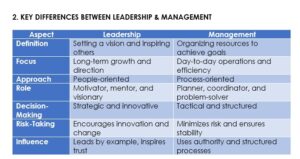 Discussion Question:
“Can a hospitality professional be both a great leader and manager? Why or why not?”
3. ROLES & RESPONSIBILITIES IN HOSPITALITY
3.1 What Makes an Effective Hospitality Leader? Visionary Thinking – Sets long-term goals and inspires teams. Emotional Intelligence – Understands and connects with employees and guests. Empowerment – Motivates staff to take ownership and provide exceptional service. Adaptability – Responds to industry trends, crises, and changes.
Example:
Arne Sorenson (former CEO of Marriott International) led the company to global
expansion while maintaining a strong customer-service culture.
3.2 What Makes an Effective Hospitality Manager? Operational Efficiency – Ensures smooth daily operations. Financial Oversight – Manages budgets, costs, and revenue. Team Supervision – Organizes, hires, and trains employees. Compliance & Standards – Ensures legal, safety, and customer service
compliance. Example:
Hotel General Managers oversee departments such as housekeeping, front office, and F&B to maintain operational efficiency.
4. LEADERSHIP STYLES IN HOSPITALITY
Different situations require different leadership approaches. Understanding these styles helps hospitality professionals become adaptable leaders.
4.1 Transformational Leadership
Inspires and motivates teams to exceed expectations. Focuses on innovation and continuous improvement. Encourages staff development and training. Example: Four Seasons Hotels’ leadership emphasizes employee empowerment and guest experience innovation.
4.2 Servant Leadership Focuses on serving employees first to create an exceptional guest
experience. Promotes humility, empathy, and teamwork. Leaders act as mentors and facilitators. Example: Horst Schulze (Co-founder of Ritz-Carlton) believed in putting employees first, which led to high service quality.
4.3 Situational Leadership Adapts leadership style based on the situation and employee needs. Uses directive, coaching, supporting, or delegating approaches as needed. Works well in dynamic and fast-changing hospitality environments. Example: Hotel managers adjusting leadership styles during crises like the COVID-19 pandemic.
4.4 Transactional Leadership Focuses on structure, rewards, and performance metrics. Uses clear goals, incentives, and discipline to maintain standards. Works best for large hotel chains with strict SOPs. Example: Fast food franchises (e.g., McDonald’s, Starbucks) rely on transactional leadership for consistent service.
Discussion Question:
“Which leadership style do you think is most effective in hospitality?”
5. DECISION-MAKING IN HOSPITALITY
Hospitality professionals must balance leadership-driven vision with managerial efficiency when making decisions.
5.1 Leading Teams vs. Managing Operations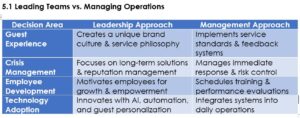 Case Study:
How Airbnb’s leadership made strategic decisions to adapt to changing traveler
needs, while hotel managers ensured operational efficiency.
6. INTERACTIVE ACTIVITY: LEADERSHIP STYLE ASSESSMENT Group Discussion:
What is your leadership style?
How can you improve as a leader or manager in hospitality?
7. CONCLUSION & KEY TAKEAWAYS Leadership and management are both critical in hospitality. Great leaders inspire and innovate, while great managers ensure efficiency
and execution. Different leadership styles suit different hospitality environments. Decision-making in hospitality requires balancing leadership vision and
managerial execution.
SESSION 3: STRATEGIC PLANNING & DECISION-MAKING IN HOSPITALITY
1. INTRODUCTION TO STRATEGIC PLANNING IN HOSPITALITY
Strategic planning is a structured approach that helps hospitality businesses set goals, allocate resources efficiently, and make informed decisions to maintain a competitive advantage.
1.1 Why is Strategic Planning Important in Hospitality? Helps hospitality businesses adapt to changing customer expectations Improves operational efficiency and revenue management Reduces risks and prepares for crises Enables long-term growth and market expansion Example:
Marriott International’s long-term strategic planning led to global expansion and innovative customer loyalty programs, strengthening its market position.
2. DEVELOPING A VISION & MISSION STATEMENT FOR HOSPITALITY BUSINESSES
2.1 Vision vs. Mission Statement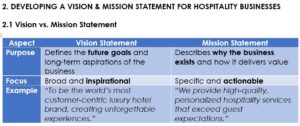
3. STRATEGIC PLANNING MODELS IN HOSPITALITY
Strategic planning models help hospitality leaders analyze their business environment and make informed decisions.
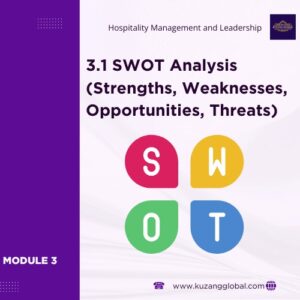
3.1 SWOT Analysis (Strengths, Weaknesses, Opportunities, Threats) Strengths: What the business does well (e.g., strong brand reputation, excellent customer service) Weaknesses: Areas needing improvement (e.g., high operating costs, staff turnover) Opportunities: External factors that can be leveraged (e.g., tourism growth, digital marketing trends) Threats: External risks (e.g., economic downturns, pandemics) Example:
A luxury resort conducts a SWOT analysis to expand into new international markets. Group Activity:
Participants conduct a SWOT analysis for a hotel or restaurant of their choice.
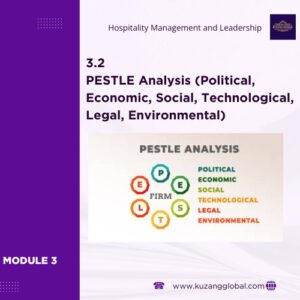
3.2 PESTLE Analysis (Political, Economic, Social, Technological, Legal, Environmental) Political: Government policies, regulations, taxation, visa rules Economic: Tourism trends, exchange rates, inflation Social: Cultural preferences, guest expectations, generational shifts (e.g., rise of millennial travelers) Technological: AI in hospitality, mobile check-ins, automation Legal: Labor laws, safety regulations, health standards Environmental: Sustainability trends, climate impact, eco-tourism
Discussion Question:
“How has technology changed strategic planning in hospitality?”
4. CRISIS MANAGEMENT & RISK ASSESSMENT IN HOSPITALITY LEADERSHIP
4.1 Understanding Crisis Management in Hospitality
A crisis in hospitality can include: Economic downturns Pandemics (e.g., COVID-19) Natural disasters (e.g., hurricanes, earthquakes) Negative publicity or brand reputation damage Security threats (e.g., cyberattacks, terrorism) Case Study:
How hospitality leaders responded to COVID-19:
Marriott implemented enhanced cleaning and flexible booking policies.
Airbnb adapted by shifting toward long-term stays and digital nomad
experiences.
Hilton launched the “CleanStay” program to rebuild guest confidence.
4.2 Steps for Effective Crisis Management Risk Identification: Assess potential threats to business operations.
 Crisis Preparedness: Develop an action plan for different crisis scenarios.
 Communication Strategy: Train staff on crisis communication and guest
handling. Operational Response: Adjust policies, pricing, and guest services during
crises. Recovery Strategy: Rebuild brand reputation and strengthen future
resilience.
Example:
How Disney Hotels manage crisis communication during disasters.
Discussion Question:
“What is the biggest risk facing the hospitality industry today, and how should
leaders prepare?”
Group Activity:
Participants create a crisis response plan for a hospitality brand facing a crisis
(e.g., sudden drop in bookings due to a global event).
5. KEY TAKEAWAYS & CONCLUSION Strategic planning is essential for long-term success in hospitality. SWOT, PESTLE, and Porter’s Five Forces help leaders make data-driven decisions. Crisis management & risk assessment prepare businesses for unexpected challenges. Successful hospitality leaders continuously adapt to market trends and customer expectations.
SESSION 4: LEADERSHIP & INNOVATION IN THE HOSPITALITY INDUSTRY
1. INTRODUCTION TO LEADERSHIP & INNOVATION IN HOSPITALITY
In the modern hospitality industry, leaders must embrace innovation, digital transformation, and sustainability to remain competitive.
1.1 Why is Innovation Important in Hospitality Leadership? Enhances guest experience and service personalization Improves efficiency and operational excellence Strengthens brand reputation and competitiveness Drives sustainability and responsible business practices
Example:
Hilton and Marriott’s use of AI and automation to enhance guest experiences
and streamline operations.
Discussion Question:
“How has technology changed the role of hospitality leaders?”
2. THE FUTURE OF HOSPITALITY LEADERSHIP: INNOVATION & DIGITAL
TRANSFORMATION
2.1 Digital Transformation in the Hospitality Industry
Digital transformation is the adoption of technology to improve guest
experiences, streamline operations, and drive profitability. Artificial Intelligence (AI): Chatbots for customer service, predictive analytics for guest preferences Automation: Self-check-in kiosks, robotic concierge services, smart room controls Big Data & Analytics: Personalized marketing, guest behavior analysis Internet of Things (IoT): Smart hotel rooms with voice control, energy-efficient systems Example:
Marriott International uses AI-powered virtual assistants to personalize guest interactions and recommend experiences.
Interactive Activity:
Participants brainstorm how hotels can use digital tools to improve guest experiences.

3. TECHNOLOGY & LEADERSHIP: HOW DIGITAL TOOLS ARE RESHAPING GUEST EXPERIENCES
3.1 Key Technological Innovations in Hospitality Mobile Apps & Digital Check-ins: Enhancing convenience and reducing wait times Contactless Payments: Increasing security and efficiency Augmented Reality (AR) & Virtual Reality (VR): Virtual hotel tours, immersive booking experiences Blockchain Technology: Secure transactions and transparent booking systems Case Study:
How Accor Hotels leverages mobile technology to create seamless guest experiences. Discussion Question:
“What are the benefits and challenges of using AI in hospitality?”
4. SUSTAINABLE LEADERSHIP IN HOSPITALITY: CORPORATE SOCIAL RESPONSIBILITY (CSR)
4.1 The Importance of Sustainability in Hospitality Leadership
Sustainability is now a key priority for hospitality leaders due to increasing customer demand for eco-friendly and responsible tourism. Eco-friendly hotel designs & energy efficiency Reducing single-use plastics & waste management Ethical sourcing of food & beverages Diversity, equity & inclusion (DEI) in workforce leadership Example:
IHG (InterContinental Hotels Group) launched the “Green Engage” system to track and reduce carbon footprints.
Group Activity:
Participants discuss ways hotels can implement sustainable leadership practices.
5. DEVELOPING A LEADERSHIP MINDSET FOR LONG-TERM CAREER GROWTH
5.1 Traits of Future Hospitality Leaders Adaptability & Innovation: Staying ahead of industry trends Emotional Intelligence (EQ): Leading teams with empathy and strong communication Strategic Thinking: Making data-driven decisions Commitment to Lifelong Learning: Engaging in continuous professional development Example:
Arne Sorenson (Former CEO of Marriott) was known for his visionary leadership and commitment to sustainability and diversity.
Interactive Activity:
Self-assessment on individual leadership strengths and areas for growth.
6. KEY TAKEAWAYS & CONCLUSION Innovation is key to the future of hospitality leadership. Technology enhances guest experiences and improves operations. Sustainable leadership is essential for long-term industry success. Leaders must develop adaptability, emotional intelligence, and strategic thinking for career growth.
DAY 2
SESSION 1: LEADERSHIP STYLES & THEIR IMPACT ON TEAM SUCCESS
1.1 The Role of Leadership in Team Success
Introduction to Leadership in Hospitality
Leadership in the hospitality industry plays a vital role in shaping the guest experience, ensuring operational efficiency, and fostering a culture of service
excellence. Hospitality leaders are responsible for motivating employees, making critical decisions, and maintaining high service standards.
Why Leadership Matters in Hospitality
An effective leader in the hospitality industry: Motivates and inspires employees to provide outstanding service. Enhances employee engagement by creating a positive work environment. Promotes operational efficiency through structured decision-making. Encourages teamwork to improve productivity and guest satisfaction. develops future leaders by mentoring and empowering team members.
The Link between Leadership & Organizational Success A strong leadership culture results in higher employee retention rates. Happy and motivated teams deliver better guest experiences. Leadership development ensures that hospitality businesses remain competitive. Example: The Ritz-Carlton’s leadership principles emphasize empowerment by
allowing employees to make decisions that enhance guest satisfaction.
1.2 Leadership Styles in Hospitality
Different leadership styles have a direct impact on team performance, motivation, and guest experiences. Understanding these styles helps hospitality
professionals adapt their approach to different situations.
Transformational Leadership
Definition: Transformational leaders inspire and motivate their teams through a shared vision, innovation, and change. Key Traits: Visionary, inspiring, forward-thinking. Impact: Encourages creativity, fosters innovation, and builds strong team morale. Example: Four Seasons Hotels emphasizes transformational leadership, promoting a culture of excellence and empowerment.
Servant Leadership
Definition: Servant leaders prioritize employee growth, well-being, and development. Key Traits: Empathetic, supportive, team-focused. Impact: Builds trust, loyalty, and strong team relationships, leading to higher employee satisfaction. Example: Marriott International promotes servant leadership, investing in employee training and career advancement.
Situational Leadership Definition: Situational leaders adjust their leadership style based on the team’s needs, experience level, and challenges. Key Traits: Flexible, adaptive, and strategic. Impact: Provides personalized guidance to team members, improving overall performance. Example: A hotel manager may use a directive style with new employees but a coaching approach with experienced staff.
Transactional Leadership Definition: Transactional leaders use rewards and discipline to manage performance. Key Traits: Performance-driven, rule-focused, structured. Impact: Encourages efficiency and accountability but may limit creativity. Example: A restaurant chain using performance-based incentives for top performing employees.
Autocratic vs. Democratic Leadership
Autocratic Leadership: Definition: Centralized decision-making where the leader exerts full control. Impact: Effective in crises but may create low employee morale if overused.
Example: In emergency situations, hotel GMs may adopt an autocratic style to make quick decisions.
Democratic Leadership: Definition: Encourages team participation in decision-making. Impact: Boosts team engagement, innovation, and job satisfaction. Example: A hotel manager involving staff in brainstorming sessions to improve guest services.
Case Study: How Four Seasons Hotels’ Leadership Philosophy Fosters Excellence Background: Four Seasons Hotels is globally recognized for exceptional service and employee satisfaction.
Leadership Approach: Implements transformational and servant leadership principles. Encourages employee empowerment, allowing staff to make decisions that improve guest experiences. Invests in continuous training and career development. Outcome: High employee retention and satisfaction. Consistently high guest ratings for personalized service. A strong reputation for excellence in hospitality leadership.
Key Takeaways from Session 1 Effective leadership drives team success and guest satisfaction. Different leadership styles influence how employees perform and engage with guests. Transformational and servant leadership foster a culture of excellence in hospitality. Adapting leadership styles based on team needs leads to better results.
2.1 Hiring the Right Talent in Hospitality
Introduction to Talent Acquisition in Hospitality
The hospitality industry is highly service-oriented, and the success of hotels,
restaurants, and travel businesses depends on having the right people in the right roles. Recruiting skilled, passionate, and customer-focused employees is crucial for delivering exceptional guest experiences.
Challenges in Hospitality Recruitment High Turnover Rates: Employees often leave for better opportunities, requiring continuous hiring. Seasonal Workforce Demand: Peak seasons require temporary staff, creating staffing challenges. Skills Gap: Many applicants lack the necessary customer service and technical skills.

Effective Recruitment Strategies
To attract and hire the best talent, hospitality businesses must implement strategic hiring practices: Behavioral Interviewing:
Instead of just checking qualifications, recruiters focus on attitude, problem-solving, and interpersonal skills.
Example: Asking a candidate, “Tell me about a time you handled a difficult guest.”
Employer Branding:
A strong reputation as an employer attracts top talent.
Offering a great workplace culture, competitive benefits, and career growth opportunities makes a company more appealing.
Employee Value Proposition (EVP):
A strong EVP helps attract and retain employees by offering: Competitive Salaries & Benefits – Healthcare, retirement plans, staff discounts. Career Development – Training programs, mentorship, promotions. Work-Life Balance – Flexible schedules, wellness programs.
Example: Hilton Hotels ranks among the best places to work due to its focus on employee well-being.
2.2 Employee Retention Strategies
The Cost of High Employee Turnover Replacing an employee costs up to 30-50% of their annual salary. Loss of experienced employees affects guest satisfaction. Constant training of new hires reduces productivity.
Retention Strategies for Hospitality Businesses
To reduce turnover and keep employees engaged, hospitality leaders must focus on three key areas:
1. Training & Career Growth Provide onboarding programs to help new hires adjust quickly. Offer continuous training and leadership development programs. Encourage internal promotions instead of hiring externally. Example: Four Seasons Hotels offers a Leadership Development Program to groom employees for management roles.
2. Employee Recognition & Rewards Financial Incentives: Bonuses, salary increments, profit-sharing. Non-Financial Incentives: Employee of the Month awards, public recognition, and career growth opportunities. Peer Recognition Programs: Encouraging colleagues to recognize and appreciate each other.
Example: Marriott International’s TakeCare program includes health, financial, and well-being support for employees.
3. Workplace Culture & Employee Engagement
Foster open communication where employees can share ideas and concerns. Encourage team bonding activities like staff outings and social events. Implement wellness programs to support physical and mental health. Example: The Ritz-Carlton’s “Gold Standards” focus on employee respect and empowerment, leading to high job satisfaction.
2.3 Employee Motivation in Hospitality
Why Motivation Matters Motivated employees deliver better service and create memorable guest experiences. High motivation leads to higher productivity and job satisfaction. Unmotivated staff result in poor service, high turnover, and low guest satisfaction.
Applying Motivation Theories in Hospitality
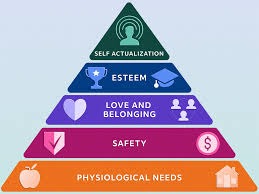 Maslow’s Hierarchy of Needs
Physiological Needs: Competitive wages, meal allowances.
Safety Needs: Job security, health benefits.
Social Needs: Team bonding, workplace friendships.
Esteem Needs: Recognition programs, promotions.
Self-Actualization: Career growth, personal development opportunities.
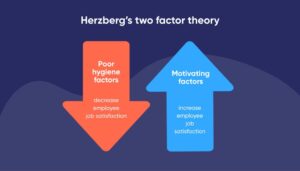 Herzberg’s Two-Factor Theory
Hygiene Factors (prevent dissatisfaction): Salary, job security, working conditions.
Motivational Factors (increase job satisfaction): Recognition, meaningful work, growth opportunities. Incentive Programs for Service Excellence
Reward outstanding employees with bonuses, paid vacations, and awards.
Implement performance-based rewards to encourage service excellence. Example: Many luxury hotels offer incentives like employee discounts, all-expense-paid trips, and bonuses for exceptional performance.
Case Study: Marriott’s Employee Retention Strategy – The “TakeCare” Program Background: Marriott International is known for industry-leading employee retention. Key Initiatives: TakeCare Program: A comprehensive initiative focusing on well-being, career growth, and work-life balance. Mentorship & Career Development: Employees receive ongoing leadership training. Workplace Flexibility: Supports employees with childcare, wellness programs, and remote work options. Outcome: Higher Employee Satisfaction: Marriott ranks among the best hospitality companies to work for. Lower Turnover Rates: Staff stay longer due to career growth opportunities and a strong support system. Enhanced Guest Experiences: Motivated employees provide exceptional service, leading to higher customer loyalty.
Key Takeaways from Session 2 Talent acquisition in hospitality requires hiring for attitude and training for skill. Strong employer branding and EVP attract top talent. Retention strategies like career growth, recognition, and workplace culture improve employee loyalty. Motivated employees deliver outstanding guest experiences. Applying Maslow’s and Herzberg’s theories helps create an engaged workforce.
SESSION 3: DIVERSITY, EQUITY & INCLUSION (DEI) IN HOSPITALITY
3.1 Understanding Diversity, Equity & Inclusion (DEI)
Introduction to DEI in Hospitality
The hospitality industry serves a global audience with diverse backgrounds, cultures, and expectations. To provide exceptional service, organizations must embrace Diversity, Equity, and Inclusion (DEI) in their workplace culture and guest interactions.
Defining Key DEI Concepts Diversity – The presence of differences in gender, race, ethnicity, age, culture, physical ability, and perspectives in hospitality teams. Equity – Ensuring fair access to opportunities, training, promotions, and benefits for all employees. Inclusion – Creating a workplace culture where every employee feels valued, respected, and empowered to contribute.
Types of Diversity in Hospitality Cultural Diversity: Different ethnicities and nationalities working together. Gender Diversity: Equal representation of men and women in leadership. Generational Diversity: A mix of Baby Boomers, Millennials, and Gen Z employees. Neurodiversity & Disabilities: Employing and supporting individuals with different cognitive abilities or physical challenges.
Example: Many international hotel chains, like Accor and Marriott, actively hire people from underrepresented groups to promote diversity.
3.2 The Importance of DEI in Hospitality Leadership
Why DEI Matters in Hospitality
The hospitality industry thrives on personalized experiences, teamwork, and cultural understanding. A strong DEI strategy benefits both employees and
guests in the following ways:
Enhances Guest Experiences:
Multicultural teams understand diverse customer needs and preferences.
Hotels and restaurants adapt their services for international guests.
Example: A hotel with multilingual staff can provide better service to global travelers.
Boosts Employee Morale & Retention:
Employees perform better when they feel respected and valued.
A diverse workforce reduces bias and discrimination, creating a positive work environment.
Example: Hyatt’s Women@Hyatt initiative helps increase female leadership roles.
Increases Brand Reputation & Customer Loyalty:
Customers prefer brands that promote inclusivity and social responsibility.
DEI initiatives enhance corporate reputation and attract diverse talent.
Example: Hilton’s recognition as one of the World’s Best Workplaces is partly due to its strong DEI programs.

3.3 Best Practices for Implementing DEI in Hospitality
1. Unconscious Bias Training Many hiring managers and employees unintentionally favor certain groups due to hidden biases. Training programs help reduce stereotypes and promote fair hiring and promotion practices. Example: Marriott International trains managers to recognize bias in hiring decisions.
2. Equal Pay & Career Growth Opportunities Hotels and restaurants must ensure fair wages for all roles, regardless of gender or background. Equal opportunities for leadership development and promotions encourage a diverse workforce. Example: The Accor Group launched a Gender Equality Program to close pay gaps and promote women in executive roles.
3. Culturally Inclusive Customer Service Employees should be trained in cultural sensitivity to better serve international guests. Hotels and restaurants should incorporate diverse menu options and multilingual services. Example: Luxury hotel chains like Four Seasons and Ritz-Carlton offer customized experiences based on cultural preferences.
Case Study: How Hilton Became an Industry Leader in Diversity & Inclusion Background: Hilton Hotels has been ranked among the Best Companies for Diversity for multiple years.
Key DEI Strategies: Diverse Hiring Practices: Actively recruits individuals from underrepresented backgrounds. Inclusive Leadership Programs: Provides training and mentorship for women and minorities in leadership. LGBTQ+ Inclusion: Supports LGBTQ+ employees through policies, benefits, and safe workplace initiatives. Community Engagement: Invests in global initiatives that support education and workforce diversity.
Results: Lower Employee Turnover: Hilton’s inclusive work culture boosts employee retention. Higher Guest Satisfaction: Travelers appreciate a multicultural and inclusive service approach. Stronger Employer Brand: Hilton attracts top hospitality talent worldwide.
Key Takeaways from Session 3 Diversity, Equity & Inclusion create a positive workplace and enhance guest experiences. Diverse teams bring cultural insights, innovation, and better service quality. Fair policies and career growth opportunities promote employee retention.
Leading hospitality brands prioritize DEI to attract top talent and loyal customers.
SESSION 4: UNDERSTANDING CUSTOMER EXPECTATIONS & SERVICE
EXCELLENCE IN HOSPITALITY
4.1 The Psychology of Customer Expectations
Introduction to Customer Expectations in Hospitality
Customer expectations in the hospitality industry are shaped by personal experiences, brand reputation, cultural influences, and industry standards. To
achieve service excellence, hospitality businesses must understand, anticipate, and exceed guest expectations.
Key Psychological Drivers of Customer Expectations Personalization: Customers expect services tailored to their preferences and past interactions. Speed & Efficiency: Guests value fast check-ins, prompt service, and seamless transactions. Consistency & Reliability: Customers expect the same level of service every time they visit. Emotional Connection: A warm welcome, empathy, and attention to detail enhance guest satisfaction. Value for Money: Guests expect quality service that justifies the price they pay.
Moments of Truth in Customer Experience
A “moment of truth” occurs when a guest interacts with the service and forms an opinion about the brand. These moments define whether a guest will return or switch to a competitor. Examples of Key Moments of Truth: First Impression: The guest’s arrival experience, check-in process, and initial interaction. Service Delivery: Room cleanliness, dining experience, and responsiveness to guest needs. Issue Resolution: How well staff handle complaints and recover from service failures.
Departure Experience: The checkout process, farewell, and follow-up communication. Example: A study by J.D. Power found that 72% of customers who experience a well-handled service issue are more loyal than those who never had a
problem.
4.2 Service Excellence & Guest Retention Strategies
1. Personalized Guest Experience Using CRM (Customer Relationship Management) tools to track guest preferences. Creating guest profiles with details on favorite rooms, meal preferences, and past feedback. Sending personalized offers, birthday greetings, and exclusive deals to loyal guests. Example: Luxury hotel brands like Four Seasons and Mandarin Oriental use AIpowered CRM systems to remember guest preferences and personalize service.
2. Training Frontline Staff for Service Excellence
Frontline employees are the face of hospitality brands. Proper training ensures: Active Listening: Understanding guest concerns and responding with empathy. Effective Communication: Using positive language and professional etiquette. Problem-Solving Skills: Handling guest complaints quickly and efficiently. Cultural Sensitivity: Adapting service styles to different cultural expectations. Example: Disney’s customer service training includes role-playing scenarios to prepare staff for real-world guest interactions.
3. Loyalty Programs & Special Offers for Retention Implementing tier-based loyalty programs where repeat customers earn rewards. Offering discounted stays, complimentary upgrades, or exclusive perks. Engaging guests with seasonal promotions and membership benefits. Example: Marriott Bonvoy and Hilton Honors reward frequent guests with points, free stays, and VIP privileges.
4. Handling VIP & High-Net-Worth Guests Providing exclusive check-ins, personal concierge services, and luxury amenities. Offering chauffeur services, private dining, and customized travel itineraries. Ensuring complete privacy, discretion, and seamless service.
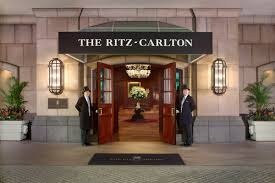 Example: The Ritz-Carlton’s “Ladies and Gentlemen” philosophy ensures that every guest—especially high-net-worth individuals—receives personalized, world-class service.
Case Study: How Ritz-Carlton’s “Gold Standards” Set the Benchmark for Service Excellence Background: The Ritz-Carlton Hotel Company is known for delivering some of the best customer experiences in the hospitality industry. Key Strategies: The 3 Steps of Service: A warm greeting, fulfilling expressed and unexpressed needs, and a fond farewell. The 10-5 Rule: Employees acknowledge guests at 10 feet with eye contact and at 5 feet with a smile and greeting. Empowered Staff: Employees are allowed to spend up to $2,000 per guest per incident to resolve service issues. Results: High guest satisfaction and repeat customers. Strong brand reputation for luxury and excellence. A global benchmark for training hospitality professionals.
Interactive Activity: Guest Retention Strategy Development
Key Takeaways from Session 4 Understanding customer expectations is essential for service excellence. Moments of truth impact guest loyalty and long-term retention. Personalization, frontline staff training, and loyalty programs enhance guest experience. VIP guests require specialized, discreet, and luxurious service approaches. The Ritz-Carlton’s Gold Standards remain a global benchmark for service excellence.
SESSION 5: CRISIS & COMPLAINT MANAGEMENT IN HOTELS & RESTAURANTS
5.1 Understanding Crisis Management in Hospitality
Introduction to Crisis Management in Hotels & Restaurants
Crisis management in hospitality involves anticipating, responding to, and recovering from unexpected situations that can disrupt operations and damage reputation.
Common Types of Crises in Hospitality Guest Complaints: Poor service, billing errors, or dissatisfaction with amenities. Operational Failures: Power outages, system crashes, or overbookings. Public Relations (PR) Issues: Negative press, social media backlash, or staff misconduct. Health & Safety Incidents: Food poisoning, accidents, or natural disasters. Security Threats: Theft, cyberattacks, or guest safety concerns.
Example: The 2018
Marriott data breach exposed the personal information of 500 million guests, forcing the company to implement stronger cybersecurity
measures and compensation strategies.
Creating a Structured Crisis Management Plan
To minimize damage and recover quickly, hotels and restaurants must have a Crisis Management Plan (CMP) that includes: Risk Assessment: Identifying potential crises and their impact. Crisis Communication Protocol: Clear guidelines on internal and external communication. Crisis Response Team (CRT): Assigning trained staff to handle crises. Emergency Procedures: Action plans for fire, medical emergencies, or security threats. Post-Crisis Analysis: Reviewing what went wrong and improving response strategies. Example: After the COVID-19 pandemic, global hotel chains like Hilton and Marriott introduced enhanced sanitation protocols, contactless check-ins, and flexible cancellation policies to rebuild guest confidence.

5.2 Steps to Effective Complaint Handling
Why Complaint Handling Matters 68% of guests who experience a well-handled complaint become loyal customers. Effective complaint resolution reduces negative online reviews and boosts brand reputation. Training staff in complaint resolution ensures higher guest satisfaction and retention.
The 4-Step Complaint Handling Process
1. Listen & Acknowledge
Allow the guest to express their concerns fully without interruption. Maintain eye contact, a neutral expression, and a reassuring tone. Take notes to show genuine attentiveness. Example: A guest complains about slow room service. The manager listens carefully and acknowledges the frustration before offering a solution.
2. Apologize & Empathize Offer a sincere and specific apology. Show genuine empathy using phrases like:
“I completely understand how frustrating this must be for you.”
“I sincerely apologize for the inconvenience caused.” Example: A customer receives an overcooked steak at a fine-dining restaurant. Instead of arguing, the waiter apologizes and offers to replace the
dish immediately.
3. Resolve Quickly Offer an immediate solution or reasonable compensation (e.g., discounts, upgrades, complimentary services).
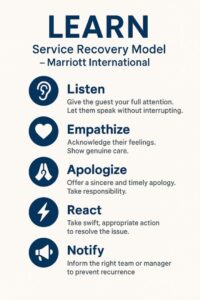 Follow the L.E.A.R.N. Model:
Listen to the complaint.
Empathize with the guest.
Apologize sincerely.
Resolve the issue effectively.
Notify management to prevent recurrence. Example: A guest finds hair in their food at a restaurant. The manager promptly apologizes, replaces the meal, and offers a complimentary dessert as
a goodwill gesture.
4. Follow Up Contact the guest after resolving the issue to ensure satisfaction. Offer a personalized note, phone call, or email. Invite the guest for a return visit with a special discount.
Example: A hotel resolves a complaint about noisy neighbors by relocating the guest. The manager follows up the next day to check if the guest is now comfortable.

5.3 Managing Online Reviews & Reputation
The Power of Online Reviews in Hospitality 90% of travelers read online reviews before booking a hotel or restaurant. A single negative review can cost a business up to 22% of potential customers. Hotels & restaurants must be proactive in managing their online reputation.
How to Handle Negative Reviews Professionally Acknowledge & Respond Promptly:
Thank the guest for their feedback.
Apologize for the issue.
Offer a solution or invite them to discuss the matter privately. Example: A guest leaves a one-star review about poor room service. The hotel manager responds within 24 hours, apologizing for the inconvenience and offering a discount on the next stay.
Encourage Positive Reviews:
Train staff to ask satisfied guests for reviews.
Offer incentives like free coffee or small discounts for guests who leave reviews.
Use QR codes to make reviewing easy. Example: A restaurant places QR codes on tables leading to their Google Review page, increasing positive reviews by 30% in six months.
Use AI Chatbots & 24/7 Support for Reputation Management:
Implement AI-driven chatbots to resolve guest issues instantly.
Use social media listening tools to monitor brand mentions. Example: Marriott uses AI-powered chatbots to handle guest requests and complaints in real time, reducing negative feedback by 40%.
Case Study: How Airbnb Managed Guest Safety Complaints & Improved
Customer Trust Background: In 2019, Airbnb faced a wave of guest complaints about safety issues, including unauthorized cameras in rental properties and fraudulent listings. Challenges: Declining customer trust and confidence. Increased negative media coverage and lawsuits. Crisis Management Strategies: Implemented a 24/7 customer safety hotline. Introduced background checks for hosts and enhanced verification processes. Created a $1 million insurance policy for guest safety. Results: Restored customer trust, leading to a 15% increase in bookings. Stronger host accountability policies, reducing fraudulent listings. Improved brand reputation and customer safety assurance.
Key Takeaways from Session 5 A structured crisis management plan minimizes operational disruptions. Active listening, empathy, and quick resolution improve complaint handling. Proactive online reputation management protects brand image. AI and technology enhance guest service recovery efforts. Case studies show that effective crisis management strengthens customer trust.
DAY 3
Introduction to Hospitality Financial Management & Digital Transformation
The hospitality industry is evolving rapidly, with financial acumen and digital innovation playing a crucial role in business success. Understanding financial principles, cost control, revenue management, and digital transformation enables hotel and restaurant managers to maximize profitability while enhancing guest experiences.
This session focuses on the financial strategies that drive success and the digital tools transforming the industry.
1.1 Key Financial Statements in Hospitality
Financial accounting is the backbone of decision-making, investor relations, and regulatory compliance in hospitality businesses such as hotels, resorts, and restaurants. Understanding and analyzing financial statements are crucial for business sustainability, profitability, and operational efficiency.
Three Primary Financial Statements:
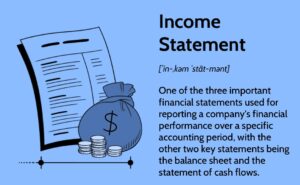
1. Income Statement (Profit & Loss Statement): This statement measures abusiness’s financial performance over a specific period by tracking
revenues, expenses, and net profits. It helps in determining profitability trends and assessing operational efficiency. Example: A hotel’s income statement may show that revenue increases during peak seasons (e.g., summer holidays) and declines in off-peak
seasons. Managers can use this data to develop pricing and promotional strategies.
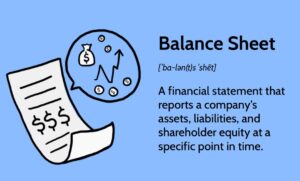
2. Balance Sheet: This statement provides a snapshot of a company’s financial position at a given point in time, listing assets, liabilities, and
equity. It helps businesses understand their financial health, liquidity, and capital structure.
Example: A luxury resort’s balance sheet will include high-value assets such as land, buildings, and equipment, which are essential for long-term
sustainability.
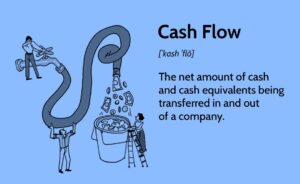
3. Cash Flow Statement: This statement tracks the movement of cash in and out of the business, categorizing cash activities into operating, investing,
and financing activities. It ensures businesses have sufficient liquidity to meet operational needs and financial obligations. Example: A restaurant with strong cash flow can reinvest in new kitchen equipment or expansion without needing external financing.
1.2 Hospitality-Specific Financial Metrics
Financial performance in the hospitality industry is measured using specific key performance indicators (KPIs). These metrics provide insights into revenue management, cost efficiency, and profitability.
Essential Hospitality Financial Metrics:
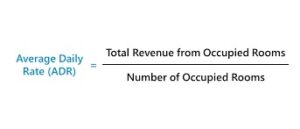
1. Average Daily Rate (ADR): Measures the average revenue earned per room sold.
Formula: Example: If a hotel generates $50,000 in room revenue by selling 250 rooms in a night, the ADR is $200.
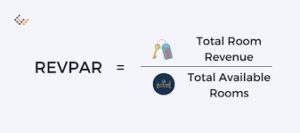
2. Revenue per Available Room (Rev PAR): Evaluates a hotel’s ability to fill rooms at an optimal rate.
Formula: Example: If a hotel with 200 rooms generates $40,000 in revenue, its Rev PAR is $200 per room.

3. Food & Beverage (F&B) Cost Percentage: Determines the cost efficiency of food and beverage operations.
Formula: Example: If a restaurant spends $10,000 on food supplies and generates $40,000 in F&B revenue, the F&B cost percentage is 25%.
4. Occupancy Rate: Measures how efficiently a hotel utilizes its available rooms.
Formula: Example: If a hotel has 200 rooms and sells 150 in one night, its occupancy rate is 75%, indicating strong performance.
Industry Insights & Best Practices
Revenue Management: Dynamic pricing strategies can help maximize Rev PAR by adjusting rates based on demand fluctuations.
Cost Control: Monitoring F&B costs and implementing waste reduction strategies improve profit margins.
Financial Planning: Accurate forecasting and budgeting ensure long-term sustainability and operational efficiency.
Technology Integration: Using financial management software enhances data accuracy and decision-making in hospitality accounting.
By mastering these financial principles, hospitality managers and business owners can drive profitability, optimize costs, and improve financial decisionmaking in an ever-evolving industry.
2.1 The Importance of Budgeting in Hospitality
Budgeting is a critical financial tool that helps hotels and restaurants plan, allocate resources, and set financial targets to ensure operational efficiency
and profitability. A well-structured budget prevents overspending, ensures liquidity, and supports long-term growth.
Types of Budgets in Hospitality
1. Operational Budget:
o Covers daily operating expenses such as salaries, utilities, housekeeping supplies, and inventory.
o Helps control costs and ensure smooth hotel and restaurant operations.
2. Capital Budget:
o Used for long-term investments like hotel renovations, new restaurant equipment, or property expansions.
o Supports the development of modern facilities and services to enhance guest experiences.
3. Cash Flow Budget:
o Ensures that there is enough liquidity to cover short-term expenses like supplier payments and staff salaries.
o Avoids financial shortfalls by predicting cash inflows (room bookings, restaurant sales) and outflows (bills, maintenance). Example: A luxury resort planning a $5 million renovation will allocate funds from its capital budget while maintaining operational expenses through careful cash flow budgeting.
2.2 Cost Control Techniques for Hotels & Restaurants
Cost control is essential for maximizing profits while maintaining service quality.
Effective cost management ensures sustainable business operations.
Key Cost Control Techniques Inventory Management:
Implement just-in-time (JIT) inventory to minimize waste.
Use inventory tracking software to monitor food, beverage, and linen usage.
Labor Cost Optimization:
Utilize staff scheduling software (e.g., HotSchedules, Deputy) to match labor supply with customer demand.
Cross-train employees to increase efficiency and reduce overtime costs.
Energy Efficiency Measures:
Install LED lighting and smart thermostats to reduce electricity consumption.
Implement water conservation programs in hotels and restaurants.
Waste Reduction Strategies:
Introduce portion control in restaurants to minimize food waste.
Recycle and reuse materials to cut operational costs.
Example:
Hilton Hotels implemented LED lighting, smart HVAC systems, and water conservation programs, saving over $1 million annually in energy costs.
2.3 Profitability Analysis in Hospitality
To remain competitive and financially viable, hospitality businesses must analyze their profitability using key financial metrics.
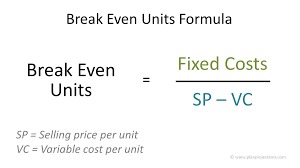
Break-even Analysis Break-even Point Formula:
Break-even sales volume = Fixed Costs ÷ (Selling Price per Unit – Variable Cost per Unit)
Determines the point where total revenue equals total costs (no profit, no loss). Example: A hotel room costs $100 per night to maintain (variable costs), and the hotel has fixed costs of $50,000. If the selling price is $200 per night, the hotel needs to sell 250 room nights per month to break even.

Key Profitability Metrics Gross Profit Margin:
Gross Profit Margin=(Total Revenue−Cost of Goods SoldTotal Revenue)×100\text {Gross Profit Margin} = \left( \frac{\text{Total Revenue} – \text{Cost of Goods Sold}}{\text{Total Revenue}} \right) \times 100Gross Profit Margin=(Total RevenueTotal Revenue−Cost of Goods Sold)×100
Measures the percentage of revenue remaining after direct costs.
Net Profit Margin:
Net Profit Margin=(Net Profit Total Revenue)×100\text{Net Profit Margin} = \left( \frac{\text{Net Profit}}{\text{Total Revenue}} \right) \times
100Net Profit Margin=(Total Revenue Net Profit)×100
Reflects overall business profitability after all expenses.
Example:
A restaurant that improves its profit margin from 8% to 15% through better cost control and optimized pricing strengthens its financial sustainability. Case Study: How a Five-Star Hotel Improved Profitability
A luxury hotel in Dubai reduced food waste by 30%, optimized labor scheduling, and implemented energy-saving measures. As a result, it cut operational costs by $500,000 annually while maintaining excellent guest service.
3: REVENUE MANAGEMENT & PRICING STRATEGIES
3.1 Introduction to Revenue Management
Revenue management is a strategic approach that helps hotels and restaurants maximize profitability by analyzing demand, setting optimal prices, and
managing inventory efficiently.
Key Elements of Revenue Management: Demand Forecasting: Predicting customer demand based on historical data, seasonality, and external factors. Dynamic Pricing: Adjusting prices in real-time based on demand and competitor rates. Inventory Allocation: Distributing rooms, tables, or event spaces efficiently to maximize revenue. Market Segmentation: Offering tailored pricing and promotions to different customer groups. Example: Airlines pioneered revenue management, but hotels like Marriott and Hilton have perfected it by using AI-driven pricing models to optimize revenue per available room (RevPAR).
3.2 Key Revenue Management Strategies
Effective revenue management relies on data-driven pricing strategies to ensure profitability.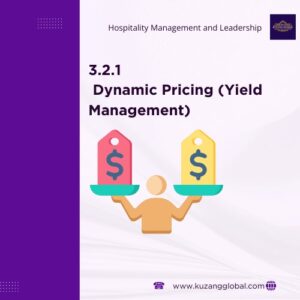
1. Dynamic Pricing (Yield Management) Adjusts room rates in real-time based on demand, competitor pricing, and booking trends. Uses automated software to increase prices during peak seasons and offer discounts during low demand. Common in hotels, restaurants, airlines, and event venues. Example:
Marriott’s AI-powered revenue management system increased RevPAR by 10% by making real-time pricing adjustments.
Uber’s surge pricing model follows similar principles.
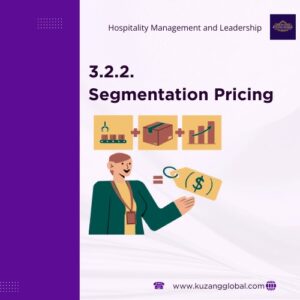
2. Segmentation Pricing Different customer groups receive tailored pricing based on their behavior and willingness to pay. Examples of segmentation:
Business vs. Leisure Travelers: Business guests pay premium rates for flexibility, while leisure travelers prefer discounts.
Direct vs. OTA Bookings: Hotels may offer lower rates to direct bookers than to customers booking via Online Travel Agencies (OTAs) like
Booking.com. Example:
Hilton Honors members get exclusive discounts and perks compared to regular online bookings.
3. Length-of-Stay (LOS) Restrictions Setting minimum or maximum stay requirements to optimize revenue during peak periods. Encourages longer stays through discounts on extended bookings.
A beach resort may require a minimum 3-night stay during holiday weekends to maximize occupancy.

4. Upselling & Cross-Selling Upselling: Encouraging guests to upgrade to a higher-priced room or premium service. Cross-selling: Offering additional services such as spa treatments, dining packages, or airport transfers to increase revenue. Example:
A luxury hotel in Dubai offers suite upgrades at check-in with a 20% discount, increasing revenue from premium rooms.
Restaurants use wine pairings or combo meal deals to increase guest spending.
3.3 Forecasting & Demand Analysis
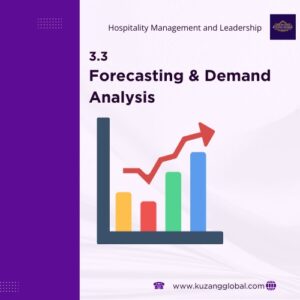
Accurate forecasting allows hospitality businesses to optimize pricing, staffing, and inventory management.
Methods of Forecasting Demand Historical Data Analysis: Examining past bookings and revenue patterns. Seasonality Trends: Adjusting rates based on high-traffic periods (e.g., summer vs. winter). Market Trends & Local Events: Monitoring tourism trends, conferences, concerts, and holidays. AI & Machine Learning: Using real-time data to predict demand and adjust pricing dynamically. Example:
Hotels in Paris increase rates by 30% during Fashion Week, as demand from luxury travelers and industry professionals skyrockets.
Las Vegas resorts raise room rates before major sporting events like the Super Bowl. Case Study: How a Five-Star Hotel Improved Revenue Through Smart Pricing
A five-star resort in the Maldives increased revenue by 20% using dynamic pricing, length-of-stay restrictions, and AI-powered demand forecasting. By
analyzing booking data, competitor rates, and local tourism trends, the hotel optimized its pricing strategy, ensuring higher occupancy and greater
profitability.
4: DIGITAL MARKETING & BRAND MANAGEMENT FOR HOTELS & RESTAURANTS
4.1 The Role of Digital Marketing in Hospitality
In today’s digital landscape, over 70% of travelers book accommodations online, and 90% of diners research restaurants before visiting. Hospitality
businesses must adopt digital marketing strategies to enhance visibility, drive bookings, and build customer loyalty.
Key Benefits of Digital Marketing in Hospitality: Increased Brand Awareness: Establishes a strong online presence. Higher Direct Bookings: Reduces reliance on Online Travel Agencies (OTAs) like Booking.com. Enhanced Customer Engagement: Builds long-term relationships through personalized communication. Competitive Advantage: Positions hotels and restaurants as market leaders. Example:
Marriott International generates more than 30% of its bookings through its website, reducing dependency on third-party platforms.
4.2 Key Digital Marketing Strategies
1. Search Engine Optimization (SEO) Optimizing hotel and restaurant websites to rank higher on search engines like Google.
Using local SEO to appear in “near me” searches. Incorporating keywords such as “best luxury hotel in New York” to attract targeted traffic. Example:
A restaurant in London increased reservations by 40% after optimizing its website for “best seafood restaurant in London.”
2. Social Media Marketing (SMM) Utilizing Instagram, Facebook, TikTok, and LinkedIn to showcase hotel experiences and menu highlights. Running paid ads to reach targeted audiences based on demographics and interests. Using hashtags and geo-tags to increase discoverability. Example:
Four Seasons Hotels launched a user-generated content campaign on Instagram, increasing direct bookings by 30% through personalized guest
interactions.
3. Email Marketing & Customer Retargeting Sending personalized promotions, loyalty offers, and post-stay surveys. Retargeting visitors who abandoned bookings by sending reminder emails with special discounts. Example:
Hilton Honors’ email campaigns targeting past guests led to a 15% increase in repeat bookings.
4. Influencer & User-Generated Content (UGC)
Partnering with travel bloggers, food critics, and influencers to promote hotels and restaurants. Encouraging guests to share their experiences using branded hashtags. Example:
The Ritz-Carlton collaborated with influencers to promote its luxury experiences, increasing social media engagement by 50%.
4.3 Online Reputation Management
A hotel or restaurant’s online reputation significantly influences customer trust and booking decisions.
Strategies for Reputation Management: Monitor Review Platforms: Track reviews on TripAdvisor, Google, and Yelp. Respond to Guest Feedback: Address both positive and negative reviews professionally and promptly. Leverage AI-Powered Chatbots: Engage with customers in real time via social media and hotel websites. Example:
Ritz-Carlton’s social media team personally responds to Instagram posts, increasing guest loyalty and brand engagement.
5: HOTEL & RESTAURANT MANAGEMENT SOFTWARE & AUTOMATION
5.1 Essential Hospitality Software
Technology has revolutionized the hospitality industry by streamlining operations, enhancing guest experiences, and optimizing revenue. The implementation of hotel and restaurant management software is now a critical success factor for businesses aiming to improve efficiency and profitability.
Key Hospitality Software Solutions
1. Property Management Systems (PMS)
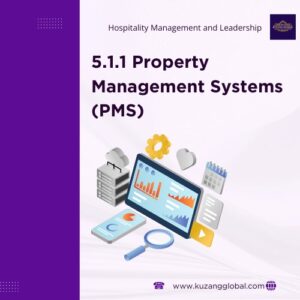
A Property Management System (PMS) is a centralized platform that automates hotel operations, including: Check-in and Check-out: Digitalized guest registration and mobile check-in. Housekeeping Management: Tracks room cleaning status and staff assignments. Guest Profile Management: Stores guest preferences for personalized service. Integrated Billing: Consolidates room charges, restaurant bills, and extra services. Example:
Marriott Hotels’ PMS integration reduced check-in times by 50%, leading to increased customer satisfaction.
2. Point-of-Sale (POS) Systems
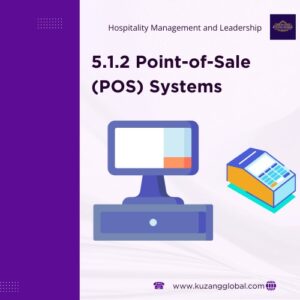
A POS system is essential for managing food and beverage sales in restaurants, bars, and room service. It allows for: Order Processing: Tracks dine-in, takeout, and online orders. Inventory Management: Reduces waste and manages stock levels. Digital Payments: Accepts credit cards, e-wallets, and contactless payments. Loyalty Program Integration: Offers discounts and rewards to repeat customers. Example:
McDonald’s self-service kiosks (POS) increased sales by 30% and improved customer experience.
3. Revenue Management Software (RMS)
Revenue Management Software (RMS) uses AI and data analytics to optimize pricing strategies by: Analyzing Demand Trends: Predicts booking patterns based on seasonality and local events. Competitive Pricing Adjustments: Monitors competitors’ rates in real-time.
Yield Management: Adjusts room rates to maximize revenue per available room (RevPAR). Example:
Hilton’s RMS system increased revenue by 12% by dynamically adjusting prices based on demand.
4. Customer Relationship Management (CRM) Systems
A CRM system helps hospitality businesses manage guest interactions and enhance customer loyalty through: Personalized Marketing Campaigns based on guest preferences. Automated Email & SMS Reminders for upcoming reservations. Guest Feedback & Review Management for continuous improvement.
Example:
IHG Hotels uses CRM software to segment customers and offer targeted promotions, increasing repeat bookings by 15%.
5. Chatbots & AI-Powered Assistants
Hotels and restaurants are increasingly integrating AI chatbots to handle: Reservation Inquiries & Room Bookings through automated responses. 24/7 Customer Support for common guest queries. Upselling & Cross-Selling services like spa bookings and dining experiences. Example:
Hyatt Hotels’ AI chatbot assists guests in multiple languages, enhancing global customer engagement.
5.2 Benefits of Automation in Hospitality
The hospitality industry is shifting towards automation to improve efficiency and guest satisfaction. Below are the key benefits:
1. Reduces Human Errors Minimizes mistakes in billing, reservations, and check-in/check-out processes. Prevents double-booking and overbooking issues through synchronized systems. Example:
Accor Hotels’ automated booking system reduced reservation errors by 40%, improving operational accuracy.
2. Enhances Guest Personalization AI-powered systems analyze guest behavior to offer customized experiences. Digital CRM platforms track preferences (e.g., room type, dietary needs) for tailored service. Example:
Hilton’s ‘Connected Room’ technology allows guests to control lighting, TV, and temperature via a mobile app, increasing guest satisfaction.
3. Improves Operational Efficiency Automates staff scheduling, housekeeping assignments, and maintenance tracking. Reduces wait times with mobile check-in and self-service kiosks. Example:
IHG Hotels’ AI-powered concierge service increased guest satisfaction by 20%, improving response time and service quality.
4. Increases Revenue & Cost Savings
Dynamic pricing strategies adjust room rates in real-time for higher profitability. Smart inventory management prevents waste and reduces operational costs. Example:
The Wynn Las Vegas Hotel implemented AI-driven pricing, leading to a 5% increase in revenue per available room (RevPAR).
6: SUSTAINABLE HOSPITALITY & ECO-FRIENDLY BUSINESS PRACTICES
6.1 The Importance of Sustainability in Hospitality
Sustainability has become a critical factor in the global hospitality industry.
Hotels and restaurants are increasingly adopting eco-friendly initiatives to meet consumer expectations, reduce environmental impact, and improve
profitability.
Key Reasons Why Sustainability Matters
1. Rising Consumer Demand for Eco-Friendly Hotels & Restaurants Over 80% of travelers prefer accommodations that implement sustainable practices (Booking.com 2023 Sustainability Report). Millennials and Gen Z guests actively seek hotels and restaurants with green certifications such as LEED, Green Key, and EarthCheck. Example:
IHG Hotels launched its ‘Green Engage’ program, allowing guests to track their carbon footprint per stay, increasing eco-conscious bookings.
2. Lower Operational Costs Through Energy & Waste Reduction Energy-efficient systems reduce electricity and water consumption, lowering utility bills. Waste management initiatives cut down disposal costs while supporting sustainability goals.
Example:
Hilton Hotels reduced energy consumption by 49% through smart lighting, efficient HVAC systems, and automated energy controls.
3. Improved Brand Reputation & Compliance with Regulations Adopting sustainability enhances brand image and attracts eco-conscious customers. Many governments offer tax incentives and grants for businesses that implement green practices. Example:
Marriott International’s ‘Serve 360’ program led to a 30% increase in positive brand perception and government recognition for sustainability
efforts.
6.2 Eco-Friendly Strategies for Hotels & Restaurants
To build a sustainable hospitality business, organizations must implement practical and measurable green initiatives.
1. Energy Conservation Install solar panels to generate renewable energy. Use LED lighting to reduce electricity consumption. Implement smart thermostats to optimize heating and cooling based on occupancy. Example:
Hyatt Hotels’ energy efficiency programs saved $2.5 million annually by implementing LED lighting and smart energy management systems.
2. Water Efficiency
Install low-flow faucets, showerheads, and toilets to reduce water wastage. Use rainwater harvesting systems for irrigation and landscaping. Encourage guests to reuse towels and linens through awareness programs. Example:
Accor Hotels’ Planet 21 Initiative reduced water consumption by 30% by implementing smart water meters and low-flow fixtures.
3. Sustainable Sourcing & Ethical Supply Chain Partner with local, organic, and sustainable food suppliers to reduce carbon footprint. Use ethically sourced seafood and fair-trade coffee in hotel restaurants. Reduce food waste by implementing zero-waste cooking strategies. Example:
Nobu Hotels exclusively sources sustainable seafood, ensuring compliance with ethical fishing practices.
4. Waste Management & Plastic-Free Initiatives Implement composting programs to recycle food waste into fertilizer. Replace single-use plastics with biodegradable alternatives (e.g., bamboo straws, paper packaging). Partner with recycling programs to manage waste efficiently. Example:
Marriott’s ‘Serve 360’ sustainability program eliminated single-use plastics in 7,000 hotels, saving over 3 million gallons of water annually.
Case Study: A Zero-Waste Hotel Concept The QO Hotel in Amsterdam is a fully sustainable hotel using:
Rainwater for irrigation & toilets.
A rooftop greenhouse to grow organic ingredients.
100% recycled materials in hotel construction. Results: Reduced waste by 80% and cut energy use by 65%.
DAY 4:
CASE STUDIES, INDUSTRY BEST PRACTICES & CERTIFICATION Duration: Full Day Mode: Interactive Sessions, Case Studies, Group Projects & Final Assessment
Course Overview
The hospitality industry is built on exceptional leadership, effective problemsolving, and ethical business practices. On the final day of this training,
participants will: Analyze successful leadership strategies used by global hospitality brands. Develop problem-solving techniques to handle crises and operational challenges. Understand ethics, compliance, and corporate social responsibility (CSR) in the hospitality sector. Participate in real-world group projects to apply knowledge in practical scenarios. Take the final assessment and receive internationally recognized certification. Learn about career advancement opportunities and next steps for professional growth.
This module integrates industry best practices from world-class hospitality training institutes, including:
Cornell University’s School of Hotel Administration (SHA)
EHL Hospitality Business School (École hôtelière de Lausanne)
Les Roches Global Hospitality Education
American Hotel & Lodging Educational Institute (AHLEI)
Glion Institute of Higher Education
4.1 Analyzing Successful Leadership Strategies in Top Hospitality Brands
Great hospitality leaders understand the balance between guest experience, financial success, and team management. They embrace innovation, empower employees, and prioritize customer satisfaction to drive long-term growth.
Key Leadership Strategies in the Hospitality Industry Visionary Leadership – Setting a long-term strategic vision to keep the brand competitive. Customer-Centric Approach – Placing guest satisfaction at the core of business decisions. Agility & Crisis Management – Quickly adapting to market changes and crises. Data-Driven Decision-Making – Using technology and analytics for revenue growth. Employee Empowerment & Training – Investing in workforce development. Sustainability & Ethical Leadership – Integrating eco-friendly and socially responsible practices.
Case Study: Ritz-Carlton’s Leadership Excellence
Ritz-Carlton empowers employees with a $2,000 discretionary budget per guest to handle issues proactively.
The hotel follows a “Gold Standards” service philosophy, ensuring consistent, high-quality guest experiences.
Impact: 90% guest retention rate, multiple global hospitality awards, and brand trust.
Case Study: Four Seasons’ Leadership & Customer Service Model
The Four Seasons’ “Leading with Heart” philosophy trains employees to focus on personalized service and luxury experiences.
Their Instagram-driven digital marketing campaign led to a 30% increase in direct bookings by engaging guests with tailored content.
4.2 Problem-Solving Techniques in Hospitality Leadership
The ability to identify, analyze, and resolve operational challenges is crucial for success in hospitality.
Key Problem-Solving Techniques in Hospitality Root Cause Analysis (5 Whys Method) – Repeatedly ask “Why?” to determine
the underlying issue. Fishbone Diagram (Ishikawa Model) – Identify sources of problems (staff, process, technology, customer feedback). Service Recovery Model (HEART Approach)
Hear the customer’s complaint attentively.
Empathize with their concerns.
Apologize sincerely.
Resolve the issue efficiently.
Thank them and follow up for satisfaction.
Case Study: Hilton’s Crisis Management Strategy
A major IT failure disrupted reservations worldwide.
Hilton’s leadership immediately activated a crisis response plan, utilizing backup systems, compensation offers, and real-time customer service.
Outcome: The brand maintained its reputation and guest trust by acting swiftly and communicating transparently.
Case Study: Marriott Bonvoy’s Customer Complaint Resolution
A Marriott guest had an issue with room cleanliness.
The service recovery process included a personalized apology, free upgrade, and loyalty points compensation.
Impact: The guest became a brand advocate and left a 5-star review despite the initial complaint.
4.3 Ethics, Compliance & Corporate Social Responsibility (CSR) in Hospitality
Ethical business practices are vital for legal compliance, employee rights, guest safety, and environmental sustainability.
Key Ethical and Compliance Areas in Hospitality Fair Employment & Diversity – Equal opportunities, fair wages, and antidiscrimination policies. Health & Safety Standards – Food hygiene (HACCP), fire safety, and pandemic preparedness. Guest Data Protection (GDPR & Cybersecurity) – Secure customer information against breaches. Sustainability & Green Hospitality – Reducing carbon footprints and adopting eco-friendly policies.
Case Study: Marriott’s “Serve 360” CSR Program
Marriott focuses on sustainability, community development, and ethical sourcing.
Results: 30% reduction in energy use, plastic-free initiatives, and employment for underprivileged youth.
Case Study: Hyatt’s Ethical Business Standards
Hyatt introduced zero-tolerance policies for labor exploitation and unethical sourcing.
The brand ensures 100% fair trade practices in food and service procurement.
4.4 Group Projects & Real-World Hospitality Scenarios
Participants will apply their knowledge through team-based problem-solving projects involving real-world hospitality challenges.
Sample Group Project Scenarios A luxury resort faces negative online reviews about slow service – Develop a customer service improvement strategy. A restaurant’s revenue declines due to poor digital presence – Create a social media and SEO marketing plan. A hotel struggles with high staff turnover –
4.6 Certification & Next Steps for Career Growth
Participants will receive a globally recognized certificate in Hospitality
Leadership & Management.
Career Advancement Strategies Join Hospitality Associations – AHLEI, CHRIE, HFTP for networking. Further Specialization – Take advanced courses in revenue management, digital hospitality, and sustainability. Leverage Online Platforms – Use LinkedIn and industry job portals for career opportunities.
Success Story:
A course participant secured a managerial role at Accor Hotels after presenting their group project at a hospitality industry conference.
Final Remarks & Closing Ceremony Acknowledgment of top-performing participants. Certificate distribution & alumni network invitation. Industry networking session for job opportunities.
This course is designed to match global standards in hospitality education, ensuring participants develop leadership, strategic thinking, and operational
excellence for long-term success. 