
Copyright © 2025 by Kuzang Global
All rights reserved. No part of this publication may be reproduced, distributed, or
transmitted in any form or by any means, including photocopying, recording, or
other electronic or mechanical methods, without the prior written permission of
the publisher, except in the case of brief quotations embodied in critical reviews
and certain other noncommercial uses permitted by copyright law.
www.kuzangglobal.com
First Edition: July 2025
Day 1 – Module 1: Introduction to the Hospitality Industry
Foundation of Hospitality and Guest Service Excellence
Welcome to your first step into mastering the world of hospitality. Whether you’re already working in the field or aiming to step up your game, this session is designed to reconnect you with the why behind what we do.
Let’s start with the basics:
When we talk about the hospitality industry, we’re referring to a massive and dynamic sector of the global service economy. You’re part of a network that includes hotels, restaurants, resorts, cruise lines, event services, and tourism—all centered around one thing: creating exceptional experiences for people.
The word hospitality actually comes from the Latin “hospes”—meaning host or guest. It reminds us that this industry is all about human connection. And that’s where you come in.
At the heart of great hospitality is your ability to:
- Serve with excellence and empathy
- Create comfortable, memorable experiences
- Consistently deliver service that builds customer satisfaction and loyalty
This isn’t just about checking guests in or serving a meal. It’s about how you make people feel—whether it’s a traveler in a new country or a couple celebrating an anniversary. In hospitality, you are the experience.
This industry thrives on emotional intelligence, attentiveness, and a high level of professionalism. Guests remember your smile, your tone, your extra effort—long after they leave the building.
So as we begin this training, remember: you are not just a service provider—you’re a creator of moments, a builder of trust, and a key player in a globally respected industry.
Let’s get started.

🏨 Brief History of the Hospitality Industry
The hospitality industry—which includes lodging, food services, travel, and recreation—has ancient roots and has evolved dramatically over time:
- Ancient Civilizations
- Mesopotamia, Egypt, Greece, and Rome offered rest stops and taverns for travelers, merchants, and soldiers.
- Hospices were early forms of lodging provided by religious groups for pilgrims.
- Middle Ages (5th–15th Century)
- Hospitality was often tied to religion—monasteries offered free accommodation.
- Inns and alehouses became common across Europe to serve growing numbers of travelers.
- Renaissance to 18th Century
- The rise of merchant trade and exploration led to more structured inns and guesthouses.
- Coaching inns appeared along trade routes, offering food, drink, and lodging.
- 19th Century – Industrial Revolution
- Travel increased due to railways and steamships.
- Grand hotels emerged in cities like Paris, London, and New York, offering luxury services.
- 20th Century – Modern Hospitality
- Introduction of air travel and tourism boosted hotel chains (e.g., Hilton, Marriott).
- Growth of restaurant franchises, resorts, and theme parks.
- Shift toward customer service, standardization, and branding.
- 1st Century – Digital & Global Era
- Rise of online booking platforms, Airbnb, and hospitality tech.
- Focus on experience-based travel, sustainability, and global certifications.
- COVID-19 transformed hygiene standards and contactless service trends.
The hospitality industry continues to adapt—blending tradition, innovation, and global demand for service excellence.
✅ Scope and Key Sectors of the Hospitality Industry
Now that we understand the heart of hospitality, let’s talk about its scope—and just how wide and exciting this industry really is.
You may already be working in one corner of it, but the hospitality industry is much more than hotels and restaurants. It’s a customer-focused, experience-driven world that brings together multiple sectors, each playing a unique role in shaping how a guest feels and remembers their journey.
Let’s start with one of the most visible pillars:
🏨 1. Lodging / Accommodation
This is where many of you may feel at home—literally. Lodging refers to any business that provides guests with a place to stay, whether it’s for one night or a few weeks. It’s about more than just providing a bed—it’s about creating a space that feels safe, clean, welcoming, and restful.
Within this sector, you’ll find:
- Hotels – from budget-friendly to 5-star luxury
- Resorts and spas – where relaxation meets top-tier service
- Motels and roadside inns – often serving road travelers
- Guesthouses and B&Bs – with that cozy, homely feel
- Hostels – popular among backpackers and budget tourists
- Serviced apartments & short-let units – ideal for long stays or business travelers
Whether you’re at the front desk, housekeeping, or behind the scenes—your role is vital. You are part of the team responsible for ensuring comfort, privacy, and peace of mind, which are the basic expectations of every guest who walks through your doors.
As we continue through this module, we’ll explore other sectors like food & beverage, travel & tourism, and recreation—but always remember: every touchpoint in this industry contributes to the overall guest experience. And it starts right here—with where they lay their head at night.
- Food and Beverage (F&B)
Now let’s dig into one of the most vibrant—and often most profitable—areas of the hospitality industry: the Food and Beverage (F&B) sector.
Wherever people gather—hotels, events, airports, or even on cruise ships—food and drink are central to the experience. And if you work in this sector, you already know: you’re not just serving meals, you’re serving memories.
The F&B sector covers a wide range of establishments, including:
- Restaurants – from fine dining experiences to fast food joints
- Cafés and coffee shops – where people relax, connect, or grab a quick bite
- Bars, pubs, and lounges – social spaces that combine service with atmosphere
- Hotel dining and room service – a critical part of a guest’s stay
- Event catering – from weddings to corporate functions
- Buffets and banqueting halls – offering volume service with a touch of flair
In many hotels and resorts, F&B is the largest revenue stream—but beyond that, it’s one of the top contributors to guest satisfaction. Think about it: a delicious breakfast, a perfectly timed room service dinner, or a warm cappuccino delivered with a smile can make all the difference in how a guest remembers their stay.
Whether you’re in the kitchen, on the floor, or managing operations, your work in F&B is essential. You help set the tone, deliver comfort, and create flavors that linger in both the mouth and the memory.
So as we continue this training, keep in mind: in the F&B sector, you don’t just feed people—you impress, delight, and connect with them through service that’s as flavorful as the food itself.

At the bustling Ijele Rooftop Restaurant in Enugu, known for its fusion of traditional Igbo cuisine and continental dishes, Daniel Okonkwo, the Food & Beverage Supervisor, trains his staff with one golden rule:
“We don’t just serve food—we serve feelings. Our goal is to impress, delight, and connect.”
One Friday evening, during the popular Live Highlife & Palmwine Night, Daniel noticed a middle-aged woman dining alone near the edge of the terrace. She had ordered only a light appetizer and a bottle of water. Rather than overlook her, Daniel approached with a warm smile.
“Madam, are you enjoying your meal?” he asked gently.
She nodded politely but didn’t say much. Something about her body language told him she needed more than food that night—she needed care.
Daniel whispered to the kitchen to prepare a complimentary plate of ukodo (yam pepper soup) and had the band dedicate a mellow highlife tune to “Our special guest on table 6.” As the music flowed and the aroma reached her table, the woman smiled for the first time. She later told Daniel that she had just come from her late husband’s memorial and hadn’t planned to eat—but the warmth she felt changed her evening.
“I came here empty,” she said. “But I’m leaving full—in more ways than one.”
Daniel knows that in F&B, every plate is a performance, every table is a stage.
People come for food—but they stay for how you made them feel. Whether it’s through the spice in the ofe nsala or the genuine eye contact during service, the flavor of the experience is just as important as the flavor on the plate.
So when Daniel trains his team, he reminds them:
“Don’t just feed people. Impress them with the aroma, delight them with the smile, and connect with them through every gesture.”
Because in the Nigerian F&B sector, it’s not just hospitality—it’s heart-service. And that’s what guests truly remember.
✈️ 3. Travel and Tourism
Let’s now explore a sector that quite literally moves the world—Travel and Tourism.
If lodging and F&B are where guests stay and dine, travel and tourism is how they get there, and why they go. This sector is all about mobility, exploration, and experience—and it’s deeply connected to everything else in hospitality.
Whether someone is traveling for a business conference, a honeymoon, or a once-in-a-lifetime adventure, travel and tourism services are what help them get from dream to destination.
Key areas in this sector include:
- Airlines and railways – moving guests quickly and comfortably across borders and cities
- Cruise lines – floating hospitality experiences that blend lodging, F&B, and entertainment
- Car rental services – offering flexibility and convenience at travel hubs
- Travel agencies and booking platforms – guiding guests through the planning and reservation process
- Tour operators and destination management companies – creating packaged experiences that leave lasting impressions
Together, these services enable global and local exploration, making them the backbone of international hospitality. And as professionals, whether you’re in hotels, events, or food service, your understanding of how people travel and what they expect along the way will sharpen your ability to serve them better.
So remember: you’re not just welcoming guests to a place—you’re part of a larger journey. And how you connect your service to that journey can elevate the guest’s entire experience.
As the Guest Experience Manager at Tafida Continental Hotel, a popular stopover for international travelers in Abuja, Mrs. Zainab Bello knows that hospitality is more than warm towels and efficient service—it’s about connection.
On a Tuesday afternoon, the concierge desk alerted Zainab that a young couple from Argentina had just checked in. They were on a six-week tour across Africa and had made a spontaneous stop in Nigeria, hoping to explore its culture. Their flight from Senegal had been delayed, and they looked worn out and a bit disoriented.
Rather than treat them like just another set of names in the system, Zainab acted.
She welcomed them personally, offered a refreshing glass of zobo, and quickly arranged for their luggage to be brought up. Noticing their interest in culture, she gave them a brochure she had personally created in partnership with local tour guides titled “Discover the Heart of Nigeria in 24 Hours”—a curated guide with insider tips on the best suya spots, craft markets, historical sites like Zuma Rock, and how to greet in Hausa.
She also called a trusted cab driver and negotiated a fair price for their city tour, ensuring they wouldn’t be overcharged as foreigners. When they returned, glowing from the experience, she had their favorite tea waiting at the lounge with soft traditional music in the background.
Before they left the next day, the couple told her:
“You didn’t just host us. You gave Nigeria a heart and a face. You connected us to your people, your rhythm. This stay changed our journey.”
Zainab understands the bigger picture.
Every traveler has a story—and hospitality professionals in Nigeria are part of that story. Whether it’s an international guest on a continent-wide trip or a local guest escaping city stress, how you understand and respond to their purpose for travel can transform their entire experience.
Because as Zainab often tells her team:
“We’re not just checking people in—we’re helping them check into something bigger: culture, comfort, and connection.”
And in doing so, she’s not just welcoming guests to a hotel—she’s becoming a meaningful stop on their larger journey.
🎡 4. Recreation and Entertainment
Now let’s talk about the part of hospitality that brings out joy, excitement, and culture—Recreation and Entertainment.
This sector is all about adding fun, relaxation, and enrichment to a guest’s overall experience. While a clean room and good food are essential, what often makes a trip unforgettable are the activities and moments of leisure that happen in between.
As hospitality professionals, you may not always work directly in this sector, but understanding its role helps you better serve guests looking for things to do, places to go, and memories to make.
Key venues in this sector include:
- 🎢 Theme parks and waterparks – offering family-friendly thrills and attractions
- 🎰 Casinos and gaming centers – popular with adults seeking entertainment and nightlife
- 💆♀️ Spas and wellness retreats – providing rest, relaxation, and rejuvenation
- 🖼️ Museums and art galleries – enriching the mind with culture and history
- 🎭 Cinemas, concerts, and theatres – delivering storytelling and live entertainment
- ⚽ Sports venues and fitness centers – where guests stay active or enjoy spectator events
You’ll often see these experiences bundled within resorts, cruise lines, tourist cities, and even urban hotels. Whether guests are looking to unwind or be entertained, this sector adds value and variety to their journey.
So keep in mind—your recommendations, partnerships, and service connections with recreation providers can enhance a guest’s stay and make you a more resourceful and reliable professional. After all, you’re not just serving rooms—you’re contributing to moments that guests will talk about long after check-out.
At Eko Grand Suites, a stylish boutique hotel nestled in the heart of Victoria Island, Lagos, Chika Olatunji, the Hospitality Manager, starts her day not just by reviewing occupancy numbers, but by scanning the guest list for opportunities to create magic.
That morning, she noticed a booking note: Mr. and Mrs. Adegbite – celebrating 10th wedding anniversary. For Chika, this wasn’t just another reservation. It was a chance to create a memory that would linger.
She immediately gathered her team.
“Let’s go the extra mile,” she said with a spark in her eyes.
She coordinated with housekeeping to prepare the room with a special touch—soft lighting, scented candles, and rose petals forming the shape of a heart on the bed. A chilled bottle of sparkling wine and a locally crafted gift basket featuring Nigerian chocolates, scented oils, and handmade souvenirs were placed beside a handwritten card that read:
Dear Mr. and Mrs. Adegbite,
Happy 10th Anniversary! May your love continue to blossom like the Lagos sun.
From all of us at Eko Grand Suites, we’re honored to be part of your special journey.
With warmest wishes,
Chika Olatunji – Hospitality Manager
That evening at dinner, Chika quietly arranged with the kitchen to prepare their favorite traditional meal—ofada rice with ayamase sauce, garnished with a fine twist. As the couple dined under soft lights, a surprise arrived—a saxophonist began playing their wedding song, followed by a petite custom-made cake with the inscription: 10 Years Strong – Mr. & Mrs. A.
Mr. Adegbite, visibly touched, asked to meet whoever was behind the arrangements.
“You’ve given us more than a stay,” he said when he met Chika. “You’ve given us a memory. We came for a night and got a moment we’ll talk about for the rest of our lives.”
Later, Mrs. Adegbite posted on social media, praising the hotel for their “incredible attention to detail and Nigerian warmth.” Her post went viral, with people across the country tagging Eko Grand Suites and calling it “the most romantic hotel in Lagos.”
And that’s the heart of Chika’s philosophy.
She’s not just serving rooms—she’s curating emotions, nurturing moments, and giving guests stories to carry with them long after check-out. Her leadership reminds her team every day:
Hospitality isn’t about beds and keys—it’s about how you make people feel.

✅ Global Trends in the Hospitality Industry
As hospitality professionals, staying ahead means staying informed. The world of hospitality is changing rapidly—shaped by technology, customer expectations, sustainability goals, and global events. These trends aren’t just buzzwords—they’re shaping the way you work, serve, and compete in the industry today.
Let’s walk through some of the key global trends that are transforming our field:
🌐 1. Technology Integration
Today’s guest expects convenience, speed, and control—and technology is the key.
You’re now seeing:
- 📲 Online booking engines and mobile check-in apps
- 🗣️ Smart hotel rooms with voice assistants and IoT-enabled features
- 🤖 AI-powered chatbots acting as virtual concierges
- 📱 Digital menus, QR code ordering, and contactless payments
- ☁️ Cloud-based Property Management Systems (PMS)
What this means for you: Faster service delivery, fewer errors, and more time to focus on personalizing the guest experience.
🌱 2. Sustainability Practices
Guests today care about the planet—and they expect the businesses they support to care too.
Hotels and resorts are adapting through:
- 🌞 Eco-friendly designs (solar panels, rainwater systems)
- ♻️ Green certifications like LEED and Green Key
- 🌿 Using biodegradable products and cutting down on waste
- 🥕 Embracing farm-to-table dining and sourcing local ingredients
What this means for you: You’re not just providing comfort—you’re helping protect the environment and appeal to a growing market of eco-conscious travelers.
🎯 3. Personalized Guest Experience
Guests don’t want generic—they want personalized service that feels thoughtful and unique. That’s where data and emotional intelligence come in.
You might already be seeing:
- 📊 AI tools identifying guest preferences before arrival
- 🌡️ Custom touches like preferred room temperature or pillow type
- 🎉 Thoughtful gestures like birthday surprises or curated offers
- 🎁 Loyalty programs that feel rewarding and relevant
What this means for you: Personal touches go a long way in earning repeat business and 5-star reviews.
🛡️ 4. Health & Safety Protocols
Since COVID-19, health and safety aren’t optional—they’re expected. Many of these new standards are here to stay.
Professionals like you are now expected to maintain:
- 🧼 Rigorous cleaning and sanitation routines
- 🌡️ Health checks and touch-free interactions
- 🍽️ Social distancing in dining and common areas
- 😷 Use of PPE and visible hygiene measures
What this means for you: Reassuring your guests that their well-being is a top priority is now part of delivering great service.
🏡 5. Rise of Boutique Hotels and Experiential Travel
Travelers today are looking for more than a room—they want stories, culture, and meaning.
That’s why we’re seeing more demand for:
- 🏨 Boutique, themed, and intimate hotel experiences
- 🧑🍳 Activities like cooking with locals, nature walks, and cultural immersion
- 🛖 Eco-lodges, Airbnb stays, and off-the-beaten-path travel
- 🧘 Wellness retreats and purpose-driven tourism
What this means for you: Authenticity is the new luxury. Your ability to offer local knowledge, create unique experiences, and connect with guests emotionally can set your property apart.
🔚 In Summary:
These trends aren’t optional—they’re opportunities. By understanding and adapting to them, you position yourself as a modern, competent, and in-demand hospitality professional.
So as we continue this training, keep your eyes open not just to what’s working now—but to what’s coming next. Because in hospitality, evolution equals excellence.
✅ Assessment Poll (General Knowledge Check)
Question:
Which of the following is a key benefit of integrating technology into hospitality operations?
- A) Slower service but more automation
B) Reducing the need for customer interaction
C) Faster service, fewer errors, and more personalized guest experiences ✅
D) Avoiding guest feedback and preferences
🎭 Scenario-Based Poll (Real-Life Application)
Scenario:
You’re a restaurant supervisor in a Lagos hotel. A guest notices that your menus are printed and asks if you have a digital version. Your hotel recently adopted QR code menus, but not all tables have signage yet.
What should you do?
- A) Provide the QR code manually and ensure the signage is added afterward ✅
B) Say you don’t know anything about it and refer them to management
C) Tell the guest they have to use the printed menu
D) Apologize and explain it’s not yet available
Correct Answer: A
✅ The Role of Hospitality in Tourism and the Economy
As professionals in hospitality, you are part of something much bigger than a hotel, a restaurant, or a front desk. Your daily work connects to global tourism, economic growth, and even cultural diplomacy. Let’s take a closer look at just how powerful your role is.
🌍 Hospitality’s Economic Impact
The hospitality industry is a major driver of global and local economies, and the numbers don’t lie.
- 👥 It employs over 300 million people worldwide—from entry-level roles to top management
- 💰 In tourism-rich countries like UAE, Thailand, and France, hospitality makes up a significant part of their GDP
- 🏪 It supports and stimulates local economies, boosting industries like farming, transportation, fashion, and the arts
- 🏨 And it brings in real revenue through hotel taxes, event tourism, food and beverage services, and guest spending
What this means for you: Every guest you serve, every room you clean, and every meal you deliver contributes to a powerful economic chain that keeps communities thriving and people employed.
✈️ Hospitality and Tourism: A Powerful Partnership
Hospitality and tourism are like twins—you can’t have one without the other.
- 🛎️ When tourists travel, they rely on your services—hotels, restaurants, guides, transportation, and entertainment
- 😊 When they receive great hospitality, they’re more likely to return, recommend, and leave positive reviews
- 😕 But poor hospitality? That leads to bad experiences, negative publicity, and a loss of future tourism for the destination
What this means for you: You are a frontline ambassador—not just for your company, but for your city, your country, and the guest’s entire travel experience.
🌐 Hospitality’s Role in Cultural Exchange
Beyond the money and movement, hospitality also builds bridges between cultures.
- 🌎 When you welcome international guests, you encourage global understanding and respect
- 🍽️ Your service, food, music, language, and dress all promote your country’s identity and heritage
- 🤝 Hospitality even plays a role in diplomatic and business relationships across borders
What this means for you: Your interaction with a guest could be their first and most lasting impression of your culture and your country.
🎯 In Summary:
Hospitality is not just a job—it’s an engine of opportunity, a driver of economic impact, and a gateway to global connection. As professionals in this space, you are key players in shaping how the world moves, connects, and remembers.
So the next time you greet a guest, serve a dish, or clean a room, know this: you’re not just doing a task—you’re helping build economies, enrich cultures, and promote your nation on a global stage.

✅ Assessment Poll (General Knowledge Check)
Question:
Which of the following is NOT one of the ways the hospitality industry contributes to the economy?
- A) Creating millions of jobs worldwide
B) Stimulating local industries like farming and transport
C) Slowing down international trade
D) Generating revenue through tourism services
Correct Answer: C – Hospitality supports, not slows, international trade.
🎭 Scenario-Based Poll (Real-Life Application)
Scenario:
You are a front desk staff member at a hotel in Lagos. A couple from Germany checks in and asks for recommendations on local food and cultural events. You’re very busy with a line of other guests waiting to be checked in.
What should you do?
- A) Hand them a city brochure and move on quickly to other guests
B) Politely ask them to return later when you’re free to assist
C) Call a colleague or concierge to assist them while you continue check-ins
D) Tell them to check online and direct them to the elevator
Best Answer: C – This ensures the guest feels cared for and welcomed, while maintaining smooth operations—a key part of being a cultural and tourism ambassador.

📝 Trainer’s Note:
Let me leave you with this thought:
Hospitality isn’t just about hotels anymore—it’s a mindset, a lifestyle, a way of leading. Whether you’re running a resort, managing a restaurant, starting your own business, or even heading a team in a corporate office, your ability to make people feel seen, valued, and cared for is what sets you apart.
Because at the end of the day, it’s not just about service—it’s about human connection. And in every industry, how you make people feel—your guests, your colleagues, your clients—that’s what determines how far you’ll go.
So as you continue your journey in hospitality, remember: you’re not just learning to manage spaces—you’re learning to lead with excellence, empathy, and impact.
:
🛎️ 2. Principles of Guest Service Excellence
Let’s talk about what truly sets great hospitality apart—exceptional guest service.
At the core of this industry—whether you’re in a five-star hotel, a boutique café, or a cruise ship—is the guest experience. How someone feels when they interact with you often means more than the building, the branding, or the bed sheets.
But here’s the truth:
Great service doesn’t just happen. It’s not luck.
It’s intentional. It’s consistent. And it’s built on a foundation of principles and behaviors that can be learned, practiced, and perfected.
When you apply the right service principles—like empathy, active listening, anticipation of needs, and respectful communication—you’re not just checking boxes. You’re creating moments guests will remember, talk about, and return for.
What this means for you: No matter your role, every interaction is an opportunity to deliver excellence—not once in a while, but every single day.
So as we dive into this section, ask yourself:
How do I make people feel?
What does service excellence look like in my daily routine?
And how can I raise the standard—not just for my guests, but for myself as a professional?
Let’s find out.
It was a busy Friday evening at Prestige View Hotel in Abuja. The lobby was buzzing with activity as guests checked in for a weekend business conference. Mr. Obinna, a frequent traveler who had stayed at the hotel multiple times, approached the front desk with a simple request:
“Good evening. I asked earlier for a quiet room away from the elevator. I just checked in and was given Room 204—right beside the lift. Could it be changed, please?”
The front desk agent, visibly tired and distracted by a call on speakerphone, barely made eye contact.
“We’re fully booked,” she replied flatly, without checking the system. “You’ll have to manage that room for tonight.”
Mr. Obinna tried to explain that he’s a light sleeper and had made the request in advance. Instead of showing empathy or offering alternatives, the staff member sighed and said:
“If it was that important, you should have come earlier.”
Mr. Obinna left the desk frustrated. He barely slept that night due to hallway noise and elevator activity. The next morning, he checked out quietly and booked a different hotel for the rest of his trip—despite being a loyal customer.
Later that week, he left a detailed negative review online, not because of the room itself, but because of how he was made to feel unimportant and unheard.
🔍 What Went Wrong?
This scenario highlights what happens when guest service principles are ignored:
- ❌ No empathy for the guest’s situation
- ❌ Poor listening and no effort to verify or assist
- ❌ Lack of respect and dismissive communication
- ❌ Failure to anticipate needs or offer proactive solutions
🧠 The Lesson:
Exceptional service isn’t about perfection—it’s about intention.
When staff fail to apply key principles like empathy and active listening, even small issues become deal-breakers. Guests remember how you made them feel more than anything else—and that feeling determines whether they come back… or walk away.
✅ First Impressions and Service Standards
Let’s be real—first impressions are everything in hospitality.
As professionals, you don’t get a second chance to make a great first impression. Research shows that guests form an opinion of you, your brand, or your business within the first 7 to 10 seconds of interaction. And that first impression? It can shape the guest’s entire experience—positively or negatively.
So here’s the deal: if you want to deliver exceptional service, then creating a powerful, positive first impression must be non-negotiable.
Let’s break down the key elements that help you do just that:
💡 What Makes a Strong First Impression?
- 👋 Warm Greeting
A genuine “Good evening, welcome to our hotel. How may I assist you today?” sets the tone. Your greeting should be confident, friendly, and respectful. It tells the guest, “You’re in good hands.” - 😊 A Genuine Smile
Nothing speaks the universal language of hospitality like a warm smile. It instantly conveys openness, positivity, and a willingness to serve. - 🎤 Tone of Voice
How you say something matters just as much as what you say. Keep your tone calm, polite, and clear. Avoid sounding rushed or mechanical—you’re not a robot, you’re a host. - ⏱️ Immediate Attention
Don’t make your guests wait or wonder if they’ve been noticed. Quick, attentive service right from the start communicates that you care. - 👁️ Attentive Posture
Stand tall, maintain eye contact, and lean in slightly to show engagement. Your body language should say, “I’m here, I’m listening, and I value you.”
And as Maya Angelou so perfectly said:
“You may not remember exactly what someone said to you, but you’ll always remember how they made you feel.”
What this means for you: That first impression isn’t just a moment—it’s the beginning of the guest’s story with you. And if you get it right, the rest of their experience becomes much easier to manage, elevate, and personalize.
So ask yourself:
What feeling do guests walk away with after their first few seconds with you?
Let’s make sure it’s one they’ll never forget—for all the right reasons.
You’re working at the front desk of a hotel in Lagos. A guest walks in looking slightly confused and tired after a long flight. You’re busy organizing some files, but you notice them at the counter. What is the best way to make a strong and positive first impression?
- A) Continue sorting your files for a few more minutes before acknowledging the guest
B) Greet the guest warmly, smile genuinely, and offer immediate assistance
C) Look at the guest briefly and say “Wait a moment” without smiling
D) Ask a colleague to attend to the guest while you finish your task, without acknowledging the guest directly
✅ Correct Answer: B – A warm greeting, genuine smile, and prompt attention show professionalism, respect, and care—creating a lasting positive first impression.
🔹 Understanding Service Standards
Let’s talk about one of the most important tools in your professional toolkit—service standards.
In hospitality, excellence doesn’t happen by chance. It happens through structure, training, and above all—consistency. That’s exactly what service standards are designed to achieve.
Service standards are the clear, consistent expectations that define how every service should be delivered—whether it’s a check-in, room service call, or restaurant order. They help ensure that every guest receives the same high-quality experience, no matter who is serving them, or when.
And in today’s global hospitality landscape, guests expect consistency. That’s why top hotel brands like Marriott, Hilton, and Radisson enforce detailed service protocols across all their locations. When a guest walks into a Hilton in Dubai or Dallas, they expect the same level of professionalism, cleanliness, and care. And so should your guests.
🌟 Core Hospitality Service Standards You Must Master:
- ⏱️ Promptness
Guests shouldn’t have to wait long. Aim to respond to requests or greetings within 60 seconds. A quick response shows attention and urgency. - 🗣️ Courtesy
Always speak with respect and professionalism. Your language, tone, and gestures should make guests feel valued, not tolerated. - ✅ Accuracy
Whether it’s a room assignment, a bill, or directions—get it right the first time. Mistakes lead to frustration, and precision builds trust. - 🧼 Cleanliness
This applies not just to the guest space, but also to your personal appearance. Clean uniforms, tidy workspaces, and hygienic habits reflect the brand’s standards and your personal pride. - 🔁 Consistency
Here’s the golden rule: every guest, every time, everywhere. The quality of service should never depend on mood, shift, or status.
What this means for you: When you uphold service standards, you deliver reliability, trust, and excellence—and guests remember that. It also makes teamwork smoother, builds a strong brand reputation, and empowers you to work with confidence.
So ask yourself:
Am I upholding these standards not just when it’s easy, but always?
Because true hospitality is measured not by what you do once, but by what you do consistently.
Adaeze Iroanya began her hospitality journey in Lagos, Nigeria, where she managed front desk operations at a busy 4-star hotel in Victoria Island. Known for her warm personality, attention to detail, and commitment to guest satisfaction, Adaeze quickly climbed the ranks.
Her reputation for delivering consistent excellence earned her an international placement at the Hilton Resort in Doha, Qatar, where she now serves as the Guest Experience Manager—overseeing a multicultural team and hosting guests from all over the world.
In Doha, the standards were higher, the expectations sharper, and the pace even more demanding. But Adaeze brought something special with her: a strong foundation in service standards, shaped by her Nigerian roots—where hospitality is not just a service, it’s a culture.
🧭 The Incident
One humid afternoon, a VIP guest from Germany arrived—an executive speaker for a major international conference the hotel was hosting. The check-in process appeared smooth, but moments later, a junior staff member quietly informed Adaeze that the room assigned had been released prematurely by housekeeping. The suite was not fully cleaned.
The clock was ticking. The guest was tired, and the team was nervous.
Most managers might have escalated the issue behind the scenes or asked the guest to wait while the room was prepared. But Adaeze understood that this wasn’t just about fixing a mistake—it was about preserving trust, maintaining standards, and owning the guest experience.
💡 The Response
Without hesitation, Adaeze approached the guest with a warm smile and genuine empathy.
“Sir, I sincerely apologize for the oversight. We’ll correct it immediately and ensure you are fully comfortable.”
She personally arranged for an upgraded suite, contacted room service to send a welcome fruit platter, and asked concierge to deliver a customized welcome letter, along with complimentary dinner at the rooftop lounge.
But she didn’t stop there.
She walked the guest to the new suite, ensured everything was in perfect order, and asked if there was anything else they needed. The guest, though initially frustrated, was visibly moved by the sincerity and professionalism of the experience.
🔄 The Team Debrief
Afterward, Adaeze gathered her team for a short, teachable moment.
“In Nigeria, we are raised to honor our guests like family. But here in global hospitality, it’s not just about going the extra mile—it’s about having standards that guide us every single time. When something goes wrong, the guest shouldn’t feel the mistake—they should feel our excellence in how we handle it.”
She reminded the team about key service standards:
- ⏱️ Prompt response — delays lead to discomfort.
- 🗣️ Professional courtesy — even under pressure.
- ✅ Accuracy — get it right the first time, but have a recovery plan if not.
- 🧼 Cleanliness and appearance — the smallest detail reflects the biggest value.
- 🔁 Consistency — no matter the guest, the shift, or the challenge.
📝 The Impact
Two days later, the German guest left a review on TripAdvisor:
“What could have been a terrible first impression became a reason I’ll return. The professionalism, warmth, and quick action of the Guest Manager made me feel respected and cared for. That’s the gold standard of hospitality.”
🔚 The Bigger Picture
Adaeze is not just managing a team—she’s leading with intention. Her actions reflect more than company policies. They reflect a deep personal and cultural commitment to excellence, and a clear understanding of why service standards matter:
- They eliminate confusion
- They create predictable quality
- They protect the brand
- And most importantly, they build trust.
As she often tells her team:
“Excellence is not what you do when someone is watching. It’s what you deliver every time, without being reminded. That’s what makes hospitality unforgettable.”
✨ Training Takeaway for Learners:
Whether you’re in Nigeria or Qatar, in a hotel or a restaurant, working with tourists or business travelers—your consistency is your credibility. Service standards are your guide to delivering excellence, not just once, but always.
You are a Nigerian hospitality manager working at an international hotel chain in Dubai. A guest calls the front desk to report that their room service order arrived cold and incomplete. The staff member who delivered it is new and says, “It’s just a small mistake.” Your hotel follows strict global service standards for accuracy, courtesy, and consistency.
As a manager, what should you do?
- A) Apologize to the guest and explain that the team is still in training, asking for their patience
B) Replace the meal quickly but take no further action, since the issue has been resolved
C) Apologize sincerely, replace the meal promptly, and coach the staff member to avoid future errors
D) Tell the guest to contact room service directly next time to avoid confusion
✅ Correct Answer: C – This response aligns with international service standards: addressing the guest’s complaint professionally, taking corrective action, and ensuring consistency through staff development.
✅ Professional Grooming and Personal Hygiene
Let’s be honest—in hospitality, appearance speaks before you do.
Guests don’t just judge the service you provide—they take in everything, including how you look, how you carry yourself, and how you present the brand through your personal grooming.
You could have the cleanest lobby and the most beautiful restaurant, but if a staff member shows up looking untidy, the guest’s perception of professionalism—and even cleanliness—drops immediately.
In this industry, you are the face of the business. Your grooming isn’t just personal—it’s part of the guest experience.
📌 Key Grooming Standards Every Hospitality Professional Should Follow:
- 👔 Uniforms
Your uniform should be clean, neatly pressed, and well-fitted. Shirts tucked in, shoes polished, and name tags worn correctly. Your attire should say, “I take my role seriously.” - 💇♂️ Hair
Keep it neat, clean, and professionally styled. If your hair is long—especially in food service—tie it back properly to maintain hygiene standards. - 💅 Nails
Nails must be clean, trimmed, and natural-looking. In food and beverage roles, avoid bright colors or artificial nails—they can be distracting or unhygienic. - 🧼 Personal Hygiene
Daily showers, deodorant, and fresh breath are a must—especially if you’re working face-to-face with guests at the front desk, in restaurants, or in concierge roles. - 🌸 Fragrance
If you wear perfume or cologne, keep it light and subtle. Strong scents might irritate guests, especially those with allergies or sensitivities. - 💄 Makeup (for women)
Go for a natural, polished look. Makeup should enhance your features, not overpower them. Think professional, not flashy.
Here’s the truth:
A well-groomed appearance sends a powerful message—“I respect myself, I respect my guests, and I take pride in where I work.”
And remember, guests can’t always see the kitchen or the back office—but they see you. So show up sharp, clean, and confident—every single day. Because in hospitality, how you show up is part of the service.
Chinelo, a Nigerian hospitality worker recently employed at a 4-star hotel in Manchester, UK, works as a breakfast server in the hotel’s busy restaurant. On her third week, she arrives wearing a stained blouse, bright pink lipstick, and long acrylic nails with designs. Her hair is loose and covers part of her face. During service, a guest complains that her nails look unhygienic for someone handling food and that her perfume is too strong for a breakfast setting.
The supervisor reminds her that UK hospitality standards expect staff to present themselves in a way that’s clean, subtle, and professional, especially in food service areas.
Question:
Which aspect of Chinelo’s appearance most directly violates UK hospitality grooming standards?
- A) Loose hair and strong perfume while serving food
B) Wearing lipstick to work in a hotel restaurant
C) Keeping her accent while speaking with guests
D) Wearing earrings and light makeup
✅ Correct Answer: A
In food service, hair should be tied back, and strong scents are discouraged to maintain hygiene and guest comfort. While light makeup is fine, overpowering perfume and untied hair are clear grooming violations in the UK’s hospitality industry.
✅ Hospitality Etiquette and Body Language
Now let’s talk about something that often speaks louder than words—your etiquette and body language.
In hospitality, it’s not just what you say—it’s how you say it, and more importantly, how you carry yourself while saying it. Your guests are constantly reading your tone, your posture, your gestures—even your facial expressions. So if your words say “Welcome,” but your face says “I’m tired,” guess what they’ll believe?
Etiquette and body language work hand in hand to build trust, show respect, and deliver exceptional service.
🔹 Politeness in Speech and Manner
Let’s start with the basics—how you speak:
- 🪄 Use your magic words: “Please,” “Thank you,” “Excuse me,” “You’re welcome,” and “May I help you?”
These may sound simple, but they’re powerful when used sincerely. - 🧑⚖️ Address guests with respectful titles like “Mr.,” “Mrs.,” or “Sir/Ma,” until they invite you to use their first name. It shows respect and professionalism.
- 🙏 Always be ready to apologize politely for any delay or inconvenience—even when it’s not your fault. You’re not accepting blame; you’re expressing empathy.
🔹 Professional Body Language
Now, let’s look at how your body speaks:
- 👀 Eye Contact
Maintain steady but friendly eye contact—it shows you’re attentive, sincere, and confident. - 🧍♂️ Posture
Stand tall, shoulders relaxed. Avoid slouching, folding arms, or leaning on counters—it can appear lazy or disengaged. - 🙂 Facial Expression
Keep your expression pleasant and calm. A warm smile goes a long way. Avoid frowns, sighs, or eye-rolling—guests notice everything. - ✋ Hands
Keep your hands visible and relaxed. Avoid pointing, crossing arms, or hiding your hands in your pockets—these can come off as rude or disinterested. - ↔️ Proximity
Respect personal space. Stand close enough to be attentive but not so close that it feels uncomfortable. - 🚶♀️ Movements
Move with grace and purpose. Rushed, sharp, or careless gestures can appear unprofessional—or even threatening.
🗝️ What This Means for You
Your etiquette and body language help create a safe, welcoming, and respectful atmosphere—which is exactly what hospitality is all about. Guests won’t always remember what you said, but they’ll never forget how you made them feel.
So ask yourself:
Is my presence as professional as my words?
Because in this industry, you are always communicating—even in silence.
It’s a hot Saturday afternoon at the Grand Amani Hotel in Abuja, a popular 4-star hotel known for hosting weekend business travelers and wedding guests. The hotel lobby is buzzing with new arrivals. Suddenly, the main elevator stops working due to a power surge. Maintenance has been alerted, but the fix is estimated to take at least an hour.
Miss Adeola, a well-dressed, clearly exhausted young woman, has just arrived from a bumpy road trip from Lagos. She is carrying two heavy travel bags and is assigned a room on the third floor.
There’s no porter available at the moment, and no elevator in sight.
By the time Miss Adeola reaches her room—sweaty, tired, and annoyed—she storms back down to the front desk, where Chinedu, the front desk agent, is attending to guests.
The Confrontation:
Miss Adeola (irritated):
“This is absolutely ridiculous. I just dragged two bags up three flights of stairs! What kind of hotel lets their elevator break down on a weekend? And nobody even offered to help me carry my luggage!”
Other guests in the lobby glance over. Tension rises. Chinedu could have reacted defensively. After all, the elevator issue wasn’t his fault. But instead, he takes a deep breath, maintains eye contact, and responds calmly:
Chinedu (smiling politely):
“Ma, I sincerely understand how stressful that must have been, especially after your long trip. Please accept our heartfelt apologies for the inconvenience. The elevator went out just a short while ago due to a technical fault, and our maintenance team is already working on it.
I should have noticed you needed help, and I truly regret that oversight. Kindly allow me to make it up to you. May I help bring your bags down or get you some cold water or juice while you settle in? I also spoke to my manager, and we’d like to offer you a complimentary dinner for the trouble.”
The Turnaround:
At first, Miss Adeola is silent. She expected resistance or excuses. Instead, she gets empathy, respect, and action.
Miss Adeola (softening):
“Thank you… I was just so tired and didn’t expect to go through all that. I appreciate the way you handled this.”
Later that evening, she posts on Instagram:
“Service is everything. The staff at Grand Amani may not control everything—but they know how to treat a guest right. Shoutout to Chinedu for his kindness today.”
🧠 Key Takeaway:
- Chinedu didn’t cause the problem, but he took ownership of the experience.
- He apologized not out of guilt, but out of empathy.
- His response de-escalated tension, preserved the guest’s dignity, and protected the hotel’s reputation.
- That one interaction created a loyal guest—even during a service failure.
🧾 Why This Matters in Nigerian Hospitality:
In a country like Nigeria, where word-of-mouth, online reviews, and first impressions carry great weight, one poorly handled moment can cost your business a guest—and their entire network. But when staff are trained to respond with emotional intelligence, even challenges become opportunities to shine.
Because in hospitality:
It’s not always about what went wrong—it’s about how you made the guest feel when it did.
Emeka, a front desk officer at a boutique hotel in Port Harcourt, is assisting a first-time international guest. During the conversation, Emeka avoids eye contact, leans heavily on the counter, folds his arms across his chest, and occasionally checks his phone under the desk. Though his words are polite, the guest seems uncomfortable and disengaged by the end of the interaction.
Question:
Which aspect of Emeka’s behavior most likely made the guest feel unwelcome or disconnected?
- A) Using polite words without smiling
B) Avoiding eye contact and folding his arms ✅
C) Standing too close to the guest while giving directions
D) Speaking too quietly and slowly
✅ Correct Answer: B
Emeka’s closed posture and lack of eye contact send non-verbal cues that he’s disinterested or unapproachable—even if his words are polite. In hospitality, body language must match your words to create a warm and professional guest experience.
🗣️ 3. Effective Communication in Hospitality
Let’s get into one of the most powerful tools you have in hospitality—not equipment, not software, but something far more personal: communication.
Here’s the truth—great service starts with great communication. And in this industry, communication isn’t just about what you say. It’s also about how you say it, how you listen, and even what you’re saying without words.
Your voice, your facial expressions, your body language—even your silence—all speak to your guest.
So in this module, we’re going to explore:
- 🗣️ Verbal and non-verbal communication techniques
How to speak clearly, confidently, and professionally—while making sure your body language supports what you’re saying. - 👂 The role of listening and empathy in guest satisfaction
Because real service isn’t just about talking—it’s about understanding. Listening shows care. Empathy builds connection. - 🌍 Managing diverse clientele with cultural sensitivity
In today’s global world, your guests will come from everywhere. Knowing how to adjust your tone, language, and gestures for different cultures is a superpower in modern hospitality.
🗝️ What This Means for You:
Whether you’re at the front desk, on the phone, or behind the scenes, every word, every gesture, every expression counts.
The way you communicate can be the difference between a complaint and a compliment, between a guest who leaves and one who returns again and again.
So as we go into this topic, ask yourself:
Am I just communicating—or am I truly connecting?
Because that’s what makes communication in hospitality not just effective—but unforgettable.
✅ Verbal & Non-Verbal Communication
Let’s now dive into the two powerful sides of communication: what you say—and how you say it without saying anything at all.
In hospitality, your words carry weight. But your body language, tone, and expressions often speak louder than anything you say out loud. That’s why mastering both verbal and non-verbal communication is key to creating service that feels natural, caring, and professional.
🔹 Verbal Communication – The Words You Speak
Verbal communication is all about how you speak to guests—your choice of words, your tone, and your timing. Every interaction is an opportunity to make someone feel welcomed, respected, and well taken care of.
Here are a few things to keep in mind:
- 🗣️ Clarity
Speak slowly and clearly. Remember, not all guests will speak your language fluently, so make it easy for them to understand you. - 🙏 Politeness
Always use courteous phrases like “May I,” “Please,” and “Thank you.” It shows professionalism and kindness. - 🎙️ Professional Tone
Keep your voice calm, warm, and helpful—even under pressure. Avoid raising your voice or sounding irritated. - 🚫 Avoid Slang or Casual Language
Phrases like “What’s up?” or “No problem” may seem friendly, but they can come off as unprofessional. Instead, use respectful alternatives like “How may I assist you?” or “You’re welcome.” - 🧑💼 Use the Guest’s Name When Appropriate
Personalizing your service with the guest’s name builds rapport and trust. For example:
“Good morning, Mr. Johnson. How was your night?”
🔹 Non-Verbal Communication – Your Actions Speak Louder
Now let’s talk about everything you’re communicating without speaking—your facial expressions, your body posture, your eye contact. Guests are always observing, and your body language can make or break their comfort level.
Here’s how to stay aware and in control:
- 😊 Smile Genuinely
A warm, authentic smile is often the first sign that a guest is welcome. It sets a positive tone right away. - 👀 Eye Contact
Maintain friendly, natural eye contact. It shows that you’re present, attentive, and sincere. - 🧍♀️ Posture
Stand upright with confidence. Avoid leaning on counters or slouching—it can make you look tired or disinterested. - 🤲 Gestures
Use open, welcoming hand gestures. For instance, when giving directions, an open palm is much more inviting than a pointed finger. Avoid crossing your arms or fidgeting—they can signal defensiveness or impatience. - 🎤 Tone of Voice
Match your tone to the situation. Stay calm when resolving a concern, and upbeat when welcoming a guest. - 👔 Appearance
Your uniform, grooming, and overall neatness are part of your non-verbal message. Show up looking sharp—because guests notice everything.
💡 Final Tip:
Always make sure your verbal and non-verbal messages match. If you say “I’m happy to help” but your arms are crossed and your face looks annoyed—that guest won’t believe your words.
What this means for you: The best hospitality professionals communicate care, confidence, and excellence—with both their voice and their presence. So always be aware of what your body is saying… because in hospitality, you’re always speaking, even when you’re silent.
It’s a busy Sunday afternoon at Jollof Republic, a popular Nigerian restaurant in Lekki, Lagos. The dining area is filled with guests enjoying local and continental dishes. A well-dressed client, Mrs. Adebayo, walks in for a late lunch. She’s a respected client and has dined here several times.
👩🍳 Staff 1: Grace – Gets It Right
As Mrs. Adebayo approaches the hostess stand, Grace, a well-trained staff member, immediately stands upright, smiles warmly, and makes gentle eye contact.
Grace (with a soft tone and genuine smile):
“Good afternoon, Ma. Welcome back to Jollof Republic. It’s a pleasure to have you. May I assist you to your table?”
She gestures politely with an open palm, walks Mrs. Adebayo to a window seat, and says:
Grace:
“I remember you preferred the window seat last time. I hope this suits you perfectly, Ma. Would you like your usual—grilled tilapia with fried plantain—or shall I bring you the menu?”
Mrs. Adebayo smiles and nods. She’s impressed. Grace’s politeness, attentiveness, professional tone, and positive body language make her feel valued and remembered.
🙅♂️ Staff 2: Daniel – Misses the Mark
Later, while Grace is assisting another table, Daniel, another staff member, approaches Mrs. Adebayo to take her drink order. His uniform is slightly untucked, and he leans on the back of a nearby chair as he speaks.
Daniel (without smiling, arms crossed):
“Madam, wetin you go drink? We no get zobo today o.”
He avoids eye contact, frowns slightly, and uses casual slang, even though this is a high-end restaurant. Mrs. Adebayo pauses, looks slightly uncomfortable, and simply replies:
“Just bring me a bottle of water, please.”
She clearly feels the contrast in professionalism between the two staff members. Daniel walks off without confirming the order or thanking her. She shifts in her seat and glances at her phone—no longer fully enjoying the moment.
🎯 Outcome:
- Grace’s combination of polite language, confident posture, personalized service, and a warm smile helped strengthen the guest’s loyalty and satisfaction.
- Daniel’s lack of professionalism—slouching, casual tone, no eye contact, and slang—undermined the guest’s comfort and made the service feel careless.
💡 Lesson:
In Nigerian hospitality, how you speak and how you carry yourself matters just as much as the service itself.
A smile, confident posture, respectful words, and polished appearance build trust and elevate the guest experience.
Because in this industry, guests may forget the food, but they will never forget how you made them feel.
✅ Listening and Empathy in Guest Relations
Now let’s talk about two of the most underrated yet powerful tools in hospitality: listening and empathy.
It’s easy to focus on what to say to guests—but in truth, how well you listen and how deeply you care often makes the biggest impact. Guests aren’t just looking for service—they’re looking to be seen, heard, and understood. And when you give them that, you turn everyday service into something meaningful.
🔹 Active Listening
Listening in hospitality isn’t passive—it’s active and intentional. It’s about being fully present in the moment and giving your guest your undivided attention. When you actively listen, guests feel valued.
Here’s how to practice it:
- 👁️ Maintain eye contact
Show the guest that you’re paying attention, not looking at your phone or around the room. - 👍 Use body language like nodding
Small gestures like nodding show that you’re engaged and following along. - 🤫 Don’t interrupt
Let them finish speaking. Even if you already know the answer, give them the space to express themselves. - 💬 Use short affirming words
Say things like “I understand,” “I see,” “Go on,” to keep the conversation flowing. - 🔁 Paraphrase to confirm
Repeat or reword what they said to make sure you understood.
For example:
“So you’re saying the air conditioning in your room isn’t working, correct?”
This not only avoids misunderstandings—it shows that you’re really listening.
🔹 Empathy in Action
Now, let’s add the heart to your listening—empathy.
Empathy is your ability to step into the guest’s shoes, to feel what they’re feeling and respond with care. And when it’s genuine, it can calm frustration, build trust, and turn a negative moment into a loyal memory.
Here’s what empathy looks like in practice:
- 🙇 Calming an upset guest
Sometimes a guest just wants to know that someone gets how they feel. - 🤝 Building trust
When you show empathy, you’re not just solving a problem—you’re building a relationship. - ❤️ Showing care beyond the service
Great service says, “I’ll fix this.”
Empathetic service says, “I care how this made you feel, and I’ll fix it.”
Example of an empathetic response:
“I’m truly sorry for the delay with your meal, ma’am. I completely understand how frustrating that must be. Let me follow up with the kitchen right away and make it right.”
🗝️ What This Means for You:
When you combine active listening with genuine empathy, you create moments guests will remember for the right reasons. Even if something goes wrong, how you respond can turn the situation around completely.
So ask yourself:
Am I just hearing guests, or am I truly understanding them?
Because at the heart of hospitality is this simple truth:
People may forget what you did, but they will never forget how you made them feel.
At Ocean Crest Hotel in Lagos, a guest named Mrs. Aluko approaches the front desk visibly upset. She explains that her room’s air conditioner hasn’t been working since she checked in, and she’s been sweating through the night.
Two staff members respond differently:
- Staff A (Tunde) listens attentively, maintains eye contact, nods while she speaks, and responds:
“I’m really sorry to hear that, ma. That must have been very uncomfortable. Thank you for letting us know. I’ll get maintenance on this immediately and arrange a fan for your room while we fix it.”
- Staff B (Ngozi) interrupts halfway through her complaint and says:
“Madam, you should have told us before. It’s not our fault. Anyway, just wait while I go and call someone.”
Question:
Which staff member demonstrated both active listening and empathy, and why?
- A) Ngozi, because she was trying to solve the problem quickly
B) Ngozi, because she explained it wasn’t their fault
C) Tunde, because he acknowledged the guest’s discomfort and took calm, immediate action ✅
D) Tunde, because he told the guest to wait quietly while the issue is resolved
✅ Correct Answer: C
Tunde practiced active listening by paying full attention, paraphrasing the concern, and showed empathy by acknowledging the guest’s discomfort. He combined professionalism with care—exactly what hospitality demands.
✅ Handling Diverse Clientele and Cultural Sensitivity
Let’s face it—hospitality is a global business. Whether you’re working in a hotel, on a cruise ship, at an airport, or in a restaurant, you’re not just serving people from your city or country. You’re welcoming the world.
And that means one thing: to truly succeed in this field, you must learn to serve with cultural sensitivity and awareness. Because what’s polite, normal, or expected in one culture may feel uncomfortable or even offensive in another.
🌍 Why Cultural Sensitivity Matters
Cultural sensitivity isn’t just “nice to have”—it’s essential. It helps you:
- ✅ Avoid miscommunication or offense
One wrong gesture or word can make a guest feel misunderstood or disrespected. - ✅ Make international guests feel welcome
A little cultural awareness goes a long way in helping guests feel at ease and valued. - ✅ Build a reputation for excellence and inclusion
People talk about how they were treated. And culturally aware service creates loyalty and referrals.
👥 Key Dimensions of Diversity You’ll Encounter
- 🏮 Culture and Traditions
From customs to holidays—what’s routine for you may be sacred for someone else. - 🗣️ Language and Communication Style
Guests may speak different languages, or interpret directness, tone, and humor differently. - 🙏 Religion and Beliefs
Be respectful of religious practices, dress codes, and rituals. - 🥗 Dietary Restrictions
Understand special food needs—halal, kosher, vegetarian, or allergies. - 🧕 Gender Roles
In some cultures, women may not be comfortable being addressed or touched by male staff, and vice versa. - 👋 Body Language Norms
A handshake, eye contact, or even a smile might mean different things depending on the culture.
🧭 Tips for Practicing Cultural Sensitivity in Hospitality
Here’s how you can serve every guest with respect and confidence:
- ❌ Avoid assumptions
Not all guests have the same preferences or expectations. Stay curious, not judgmental. - 🗨️ Use inclusive language
Say things like “Welcome everyone” instead of “Ladies and gentlemen” to respect gender diversity. - 🕌 Respect religious practices
Allow guests time for prayers, understand fasting periods like Ramadan, and offer alternative meals when possible. - ❓ Ask, don’t guess
If you’re unsure, just ask politely. Most guests appreciate the effort and will gladly clarify their needs. - 📚 Study common customs
Learn cultural basics. For example, in some cultures, handing things with your left hand is offensive. Some guests may prefer no physical contact like hugs or handshakes.
🗝️ What This Means for You:
Cultural intelligence isn’t just about avoiding mistakes—it’s about showing respect, building trust, and delivering world-class service to everyone, everywhere.
So as you continue your journey in hospitality, ask yourself:
Am I treating every guest the way they want to be treated—not just the way I’m used to?
Because in this global industry, the best hospitality is not just friendly—it’s aware, adaptable, and inclusive.
Maple Crown Hotel, a modern mid-range hotel in Toronto, Canada, known for hosting international guests, especially tourists and business travelers from Asia, Europe, and Africa.
Character:
Chuka, a Nigerian hospitality staff member recently hired at the hotel’s front desk, is polite and hardworking, but hasn’t yet undergone full cultural sensitivity training.
Guest:
Mr. Li, a middle-aged Chinese businessman traveling to Canada for a conference. He speaks English fairly well but is soft-spoken and values traditional Chinese etiquette—especially around formality, indirect communication, and non-contact gestures.
🛑 The Incident:
Mr. Li approaches the front desk to check in after a long flight. As he gives Chuka his passport, Chuka reaches with his left hand, which Mr. Li subtly hesitates at, but says nothing. Then, trying to be friendly, Chuka slaps Mr. Li on the back, laughs heartily, and says:
Chuka (cheerfully):
“Welcome, my brother! You’re going to love it here. We go treat you well!”
Mr. Li, startled by the informal tone and unexpected physical contact, takes a step back, clearly uncomfortable. He forces a smile but grows quiet. Chuka, noticing the silence, says jokingly:
Chuka:
“Ah! You’re a quiet one. Don’t worry, we go warm you up here in Canada!”
Later, Mr. Li reports the interaction to the manager, saying he felt disrespected and uncomfortable. He mentions that in his culture:
- Touching or slapping the back, especially during first contact, is inappropriate.
- Using the left hand to give or receive items is considered rude.
- He prefers formal, respectful language, especially in business settings.
⚠️ Consequences:
- Mr. Li leaves the hotel the next morning and writes a negative online review, stating the staff “lack cultural sensitivity.”
- Management schedules an emergency team training on serving Asian clientele and general cultural sensitivity.
- Chuka receives a formal warning and is enrolled in a cross-cultural hospitality course.
💡 What Should’ve Happened:
Had Chuka been more culturally aware, he would have:
- Used his right hand when receiving the passport.
- Maintained a respectful distance with no physical contact.
- Greeted Mr. Li formally, saying:
“Good evening, sir. Welcome to Maple Crown Hotel. May I assist you with your check-in?”
By adjusting his approach, Chuka could have made Mr. Li feel valued and respected—and avoided the breakdown in communication.
🗝️ Takeaway for Hospitality Professionals:
In a global setting like Canada—or anywhere—serving with cultural awareness is not just about manners; it’s about business.
What seems like a warm gesture to one guest may feel offensive to another. That’s why every hospitality staff must be trained to adapt their communication style to respect the diverse backgrounds of their guests.
Pearl River Lodge, a cozy, upscale hotel in Vancouver, Canada, known for its multicultural clientele and buffet-style dining. The hotel recently welcomed a tour group from China, and several of the guests are staying for a week.
Staff Member:
Ada, a Nigerian waitress who recently moved to Canada. She’s friendly and attentive, but unfamiliar with Chinese cultural and dietary expectations.
Guest:
Madam Chen, an elderly Chinese woman traveling with her daughter. She speaks minimal English and is vegetarian due to religious beliefs. She is also very private about personal matters and prefers quiet, respectful service.
🛑 The Incident:
At breakfast, Madam Chen approaches the buffet and struggles to read the English-only food labels. Ada notices and comes over, wanting to help.
Ada (cheerfully, speaking loudly):
“Aunty! You no sabi read this one? This one na egg and sausage. This one na fried yam. Take, I go serve you myself.”
Without asking, Ada reaches toward Madam Chen’s plate, trying to help fill it. Madam Chen looks shocked and pulls her plate back. Ada then laughs out loud, saying:
“Don’t worry, I go fix you nice chop. You too slim—need to eat!”
Other guests nearby overhear. Madam Chen’s daughter quickly steps in and explains (politely but firmly) that her mother does not eat eggs or meat, and is uncomfortable with loud personal remarks and unsolicited touching of her plate.
⚠️ Consequences:
- Madam Chen skips breakfast the next morning.
- Her daughter emails the hotel manager, expressing disappointment in how her mother was handled.
- The hotel’s TripAdvisor review that week includes a comment about the lack of cultural sensitivity among dining staff.
- Ada is pulled aside by her supervisor and given feedback on respecting guest space, tone, and dietary needs.
✅ What Ada Should Have Done:
Instead of assuming and acting casually, Ada could have:
- Lowered her tone and gently said:
“Good morning, ma’am. Would you like some help with the buffet?”
- Waited for consent before touching anything on the guest’s plate.
- Asked respectfully:
“Do you have any dietary restrictions I should be aware of?”
- Offered to bring a vegetarian menu or translator if available.
🧠 Key Lesson:
Hospitality isn’t just about being helpful—it’s about being respectfully helpful.
A guest may interpret a loud voice, casual joking, or unsolicited help as rude or intrusive—especially across cultural lines.
In international hospitality, always ask before acting, and remember:
Respect looks different in every culture.
🎯 Summary of Day 1
Let’s take a moment to reflect on everything you’ve learned today. Day 1 was all about building the solid foundation you need for a successful and impactful career in hospitality.
Here’s what you now have under your belt:
✅ You understand the global structure of the hospitality industry — how it’s made up of interconnected sectors like lodging, food and beverage, travel, and entertainment.
✅ You’ve learned the core principles of guest service excellence — from appearance and etiquette to the importance of making a great first impression.
✅ You’ve tapped into the power of verbal and non-verbal communication, knowing how your words, tone, and body language shape every guest interaction.
✅ You’ve discovered how listening and empathy are not just soft skills, but powerful tools for turning problems into loyalty and complaints into compliments.
✅ And you’ve gained valuable insight into cultural sensitivity, so you can confidently and respectfully serve guests from all over the world.
This foundation is what separates good service from exceptional hospitality. And as you continue this training, remember: it’s not just about what you know — it’s about how you make people feel. That’s the secret to standing out in this industry.
🏨 DAY 2 – Core Hospitality Operations – Introduction
Let’s talk about what keeps a hospitality business running smoothly behind the scenes and in front of the guest—these are your core operations.
From front desk management to housekeeping, food service, and facility maintenance—every detail matters. When done right, guests don’t even notice it’s happening. But when it’s done wrong, they feel it immediately.
In this section, we’ll explore the systems, departments, and day-to-day processes that deliver comfort, efficiency, and unforgettable service.
Because in hospitality, it’s not just about a smile—it’s about the structure behind the smile. Let’s dive in.
🛎️ Front Office Management – Introduction
Now let’s begin with the heartbeat of any hotel—the Front Office.
This is where it all begins and ends for your guests. It’s where they book, arrive, ask questions, solve problems, and eventually check out. In many ways, the front office is both the face and the voice of your entire establishment.
Your efficiency, your warmth, and your professionalism at that desk shape the very first and very last impression a guest will carry with them. And in hospitality, those two moments can define their entire experience.
So in this session, we’ll look at how to run the front office with confidence—from handling reservations and check-ins to managing guest requests with a smile.
Because when the front office flows smoothly, the entire hotel shines.
A mid-range hotel in Abuja, Nigeria, hosting both local and international guests during a business conference week.
Guest:
Mr. Obasi, a Nigerian businessman arriving from Enugu for a two-night stay.
🛑 The Incident:
Mr. Obasi arrives at the hotel around 8:30 p.m., visibly tired after a long trip. He approaches the front desk where the receptionist, Chika, is on a personal phone call, laughing and chatting in Pidgin.
Chika makes no eye contact, gestures for Mr. Obasi to wait, and finishes her call after two minutes. She then responds flatly:
Chika: “Yes, what do you want?”
Mr. Obasi mentions he has a reservation.
Chika (scrolling her screen): “I no see your name o. You sure you book?”
After some back and forth, she finds the booking but tells him the room isn’t ready because “housekeeping never clean am.” No apology is offered. She instructs him to wait without offering a seat or drink.
Frustrated, Mr. Obasi asks for the manager. Chika rolls her eyes and says the manager has “gone home,” then calls a porter with a dismissive wave.
😞 At Checkout (Day 3):
Mr. Obasi attempts to check out early to catch a flight, but the night audit hasn’t been completed, and Chika again is at the desk.
Chika: “Oga you go wait small. System never boot finish.”
She blames the network, offers no printed invoice, and delays him by 15 minutes. He misses his airport shuttle.
🚩 Consequences:
- Mr. Obasi posts a 1-star review on Google describing the “unprofessional front desk staff and lack of courtesy.”
- He warns his business partners not to use the hotel again.
- The hotel manager receives several complaints that week about Chika’s tone and attitude.
- Management is forced to schedule an emergency training on front desk conduct and service recovery.
💡 Training Takeaway:
The front desk is not just about check-in—it’s about setting the tone for the entire guest experience. In this case:
- Poor communication
- Lack of empathy
- Disrespectful body language
- And failure to solve a basic issue professionally
…all combined to damage the hotel’s reputation.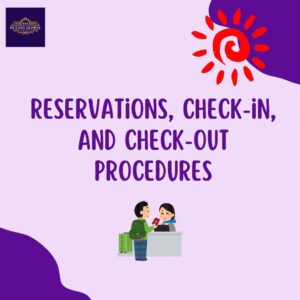
📝 Reservations, Check-In & Check-Out – Making Every Moment Count
Let’s walk through the three most important touchpoints in a guest’s journey: the reservation, the check-in, and the check-out.
Each one is a golden opportunity to show your professionalism, attention to detail, and care. When done well, these steps make guests feel welcomed, valued, and confident in your service.
📌 Reservations
This is where the guest relationship begins—before they even step into your building.
Guests might book through your website, by phone, via email, or third-party platforms like Booking.com. Whatever the method, the key is to get the details right.
You’ll typically collect:
- Guest’s name
- Room type and dates
- Contact info and payment method
- Special preferences or requests
And don’t forget—confirmation is everything. A clear, polite, and timely confirmation reassures the guest that everything is set.
👉 Pro tip: If possible, reconfirm bookings 24 hours before arrival. It shows care and avoids last-minute surprises.
🛎️ Check-In Procedure
This is the guest’s first physical experience with your service. Make it count.
- Greet them warmly—like you’ve been expecting them.
- Politely verify their identity and reservation details.
- Process payment or confirm if it’s already prepaid.
- Assign their room and hand over the key card.
- Take a moment to explain key details:
- Breakfast time
- Wi-Fi access
- Hotel amenities
- Emergency information
- Then either escort them personally or guide them clearly to their room.
A smooth, efficient check-in creates a lasting first impression—and sets the tone for the rest of their stay.
📌 Check-Out Procedure
And just as the first impression matters—so does the last.
- Start by thanking the guest and asking how their stay was.
- Review any additional charges: room service, minibar, late check-out, etc.
- Present the final bill clearly and professionally.
- Politely ask for feedback or a review—especially if they had a great stay.
- Offer assistance with transport or luggage, and thank them sincerely.
Every step should say:
“We’re glad you came—and we hope to see you again.”
🎯 What This Means for You:
Mastering reservations, check-ins, and check-outs isn’t just about procedures—it’s about crafting a guest experience that feels seamless, personal, and professional from start to finish. Because when you handle these moments well, your guest doesn’t just leave with a receipt—they leave with a reason to return.
✅ 1. Assessment Poll (Knowledge Check)
Question:
Which of the following best describes a key goal of the check-in process in a hospitality setting?
Options:
A) To give the guest their room key as quickly as possible
B) To create a warm and informative first experience for the guest
C) To upsell room upgrades without confirming guest identity
D) To remind the guest of all hotel rules and policies
Correct Answer: ✅ B
🎭 2. Scenario-Based Poll
Scenario:
A guest books a room through an online platform and arrives at your hotel. The receptionist seems unprepared, does not confirm the booking, does not explain amenities, and rushes the check-in process. The guest later complains that they were not told about Wi-Fi access or breakfast times.
Question:
What could the receptionist have done differently to improve the experience?
Options:
A) Asked the guest to sit and wait while they “looked into it”
B) Directed the guest to check online for hotel information
C) Offered an apology, processed the check-in politely, and clearly explained all key details
D) Ignored the complaint because the guest booked through a third-party site
Correct Answer: ✅ C
💻 Understanding Property Management Systems (PMS)
Now let’s talk about one of the most important tools behind the scenes in modern hospitality—the Property Management System, or PMS for short.
If the front office is the face of the hotel, then PMS is the brain. It’s the software that helps manage just about everything: from reservations and billing to guest profiles and housekeeping.
✨ What Can a PMS Do?
Think of it as your command center. A good PMS helps you:
- 📅 Manage room availability
Know which rooms are booked, vacant, or under maintenance—at a glance. - 🌐 Handle online bookings
Integrates with websites and platforms like Booking.com or Expedia to sync reservations automatically. - 🛎️ Track check-ins and check-outs
Keeps the front desk running smoothly and avoids overbooking. - 💳 Generate bills and invoices
Everything is logged, so charges are accurate and transparent. - 🧹 Coordinate with housekeeping
When a guest checks out, the system alerts housekeeping to prepare the room for the next arrival. - 👤 Build guest profiles
Stores guest preferences, past stays, and special requests—helping you offer personalized service.
🛠️ Real-World Examples
Some of the most popular PMS software used globally include:
- Opera PMS (widely used in large hotel chains)
- Cloudbeds (great for small to mid-sized properties)
- eZee FrontDesk (used in hotels and resorts worldwide)
Even if you’re not using these systems yet, learning how they work gives you a huge advantage when applying for real-world hospitality jobs.
🎯 What This Means for You:
Understanding PMS isn’t just about learning software—it’s about thinking like a professional. The more comfortable you are with tools like these, the more confident and efficient you’ll be on the job.
So even if you’re not behind the front desk yet, remember—the future of hospitality is digital, and PMS is at the heart of it.
At Royal Crest Hotel in Lagos, a guest named Mrs. Adekunle made a reservation online through a travel platform. When she arrived at the front desk, the receptionist, Tunde, could not locate her booking in the hotel’s PMS. He insisted no room was available, despite Mrs. Adekunle showing her confirmation email.
Unbeknownst to Tunde, the PMS had not been updated for two days because he had been manually jotting down walk-in bookings and ignoring the software. As a result, rooms that were already reserved online were reassigned to new guests.
To make matters worse:
- The system hadn’t been used to alert housekeeping about early check-outs, so no clean room was available.
- The guest profile system hadn’t been checked, so Mrs. Adekunle’s previous loyalty status and room preferences were ignored.
- Billing was done manually, leading to errors in other guests’ invoices.
Mrs. Adekunle, frustrated and embarrassed, left the hotel after recording a video of the poor service and posting it online. Within 48 hours, the video went viral, severely damaging the hotel’s reputation. Several reservations were canceled, and management had to issue a public apology.
🧠 Takeaway
This scenario shows how failing to use the PMS correctly—or at all—can result in:
- Double bookings
- Poor guest service
- Operational confusion
- Public backlash and financial loss
Proper PMS use isn’t optional—it’s essential to professional, consistent hospitality.
Would you like a scenario-based poll question from this as well?
✅ Handling Guest Requests and Complaints
Let’s be honest—not every guest interaction will be smooth. Some will have requests. Others will have complaints. And how you respond in those moments can define your entire service reputation.
The good news? If you respond with speed, professionalism, and care, even a complaint can turn into a positive memory.
🛎️ Handling Guest Requests
Guest requests are part of everyday hotel operations—and it’s your job to respond quickly and courteously. Even small gestures can make a big difference in how welcome a guest feels.
Some common requests you’ll hear include:
- “Can I get extra towels or pillows, please?”
- “Is it possible to change my room?”
- “I’d like a wake-up call at 5 a.m.”
- “The Wi-Fi isn’t working—can you help?”
- “Can I check out early, or check in a bit late?”
Here’s the key: Don’t delay. The faster and more positively you respond, the better the guest feels about your service—even if the request is simple.
⚠️ Handling Complaints – The LEARN Method
Now, what happens when something goes wrong? Maybe the AC isn’t working. Maybe room service took too long. The guest is upset—and this is your moment to shine.
We use a powerful technique called the LEARN model to handle complaints professionally:
- 👂 L – Listen actively without interrupting.
Give them your full attention. Don’t talk—just listen. - 💬 E – Empathize sincerely.
Let them know you understand how they feel.
“I totally understand how uncomfortable that must be.” - 🙇 A – Apologize genuinely.
Even if it’s not your fault, apologize on behalf of the team.
“I’m truly sorry for the inconvenience.” - 🔧 R – Resolve the issue promptly.
Act fast. If the AC is faulty, get maintenance in immediately. - 📝 N – Notify and Note
Let the right department know and document the complaint for records and future improvements.
Example:
A guest says, “The air conditioning in my room isn’t working.”
Here’s how you handle it:
You listen without interrupting, empathize with their discomfort, apologize, promise to send maintenance, and then follow up within 15 minutes to confirm it’s been handled.
🎯 What This Means for You:
Every request and complaint is your chance to show professionalism, empathy, and problem-solving. It’s not just about fixing an issue—it’s about restoring the guest’s comfort and trust.
And when you do that well, guests won’t just leave satisfied—they’ll leave impressed.
🧹 Housekeeping Operations – Introduction
Now let’s talk about one of the most essential—but often unsung—departments in hospitality: Housekeeping.
You may not always see them at the front desk or in the spotlight, but housekeeping staff are the guardians of guest comfort. They’re the reason rooms are fresh, bathrooms sparkle, and the entire environment feels clean, safe, and welcoming.
Their work may happen behind the scenes—but the results are front and center in every guest’s experience.
From making beds with precision, to checking for forgotten items, to ensuring the hallway smells fresh—every detail matters. Because no matter how friendly your staff is or how grand your lobby looks, if the guest’s room isn’t spotless, satisfaction drops.
So in this section, we’ll explore how housekeeping operations work, the standards they follow, and why they’re vital to a successful hospitality business.
Because at the end of the day, it’s not just about cleaning—it’s about creating a space that feels like home.
✅ Room Inspection Checklist & Turnaround – Attention to Detail Makes the Difference
Let’s take a closer look at what makes a guest room feel fresh, clean, and ready for the next arrival.
Every guest expects their room to be spotless, well-stocked, and perfectly arranged—and meeting that expectation starts with a thorough Room Inspection Checklist and smart time management.
Whether it’s a first-time guest or a returning VIP, your ability to prepare the room properly is non-negotiable. That’s why checklists and cleaning standards are so important.
📋 Room Inspection Checklist – What to Always Check
Before a room is considered “guest ready,” here are the essentials you must inspect:
- 🛏️ Bed made properly with fresh, wrinkle-free linen
- 🧽 Floors vacuumed or mopped—corners and under furniture included
- 🚿 Bathroom disinfected—mirror, toilet, sink, tiles, and fixtures must shine
- 🧴 Amenities replenished—soap, shampoo, towels, tissue, water, and more
- 🪑 Furniture dusted and neatly arranged—no fingerprints or smudges
- 💡 Appliances and lighting checked—TV, AC, light switches must all work
- 🚫 No hair, stains, or odors—these are deal-breakers for guest satisfaction
Every item on this list matters. Miss one, and the guest will notice.
🔁 Room Turnaround Time – Working with Speed & Precision
Now, while quality is critical, time also matters. Here’s how long each cleaning type usually takes:
- 🕒 Standard cleaning: 20–30 minutes per room
- 🧼 Deep cleaning (for long stays or after special use): 40–60 minutes
- ⚡ Express service (on guest request): 10–15 minutes, focused and fast
Whether you have 5 rooms or 50, your ability to clean thoroughly and efficiently is key to keeping operations smooth and guests happy.
🎯 What This Means for You:
Housekeeping isn’t just about “tidying up”—it’s about creating trust. When a guest walks into a perfectly prepared room, it tells them:
“We care about your comfort.”
That’s the power of precision, professionalism, and pride in every detail.

✅ Cleanliness & Safety Protocols – Non-Negotiables in Modern Hospitality
Let’s start with a simple truth: guests notice cleanliness first—and remember it the longest.
In today’s post-pandemic world, cleanliness is no longer just about appearance—it’s about safety, trust, and peace of mind.
That’s why your role as a hospitality professional includes following strict safety and hygiene standards every single day.
Here’s what that looks like:
- 🧤 Use gloves and sanitized cleaning equipment—don’t cross-contaminate.
- 🧽 Stick to color-coded cloths—use different ones for the toilet, sink, and tables.
- 🗑️ Dispose of trash carefully and regularly—never let it pile up.
- 🛠️ Report any damages immediately—don’t assume someone else will.
- 💨 Ventilate rooms well after each guest checks out—fresh air helps maintain hygiene.
Remember, guests may not always see you cleaning, but they feel the results—and that makes all the difference.
✅ Laundry Management – Behind-the-Scenes Excellence
Now let’s talk about another essential operation that impacts every bed, towel, robe, and uniform: Laundry.
Whether done in-house or outsourced, laundry must be timely, hygienic, and handled with care—because guests expect everything to be fresh, clean, and perfectly folded.
Here’s the basic process:
- 🛏️ First, collect all used linen and uniforms
- 🧺 Next, sort by fabric, color, and washing method
- 🧴 Then wash with the right chemicals—gentle on fabric but tough on stains
- 🌬️ Dry, iron, and fold neatly—presentation matters
- 🚚 Finally, return the fresh laundry to guest rooms or storage areas
It’s a full cycle that runs quietly in the background—but it plays a huge role in the guest experience.
🎯 What This Means for You:
Whether it’s sanitizing a bathroom or folding a crisp white sheet, your attention to cleanliness and detail builds guest confidence. It shows that the hotel is not just beautiful—it’s safe, hygienic, and trustworthy.
In hospitality, clean is not an option—it’s a promise.
Question:
You’re working a busy morning shift in housekeeping. You notice that a colleague is using the same cleaning cloth to wipe both the toilet and the sink in a guest bathroom. What is the most correct and professional response based on hygiene and safety protocols?
- A) Politely stop your colleague and remind them of the correct use of color-coded cloths, then report the incident to your supervisor. ✅
B) Wait until later to mention it to your supervisor so as not to embarrass your colleague.
C) Offer to finish the room yourself to avoid getting involved in the situation.
D) Say nothing—it’s more important to finish cleaning quickly when the hotel is full.
🍽️ Food & Beverage Essentials – More Than Just a Meal
Let’s step into one of the most exciting and guest-facing areas of hospitality—Food and Beverage, or as we say in the industry, F&B.
This department does more than just serve meals. It creates experiences—whether it’s a quiet room-service breakfast, a grand buffet, or a perfectly timed cocktail at the bar. In many hotels and resorts, F&B is not just a service—it’s a major driver of guest satisfaction and revenue.
From the moment food is prepared, to how it’s plated, and finally how it’s served—every step reflects your brand’s quality and professionalism.
In this section, we’ll explore the essentials of F&B:
How to serve with elegance, maintain hygiene, communicate with confidence, and create moments that guests remember long after they leave the table.
Because in hospitality, food isn’t just nourishment—it’s part of the experience.
✅ Restaurant Service Styles – Serving the Right Way at the Right Time
In the world of Food & Beverage, how you serve can be just as important as what you serve. That’s where restaurant service styles come in.
Each service style has its own rhythm, etiquette, and expectations. Whether you’re serving one guest or 500, knowing the difference helps you deliver the right experience at the right moment.
Let’s break them down:
🍽️ 1. À la Carte Service
This is the most personalized style.
- Guests choose individual dishes from a full menu.
- Every meal is made fresh to order.
- Timing, presentation, and attentiveness are key.
👉 Think: fine dining restaurants and upscale hotel restaurants.
🍽️ 2. Buffet Service
A favorite for high-volume settings and casual events.
- Guests serve themselves or get assistance at food stations.
- Food is pre-prepared and laid out in a self-service format.
- Usually offered at a fixed price.
👉 Think: breakfast buffets, resort dining, or event brunches.
🍽️ 3. Table d’hôte
This is a set menu style—simple, elegant, and efficient.
- A fixed number of courses with limited choices.
- One set price for the entire meal.
- Ideal for business lunches, events, or special packages.
👉 Think: wedding dinners or corporate event meals.
🍽️ 4. Room Service
The guest’s meal—delivered right to their door.
- Must be prompt, well-packaged, and served with courtesy.
- Often includes breakfast trays, dinner options, and late-night menus.
👉 Pro tip: Always knock twice and announce yourself politely.
🍽️ 5. Banquet Service
This is all about scale and coordination.
- Used for large groups at weddings, conferences, or banquets.
- Pre-set menus served in courses or buffet-style.
- Requires excellent timing, teamwork, and attention to dietary needs.
👉 Think: serving 300 guests with a smile—and no confusion.
🎯 What This Means for You:
Each of these styles demands a different pace, tone, and level of guest interaction. As a hospitality professional, your job is to adjust gracefully, deliver consistently, and always keep the guest experience at the center.
Because whether it’s a quick buffet or a formal à la carte dinner, how you serve is part of what makes it unforgettable.
🌍 International & General Restaurant Service Styles:
- À la Carte Service
- Buffet Service
- Table d’hôte Service
- Room Service
- Banquet Service
- Silver Service
- French Service
- Russian Service
- American (Plated) Service
- Gueridon (Trolley) Service
- Family Style Service
- Butler Service
- Cafeteria Service
- Counter Service
- Bar Service
- Tray Service
- Drive-Thru Service
- Takeaway/Carryout Service
- In-Flight Service
- Cruise Ship Dining Service
- Pop-Up Restaurant Service
- Cloud Kitchen / Virtual Restaurant Service
- Fast Casual Dining
- Quick Service Restaurant (QSR)
- Themed Dining
- Chef’s Table Service
- Robotic/Automated Service
- Dine-in Theater Service
- Communal Table Service
- Interactive Dining (e.g., Korean BBQ, Hot Pot)
- Ethnic Service Models (e.g., Kaiseki, Indian Thali)
🇳🇬 Nigerian Restaurant Styles:
- Buka Style / Bukateria – Ready-made traditional meals displayed for customers to select; usually semi-self-service.
- Mama Put – Informal, home-based, low-cost food service with direct personal interaction.
- Naija Casual Dining – Sit-down restaurants serving local and international dishes with waiter service (e.g., Jevinik, Terra Kulture).
- Roadside Grills / Suya Joints – Open-air, fast-service grills with limited or no seating.
- Food Court Style – Counter service inside malls/plazas, shared seating with multiple vendors.
- Palm Wine Bars / Bush Bars – Rustic outdoor setups offering local drinks and traditional delicacies in a relaxed environment.
- Owambe Catering / Banquet Style – Mass catering during parties, often with buffet or plated service at large Nigerian events.
- Contemporary Fine Dining (Urban Nigerian) – Upscale restaurants offering professional à la carte service and fusion menus in major cities.
✅ Menu Knowledge & Service Etiquette – Serving with Confidence and Class
In the Food & Beverage world, how you serve is just as important as what you serve.
Guests don’t just come for food—they come for a polished experience. That means you need to know your menu inside out and follow proper service etiquette that makes every interaction feel seamless and professional.
📖 Menu Knowledge – Know What You’re Serving
As an F&B professional, you should be able to confidently guide guests through their options.
Here’s what that includes:
- 🍲 Know the ingredients—especially common allergens like nuts, dairy, or gluten
- 🍷 Suggest meals or drinks that pair well or match guest preferences
- 🍽️ Be familiar with portion sizes and prep time—guests appreciate honesty and clarity
When you understand the menu, you’re not just taking orders—you’re helping guests make the best choice for their experience.
🥂 Service Etiquette – Every Move Matters
Now, let’s talk about how to serve with grace:
- 🍴 Handle cutlery, trays, and glasses properly—never touch food or rim of a glass
- ➡️ Serve from the left, and ⬅️ clear from the right—this is classic dining etiquette
- 💧 Refill water or drinks discreetly—don’t interrupt the guest’s conversation
- 😊 Always say: “Enjoy your meal” with a warm smile
- 🧹 Before clearing, ask politely: “May I clear your plate?”—never assume
These small gestures may seem simple—but they make your service feel thoughtful, respectful, and professional.
🎯 What This Means for You:
Guests may forget what they ordered, but they’ll never forget how you made them feel while serving them.
When you combine product knowledge with elegant service, you’re not just delivering food—you’re delivering hospitality at its finest.

✅ Customer Service in Food & Beverage – Where Courtesy Meets Experience
Now let’s talk about what truly brings the Food & Beverage experience to life: great customer service.
In hospitality, especially in F&B, service is not just about delivering food—it’s about delivering comfort, care, and connection.
You’re not just a waiter or waitress—you’re part of the guest’s experience. And how you serve determines whether they’ll come back, leave a tip, or leave a review.
🤝 What Does Excellent F&B Service Look Like?
Here are some service habits that make a huge difference:
- 👋 Warmly greet guests as soon as they walk in
A smile and a welcoming “Good evening, table for two?” sets the tone beautifully. - 🍽️ Offer recommendations based on their preferences
Ask a question or two, then guide them confidently: “If you enjoy seafood, the grilled tilapia is a favorite tonight.” - 🍲 Check in mid-meal to ensure satisfaction
“How is everything with your meal?”—asked at the right time, shows care without being intrusive. - ⚖️ Handle complaints with tact
If a guest says, “This isn’t what I ordered,” respond calmly:
“I’m so sorry for the mix-up. Let me fix that right away.” No defensiveness. Just solutions. - 👵👶 Be patient with children, elderly, or special-needs guests
Hospitality means being kind, accommodating, and respectful—no matter how long it takes.
💡 Trainer’s Reminder:
The guest’s comfort matters more than your convenience.
If something takes a bit longer, but it makes the guest happy—it’s worth it.
Because in F&B, excellent service isn’t optional—it’s the main ingredient.
👔 Day 3: Leadership, Ethics & Professional Growth in Hospitality
🕘 Time: 7:00 PM – 9:00 PM (WAT)
Welcome to Day 3! Tonight, we step into the heart of professional excellence in hospitality—the part that shapes your career, your character, and your long-term success.
Today is all about becoming more than just a good worker. It’s about becoming a trusted leader, someone who understands ethical standards, handles tough situations with grace, and is always ready to grow professionally—locally and internationally.
🎯 What You’ll Learn by the End of Today:
✅ Ethics and Standards:
You’ll understand the ethical responsibilities that come with representing a hotel, resort, or brand. We’ll look at what global professionalism looks like, and how to maintain integrity in high-pressure environments.
✅ Crisis and Conflict Management:
Things won’t always go as planned. That’s why we’ll equip you with practical tools for dealing with guest complaints, unexpected emergencies, and internal staff issues—with confidence and control.
✅ Career Pathways and Global Opportunities:
You’ll discover how to plan your career growth, identify certifications that boost your profile, and explore international opportunities in hospitality. Whether you dream of managing a luxury hotel or working on a cruise ship—we’ll show you how to start.
🎓 Why This Matters:
Hospitality isn’t just a job—it’s a career built on trust, responsibility, and growth. And tonight, we’re helping you take that next step forward—as a leader, as a professional, and as someone ready for global success.
🌟 Rita Opiah – First Nigerian Female GM at Radisson
- Position: General Manager, Park Inn by Radisson Serviced Apartments, Victoria Island, Lagos
- Background: Started in hospitality as a receptionist at Victoria Crown Plaza in 2007 and steadily climbed through roles at Protea and Marriott hotels
- Major Milestones:
- First Nigerian female GM in Radisson Hotel Group
- Led her hotel to consistently exceed gross operating profit expectations—including during COVID—earning accolades within the Radisson group
- Named one of Africa’s top 100 Women in Travel and Tourism
🌍 Why Rita Opiah Stands Out
- Homegrown Talent: Born, educated, and trained in Nigeria—she’s an authentic example of local expertise competing globally.
- Professional Growth: Rose through the ranks by embodying integrity, consistency, and perseverance, core values in hospitality and national development
- Transformational Leadership: Under her guidance, the hotel underwent a major facility upgrade and staff empowerment initiatives—resulting in better service quality and profitability
📌 Key Takeaways for Trainees
Lesson | Impact |
From Reception to GM | You can grow within your own country with commitment and results |
Character & Values in Leadership | Rita’s journey is a testament to integrity and professionalism |
Rise of Female Leadership | Her achievement breaks stereotypes and inspires locally-led excellence |
🧭 1. Workplace Ethics & Hospitality Standards – Doing the Right Thing, Always
Let’s be real—ethics is the invisible force that holds the entire hospitality industry together. You can have the best uniforms, the most luxurious rooms, and the tastiest menu—but if your team lacks ethical standards, it all falls apart.
In hospitality, ethics isn’t just about following rules—it’s about choosing what’s right even when no one is watching.
✅ Ethical Decision-Making in Service
Every single day, hospitality professionals face decisions that test their values and integrity.
So let me ask you…
- A guest forgets a wallet full of cash in their room—what do you do?
- Your colleague accidentally spills wine on a guest’s designer bag and says, “Don’t tell.” — what’s your move?
- A VIP offers a big tip to jump the line — do you bend the rules?
How you respond defines your character. And your character shapes your career.
🔑 Core Ethical Responsibilities You Must Carry:
- Transparency – Be honest in your communication, pricing, and promotions. No tricks.
- Fairness – Every guest and colleague deserves equal treatment. No favoritism.
- Accountability – Own your mistakes, fix them, and learn. No blaming others.
- Confidentiality – Guest data is sacred. Protect names, booking details, and payment info.
- Zero Tolerance – For abuse, fraud, theft, discrimination, or anything that violates professional trust.
🎯 Why It Matters:
When guests trust you, they come back. When your team trusts you, they support you.
Ethics builds relationships—and relationships build reputations.
In the end, being ethical is not just about avoiding trouble—it’s about standing tall in your profession, knowing you represent something bigger than yourself.
🇳🇬 Scenario: The Protocol Violation at Royal Crest Hotel, Abuja
Fatima works as a Guest Relations Supervisor at the Royal Crest Hotel in Abuja—a reputable establishment that hosts government officials, business leaders, and foreign diplomats.
One evening, during a busy weekday check-in rush, a well-known senator arrives unannounced. The reception area is full of waiting guests, many of whom had booked in advance and were already queued for check-in.
The senator, accompanied by a small entourage, walks straight to the front desk and says loudly:
“I don’t queue. Just get me a suite quickly. Here—”
(He discreetly slides a ₦20,000 note toward Fatima.)
“Take this and handle it fast. I’m in a hurry.”
Fatima’s junior colleague, Kemi, whispers to her:
“Madam, abeg just take it. He’s a big man. Don’t let trouble come.”
Fatima is faced with an ethical dilemma:
- Does she accept the money and bypass the system, knowing it will upset other guests?
- Or does she respect the hotel’s hospitality standards, which demand fairness, order, and transparency?
Taking the senator out of turn would violate the hotel’s guest service policy and create visible unfairness. Worse still, social media backlash is common in such moments when other guests feel disrespected or overlooked.
✅ Fatima’s Decision
Fatima gently picks up the cash, places it back in the senator’s hand with a respectful smile, and says:
“Sir, I deeply respect your status, but our policy ensures fairness to all our guests. We’ll get to you shortly. Please allow me to prioritize those who’ve been waiting.”
She immediately signals another staff member to offer the senator a complimentary drink while he waits, maintaining both respect and protocol.
🔍 Outcome
- The senator, initially surprised, quietly waits and later commends Fatima for her professionalism.
- Other guests observe the fairness and are visibly pleased.
- Management commends Fatima, citing her as an example of ethical leadership under pressure.
- A blogger guest posts positively about the experience, praising the hotel’s standards.
🎯 Moral of the Scenario
In Nigeria’s fast-paced hospitality environment, ethical leadership is tested daily—especially when dealing with VIPs or influential guests. But staying firm on values like fairness, accountability, and professionalism earns respect, trust, and long-term success for both the individual and the brand.
✅ Respect, Integrity & Team Behavior – The Heartbeat of a Strong Hospitality Workplace
Let’s talk about what really makes a hospitality team succeed—not just skills, not just uniforms—but the way we treat one another and the values we uphold when no one’s watching.
Because in this industry, it’s not just about how well you serve guests—it’s also about how well you work with your team.
🧱 Respect – The Foundation of Every Great Team
Respect is about valuing every person, regardless of their background, accent, culture, or job title.
It means:
- Greeting every guest and colleague with genuine politeness
- Listening attentively—even when you’re busy
- Being mindful of personal space, beliefs, and traditions
In short: respect makes people feel seen, heard, and safe.
🔒 Integrity – Doing the Right Thing, Always
Integrity is simple to define—but powerful to live by.
It means:
- Doing the right thing even when no one’s watching
- Speaking up when something is wrong—even if it’s uncomfortable
- Making choices that reflect both your personal values and your employer’s standards
People may forget what you did, but they’ll never forget how you stood when it mattered most.
👥 Professional Team Behavior – We Rise Together
In hospitality, you are never working alone. Every shift is a team effort, and success depends on how well you show up for one another.
Professional behavior includes:
- 🔔 Being on time and dependable
- 📢 Communicating clearly and respectfully, even under stress
- 🤝 Volunteering to help during peak periods—because teamwork matters
- 🙅♀️ Avoiding gossip, drama, or blame games—it destroys morale
- 💬 Giving feedback the right way—respectful, honest, and solution-focused
✨ Final Thought:
“Ethics is what your guests remember when the service is forgotten.”
You may serve a hundred meals or check in a thousand guests—but it’s the character behind the service that people truly remember.
When you lead with respect, act with integrity, and support your team—you’re not just a good worker, you’re a true hospitality professional.
🇳🇬✈️ Scenario: Temi at the Avalon Grand Hotel – United Kingdom
Temi, a young Nigerian woman, recently started working as a front desk associate at the Avalon Grand Hotel in Manchester, UK. Known for its blend of old English charm and international clientele, the hotel holds a strict code of professionalism, teamwork, and guest service excellence.
🔹 The Challenge
One chilly Saturday evening, during a particularly busy shift, Temi’s colleague Liam, who was responsible for handling VIP guest check-ins, stepped outside for an unscheduled smoke break—leaving his station unattended during peak hours.
A high-profile guest arrived at the same moment, expecting swift, red-carpet service.
Temi saw what was happening and knew:
- It wasn’t her department.
- She could pretend not to notice.
- No one had told her to cover VIPs.
But she also knew the guest’s experience was on the line, and the hotel’s values emphasized stepping up when needed.
Without hesitation, Temi greeted the guest warmly, accessed the VIP system (which she had trained on), and completed the check-in flawlessly—offering a welcome drink voucher, a map of the local area, and confirming the guest’s spa reservation.
🔹 Later That Night
When Liam returned and realized Temi had handled his VIP check-in, he muttered,
“Why did you do that? It’s not your job. If anything had gone wrong, it would’ve been on you.”
Temi smiled and responded calmly,
“I didn’t step in to show you up—I stepped in to keep the guest from waiting. We’re one team, and the guest experience comes first.”
Instead of reacting defensively, Liam paused. Her maturity made an impression.
🔹 The Outcome
- The guest left a glowing review, mentioning Temi by name.
- The manager highlighted her actions in the morning staff briefing as an example of initiative, teamwork, and integrity.
- Liam later privately apologized and admitted he could’ve handled his break better.
✅ What This Teaches
Temi demonstrated:
- Integrity: Doing the right thing even when it wasn’t her duty.
- Team Spirit: Covering for a teammate without blame.
- Professionalism: Clear communication and calm leadership under pressure.
In the global hospitality workplace, Nigerian professionals like Temi earn respect not just by showing up—but by stepping up.
Would you like this tailored into a WhatsApp audio training, training slide, or role-play script?
🗳️– “What Would You Do?”
You are working at a busy 4-star hotel in Dubai as a Front Desk Associate. It’s a Friday evening, and the lobby is full. Your colleague, Blessing—also a Nigerian—shows up 30 minutes late for her shift without informing anyone. She looks tired and says:
“Abeg cover for me. Just tell the manager I’ve been around since 3 p.m. My Metro got delayed and I can’t afford another warning.”
You know:
- Lying to the manager violates hotel policy.
- Blessing is your friend and fellow countrywoman.
- You’ve been trained that integrity and professional conduct are non-negotiable values at work.
❓ What would you do?
- Lie for her out of loyalty. Everyone runs late sometimes.
B. Tell her to explain honestly to the manager—rules are rules.
C. Say nothing and pretend you didn’t notice her lateness.
D. Inform the manager yourself—she shouldn’t drag you into it.
✅ Select your response and explain why. Remember, in hospitality, integrity builds your personal and professional brand—even abroad.
✅ Global Codes & Compliance in Hospitality – Upholding Standards, Protecting Reputation
Let’s take a moment to zoom out and see the bigger picture.
Hospitality isn’t just a local service—it’s a global industry. And with that comes a responsibility to operate with integrity, professionalism, and care, no matter where in the world you’re serving.
So whether you’re working in a boutique hotel in Lagos or a five-star resort in Dubai, there are global standards that protect guests, staff, and the reputation of the entire industry.
🌍 Who Sets These Standards?
There are key organizations that guide the industry’s ethical and legal conduct:
- UNWTO – The World Tourism Organization promotes responsible, sustainable tourism around the world.
- AHLEI – The American Hotel & Lodging Educational Institute sets global training and certification benchmarks.
- ACTD Accreditation – Recognized worldwide for confirming the ethical and educational quality of training institutions.
These bodies help ensure that every hotel, lodge, or resort upholds a level of excellence that guests can trust.
🧾 Examples of What These Standards Look Like in Action:
- ✅ Zero tolerance for harassment, bribery, theft, or discrimination
- ✅ Strict health and safety practices—from pest control to pandemic protocols
- ✅ Child protection and anti-human trafficking policies, especially in resorts and international chains
- ✅ Guest data protection laws like GDPR—keeping all personal info and bookings safe and secure
- ✅ Mandatory fire and emergency safety drills to prepare staff for real-life crises
No matter where you work, these rules help protect three things: dignity, safety, and privacy.
🧠 Final Takeaway:
Ethics in hospitality isn’t just about doing your job—it’s about honoring the trust people place in you.
Every guest that walks through your doors expects to feel safe, respected, and cared for. And when you follow global codes of conduct, you’re not just meeting expectations—you’re showing the world that your service is built on honor, not shortcuts.
Because in the end, you are the brand. And how you carry yourself helps define the entire industry.
Timothy, a Nigerian working as a Reservations Officer at a hotel in Barcelona, Spain, receives a phone call from someone claiming to be a business associate of a VIP guest, Mr. Garcia.
The caller says:
“He’s in a meeting and needs those booking receipts urgently. Please forward them now—he told me you’d help.”
Wanting to be helpful and avoid tension, Timothy quickly emails the guest’s private reservation history, including:
- Passport number
- Billing address
- Cardholder details
- Dietary preferences
He doesn’t confirm the caller’s identity or seek formal consent—he just acts quickly to “keep things moving.”
🚨 The Consequences:
The next day, Mr. Garcia files a formal complaint with hotel management after realizing his private details were shared without permission.
The hotel investigates and finds that Timothy violated the GDPR (General Data Protection Regulation)—a serious data privacy law in Europe. Because the breach involved sensitive personal data, the hotel faces a regulatory fine, and Timothy is terminated for misconduct.
Worse still, the data was misused—Mr. Garcia became a victim of identity fraud, damaging the hotel’s reputation and guest trust.
🧠 Lesson:
Timothy’s mistake wasn’t malicious—but it was careless.
In hospitality, especially in Europe, data privacy isn’t optional.
When you work abroad, understanding and following local laws like GDPR protects you, your guest, and your job.
A moment of pressure is never worth the loss of trust or a career.
🚨 2. Crisis & Conflict Management in Hospitality – Staying Calm When It Counts
Let’s be honest—hospitality isn’t always smooth sailing. Some days, everything flows. Other days? You’re dealing with angry guests, sudden power outages, medical emergencies, or team tension.
But here’s the truth: how you handle the pressure is what separates good service from great leadership.
In this industry, your ability to remain calm, respectful, and in control—especially during chaos—is a sign of true professionalism.
💥 Because Not Every Day Will Be Perfect
There will be moments when:
- A guest becomes loud and aggressive
- A colleague makes a costly mistake during a busy shift
- Someone faints in the lobby
- A storm cuts off power and internet during a conference
And in those moments, guests aren’t just watching what happens—they’re watching how you respond.
🎯 What Makes a Crisis-Ready Hospitality Professional?
- ✅ Composure – You don’t panic. You breathe, think clearly, and keep your voice steady.
- ✅ Quick Thinking – You know the protocol. You act fast, and you inform the right people.
- ✅ Empathy – Even in conflict, you treat others with dignity and respect.
- ✅ Team Coordination – You know when to take charge and when to ask for help.
- ✅ Guest Reassurance – You don’t just fix the issue—you communicate with calm confidence, helping the guest feel safe and supported.
🧠 Final Thought:
You weren’t just hired to smile and say “Welcome.”
You were hired to lead even when it’s hard. That’s what builds trust. That’s what builds your reputation.
Because at the end of the day, guests may forget the crisis…
But they’ll never forget how you made them feel during it.
✅ Managing Difficult Guests and Emergencies – Keeping Your Cool When It’s Tough
Let’s face it — not every guest interaction is smooth sailing. Sometimes, guests come to you frustrated, angry, or even demanding things that seem unreasonable. And honestly, sometimes the problem isn’t even your fault.
But here’s the key: your reaction is what shapes the entire experience.
👥 Meet the Challenging Guests You’ll Encounter
You might run into several types of difficult guests, including:
- The Angry Guest — Loud, upset, demanding compensation or immediate fixes. They want to feel heard and want quick solutions.
- The Rude Guest — Disrespectful, dismissive, maybe even insulting. Their words sting, but it’s not personal.
- The Entitled Guest — Expects special treatment, threatens negative reviews if they don’t get their way.
- The Emotional Guest — Overwhelmed or upset, maybe crying or easily triggered by the situation.
- The Drunken or Aggressive Guest — Intoxicated, confrontational, or disruptive — these guests require careful, calm handling.
🧩 How Do You Handle These Guests Like a Pro?
The secret is in your mindset and technique. Here’s how to keep control and turn tough moments around:
- Stay Calm: Keep your tone steady, your face relaxed, and your body language open. Your calmness helps to de-escalate tension.
- Don’t Take It Personally: Remember, it’s about the situation or their frustrations — not about you as a person.
- Listen Actively: Let them talk without interrupting. Show you’re paying attention by nodding or affirming quietly.
- Show Empathy: Use phrases like, “I understand your frustration” or “I’m sorry you’re experiencing this.” This goes a long way in calming emotions.
- Offer Solutions: Focus on what you can do to help, rather than what you can’t. Even small gestures make a difference.
- Know When to Escalate: If the situation gets beyond your control, don’t hesitate to involve a supervisor or security. Safety and policy come first.
- Be Polite but Firm: Set clear boundaries without being rude. Respect goes both ways.
🚨 Handling Emergencies with Confidence
Emergencies — whether a medical situation, fire alarm, or other crisis — demand you stay composed and act swiftly. Follow protocols closely, communicate clearly with guests and team members, and prioritize safety above all else.
✨ Remember This:
A calm, professional response can turn a negative experience into a positive one that guests will remember — and talk about — for years.
In hospitality, it’s not just about solving problems. It’s about how you make people feel while you’re solving them.
That’s the real mark of a true hospitality professional.
You’re working at the front desk of a busy hotel in London. A guest approaches angrily, speaking loudly and dismissing your attempts to assist. They say,
“This place is a joke! Why is my room not ready? Do you even care about your guests?”
How do you respond?
- Stay calm, listen actively, and say, “I’m sorry for the inconvenience. Let me check your reservation and find a solution right away.”
- Respond with equal frustration, telling the guest to calm down or leave if unhappy.
- Ignore the guest’s tone and continue with standard check-in procedures without addressing their behavior.
- Apologize and immediately offer a free upgrade without verifying the situation.
It’s a busy Saturday night at a popular hotel bar in Lagos. The place is lively, music is playing, and guests are enjoying themselves after a long week. Suddenly, one guest who has clearly had too much to drink starts causing a scene.
He begins by loudly complaining about the price of a drink, using harsh language and insulting the bartender. Other guests start to look uncomfortable as his voice gets louder, disrupting the relaxed atmosphere.
When a staff member politely approaches to calm him down and suggests he lower his voice or perhaps take a break outside, the guest refuses. Instead, he becomes aggressive — shouting insults, throwing his drink on the floor, and even pushing the bartender lightly.
Other patrons start murmuring anxiously, some deciding to leave early. The situation escalates when the guest starts threatening to “ruin the hotel” and refuses to cooperate.
The bar manager quickly calls security to intervene. The security team arrives and tries to reason with the guest, but he continues to be confrontational. Eventually, the security guards have to escort him out of the premises for the safety of other guests and staff.
🔥 Consequences of the Incident
- Several guests complain at the front desk about feeling unsafe and disturbed.
- The hotel’s reputation suffers, with some customers vowing not to return.
- Social media posts by upset guests spread the story, potentially affecting future bookings.
- The staff involved feel stressed and unsafe during the incident.
🧠 Lessons Learned
This situation shows how important it is to:
- Recognize signs of intoxication early
- Maintain calm and professional communication
- Act quickly to de-escalate the situation before it gets out of control
- Know when and how to involve security or management
- Protect the safety and comfort of all guests and staff
In Nigeria’s bustling hospitality scene, these skills are essential — because your handling of difficult guests can make or break your establishment’s success.
✅ Steps to Resolve Conflict Professionally – Keeping Your Team and Guests Happy
In hospitality, conflict doesn’t just happen with guests — sometimes it’s right within the team. Maybe it’s between coworkers, departments, or even between management and frontline staff.
If these conflicts are ignored or handled poorly, they can damage teamwork, lower morale, and even cause bigger problems down the line.
So, how do you resolve conflicts like a pro? Here’s a simple 5-step approach you can use every day:
🪜 Step 1: Listen
The first step is to listen — really listen — to both sides without taking sides or jumping to conclusions.
Let everyone express their feelings and perspectives fully. Sometimes just feeling heard helps calm emotions.
🪜 Step 2: Acknowledge
Next, show that you respect their concerns.
Use reflective statements like, “I understand this upset you because…”
Acknowledging emotions doesn’t mean you agree, but it shows you’re taking their feelings seriously.
🪜 Step 3: Clarify
Now, ask questions to dig deeper and get to the root of the conflict.
Often, conflicts come from misunderstandings, unmet expectations, or unclear policies.
Try to identify any emotional triggers or gaps that might have caused the problem.
🪜 Step 4: Resolve
Once you understand the core issue, offer fair and practical solutions.
This might mean a compromise or following organizational policies.
Whatever you decide, make sure it’s balanced and clear to everyone involved.
🪜 Step 5: Follow Up
Conflict resolution doesn’t end with a conversation.
Check back to make sure the solution is working and relationships have improved.
This prevents the same problem from popping up again and builds ongoing trust.
🔄 Why This Matters
Good conflict resolution isn’t just about fixing problems — it’s about creating a healthy work environment where everyone feels respected and valued.
And when your team works well together, your guests feel it — and that leads to better service, happier customers, and a stronger reputation for your business.
Keep these steps in mind, and you’ll be a true leader — both in your team and in the eyes of your guests.
✅ Safety and First Aid Awareness – Being Ready When It Matters Most
As hospitality professionals, guests expect more than just friendly smiles and excellent service. They trust you to be ready — truly prepared to protect and assist them during emergencies.
Whether it’s a sudden power outage, a health emergency, or a fire alarm, your ability to respond swiftly, calmly, and confidently can make all the difference — even save lives.
🚨 What Could Go Wrong? Possible Emergency Scenarios
You might face situations like:
✔️ A guest collapsing suddenly in the lobby or restaurant
✔️ A fire breaking out in the kitchen or a guest room
✔️ An outbreak of food poisoning during a banquet or event
✔️ A child going missing somewhere on the hotel grounds
✔️ A suspicious package or potential security threat detected
Each of these demands your full attention and prompt action.
📋 Basic Emergency and First Aid Protocols You Must Know
✔️ Know your hotel’s evacuation plan inside and out — including all emergency exits and the location of fire extinguishers.
✔️ Stay calm. Your calmness helps keep guests calm too. Guide everyone to safety without causing panic.
✔️ Contact emergency services or your hotel’s security team immediately. Time is critical.
✔️ Provide basic first aid if you’re trained: This might include CPR, placing someone in the recovery position, or treating minor wounds.
✔️ Document the incident: Always file a formal report afterward. This protects you, your team, and the hotel legally and helps improve future responses.
⚠️ Why This Matters
An alert and trained staff member doesn’t just react — they prevent disaster. Your readiness creates a safer environment for guests and coworkers alike.
💡 Remember These Key Points
✔️ Difficult guests and conflicts happen — but managing them with empathy, calm, and clear communication keeps situations from escalating.
✔️ Resolving conflicts professionally builds a stronger team and protects the guest experience.
✔️ Emergency readiness isn’t optional — it’s your legal, professional, and moral responsibility.
When you’re prepared, you not only protect lives but also build trust and confidence — making your hospitality service truly exceptional.
🇳🇬✨ Success Story: Tunji’s Journey from Nigeria to Promotion Abroad Through Safety and First Aid Excellence
Tunji, a determined and ambitious Nigerian hospitality professional, moved abroad to Switzerland with one goal — to build a strong and rewarding career in the global hospitality industry. Tunji understood early on that excelling in hospitality meant more than just friendly service; it meant being ready to handle any situation, especially emergencies.
One afternoon, during a busy weekend at the hotel where Tunji worked, a guest suddenly collapsed in the lobby. The scene quickly became tense as onlookers panicked. But Tunji stayed calm. Drawing on his training in safety and first aid, he immediately assessed the guest’s condition and quickly called for assistance.
Without hesitation, Tunji began administering CPR, following the correct protocols he had learned. While Tunji worked to stabilize the guest, another staff member contacted emergency medical services. Throughout the ordeal, Tunji remained composed and focused, reassuring nearby guests and staff to prevent further panic.
The paramedics arrived promptly and took over care, and the guest was safely transported to the hospital. Later, the guest’s family reached out personally to thank Tunji for his quick and professional response that potentially saved their loved one’s life.
🌟 How Tunji’s Preparedness Changed His Career
- Recognition: The hotel management immediately recognized Tunji’s calm leadership and quick thinking under pressure as exceptional qualities.
- Promotion: Within a few months, Tunji was promoted to Front Office Supervisor, a role that entrusted him with greater responsibility and leadership.
- Wage Increase: Alongside the promotion came a significant increase in salary, reflecting the hotel’s confidence in his abilities.
- Role Model: Tunji’s actions inspired his colleagues to prioritize safety training and emergency preparedness, improving the entire team’s readiness.
- Professional Growth: Tunji’s reputation as a reliable and skilled professional grew, opening doors to international opportunities and certifications.
💡 Lessons from Tunji’s Experience
- Preparation is Key: Emergency situations demand readiness. Regular safety and first aid training equips you with life-saving skills.
- Stay Calm and Confident: In emergencies, your composure can prevent chaos and build trust among guests and staff.
- Leadership Shines Through Action: How you respond during a crisis reflects your professionalism and can accelerate your career growth.
- Continuous Learning: Investing in training not only improves safety but also enhances your employability worldwide.
- Building Trust: Guests and employers value staff who can protect and care for others beyond routine service.
🚀 Your Path Forward
Tunji’s story shows that mastering safety and first aid isn’t just about compliance — it’s about becoming a hospitality professional who truly makes a difference.
If you want to stand out, grow your career, and be ready for any challenge, investing in emergency preparedness training is a must.
Are you ready to follow Tunji’s footsteps and elevate your career through safety excellence? Let me help you design a training plan that equips you with the skills to succeed anywhere in the world.
💼 Career Development in Hospitality – Your Gateway to Global Success
The hospitality industry is truly one of the fastest-growing and most international career fields in the world today. Whether your dream is to manage a luxurious 5-star hotel in Dubai, organize exclusive luxury events in London, or work onboard a cruise ship sailing the Caribbean, your journey begins with the right training, mindset, and hands-on experience.
Hospitality is much more than just a job — it’s a lifestyle and a global community. The field offers endless opportunities to grow, travel, and connect with people from all over the world. But it also rewards those who are passionate, dedicated, and professional.
Success in hospitality requires not just skills, but a strong work ethic, cultural awareness, and a willingness to continuously learn and adapt. From entry-level roles to executive leadership positions, there is a clear career pathway if you are ready to put in the effort and seize the opportunities.
This career will challenge you, inspire you, and take you places — both literally and figuratively. With the right foundation and mindset, you can build a fulfilling career that opens doors internationally and offers exciting personal and professional growth.
So get ready to invest in yourself, embrace new experiences, and start building your future in this dynamic and rewarding industry. Your hospitality career journey starts now — and the possibilities are limitless.
✅ Building Your Career Path in Hospitality
Here’s the exciting truth — there’s no single route to success in hospitality. This industry is full of possibilities, with career paths to match your strengths, personality, and passions. Whether you love managing people, planning events, traveling the world, or creating amazing guest experiences — there’s a place for you.
🧭 Which Path Will You Take?
Here are just a few of the career tracks you can explore:
✔️ Hotel & Resort Management – Lead hotel operations, manage teams, and shape unforgettable guest experiences.
✔️ Housekeeping Supervision – Maintain top-tier cleanliness, comfort, and hygiene standards that wow guests.
✔️ Restaurant & Catering Management – Oversee food and beverage service, events, and team performance.
✔️ Guest Relations & Concierge Services – Handle special requests, VIP guests, and build strong guest relationships.
✔️ Event Planning & Coordination – Organize beautiful weddings, powerful conferences, and high-end private events.
✔️ Cruise Ship Hospitality – Travel internationally while providing top service at sea.
✔️ Spa & Wellness Management – Create spaces of peace and relaxation for health-conscious guests.
✔️ Tourism Operations – Design and deliver exciting tour packages and destination experiences.
And remember — where you start isn’t where you’ll finish. Many top managers and directors began as receptionists, waiters, or room attendants. What matters is how you grow.
💡 How to Grow in Hospitality
✔️ Start small, think big. Your first role might be basic — and that’s okay. Focus on doing it well.
✔️ Take feedback seriously. Hospitality is a people business — listen, learn, and improve.
✔️ Find mentors. Learn from those who’ve walked the path ahead of you. Ask questions.
✔️ Keep learning. Every 2–3 months, aim to gain a new skill — whether it’s learning a property management system (like Opera), brushing up on Excel, learning a foreign language, or building your emotional intelligence.
✔️ Get involved. Attend hospitality webinars, trade events, or online workshops. Exposure builds confidence and connections.
🎯 Final Thought:
The people who rise in hospitality are the ones who stay curious, stay teachable, and keep growing. If that sounds like you — then you’re already on your way to becoming a future leader in the industry. 🌍✨
✅ How to Craft a Winning Resume for Hospitality Jobs
Let’s be honest — in hospitality, your first impression often happens long before you walk into the interview. It happens on your resume. And that single page can open doors to exciting roles if done right.
So, how do you make your resume stand out in a competitive industry like ours?
✍️ What Your Resume Must Include:
✔️ Relevant Experience
Even if you’ve never worked in a hotel, don’t worry. Volunteering at events, helping with guest ushering, or supporting a local restaurant — it all counts. Highlight any role where you served others or worked on a team.
✔️ Soft Skills that Employers Love
Hospitality thrives on people skills. Be sure to mention:
- Excellent communication
- Teamwork
- Adaptability
- Problem-solving
- Time management
✔️ Real Achievements
Employers love numbers. Instead of just saying “Handled customer service,” say:
➡️ “Increased guest review scores by 15% within 3 months by improving check-in efficiency.”
✔️ Your Certifications
This is your edge! Be proud to include your ACTD-accredited Certificate from Kuzang Global Academy — it proves you’ve been trained to global standards.
✔️ Professional Layout
Your resume should be:
- Neatly formatted
- Free from typos
- Clear and easy to read
Use a simple, modern font and avoid crowded or flashy designs.
🔑 Keep It Short and Sharp
- If you’re entry-level, stick to 1 page
- If you’re experienced, no more than 2 pages
📌 Final Tip:
Let your resume tell your story — honestly and confidently. You don’t need to exaggerate; your growth, effort, and training already speak volumes.
Need help reviewing your resume or choosing the right words? I’m here for that too. ✅
✅ Launch Your Hospitality Career Beyond Borders
If you’ve ever dreamed of working in a luxurious Dubai hotel, a cozy London guesthouse, or a tropical resort in the Maldives — you’re not alone. The good news? Skilled hospitality professionals are in high demand around the world, and with the right training and certifications, you could be next.
🌍 Where Are the Jobs?
Here are some of the top regions offering incredible hospitality job opportunities:
- United Arab Emirates (Dubai, Abu Dhabi): Known for 5-star hotels, mega events, and glamorous resorts
- United Kingdom & Europe: Cruise lines, boutique hotels, and even royal estates hire skilled staff
- Canada & USA: Resorts, amusement parks, and eco-tourism lodges are actively hiring
- Qatar & Saudi Arabia: Rapidly growing luxury service industries, VIP guest care, and large hotel chains
- Mauritius, Maldives & Seychelles: Paradise island resorts are always in search of trained professionals
- Cruise Lines (Worldwide): Work while you travel on ships like Carnival, MSC, or Royal Caribbean
These countries not only offer jobs but also training-based visas and long-term growth opportunities for qualified individuals.
🎓 What Certifications Boost Your Chances?
Want to stand out to international recruiters? These certifications are game changers:
✅ ACTD-Accredited Certificate (like the one from Kuzang Global Academy) – Recognized globally for proving your professional training
✅ Food Safety & Hygiene Training – Required for anyone working in kitchens or food service
✅ First Aid & CPR – Especially important for cruise ships, resorts, and events
✅ Language Proficiency Exams – IELTS, TOEFL, or Duolingo are often needed for English-speaking countries
✅ PMS Software Skills – Familiarity with Opera, Cloudbeds, or Protel gives you an edge in front office and reservations roles
🌐 Hospitality is Your Global Gateway
The beauty of hospitality is that it’s a universal industry — people need great service everywhere. With the right skills and mindset, your job title could soon come with a boarding pass. ✈️
Train smart. Certify globally. And get ready to serve the world.
🌍 Wanle Akinboboye – From Visionary to Hospitality Icon
👶 Humble Beginnings in Nigeria
Born in Ondo State, Wanle Akinboboye studied mechanical engineering in Kaduna. In the early 1980s, he moved to Miami, USA, where he earned an MBA in Hospitality Management from Florida International University.
🌱 Returning Home With a Vision
In 1984, Wanle returned to Nigeria with a dream: to create an authentic African hospitality experience. Starting from scratch, he founded multiple ventures—including security, entertainment, and tourism businesses.
🏝️ Building a Hospitality Empire
His most iconic creation is La Campagne Tropicana Beach Resort in Lagos—a 65-acre African-themed luxury destination that blends savannah, mangroves, lake, and oceanfront. (
Over 32 years, he expanded into resorts, festivals, and cultural programs, all grounded in showcasing African heritage.
💼 Global Recognition & Legacy
- Founded 16 companies in tourism, entertainment, and security
- Recognized across Africa as a pioneer of African-centric luxury hospitality
- La Campagne Tropicana became a continent-wide benchmark for authenticity and guest experience
✨ Why His Story Matters
From | To | Lesson |
Engineer | Hospitality visionary | A clear vision can transform any career |
Returned home | Built an iconic resort | Local insights + global training = impact |
One resort | Multi-venture hospitality brand across Africa | Scaling is about passion and perseverance |
Starting low | Celebrated continent-wide leader | Your roots can become your greatest asset |
🔑 Takeaway for Your Team
Wanle’s journey teaches us:
- Start with a bold vision, no matter where you begin
- Blend local culture with global standards to create unique value
- Perseverance and expansion can turn a single resort into a hospitality movement
- Legacy extends beyond profit—it’s about cultural impact and community upliftment
🧠 Let’s Recap Day 3: Leadership, Ethics & Career Growth
Today was all about helping you grow — not just as a worker in hospitality, but as a respected leader and global professional.
Here’s what you walked away with:
💡 Ethics and Team Culture:
You discovered what it truly means to lead with integrity, fairness, and respect — even when no one’s watching. Because in hospitality, your values are your brand.
🔥 Conflict and Crisis Management:
We talked about real-world scenarios — angry guests, emergencies, misunderstandings — and gave you tools to stay calm, think clearly, and turn tense moments into success stories.
Now, you’re better equipped to lead under pressure and protect your team and guests alike.
🌍 Your Global Career Starts Now:
We mapped out clear career paths and revealed where your certificate can take you internationally — from 5-star hotels in Dubai to cruise ships crossing the world. You now know what certifications boost your profile and how to stand out as a top-tier professional.
👏 Whether you’re just starting out or planning your next big move, remember:
Hospitality rewards the passionate, the prepared, and the professional.
Keep showing up. Keep growing. And keep aiming higher.
Your future in hospitality is just getting started! 💼✨
📌 Day 3 Assignment
In 5–7 lines, write down a hospitality career goal you now have after this training, and outline how you plan to achieve it.
Example: “I want to become a Front Office Supervisor in a 4-star hotel. I will start by volunteering in guest services, improving my communication, and gaining certifications like PMS software training.”